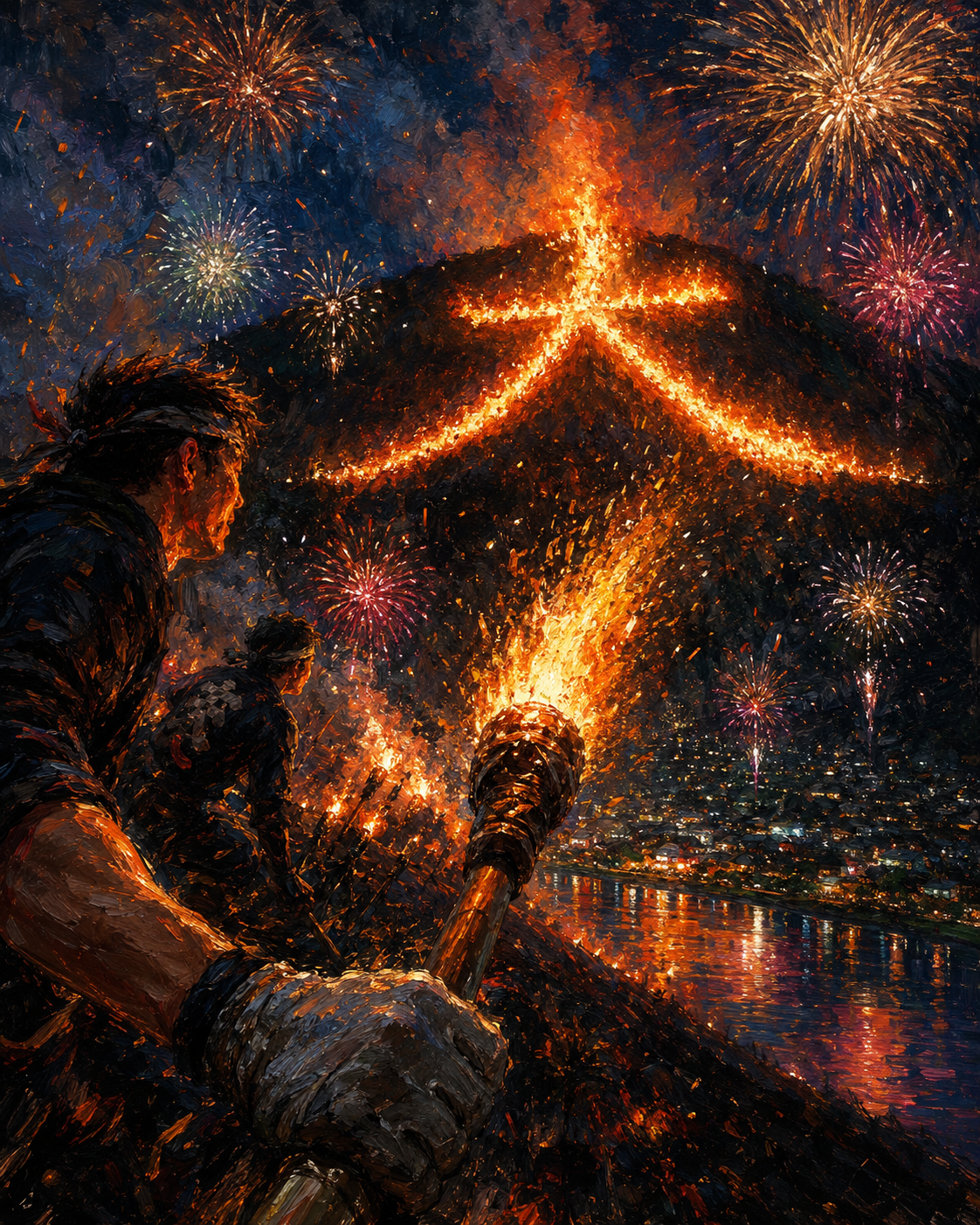
Burning Torches and Hands of Men Lighting the Daimonji Fire
Critique
Introduction This painting depicts torchbearers at close range beneath a mountain marked by an enormous figure of fire and surrounded by fireworks. A flaming torch rises from the lower center toward the slope, joining human action to the distant blaze. The viewpoint emphasizes the labor required to produce the luminous ceremony. Description Two dark-clad participants occupy the left foreground, their faces turned toward the torch held by heavy gloved hands. Sparks stream upward from its wrapped head and merge visually with the central fire ascending the mountain. Beyond the slope, red, green, white, and gold fireworks punctuate the sky, while a lakeside town and reflections appear at lower right. Analysis The torch creates a powerful diagonal axis that meets the vertical flame and branching lines of the illuminated mountain sign. This alignment converts three separate distances into one continuous upward movement. Orange and white emerge against blue-black clothing and terrain, while thick impasto defines charred wood, gloves, embers, and smoke; smaller radial strokes reserve a distinct scale for fireworks. Interpretation and Evaluation Rather than treating fire as distant spectacle, the composition foregrounds its weight, heat, and human handling. Foreshortened hands and the torch’s cylindrical mass show convincing descriptive skill. The extreme proximity is an inventive choice that gives ritual labor equal importance to the mountain image, and the concentrated color scheme sustains dramatic intensity without dissolving spatial depth. Conclusion The work unites bodily effort, symbolic form, town, and sky through a rigorously directed composition. Its tactile technique makes sparks and protective clothing feel materially opposed. What first appears to be an overwhelming image of flame gradually becomes a study of how coordination builds a sign visible across the landscape.
Same Subcategory
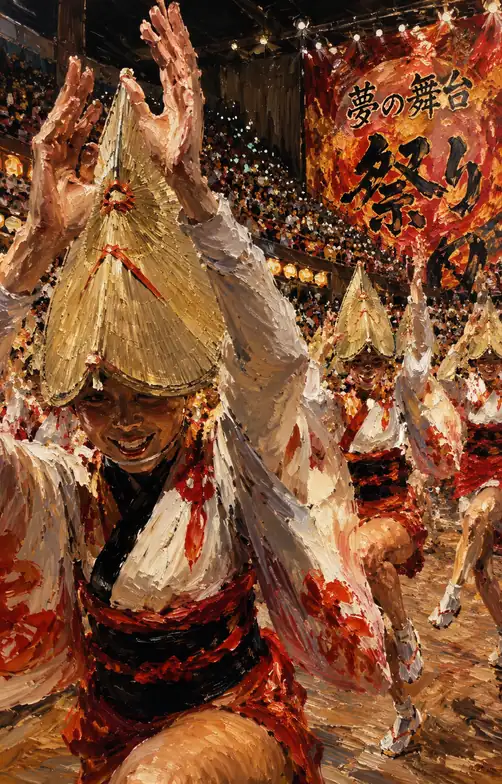 Awa Odori Dancers in Straw Hats Dancing on the Dream Stage
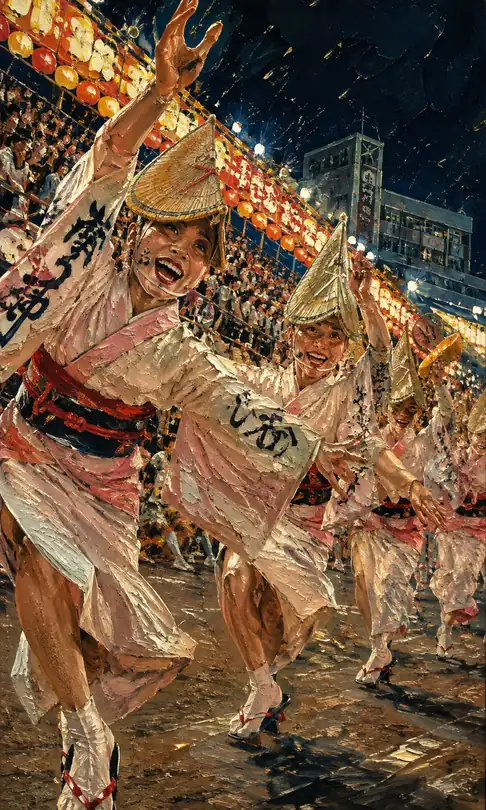 Straw-Hatted Awa Odori Dancers Advancing Through Lanterns and Cheers
Similar Artworks
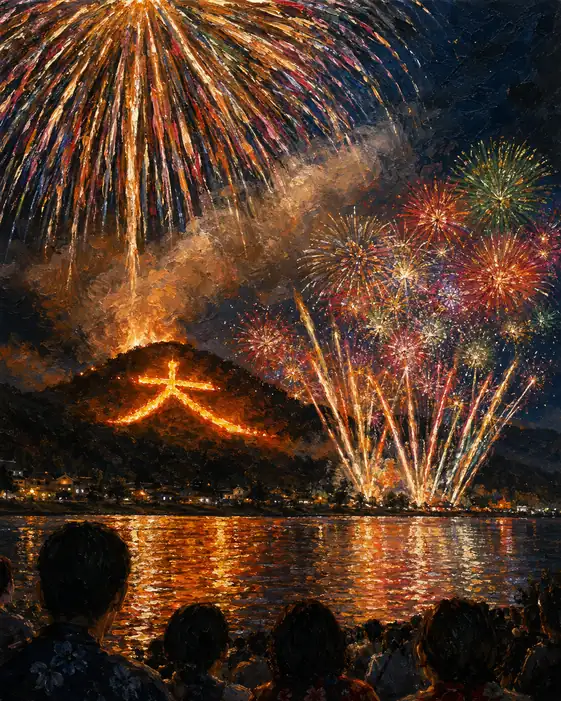 Daimonji Fire Mountain and Grand Fireworks Viewed from the Lakeside
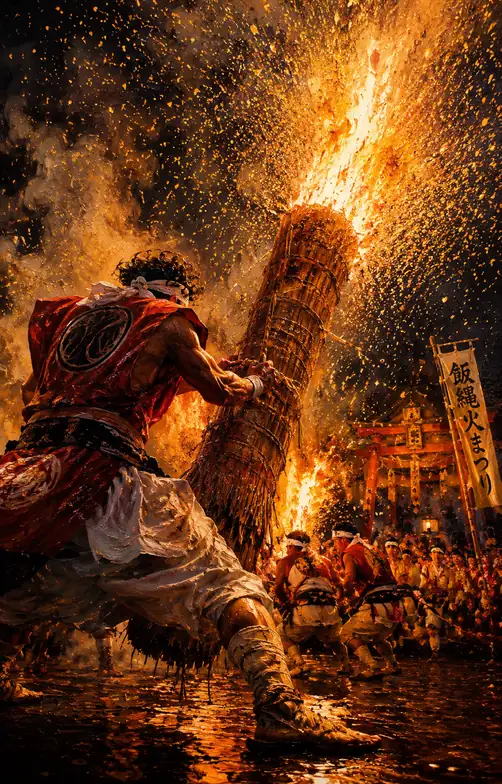 Burning Tezutsu Torch and Valiant Men at Iizuna Fire Festival Shrine
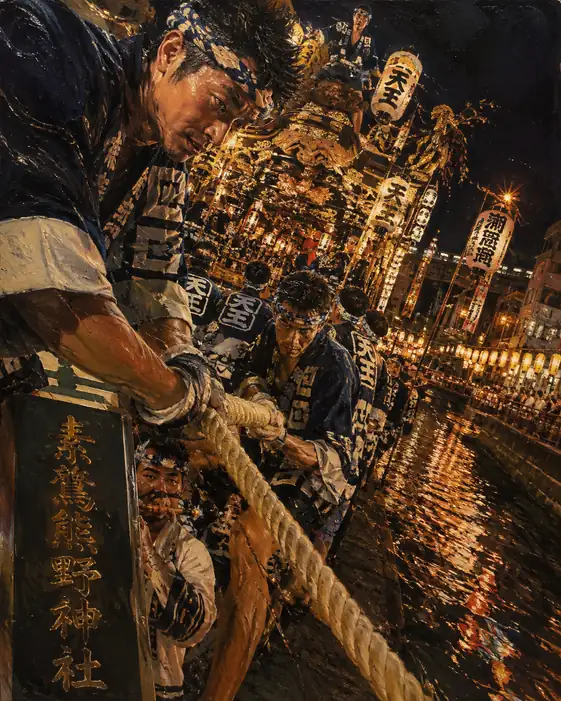 Men's Sweat and Ropes at Susanoo Shrine Tenno Festival
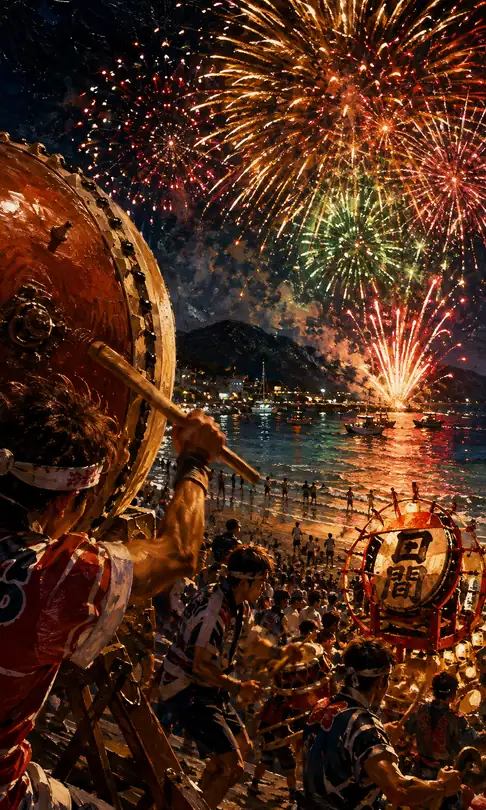 Tama Drum Platform on the Beach and Grand Fireworks Over the Sea
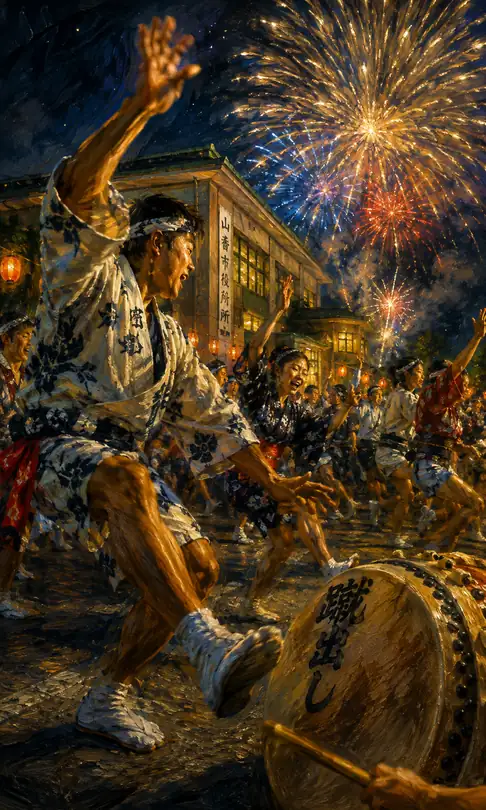 Dynamic Male Dance Leaping to Drums and Fireworks by Yamaga City Hall
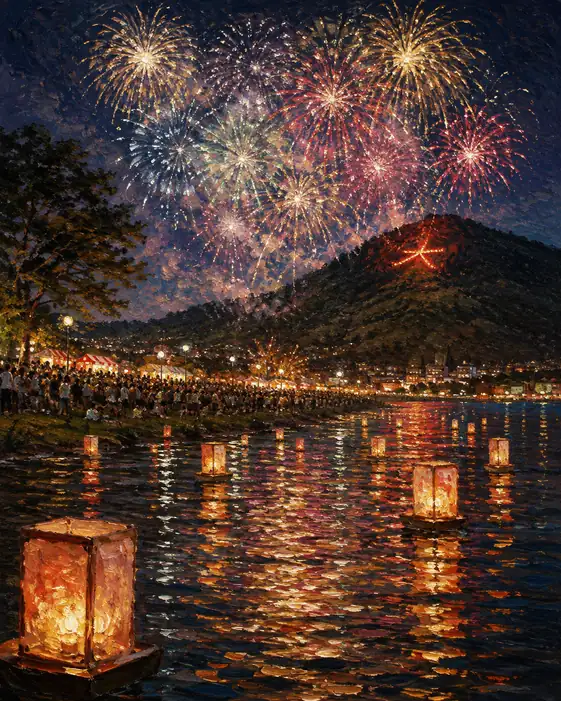 Blossoms of the Night Sky Embracing Daimonji and Floating Lanterns
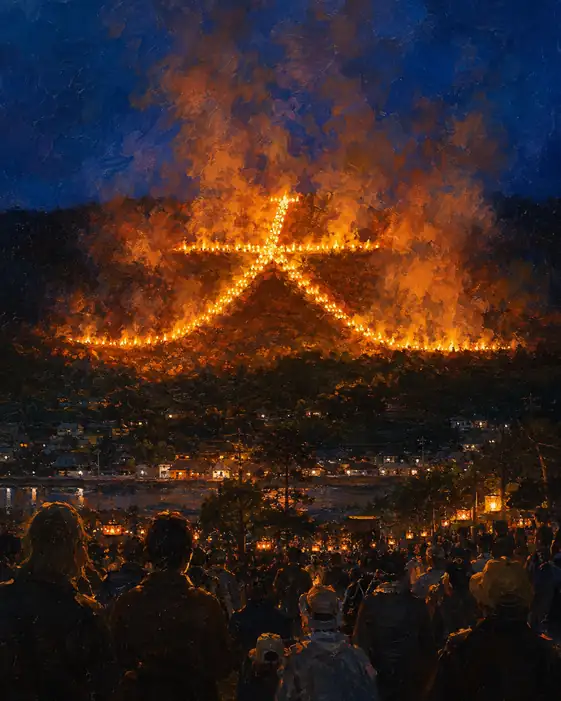 Flame of the Grand Letter on the Night Mountain
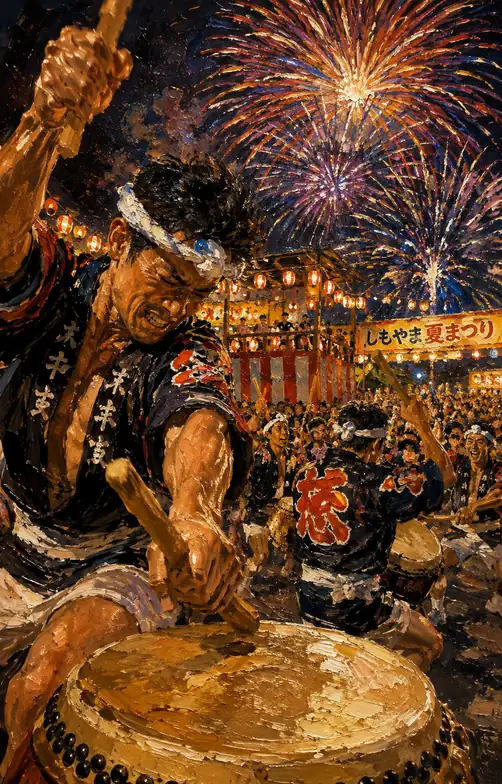 Passionate Taiko Drummer's Shout Resonating Under Shimoyama Summer Fireworks
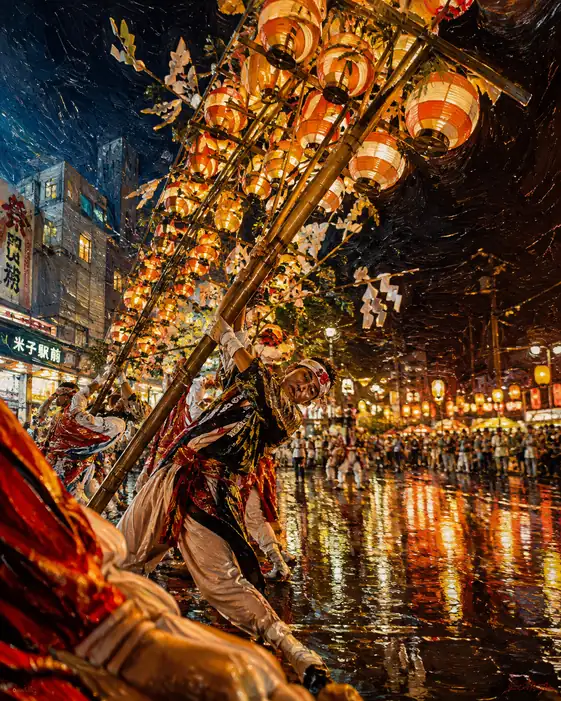 Gaina Mando Lanterns and the Skill of the Holder at Yonago Station
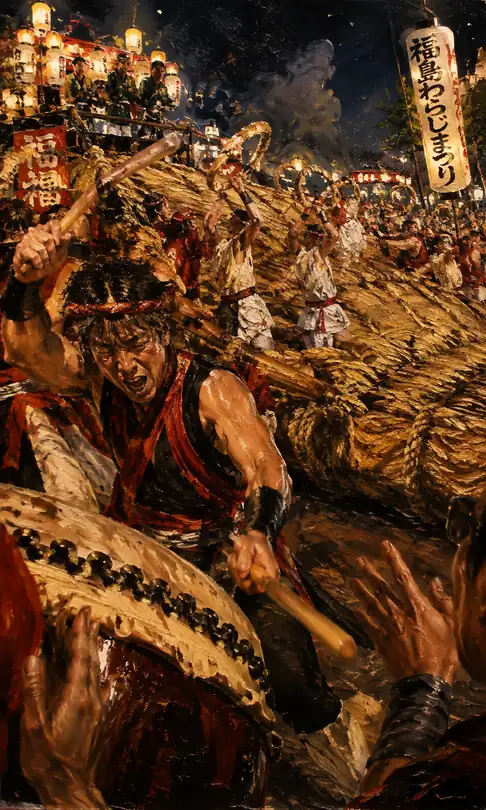 Great Straw Sandal and Resonating Drums at Fukushima Waraji Festival