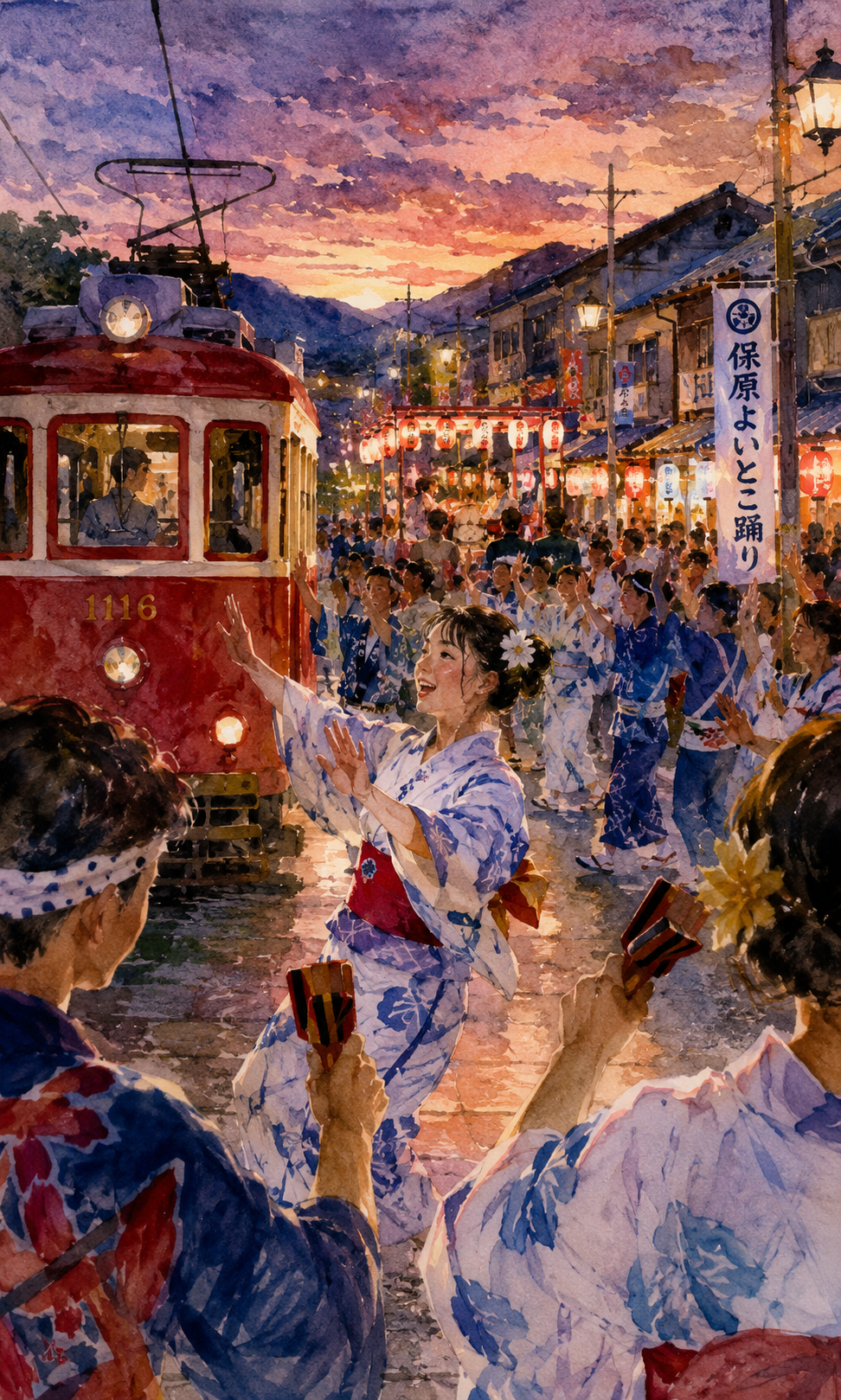
Hobara Yoitoko Dance Passing a Tram in the Sunset Street
Critique
Introduction This watercolor depicts a festival dance beside a red tram in a mountain town at sunset. A woman in blue-white yukata and red obi turns with open arms. Car number “1116,” a banner naming the Hobara Yoitoko dance, and a lantern tower join local performance to everyday transport. Description The tram fills the left with round headlamps and overhead collector; passengers remain visible inside. The central dancer wears a white flower and raises one arm toward the vehicle. Cropped figures at both lower corners hold red-black clappers. Rows of blue-white yukata lead toward a striped tower with drum and lanterns. Wooden shops, streetlights, utility poles, mountains, and a pink-violet sky recede behind. Analysis The tram's firm vertical face opposes the woman's curved pose, directing mechanical and bodily movement into common depth. Foreground backs frame her face, after which vision rises to tower and sky. Red repeats through vehicle, sash, and lanterns; blue connects clothing, mountains, and twilight. Defined machinery contrasts with fluid washes in crowd and cloud, distinguishing metal, cloth, and reflective street. Interpretation and Evaluation The tram represents ordinary civic time, while dance temporarily transforms its route. The woman's backward smile joins collective discipline to personal exchange. Legible banner and vehicle number prevent the scene from becoming generic. Transparent watercolor preserves changing evening light and gives a large crowd breathing space. Conclusion Tram, dancers, tower, shops, and mountains compress daily life and celebration into one street. Red vehicle and smile compete initially; lanterns, text, and repeated gestures then reveal the whole town becoming a dance ground. Stable color design and spatial gradation convey both specific place and participatory joy.
Same Subcategory
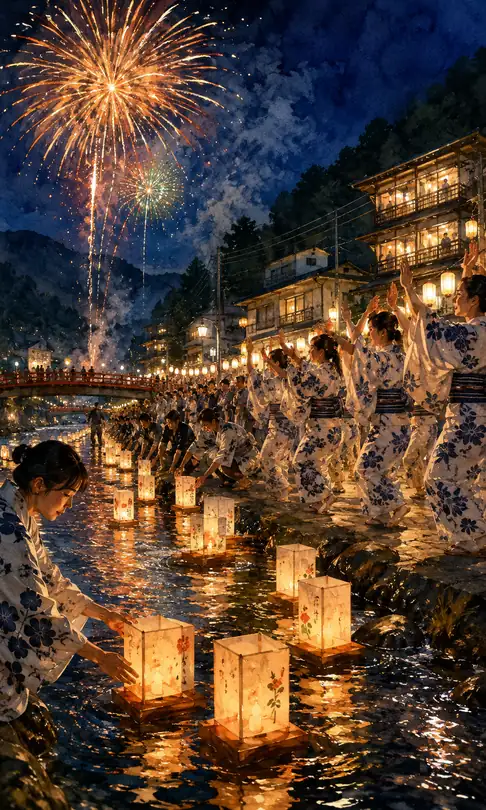 Floating Lanterns and Matching Yukata Bon Dance by the Spa Town Stream
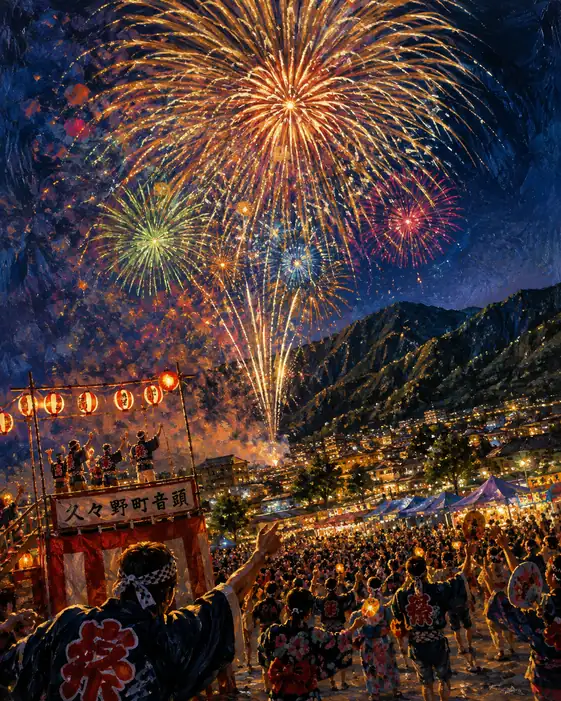 Kuguno Town Ondo Tower and Grand Fireworks Burning the Hida Mountain Slope
Similar Artworks
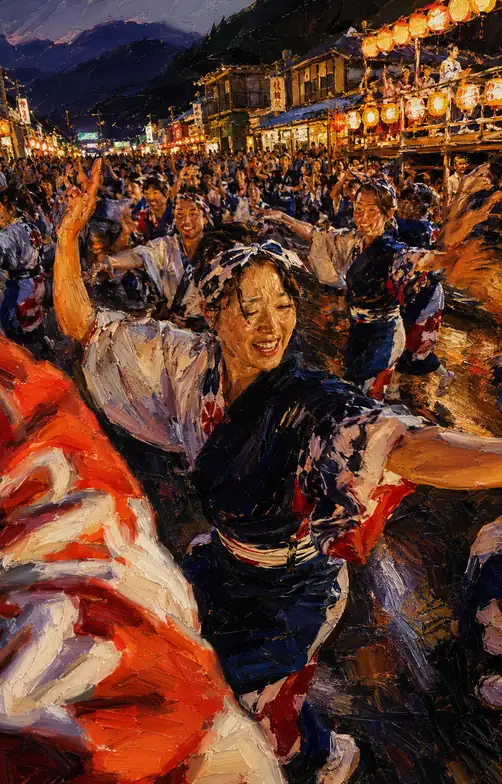 Circle of Smiles Dancing in Evening Breezes
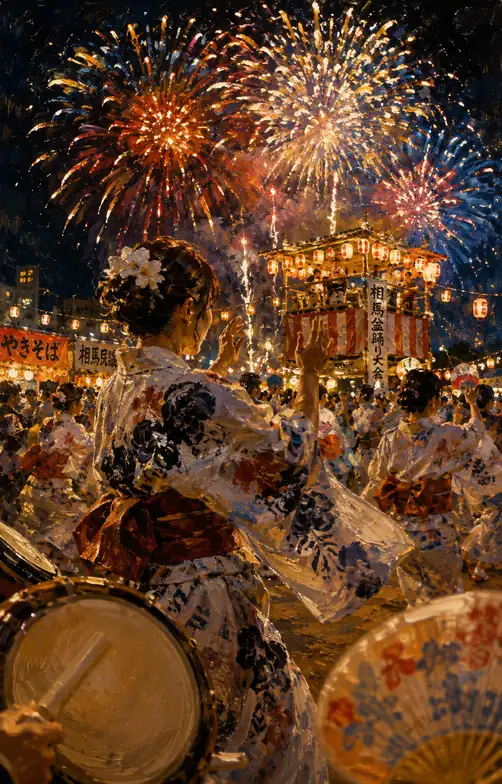 Graceful Hands Dancing Under Sky Fireworks
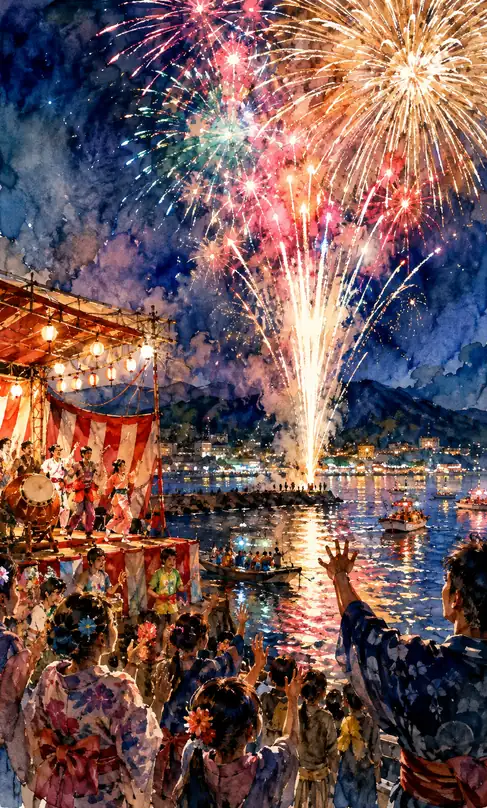 Harbor Stage and Hands of Joy Welcoming Grand Fireworks
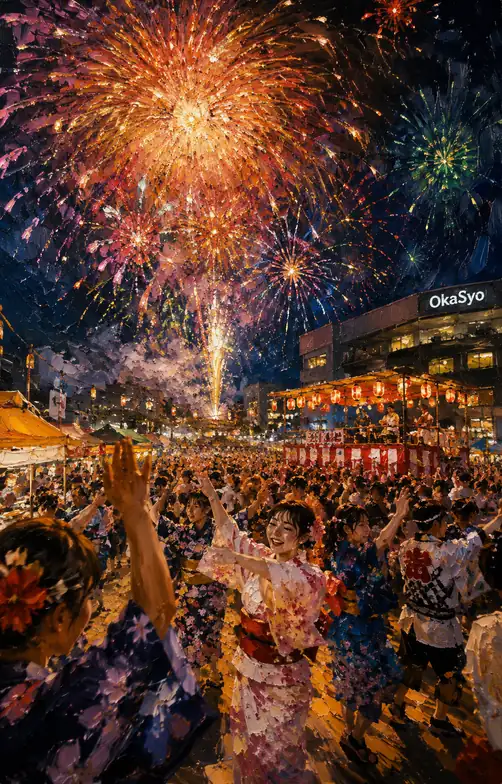 Pink Yukata Joy Dancing Under Tower Lanterns and Grand Fireworks
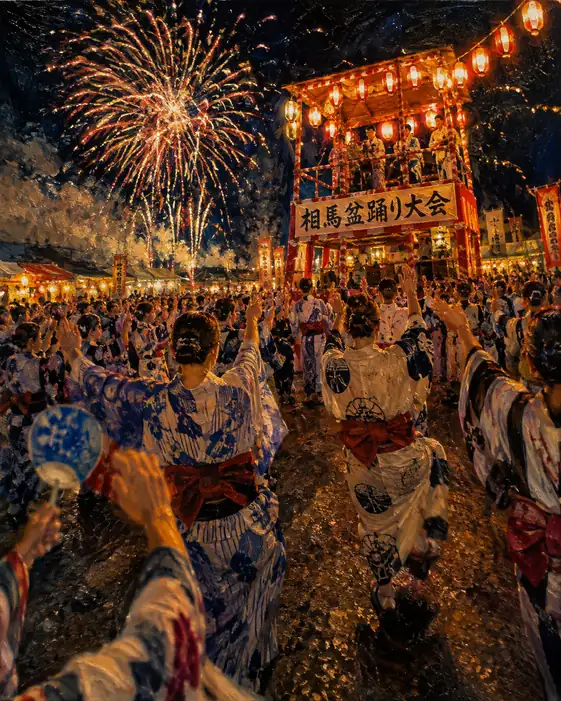 Indigo Yukata Dancing in Festive Rhythm
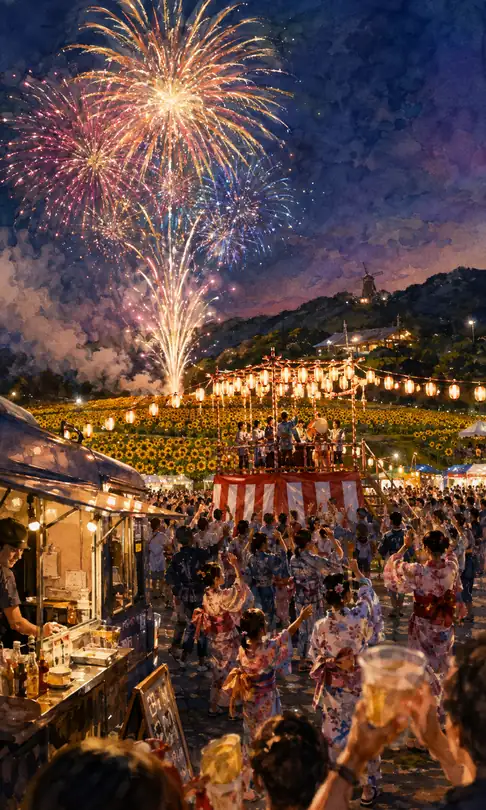 Bon Dance and Fireworks Over Sunflower Hills and Windmill
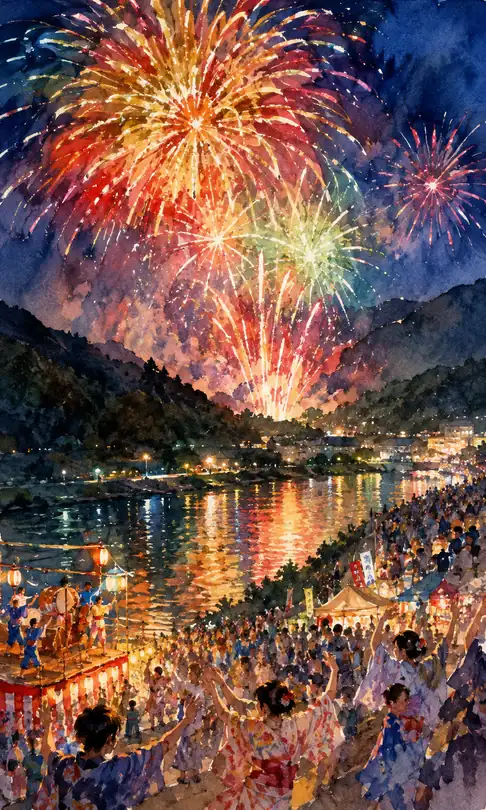 Festival Dance by the Tower and Colorful Fireworks Over the River Gorge
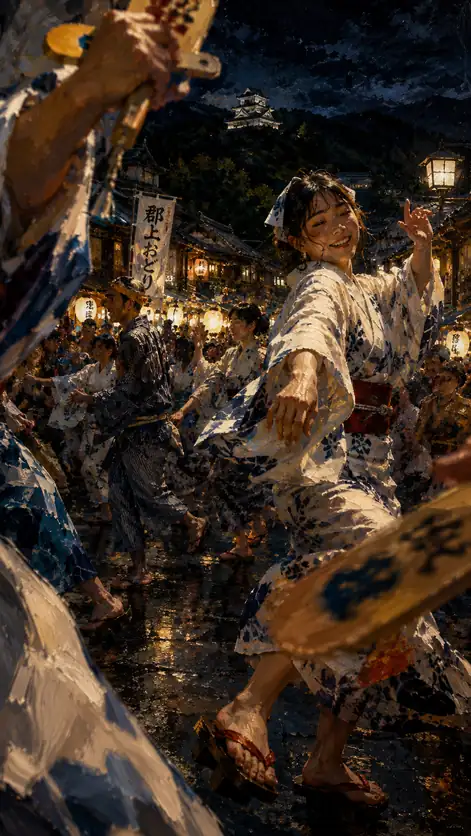 Sound of Clogs Dancing Before the Castle
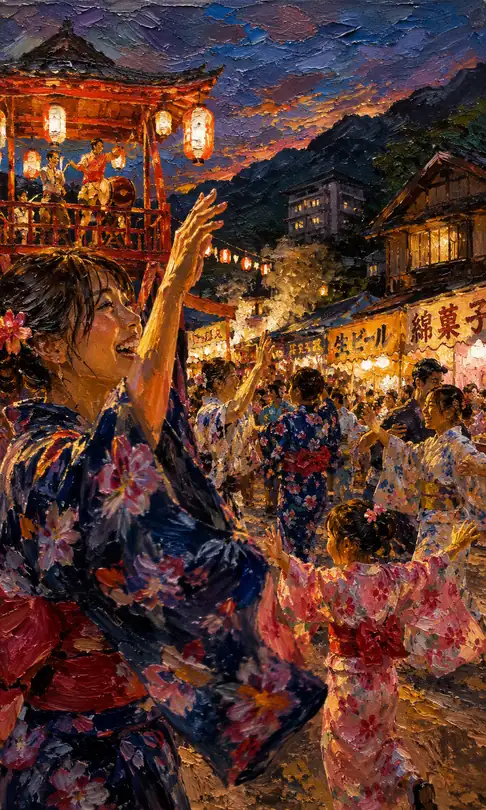 Bon Dance Energetically Dancing Under Spa Town Lanterns and Stalls
 Pink Yukata Smile and Bon Dance Ring in the Twilight Square