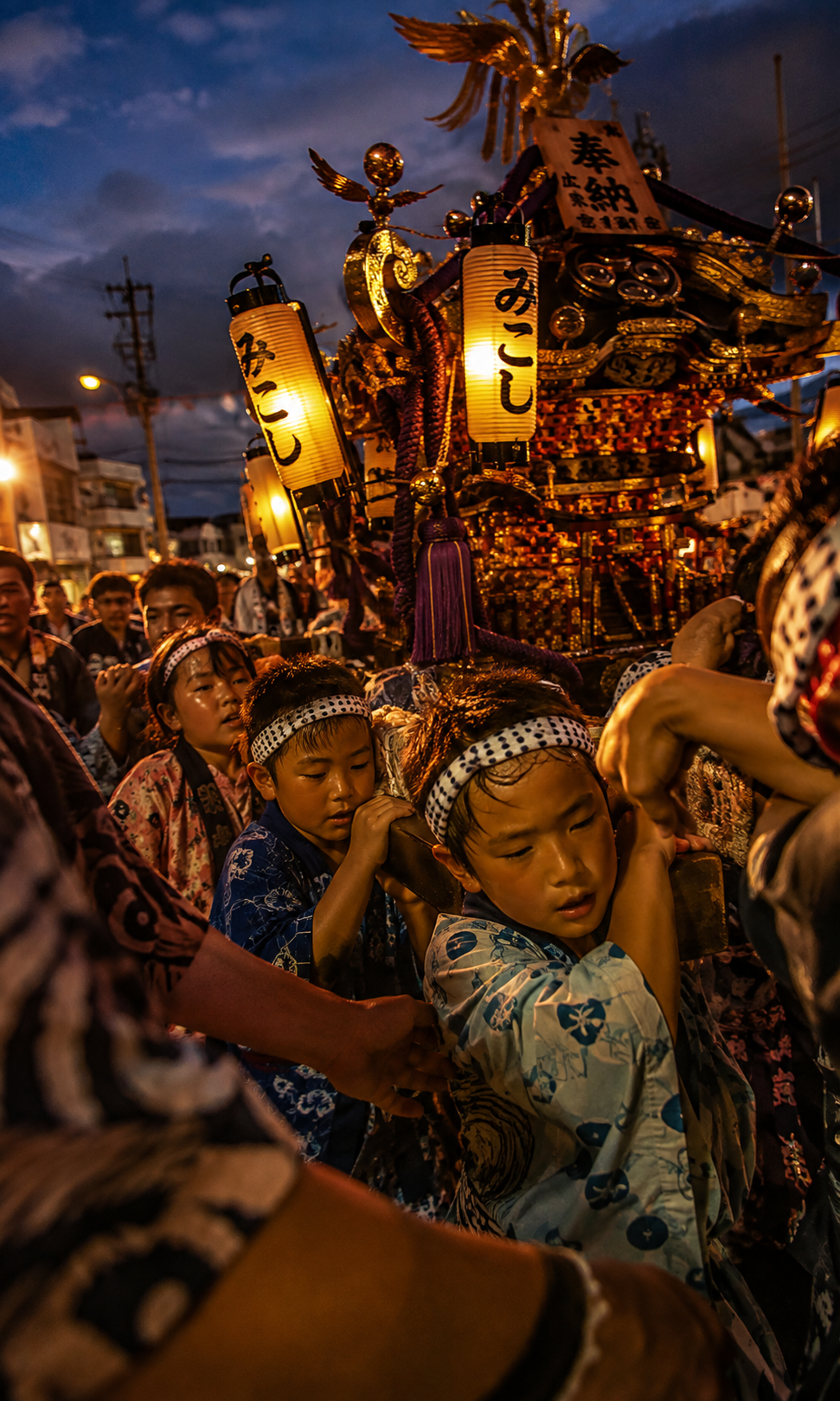
Children Earnestly Bearing the Weight of the Golden Shrine
Critique
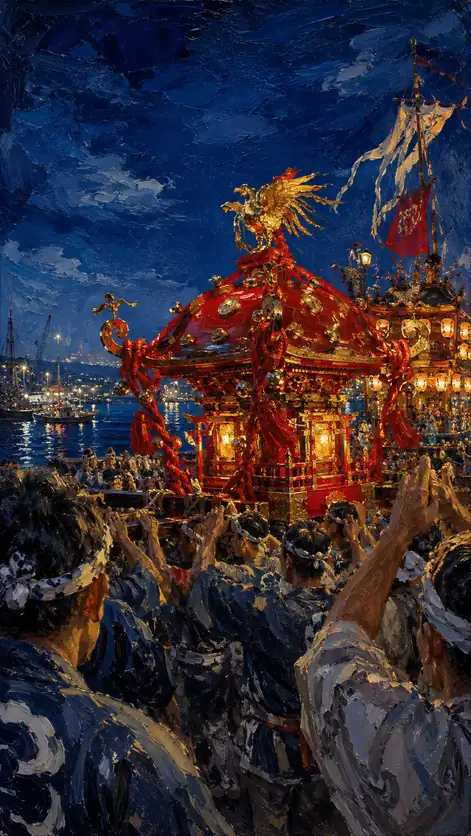
Introduction This vertical painting depicts children carrying an ornate shrine through a town at dusk. The viewpoint enters the press of bodies at shoulder height, bringing effort forward. Sacred ornament rises above a human network of hands, faces, and cloth. Description A boy in a pale blue patterned robe occupies the lower right, his cheek close to the dark wooden beam and his eyes lowered. Two children behind him press their shoulders and hands against the same support, while adults reach in from both edges. Above them, illuminated paper lanterns, purple cords, gold metalwork, carved masks, and a winged finial crowd the shrine against a cloudy blue sky. Analysis The horizontal beam divides the laboring bodies below from the brilliant structure above, yet ropes, arms, and lanterns repeatedly cross that boundary. Shallow focus blurs the nearest shoulders and hands, directing attention toward the children's strained expressions. Warm amber light catches sweat and gilded relief, while cool blue robes and sky provide relief from the dense orange-brown field. The compressed framing conveys both weight and forward movement. Interpretation and Evaluation The image presents ritual continuity as learned through participation. The children are not passive witnesses: closed eyes, tilted heads, and placed fingers reveal concentration and fatigue. Its close composition, facial description, selective focus, and control of mixed evening light produce credibility. The contrast between elaborate decoration and young carriers is effective, giving communal tradition a tangible cost without diminishing its dignity. Conclusion At first the gilded shrine appears to dominate the scene, but closer viewing shifts attention downward to the coordinated shoulders supporting it. The work ultimately makes shared burden, guidance, and youthful persistence the foundations of ceremonial splendor.
Same Subcategory
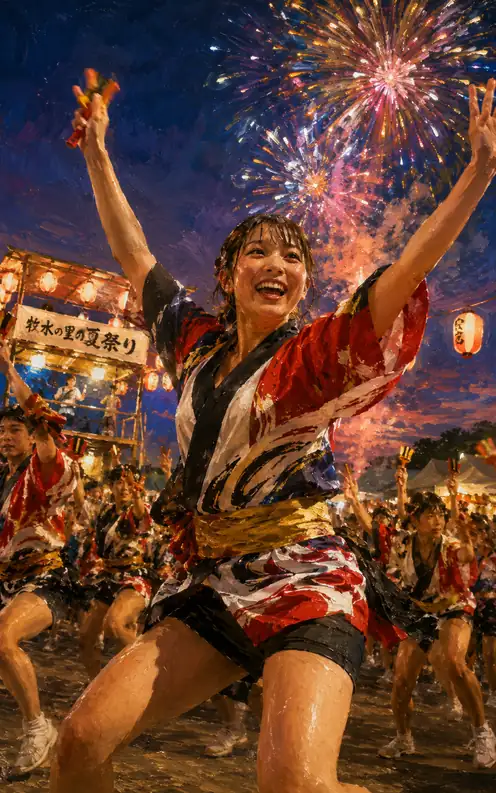 Beating Naruko and a Dancer's Radiance at Bokusui Country Summer Festival
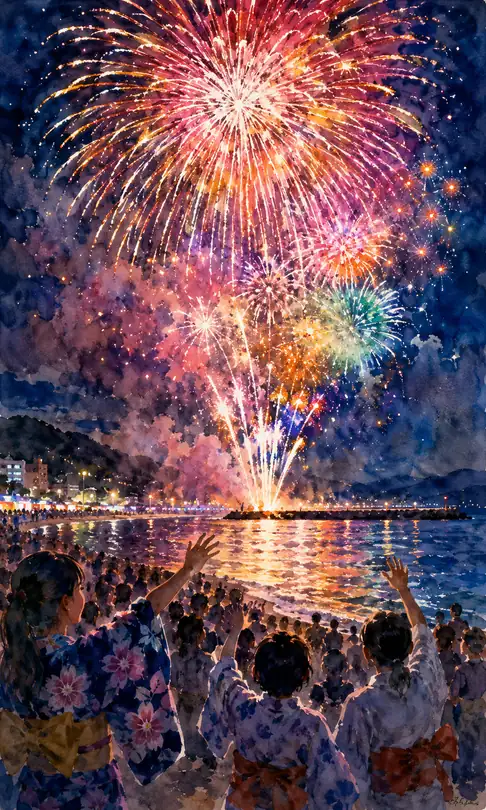 Joyful Hands Raised in Yukata on the Beach Under Pink-Gold Fireworks
Similar Artworks
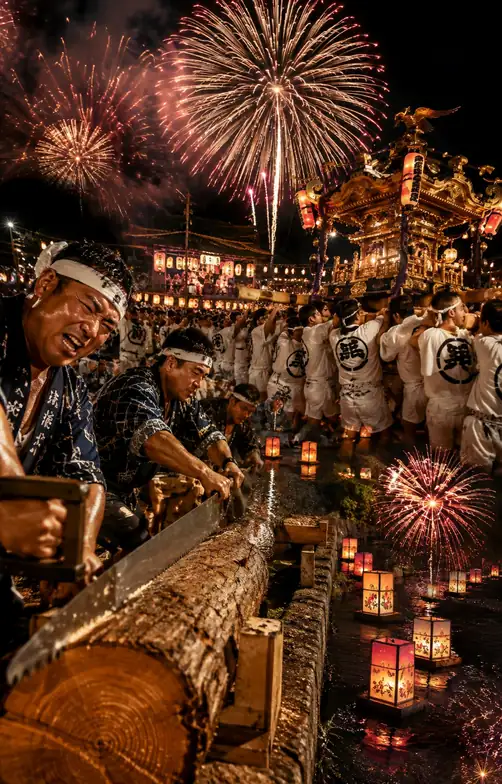 Craftsmen Sawing Logs and Grand Fireworks Over the Phoenix Shrine
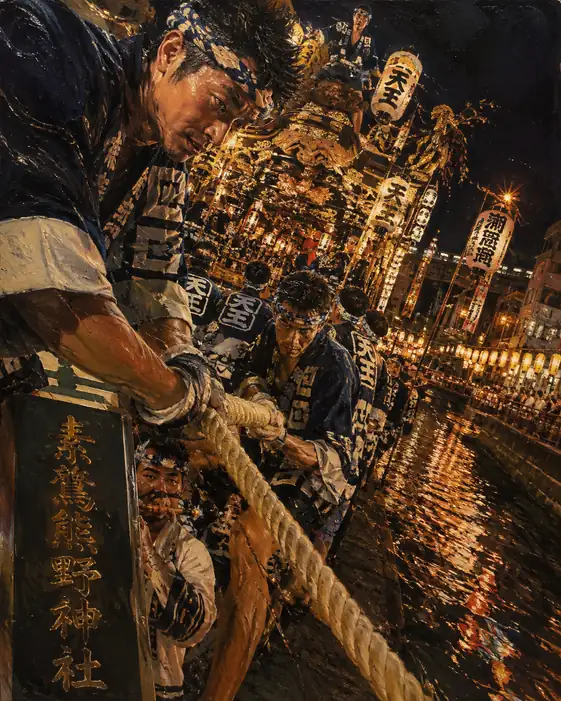 Men's Sweat and Ropes at Susanoo Shrine Tenno Festival
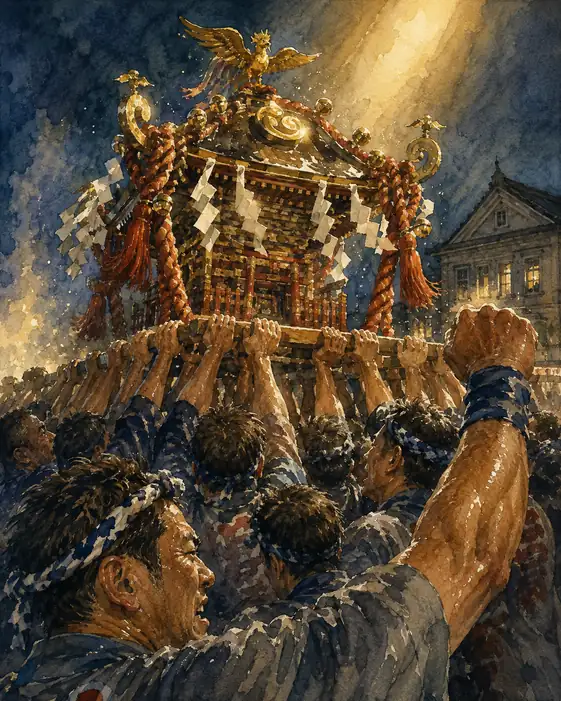 Flash of Sacred Shoulders in Dusk (No. 16)
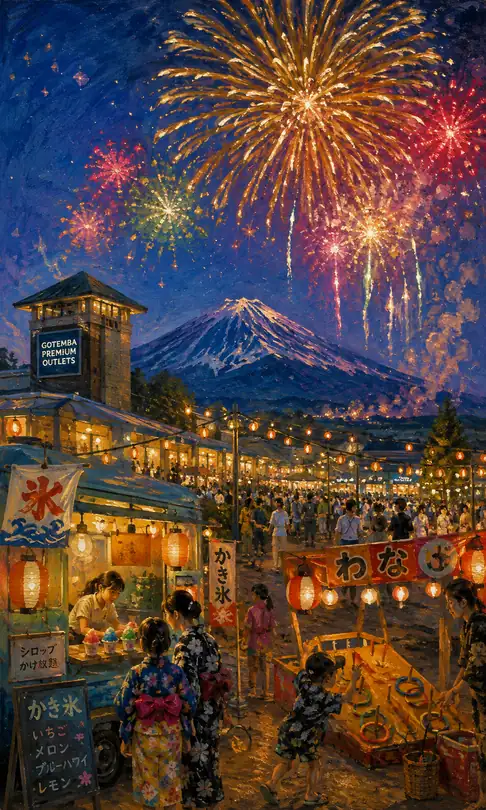 Grand Fireworks and Shaved Ice Stall Under Mount Fuji and Gotemba Outlets
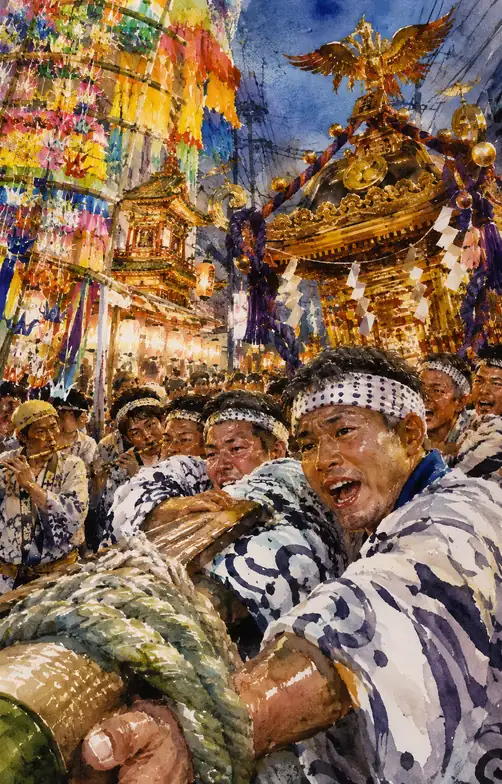 Golden Phoenix Shrine and Men's Cries Resonating in Tanabata Streamers
 Passionate Cries of Men Pulling the Vermilion and Gold Float
 Golden Phoenix Shrine Raised High with Maiden's Bell
 Pinnacle of Passion: Lifting the Sacred Shrine
 Flash of Sacred Shoulders in Dusk (No. 52)
 Streamers Swimming Through the Sky of Wishes