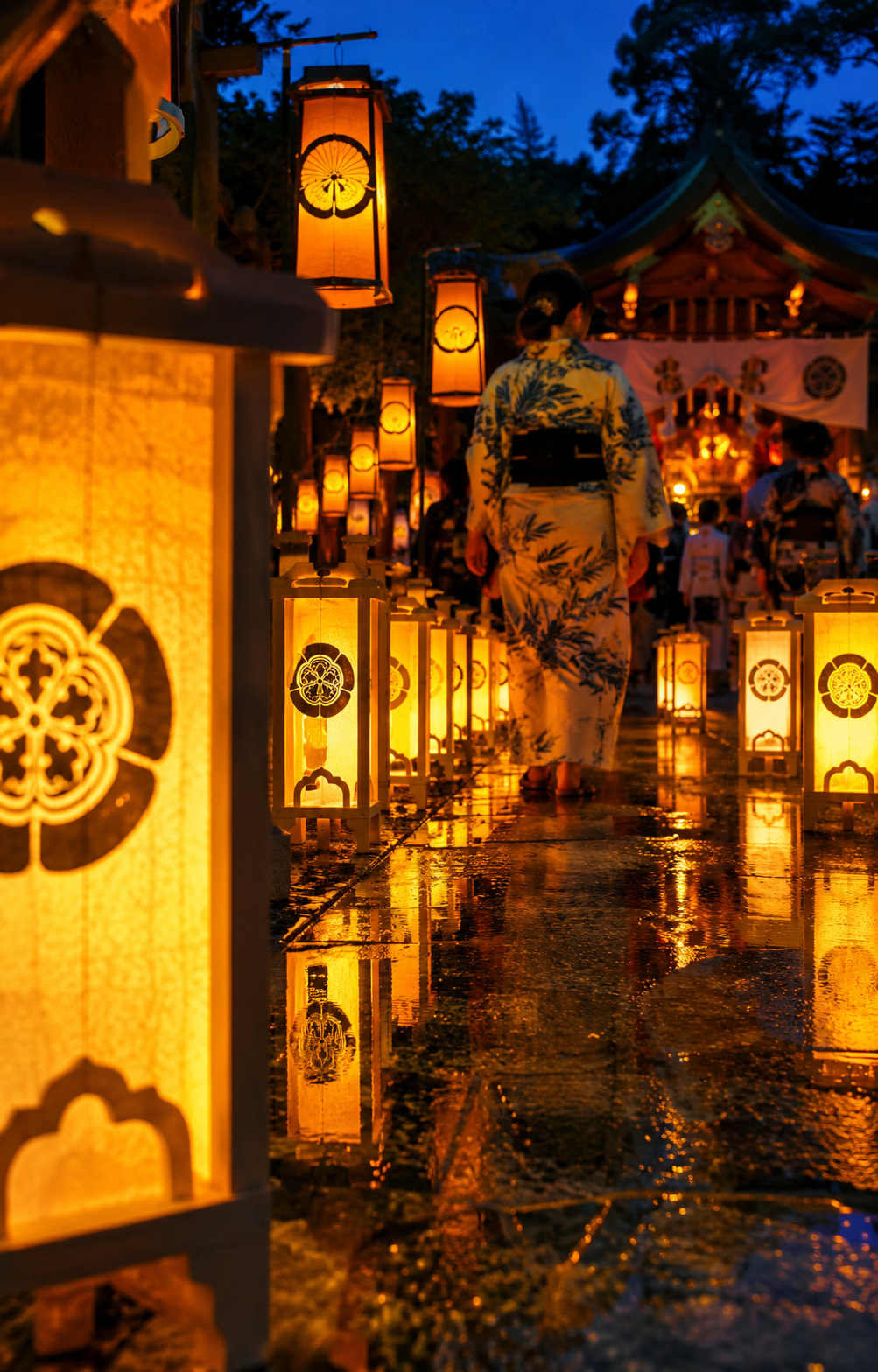
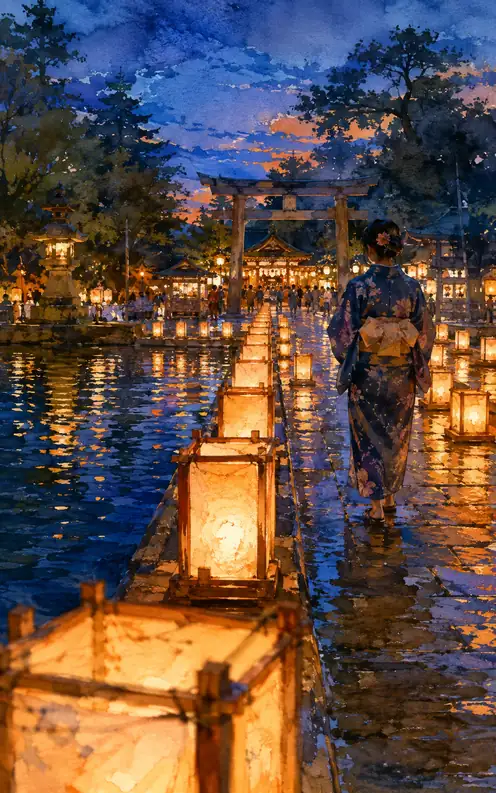
Lanterns and Serenity of a Yukata Figure on the Rain-Washed Shrine Path
Critique
Introduction This vertical painting portrays a wet approach to a shrine at blue hour. A woman in a patterned yukata walks between glowing lanterns toward the gathering. The scene favors quiet procession, using light and repetition to establish a reflective mood. Description An oversized lantern, cropped along the left edge, occupies the immediate foreground, while smaller floor lanterns recede on both sides of the stone path. The woman stands near the central axis in a pale robe with blue foliage and a dark obi. Hanging lanterns continue overhead, and other visitors, a white curtain, and the shrine roof appear softly beyond her. Analysis Repeated rectangular lights create converging lines that measure depth and guide the eye toward the shrine. The central figure interrupts this strict symmetry just enough to feel in motion. Warm amber illumination is set against a saturated cobalt sky and dark trees, while elongated reflections double the lanterns across uneven wet paving. Sharp foreground emblems gradually soften in the distance, making focus itself part of the spatial design. Interpretation and Evaluation The painting frames arrival as a transition from public path to sacred enclosure. The woman's measured stride and turned back invite the viewer to follow without intruding, and recurring floral crests give ceremonial continuity to the route. Careful light control, selective focus, balanced composition, and descriptions of paper, cloth, water, and stone show technical refinement. Its restraint distinguishes the work from dramatic festival imagery. Conclusion The initial attraction is the strong amber-blue contrast, but closer attention reveals an image structured by distance, repetition, and respectful approach. The work turns a simple walk after rain into a lucid study of anticipation and shared ritual space.
Same Subcategory
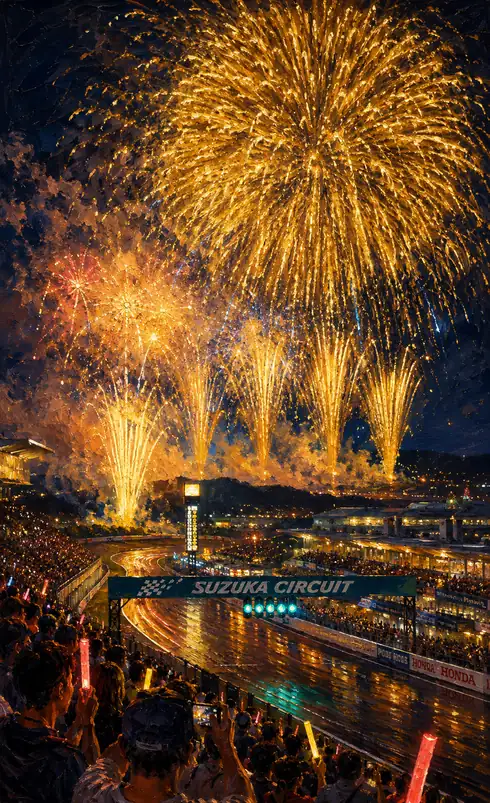 Kamuro Fireworks and Spectators' Glowsticks Over Suzuka Circuit
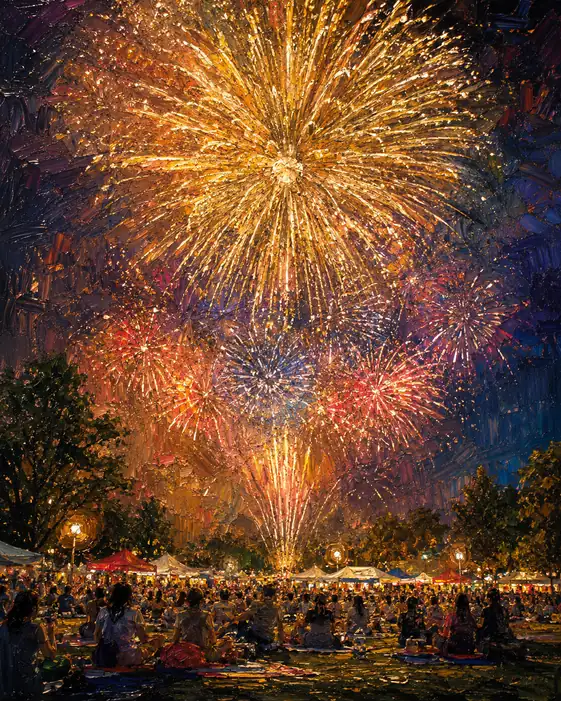 Spectators Gathered on the Park Lawn and Colorful Grand Fireworks Covering the Night Sky
Similar Artworks
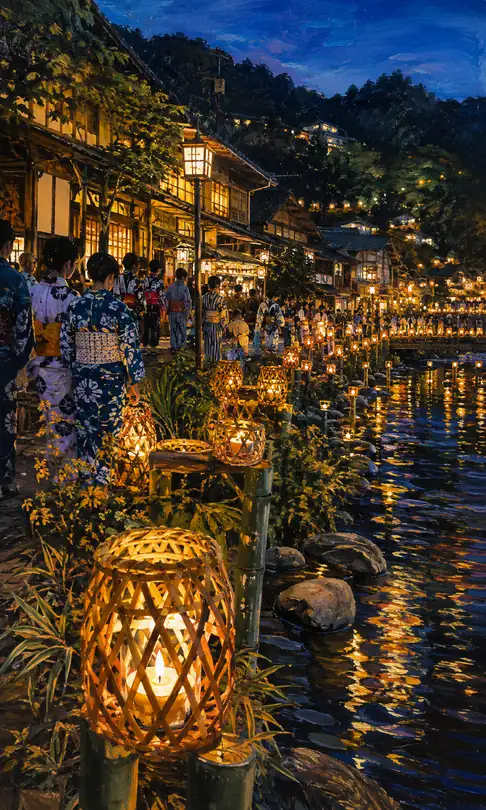 Bamboo Candle Lights and Strolling Yukata Ladies by the Hot Spring Stream
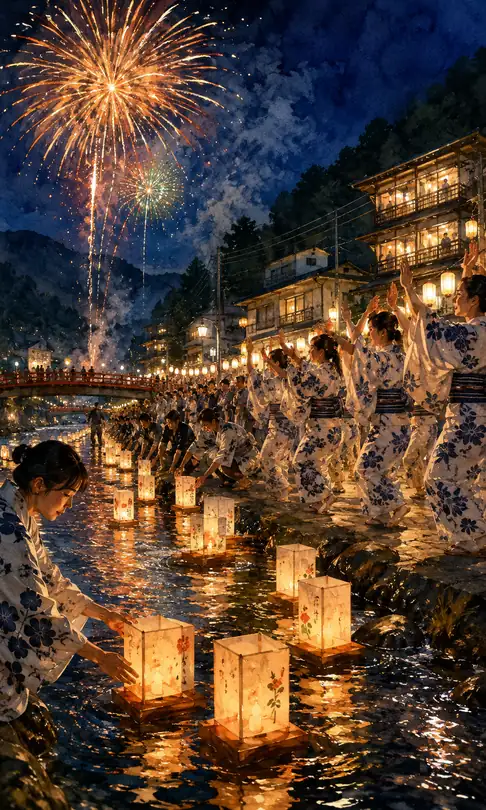 Floating Lanterns and Matching Yukata Bon Dance by the Spa Town Stream
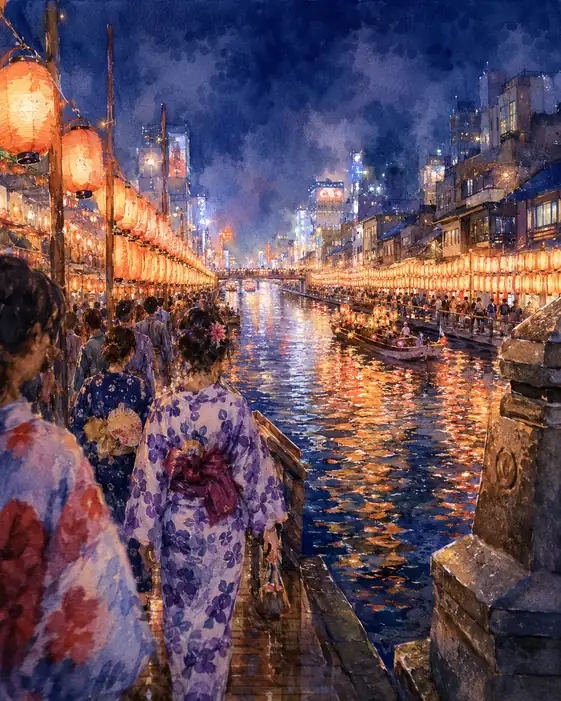 Lantern Boats and Purple Floral Yukata Along the Canal
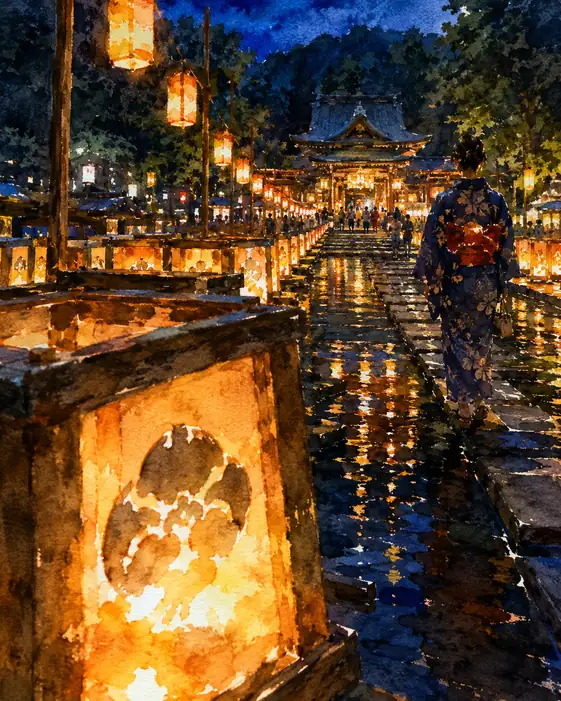 Warm Luminescence Rising in Darkness (No. 89)
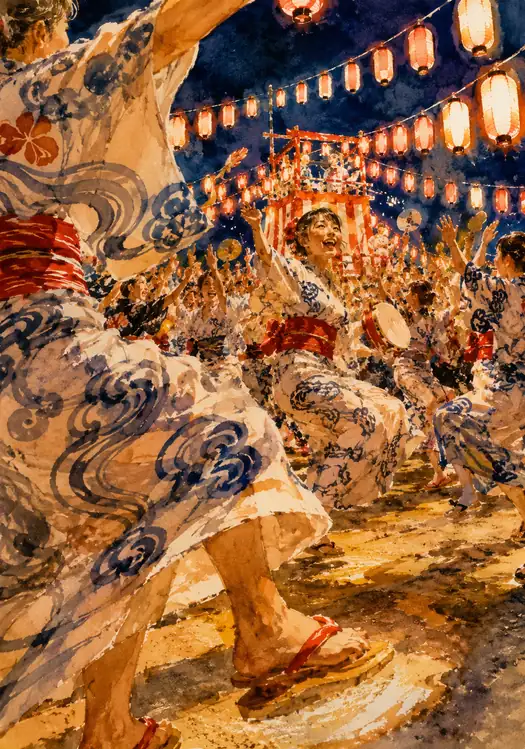 Dynamic Swirls and Smiling Dancers Under the Tower Lights
 Warm Luminescence Rising in Darkness (No. 91)
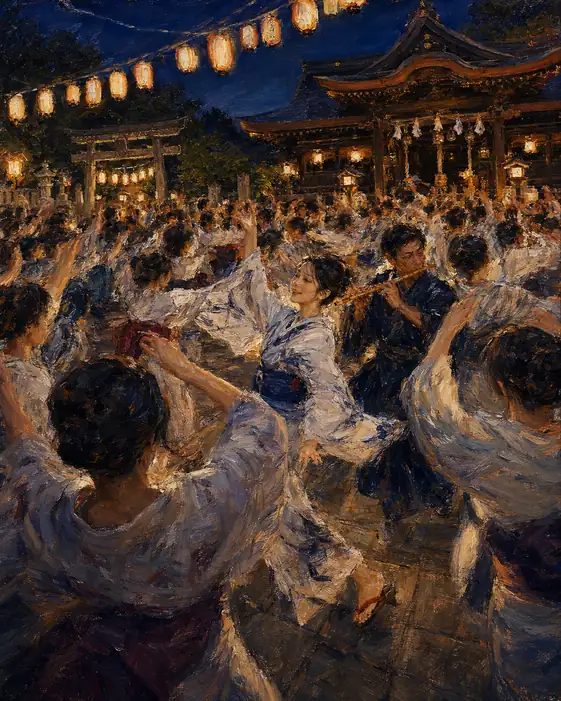 Swirling Summer Robes in Night Air (No. 33)
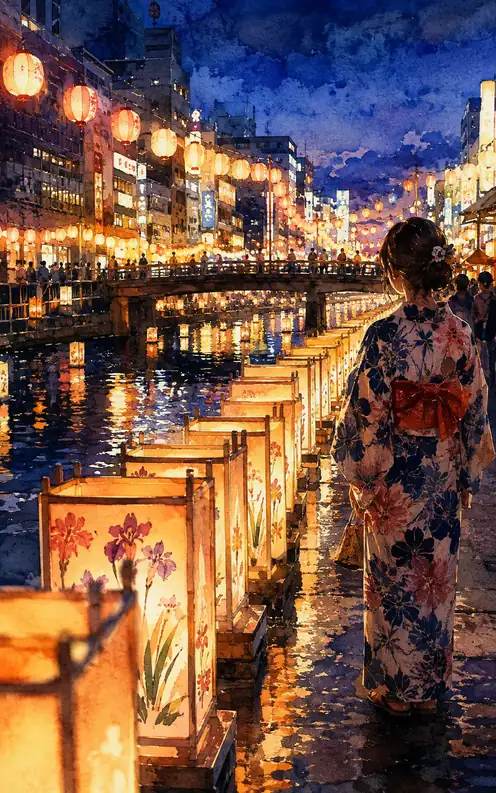 Warm Luminescence Rising in Darkness (No. 25)
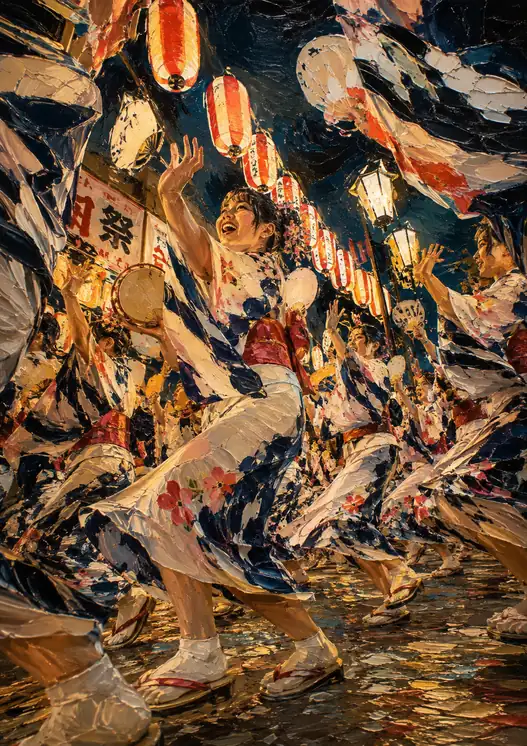 Vibrant Dance Under the Street Lanterns
 Swirling Summer Robes in Night Air (No. 70)