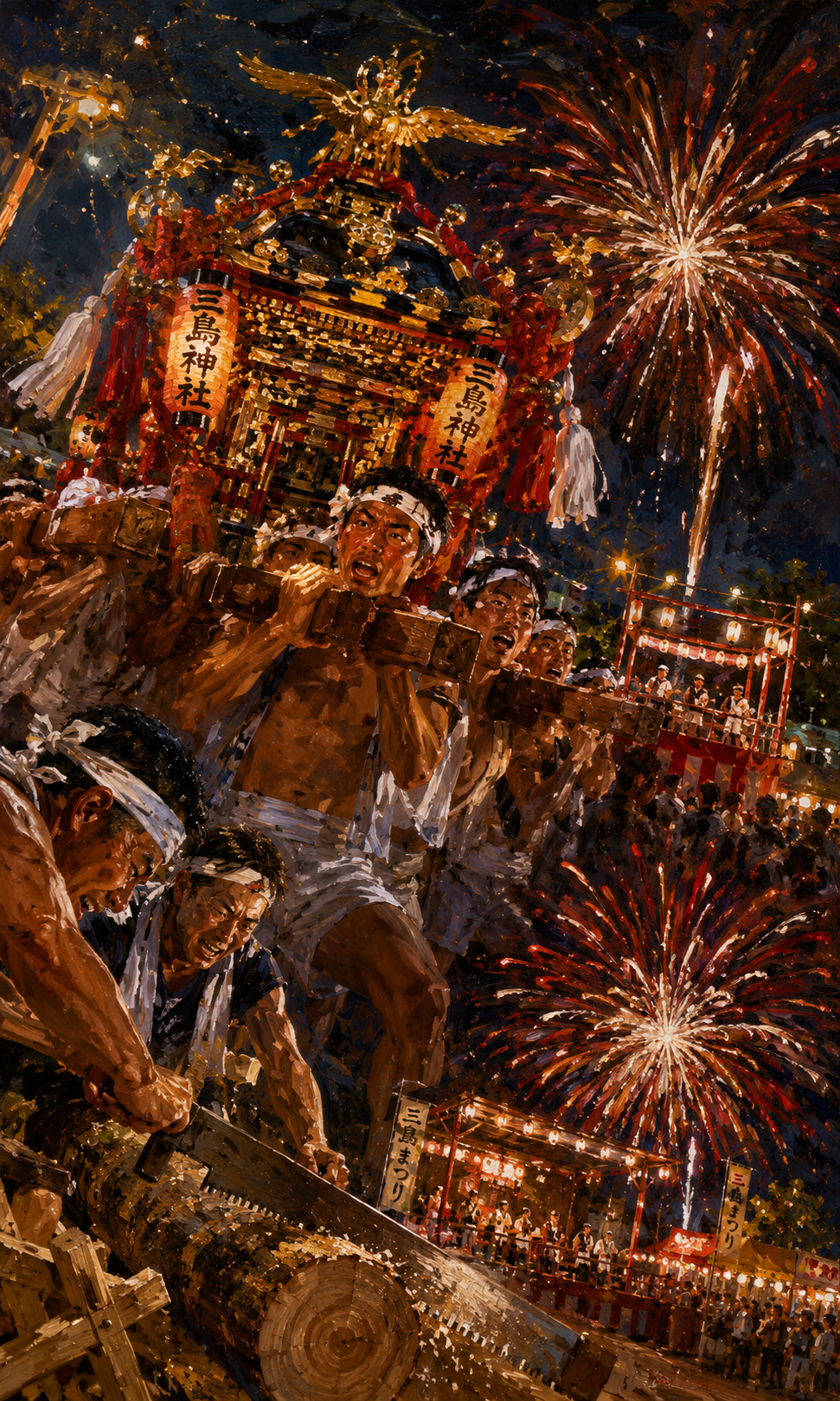
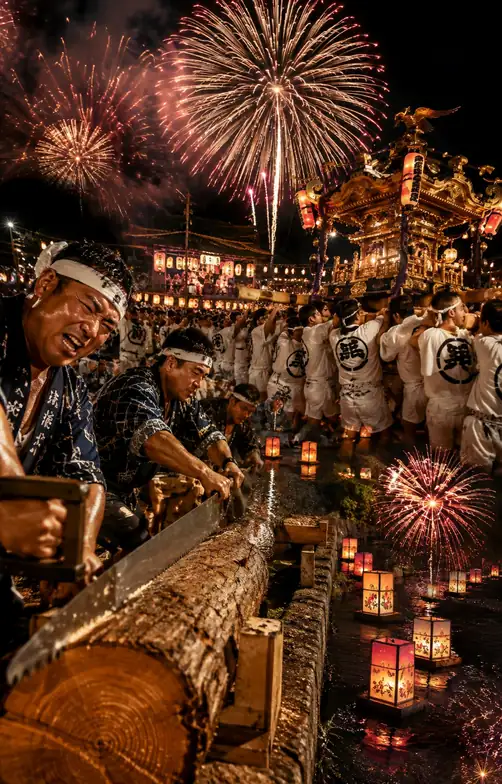
Tri-Island Shrine Phoenix Mikoshi and Men Sawing Logs in Festival Heat
Critique
Introduction This oil-like crowd scene combines men carrying a mikoshi with workers cutting a massive log beneath fireworks and two festival towers. Lanterns identify Mishima Shrine, and a golden phoenix spreads above. Shoulders beneath timber, sawing arms, and shouting mouths convey the weight and labor sustaining spectacle. Description White-clad carriers press a thick beam onto wet shoulders, mouths open. The black-and-gold shrine bears red tassels, white streamers, two “Mishima Shrine” lanterns, and a phoenix. Red-white fireworks open at right. Musicians and spectators occupy striped towers. In front, several men pull a large saw through a log; chips fly around its broad growth-ring section. Analysis The shrine mass tilts one way while log and saw drive oppositely, crossing different tasks into one force. Fireworks, wings, and growth rings repeat circular forms. Gold, red, and orange concentrate in shrine, sky, and towers, outlined by white garments and navy night. Impasto makes metal, sweat, bark, and chips tactile while faces and lettering remain legible. Interpretation and Evaluation Pairing procession with timber work makes ceremonial display inseparable from material labor. Shoulders under the beam answer arms pulling the saw as collective exertion. Shrine name and banners establish locality; two towers broaden sound and audience. Despite abundant information, strong timber diagonals prevent dispersal. Conclusion Mikoshi, carriers, log, saw, towers, and fireworks unite pageantry with weight. Phoenix and bursts attract first, then sinking shoulders, gripping hands, and wood chips disclose communal substance. Red, gold, white, and navy preserve nocturnal heat. The painting honors bodies and materials that support celebration.
Same Subcategory
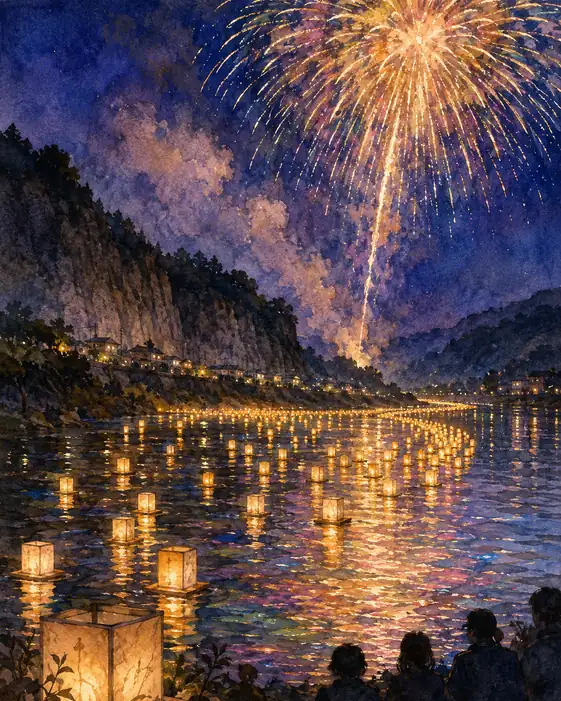 Stream of Lantern Light Floating down the Gorge and Golden Willow Fireworks
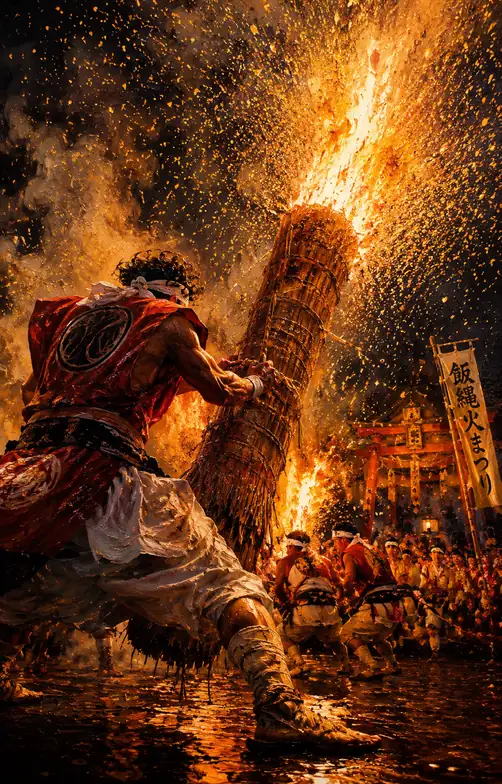 Burning Tezutsu Torch and Valiant Men at Iizuna Fire Festival Shrine
Similar Artworks
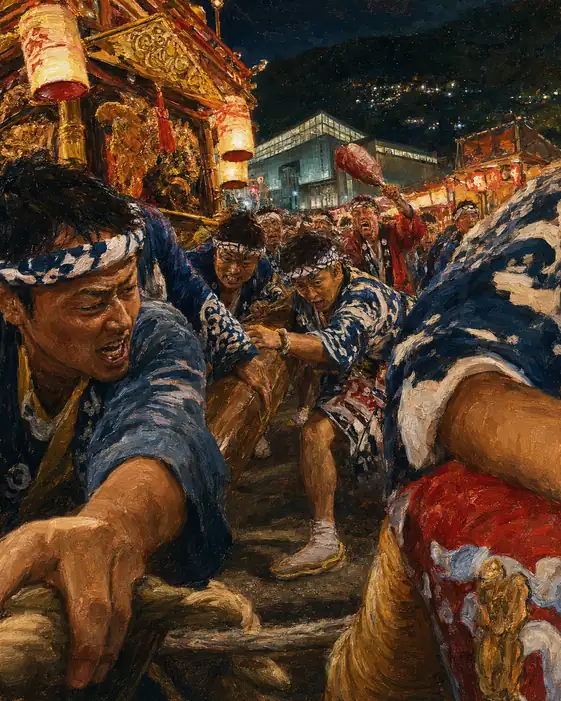 Men Pulling the Heavy Ropes of the Golden Shrine Truck with Passion
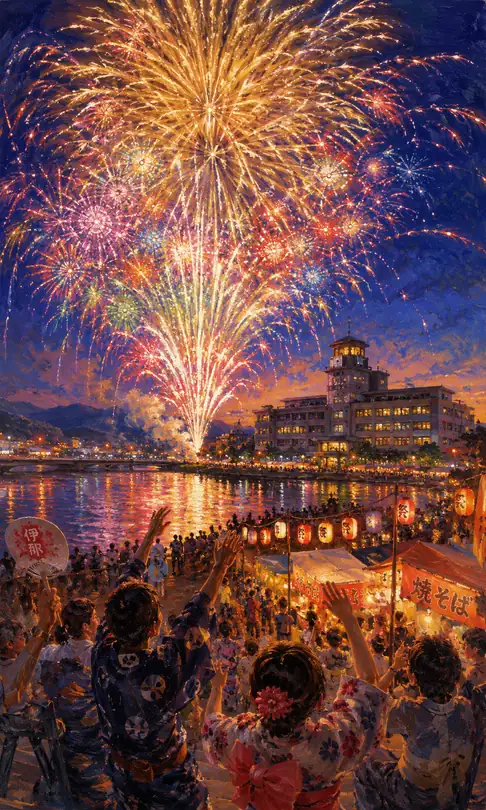 Western Building and Grand Colorful Fireworks Over the Ina Riverside
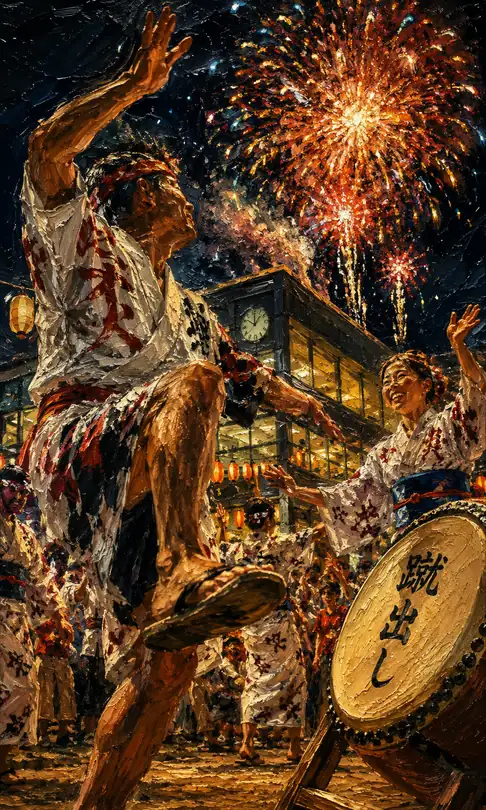 Dynamic Leap Dance by the Great Drum Under the Clock Tower Sky
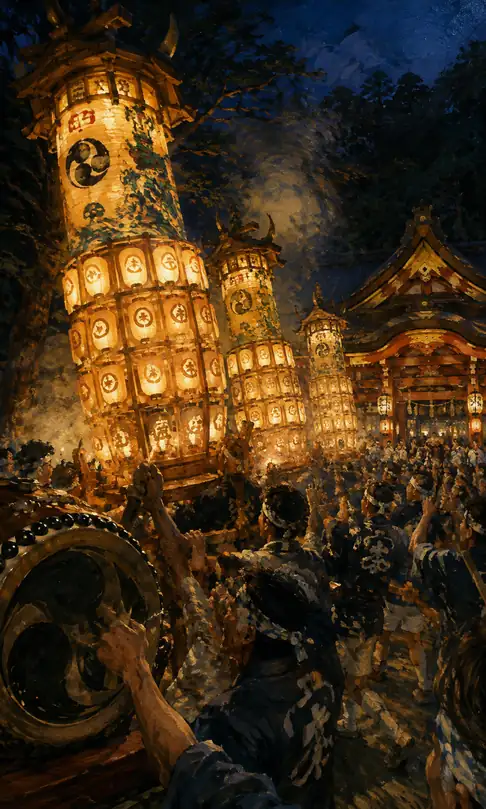 Sacred Tower Lights Illuminating the Shrine
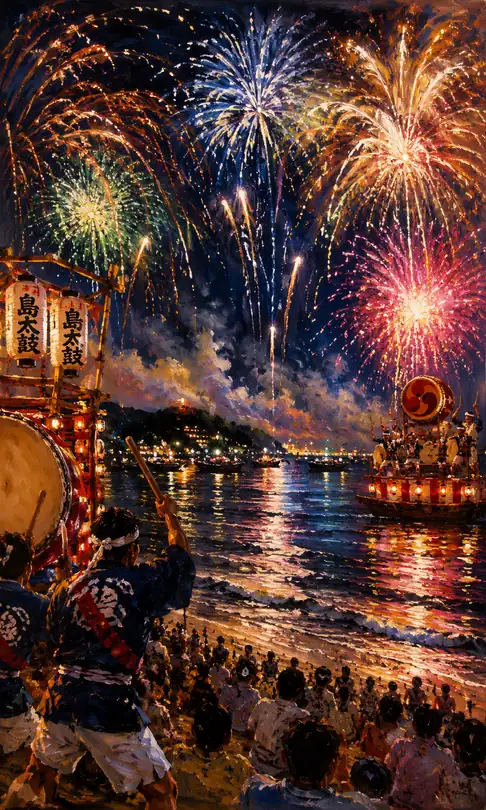 Island Taiko Drums and Festive Boat Resonating Under Fireworks
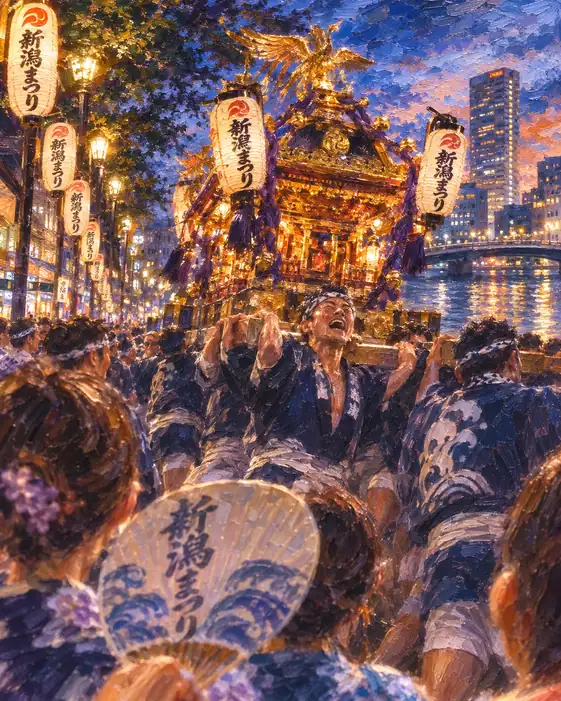 Flash of Sacred Shoulders in Dusk (No. 52)
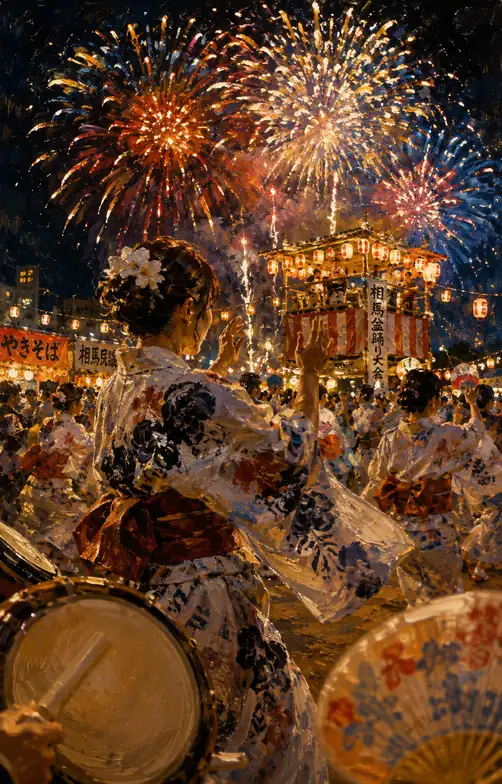 Graceful Hands Dancing Under Sky Fireworks
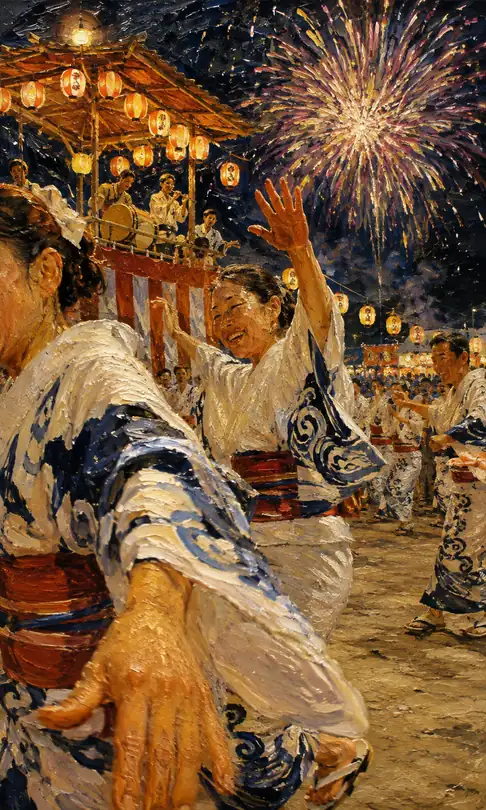 Bon Dance Dancers in Wave-Patterned Yukata Under Lanterns and Fireworks
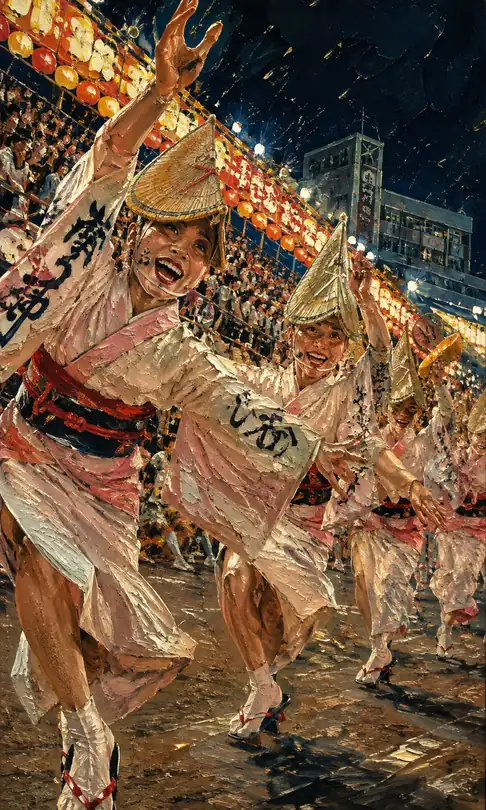 Straw-Hatted Awa Odori Dancers Advancing Through Lanterns and Cheers
 Craftsmen Sawing Logs and Grand Fireworks Over the Phoenix Shrine