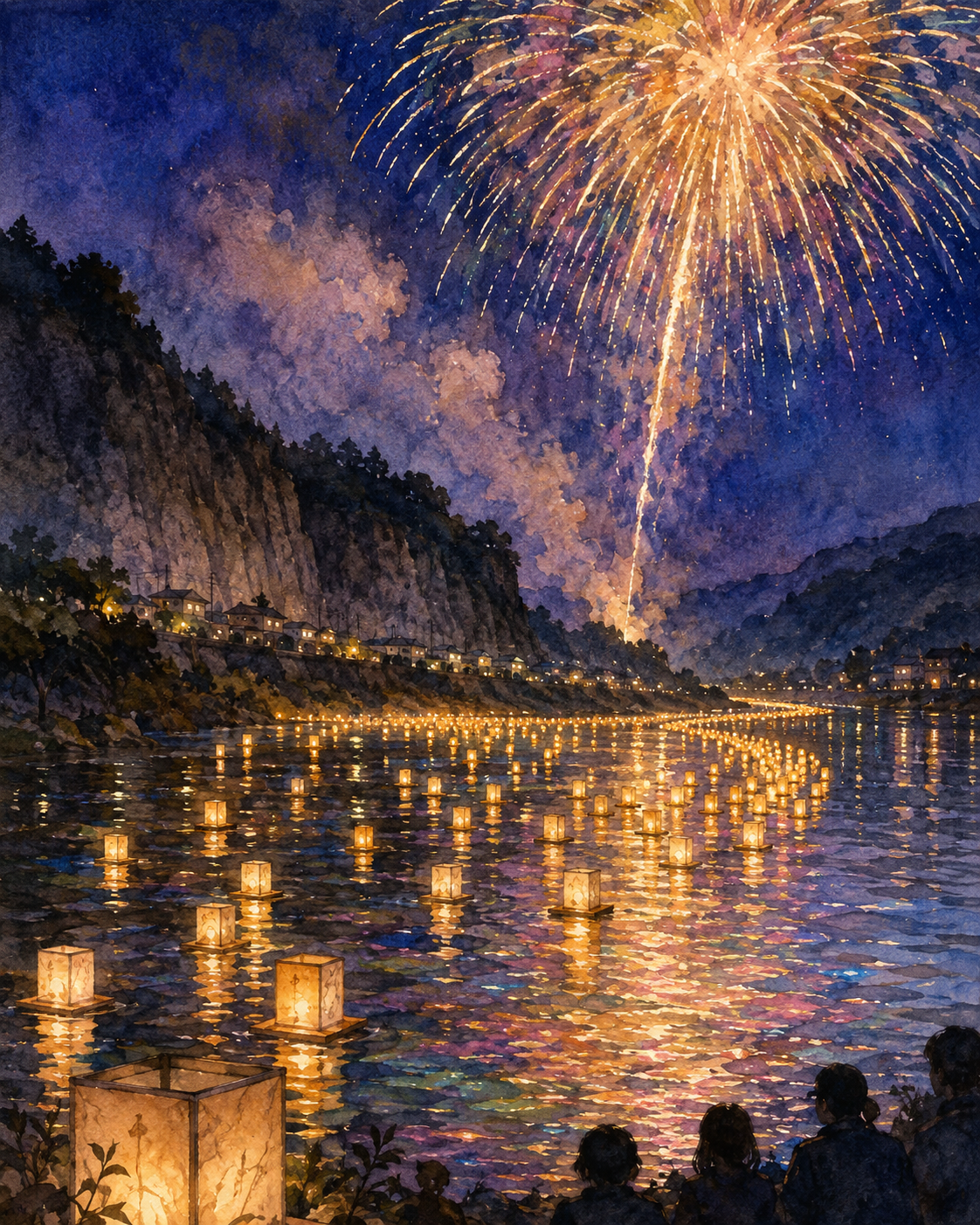
Stream of Lantern Light Floating down the Gorge and Golden Willow Fireworks
Critique
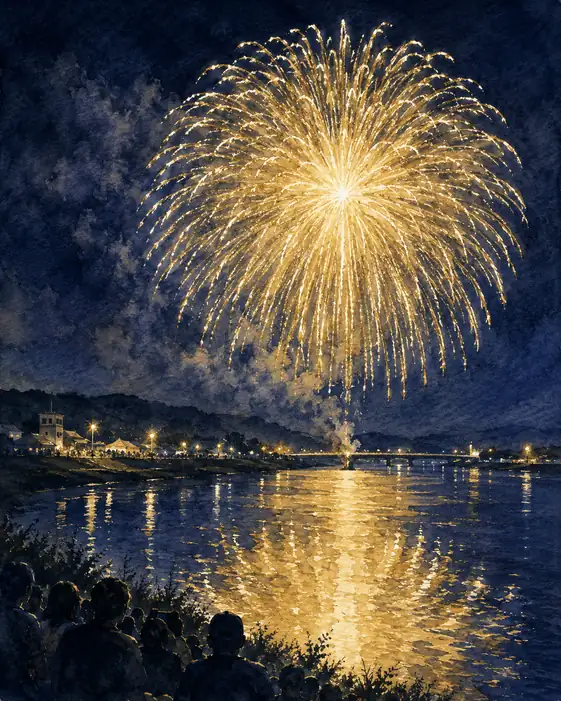
Introduction This painting depicts floating lanterns and fireworks within a mountain river valley at night. A large lantern glows in the near-left foreground, while hundreds of smaller lights travel toward a distant bend. A firework opens high at the right, joining an intimate riverside observance to the scale of the surrounding landscape. Description Lanterns form several curving rows across the water, their reflections broken into gold and violet patches. A steep, tree-topped cliff rises on the left, with houses and lamps following its base; darker mountains close the right distance. Four seated silhouettes watch from the lower edge as smoke drifts upward through the valley. Analysis The nearest lantern establishes depth, and its diminishing repetitions create a serpentine route to the horizon. The firework’s narrow ascending line loosely continues that route into the sky, connecting water and air. Warm squares stand against saturated blues and purples, while soft washes describe rock and smoke; finer linear marks reserve clarity for sparks and reflected light. Interpretation and Evaluation The composition balances collective ceremony with quiet contemplation. Convincing recession gives the many lanterns spatial order, and the asymmetrical cliff and firework keep the vertical format active. The color harmonies are especially effective: gold offers warmth without erasing the nocturnal blues, while the varied technique separates solid terrain, dissolving smoke, and moving water. Conclusion The work’s descriptive detail remains subordinate to a clear progression from foreground witness to distant community. Its inventive pairing of floating lights and an aerial burst gives two kinds of illumination distinct rhythms. What first seems primarily festive gradually reads as a measured image of remembrance, continuity, and human presence held within a much larger landscape.
Same Subcategory
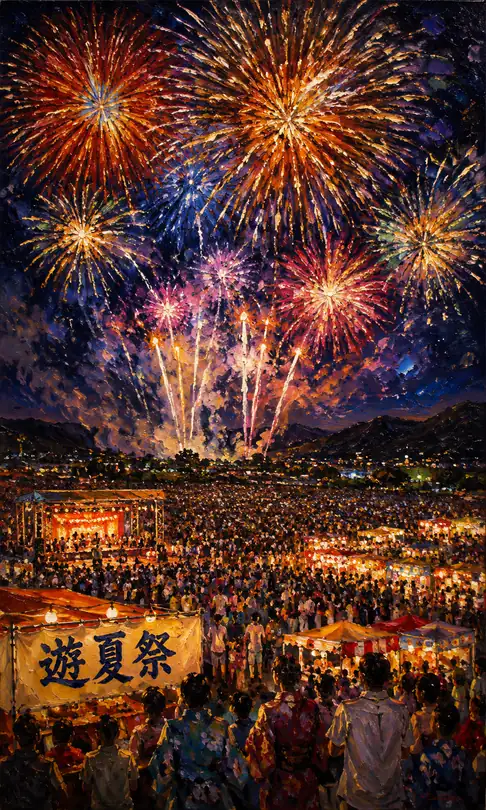 Yuka Festival Bustle and Multicolored Fireworks Over the Mountain Night
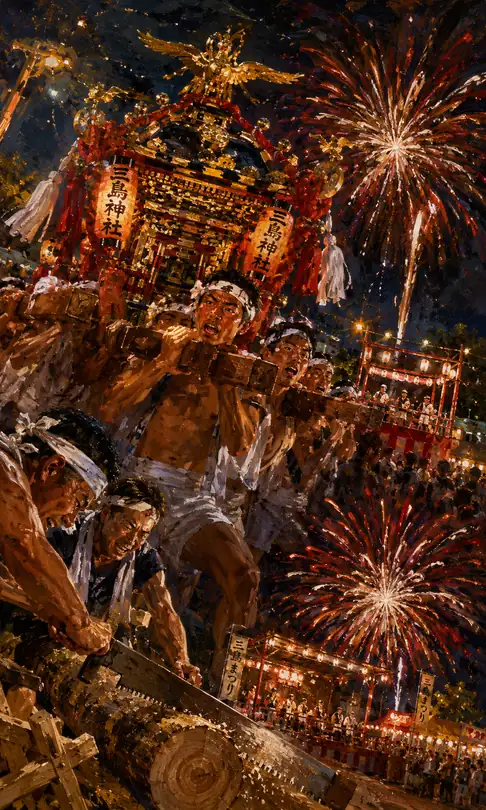 Tri-Island Shrine Phoenix Mikoshi and Men Sawing Logs in Festival Heat
Similar Artworks
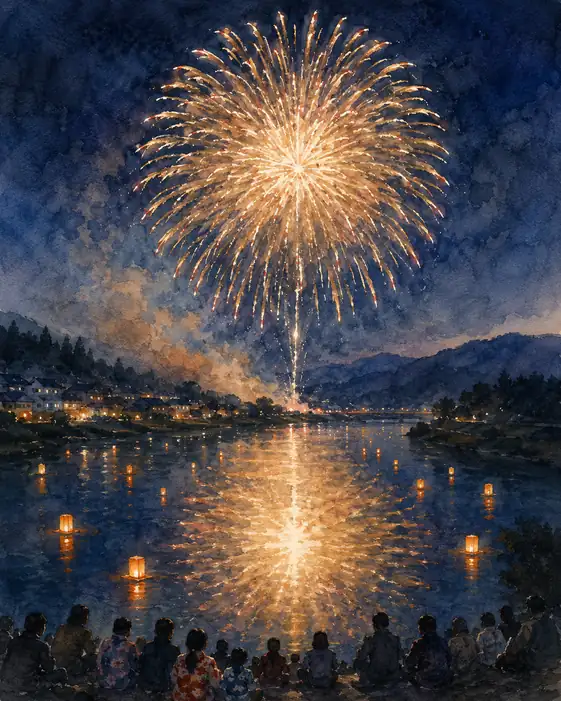 An Instant Eternity Scorching the Sky (No. 83)
 An Instant Eternity Scorching the Sky (No. 82)
 Golden Blossoms Reflected in Symmetrical Harmony
 Spectators in the Lakeside Silence Watching Shore Lights and Fireworks
 Blooming Fireworks and Spa Town Lanterns Viewed from the Hill Terrace
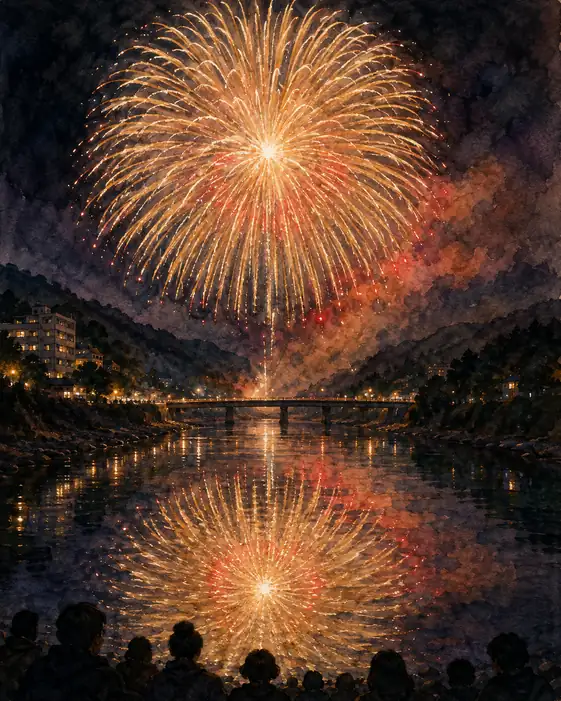 Red-Golden Bloom and Silent Crowd Reflected on the River
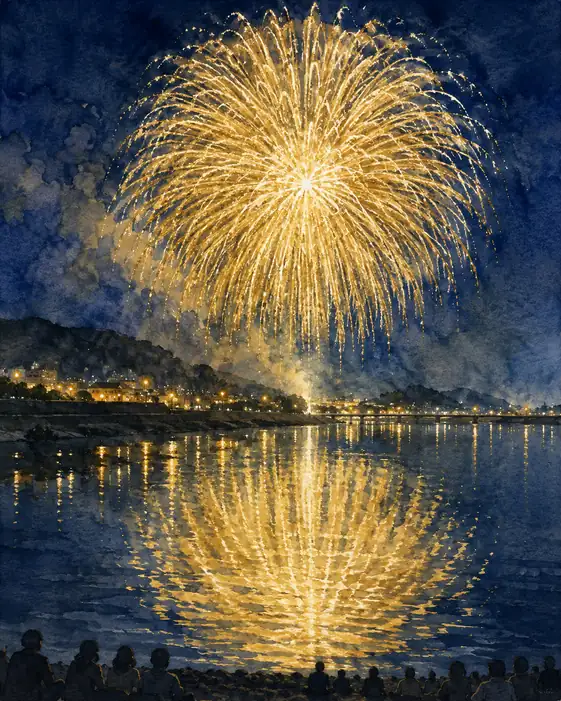 Golden Bloom Above and Reflected in the Quiet Waters
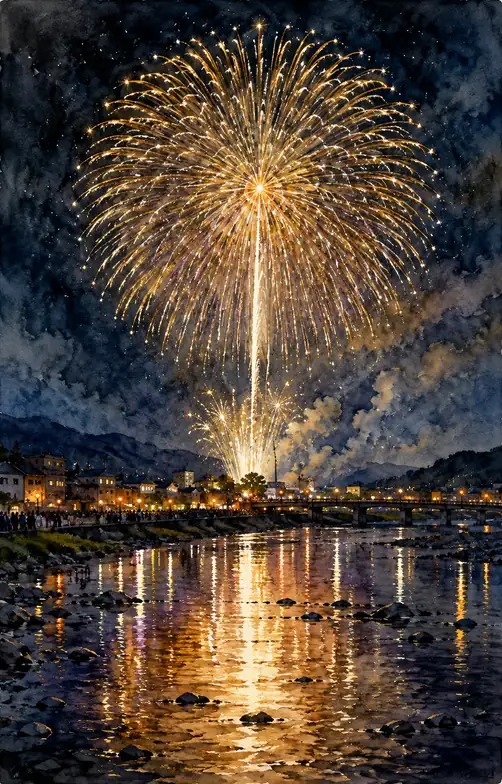 Golden Pillar of Light Reflected in the Clear Stream
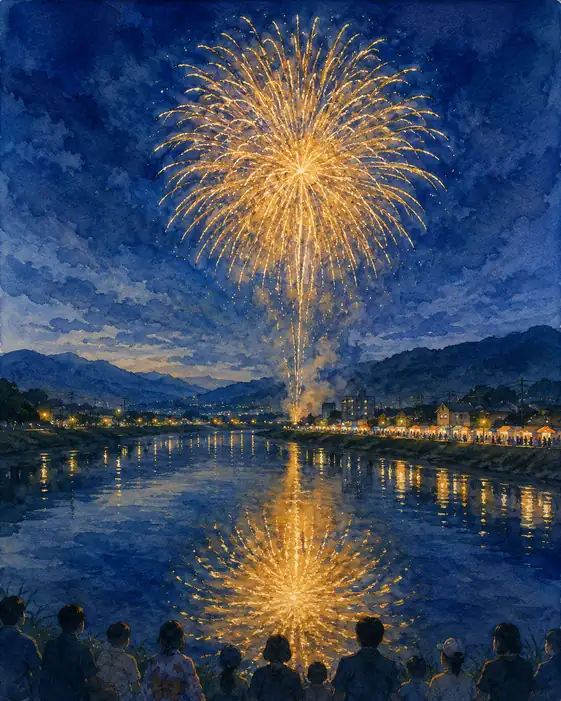 Golden Mirrored Fireworks Joining Sky and Water
 An Instant Eternity Scorching the Sky (No. 99)