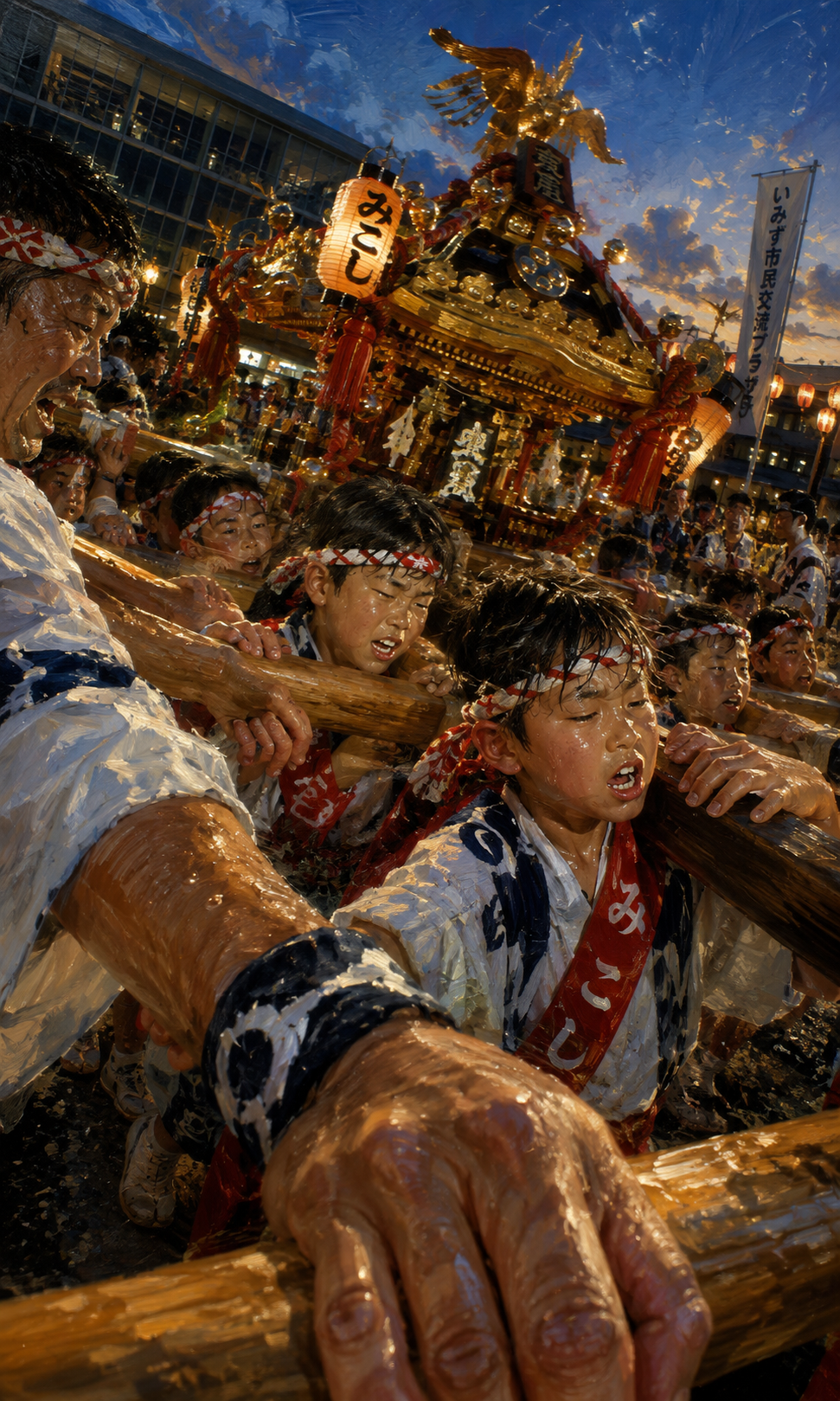
Phoenix Shrine and Children's Sweat Under the Evening Sky of Imizu
Critique
Introduction This oil-like painting looks along a beam as adults and children advance an ornate mikoshi. Wet hands, strained faces, and white-navy coats crowd the foreground; gold shrine and phoenix rise behind. Lantern and banner establish locality while weight becomes physical. Description A boy in a red-white headband braces a thick beam on his shoulder, mouth open. An adult's wet hand approaches below; a white-clad man and more children grip the timber. Gold fittings, carvings, red tassels, and round ornaments cover the shrine, topped by a winged phoenix. A lantern reads “mikoshi,” and a vertical banner identifies the Imizu civic exchange plaza. Glass architecture and sunset clouds complete the setting. Analysis Arm and beam establish a dominant horizontal crossed by the axis from boy to shrine and phoenix. A slight tilt makes the heavy structure seem to sway forward. White, navy, and red organize clothing, while gold and sunset orange concentrate above. Impasto equally inscribes moisture, wood, and metal. Exaggerated recession from the huge hand to smaller carriers intensifies pressure. Interpretation and Evaluation By emphasizing fingers biting timber, sinking shoulders, and open mouths, the work reveals labor and solidarity beneath splendor. The central child makes transmission an experience of sharing actual weight. Banner and modern building locate tradition within present civic life rather than an imagined past. Extreme proximity still preserves enough specific ornament to identify the carried object. Conclusion Bodies and shrine are tightly divided around the beam. Phoenix and wet hand initially compete, but the boy's expression joins burden to pride. Dusk, architecture, and lettering specify time and place, while white, navy, red, and gold clarify congestion. Inheritance becomes persuasive collective work performed by shoulders, hands, and voices.
Same Subcategory
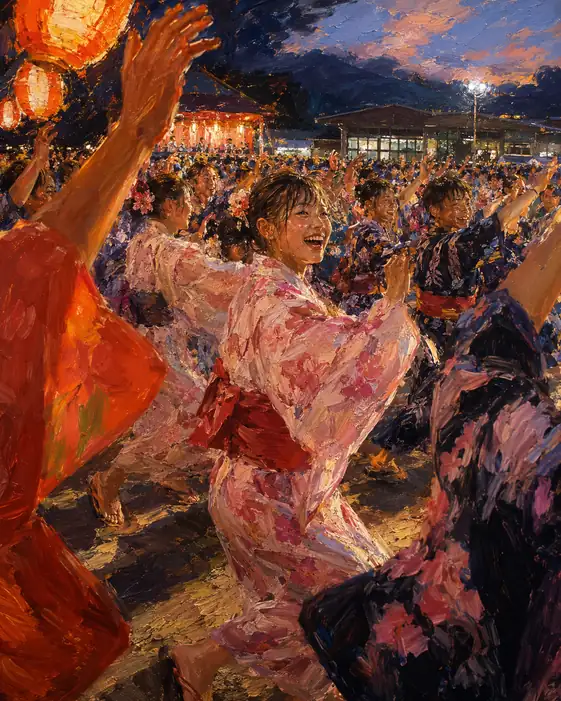 Pink Yukata Smile and Bon Dance Ring in the Twilight Square
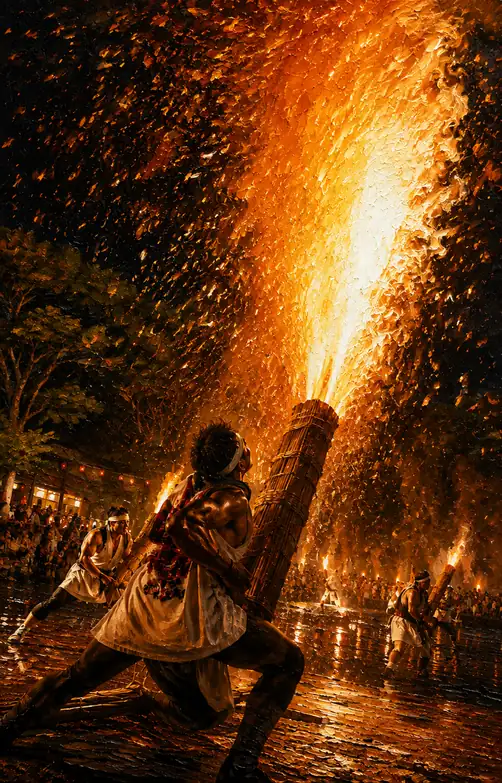 Golden Column of Fire and Men Holding Tezutsu Fireworks
Similar Artworks
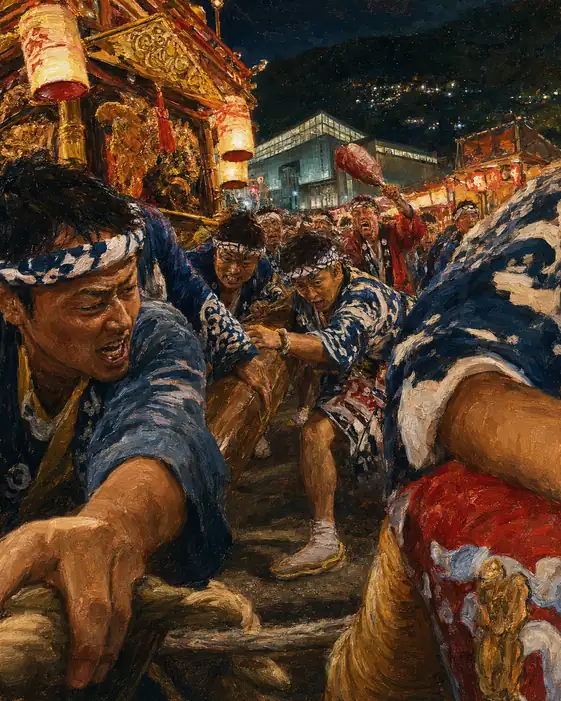 Men Pulling the Heavy Ropes of the Golden Shrine Truck with Passion
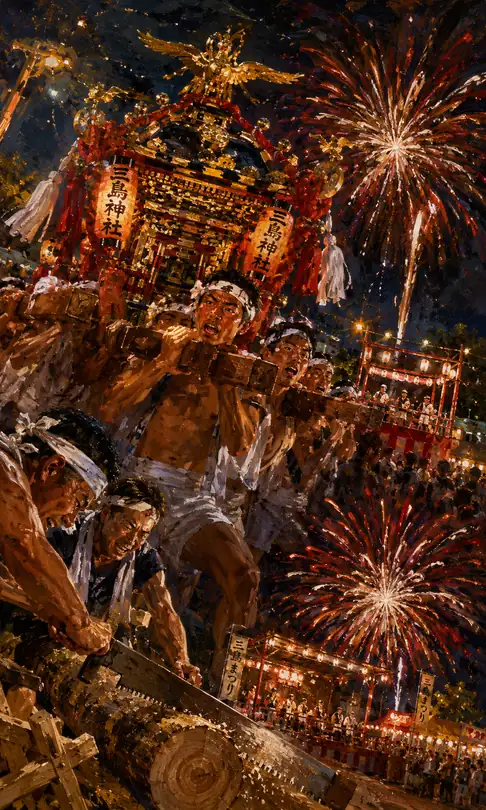 Tri-Island Shrine Phoenix Mikoshi and Men Sawing Logs in Festival Heat
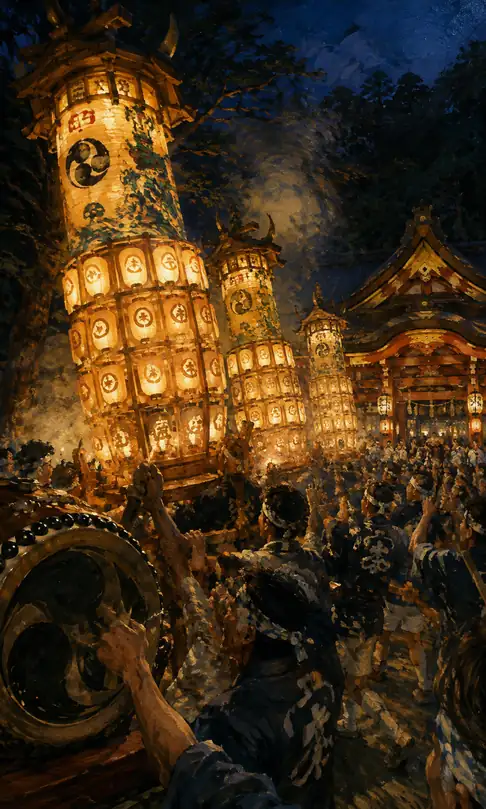 Sacred Tower Lights Illuminating the Shrine
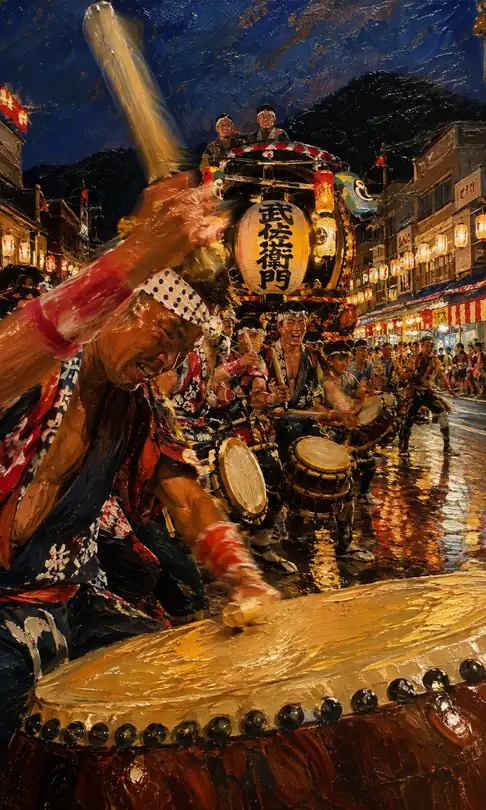 Sweating Arms and Resonating Soul Beats
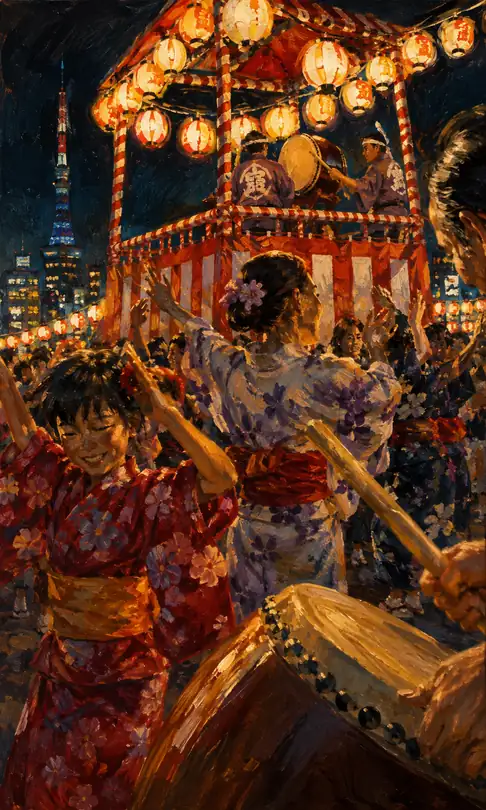 Bon Dance and Drums Resonating Under Tokyo Tower and Lantern Tower
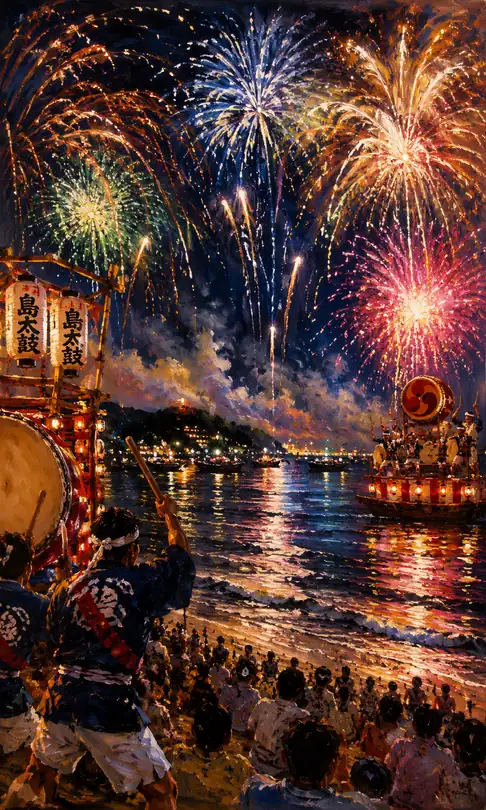 Island Taiko Drums and Festive Boat Resonating Under Fireworks
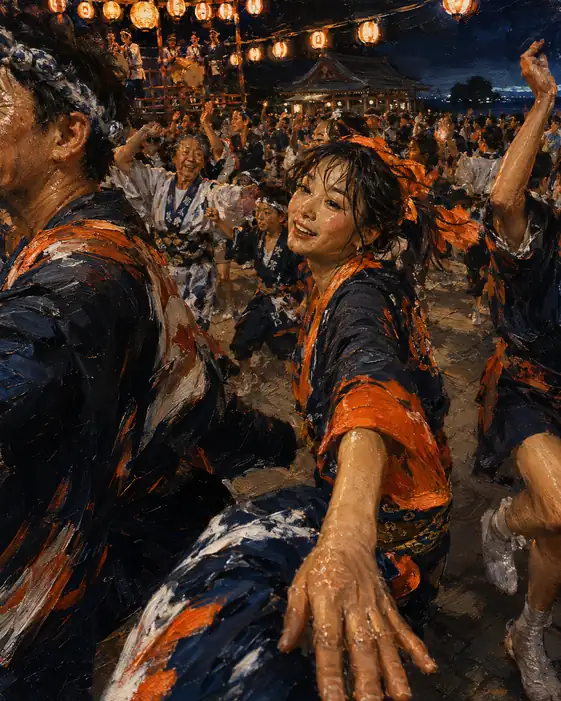 Smiles and Sweat Dancing Under the Lantern-Lit Yagura Tower
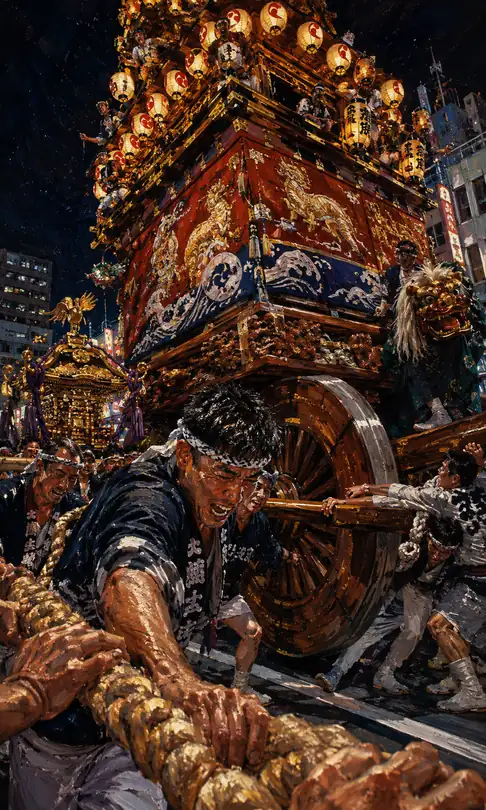 Men's Roar and Heavy Ropes Pulling a Giant Festival Float
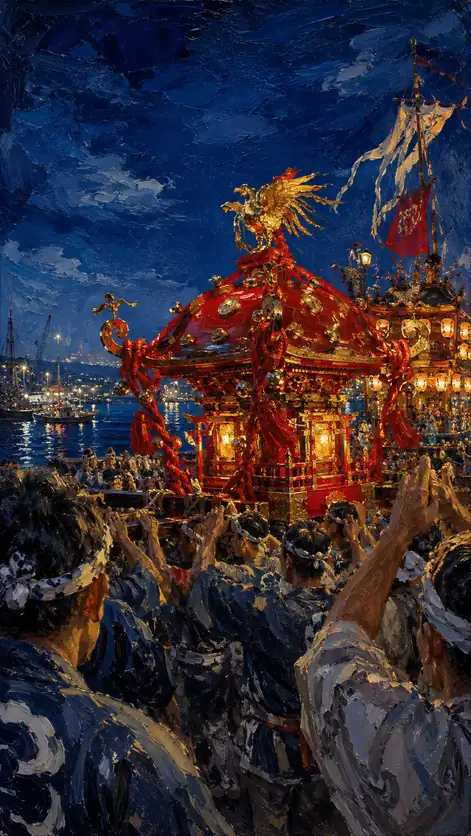 Streamers Swimming Through the Sky of Wishes
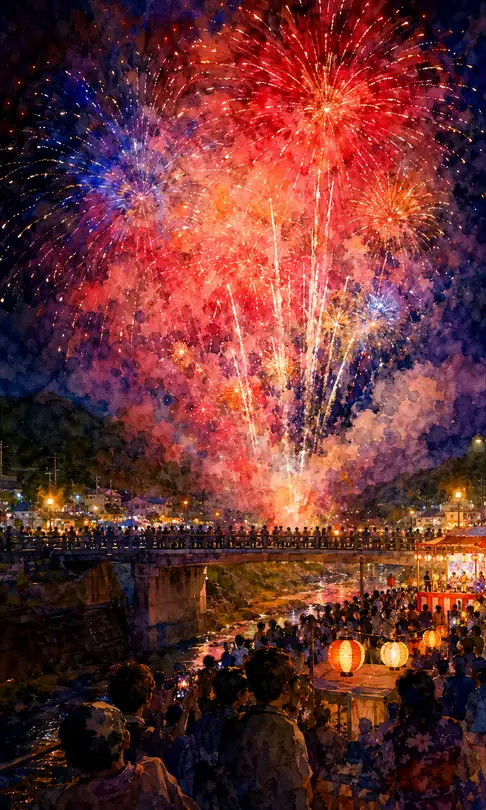 Scarlet Canopy Shrouding the Ancient Bridge