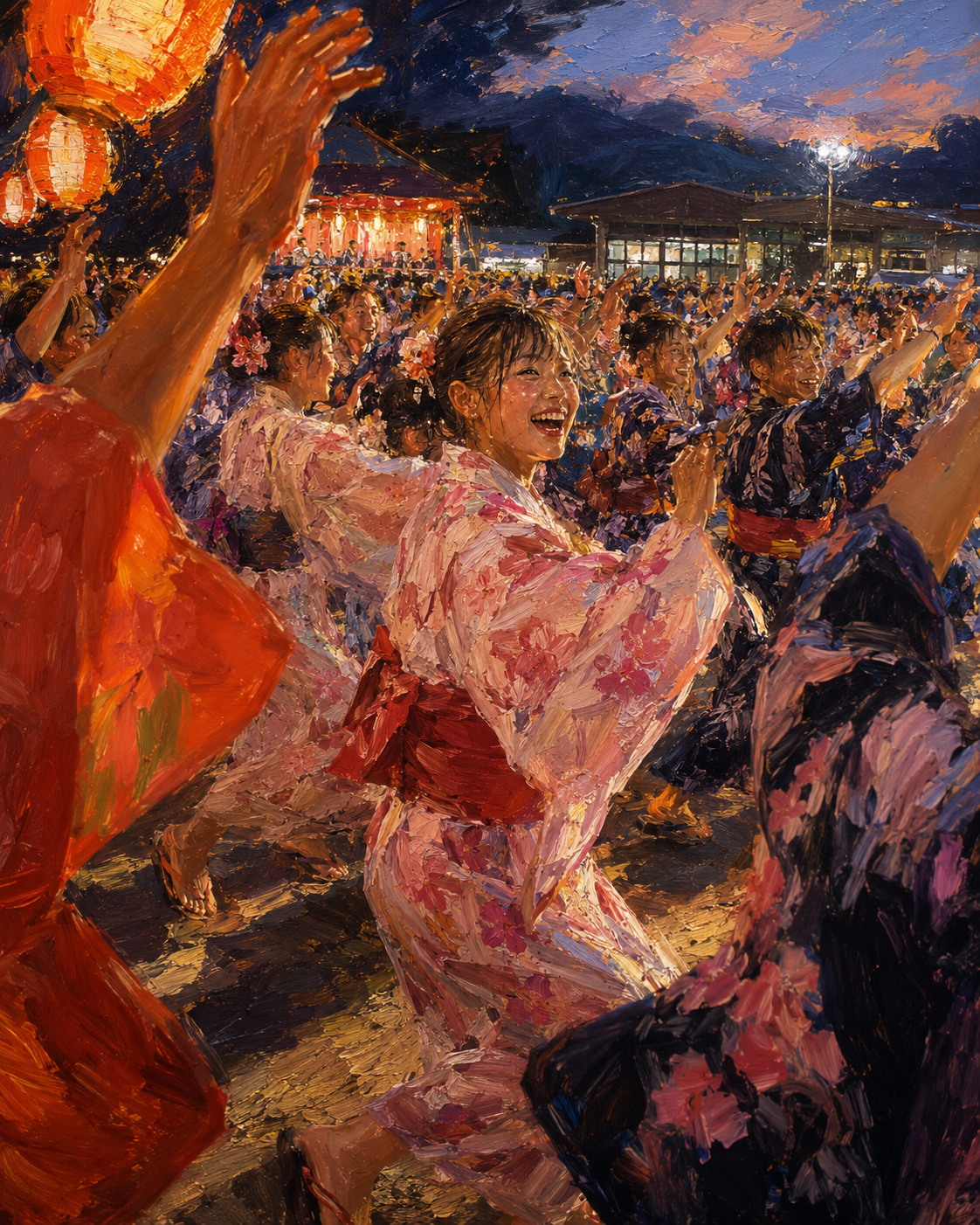
Pink Yukata Smile and Bon Dance Ring in the Twilight Square
Critique
Introduction This oil-like scene enters a communal dance at twilight. A woman in pink yukata turns smiling, joining surrounding raised arms. Lanterns, a stage, buildings, and mountains enclose the venue, binding individual expression to collective movement. Description The central woman wears a flowered pink yukata, red obi, and floral hair ornament. She twists at the waist and lifts one hand near her shoulder. A red-clad back and enormous arm are cropped at left; navy fabric and another arm approach at right. White, violet, and blue yukata overlap behind as dancers smile and lift hands. Musicians and spectators gather at a red stage beneath orange lanterns. Blue-violet sky, mountain silhouettes, and lamps indicate early night. Analysis Her face forms a focus encircled by arms and sleeves in a loose vortex. Radical cropping places the viewer inside the dance. Pink, red, and orange repeat across bodies and lanterns against navy, violet, and black. Short impasto strokes unite patterns, hair, skin, and ground in one pulse, while eyes and mouth retain clarity. Diminishing figures create convincing depth. Interpretation and Evaluation The backward smile signifies spontaneous exchange within prescribed movement. Varied generations and garments show a festival made through residents watching one another, not a uniform stage performance. Lit cheek, unsettled sleeves, and distinct faces between bodies demonstrate control. Foreground arms become an active frame concentrating complexity upon an approachable expression. Conclusion Close bodies, repeated gestures, lanterns, and twilight convey participation in the circle. The smile attracts first; stage, buildings, mountains, and countless dancers then reveal communal extent. Dense paint and warm color express heat while blue night disciplines the field. Personal delight opens naturally into collective rhythm.
Same Subcategory
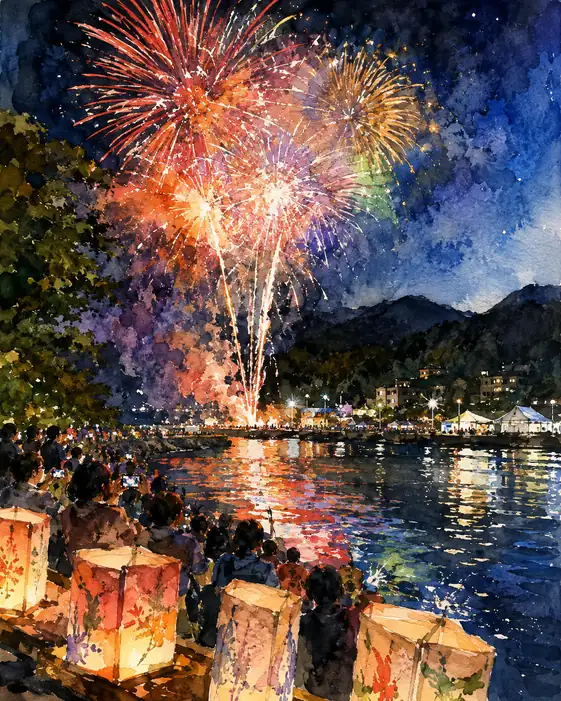 Flower Lanterns by the Lake and Red-Gold Fireworks Blooming Skyward
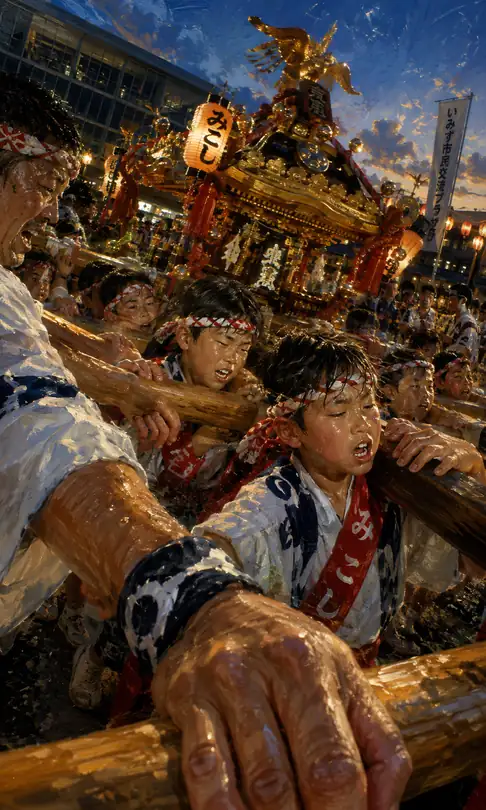 Phoenix Shrine and Children's Sweat Under the Evening Sky of Imizu
Similar Artworks
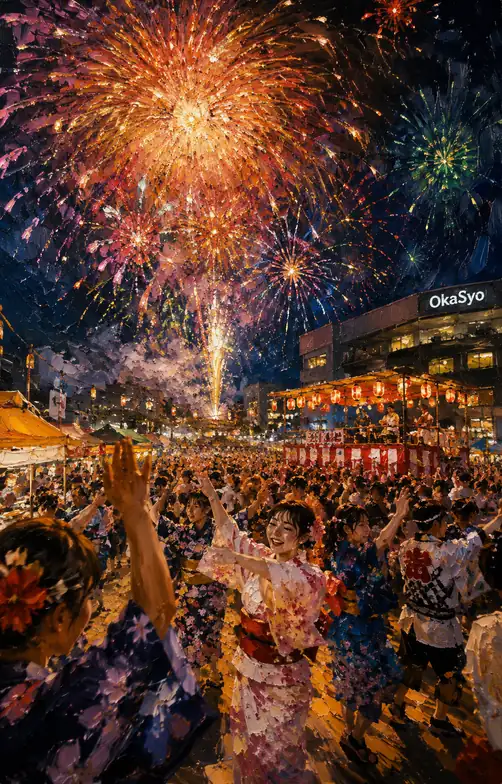 Pink Yukata Joy Dancing Under Tower Lanterns and Grand Fireworks
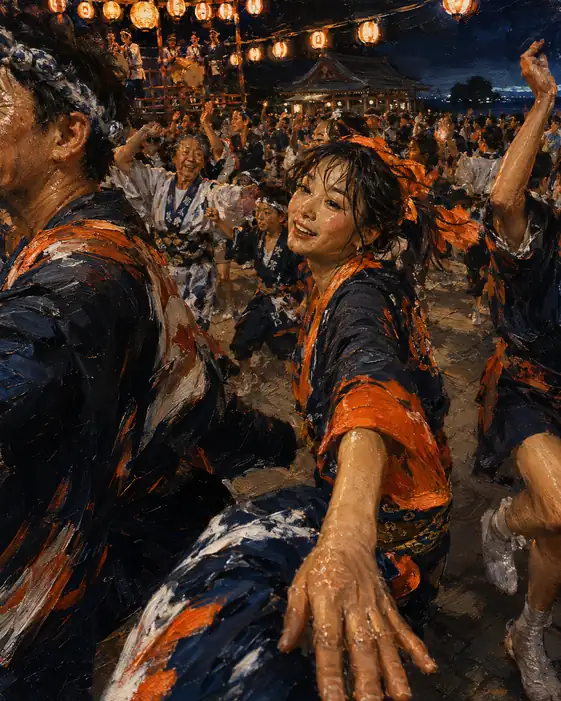 Smiles and Sweat Dancing Under the Lantern-Lit Yagura Tower
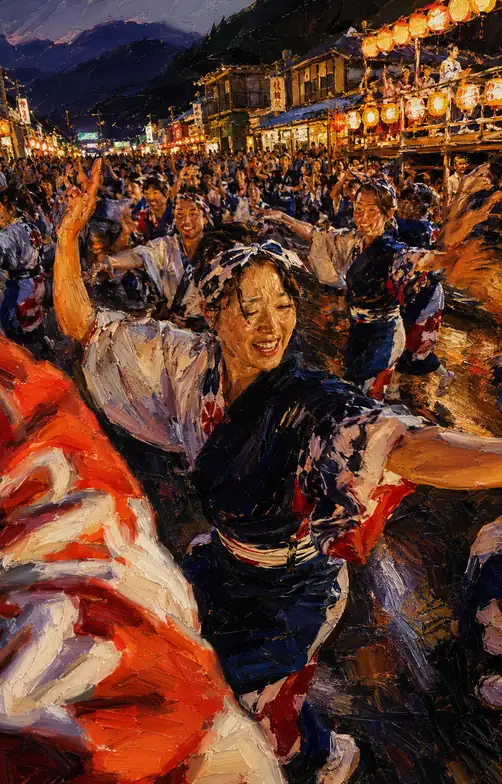 Circle of Smiles Dancing in Evening Breezes
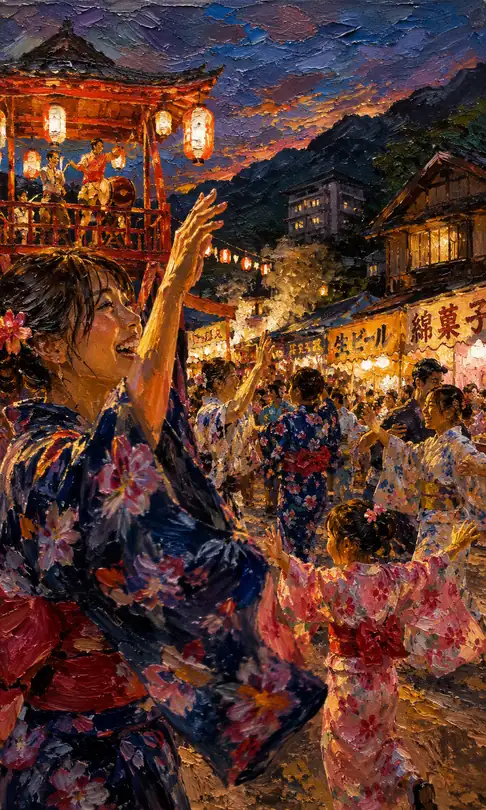 Bon Dance Energetically Dancing Under Spa Town Lanterns and Stalls
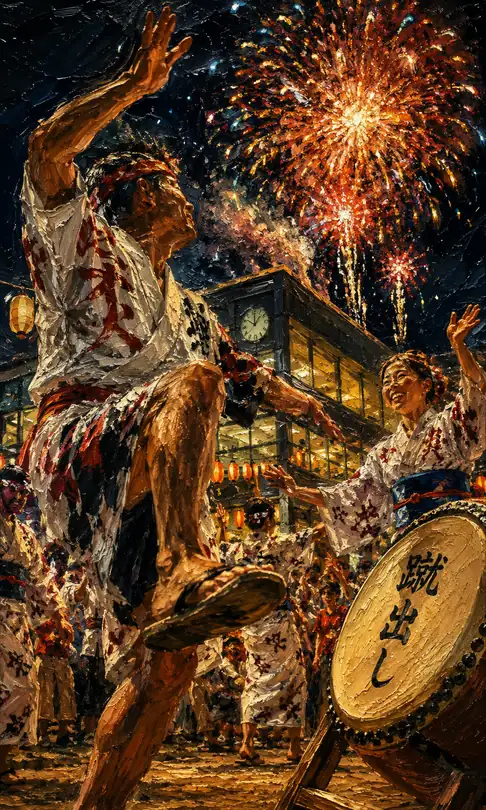 Dynamic Leap Dance by the Great Drum Under the Clock Tower Sky
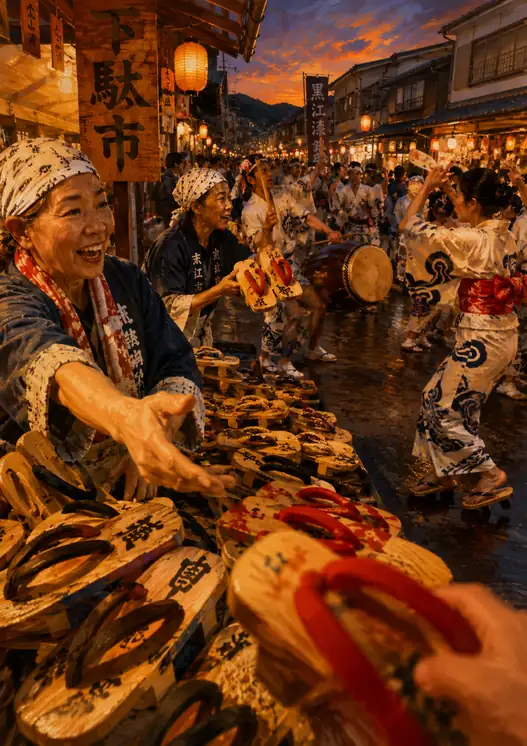 Warmth of Clogging Echoes in the Lacquer Town
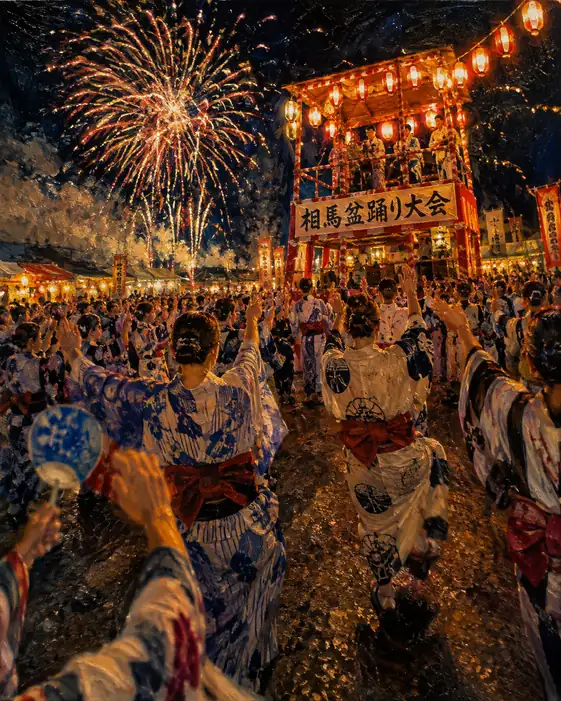 Indigo Yukata Dancing in Festive Rhythm
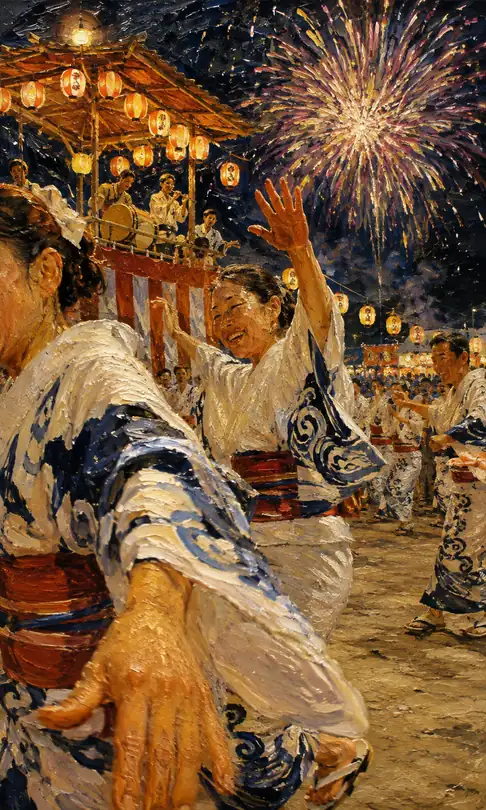 Bon Dance Dancers in Wave-Patterned Yukata Under Lanterns and Fireworks
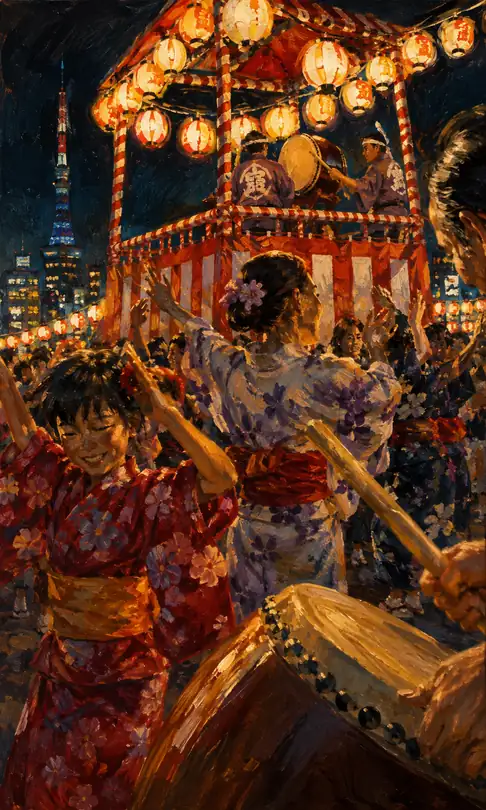 Bon Dance and Drums Resonating Under Tokyo Tower and Lantern Tower
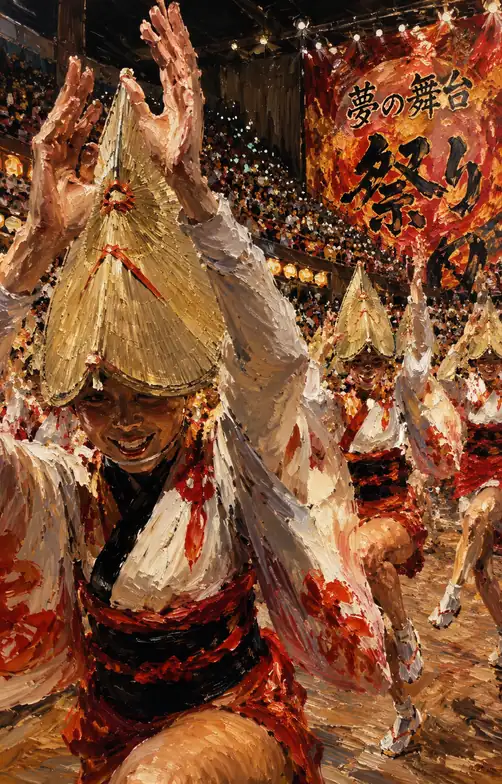 Awa Odori Dancers in Straw Hats Dancing on the Dream Stage