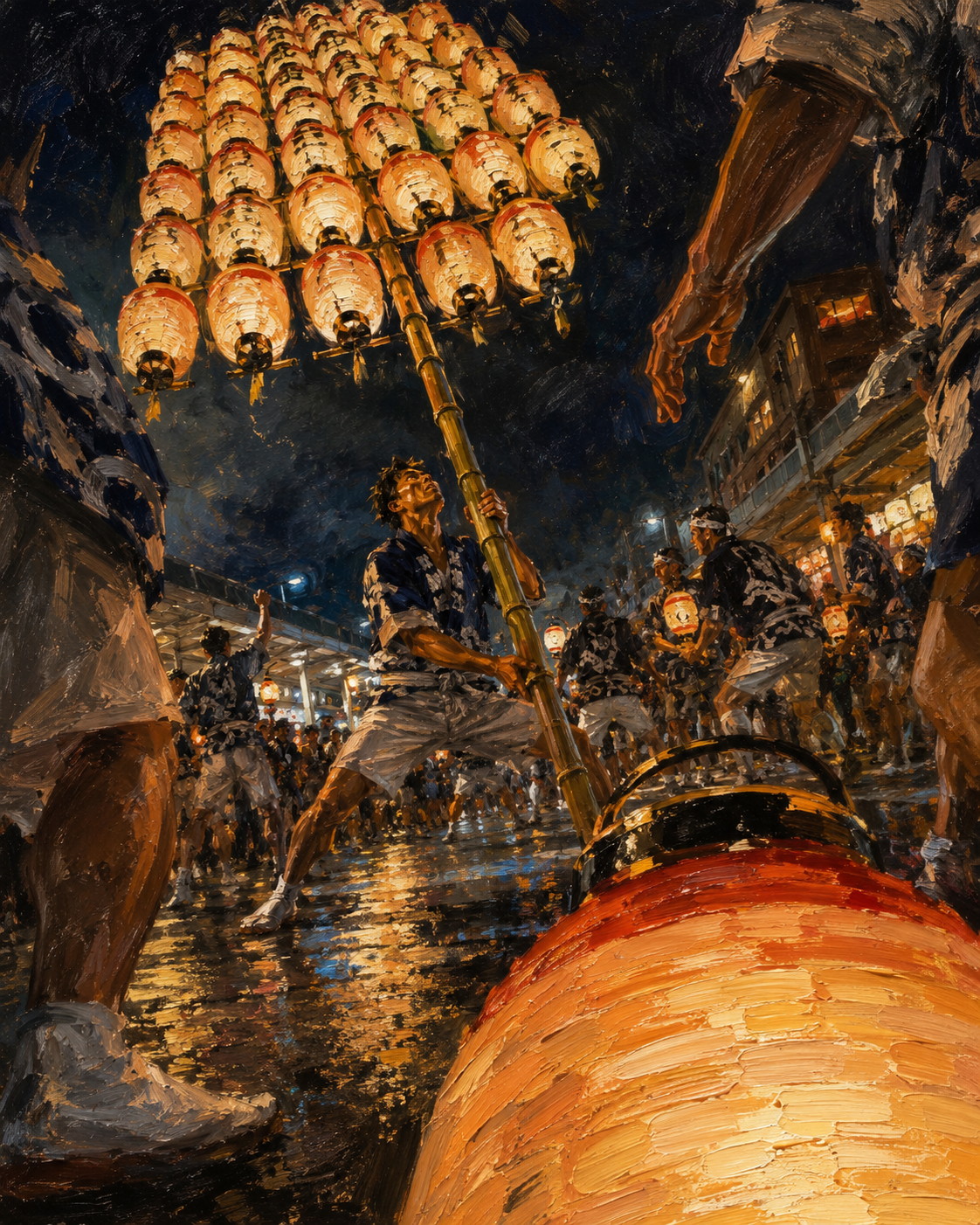
Mechanics of Kanto Lanterns and the Golden Light Supported by a Man
Critique
Introduction This painting views a performer balancing lanterns from street level. He stands wide-legged and looks upward to maintain equilibrium. A foreground light, spectators, assistants, and timber buildings enclose the act. Description The performer wears a navy coat, gray shorts, and white footwear. One hand holds high and the other near his waist as the bamboo rises toward the upper left. Dozens of lanterns with black writing, red rims, and small tassels fill crossbars above. Assistants carry lights at right; another figure raises an arm at left. Orange and blue reflect on wet paving beside wooden houses. Analysis The steep pole and spread legs form a triangle visually supporting the lantern weight. Scale differences between the foreground cylinder and upper lamps emphasize low viewpoint and height. Orange, black, navy, and bamboo ocher dominate, with blue reflections adding cool contrast. Impasto follows paper ribs, bamboo joints, wet stone, and folded cloth, distinguishing luminous softness from elastic support. Interpretation and Evaluation The central subject is not lantern splendor alone but the performer's gravity, gaze, and control of a large structure at one point. Assistants and cleared space present trained, supported technique rather than miraculous display. Descriptive skill appears in bamboo flex, gripping hands, planted legs, and repeated paper. The composition opposes large weight above to small support below, while organizing light into a distinctive geometric grid. Conclusion The low view and cropped upper lamps communicate height and place the viewer near the fulcrum. Raised paint makes paper into material light, and wet pavement adds unstable brilliance beneath the feet. At first quantity overwhelms; closer viewing reveals two hands and spread legs sustaining the image. Light, material, body, and gravity remain rigorously balanced.
Same Subcategory
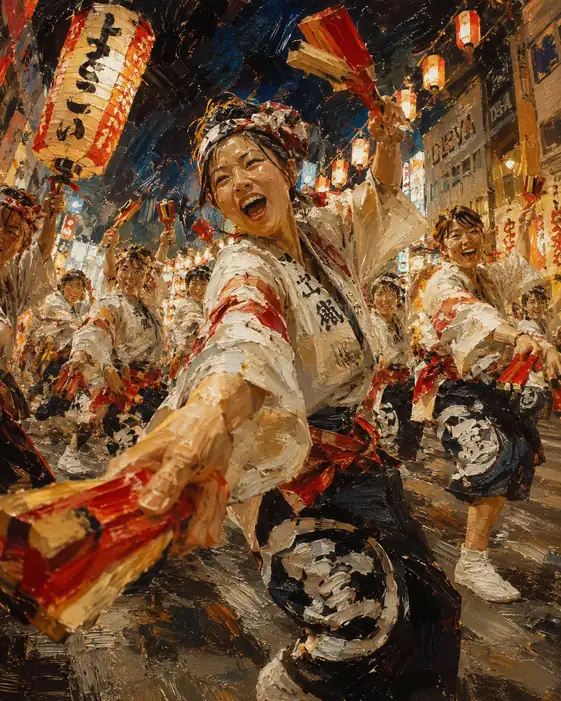 Beating Naruko and Radiant Smiles Under Street Lanterns
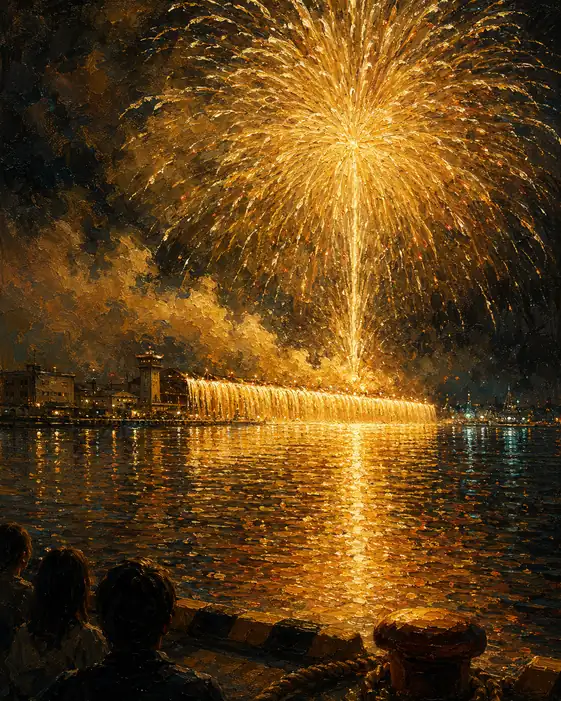 Port Niagara and Grand Golden Fireworks Dyeing the Night Sky
Similar Artworks
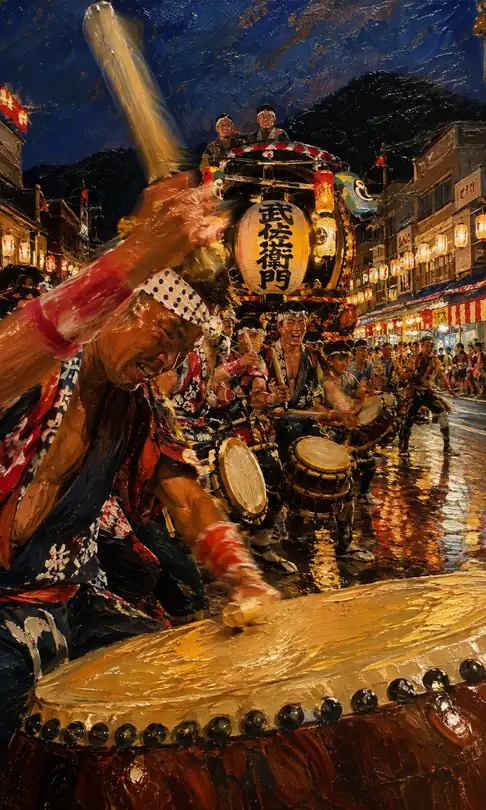 Sweating Arms and Resonating Soul Beats
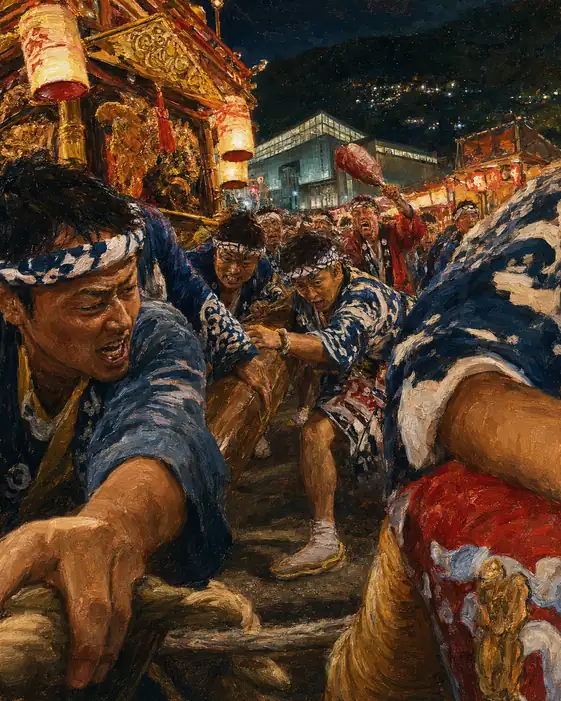 Men Pulling the Heavy Ropes of the Golden Shrine Truck with Passion
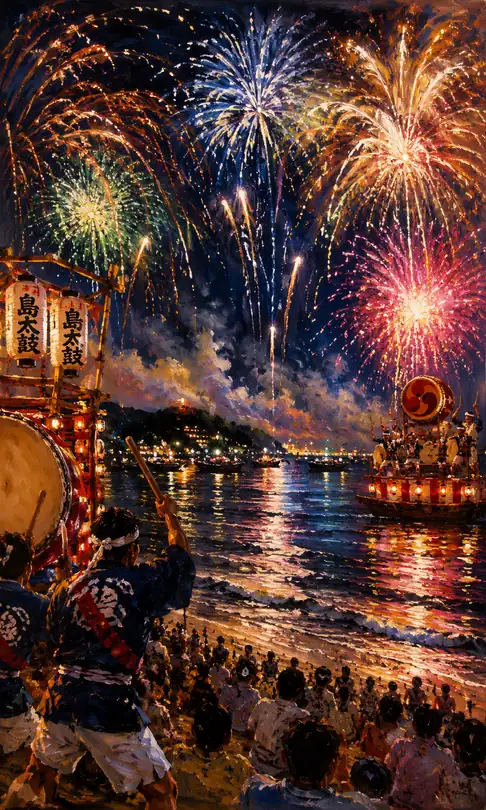 Island Taiko Drums and Festive Boat Resonating Under Fireworks
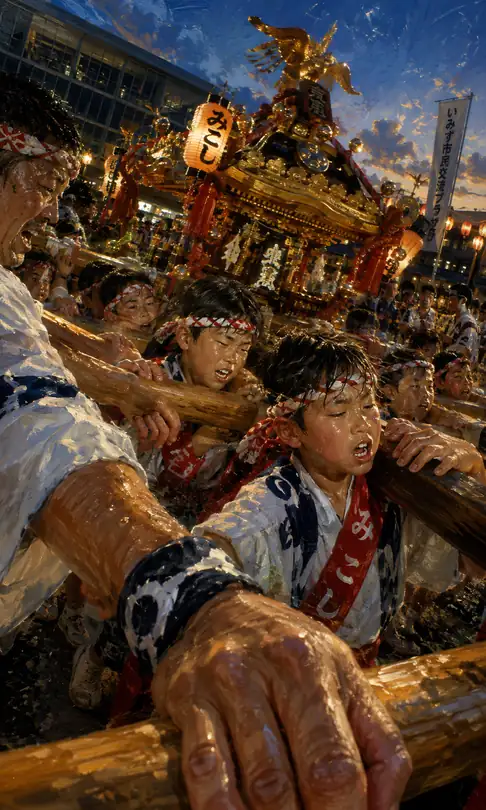 Phoenix Shrine and Children's Sweat Under the Evening Sky of Imizu
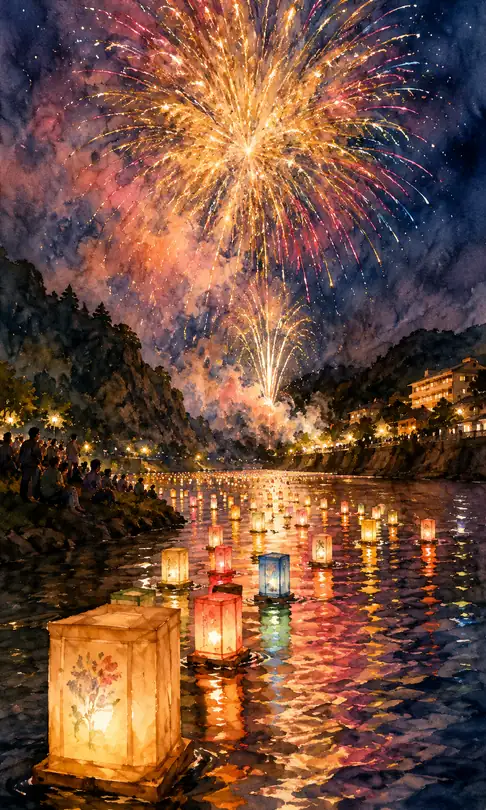 Floating Flower Lanterns and Fireworks Blossoming Over the Gorge River
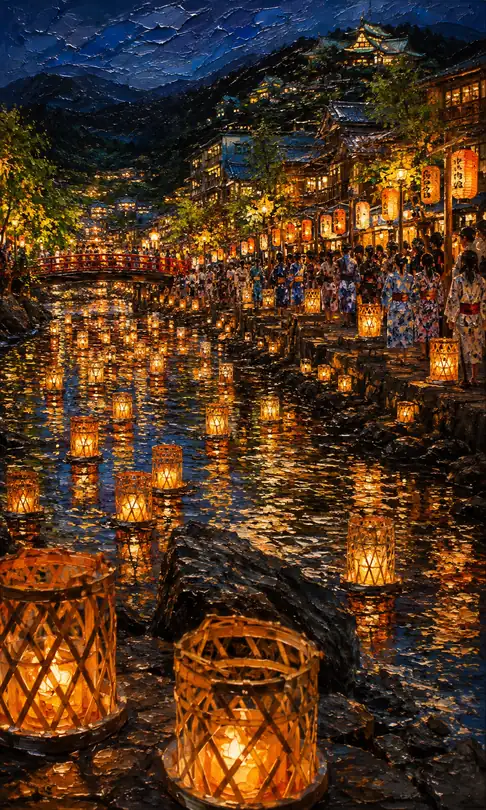 Bamboo Basket Lanterns Floating on the Hot Spring River
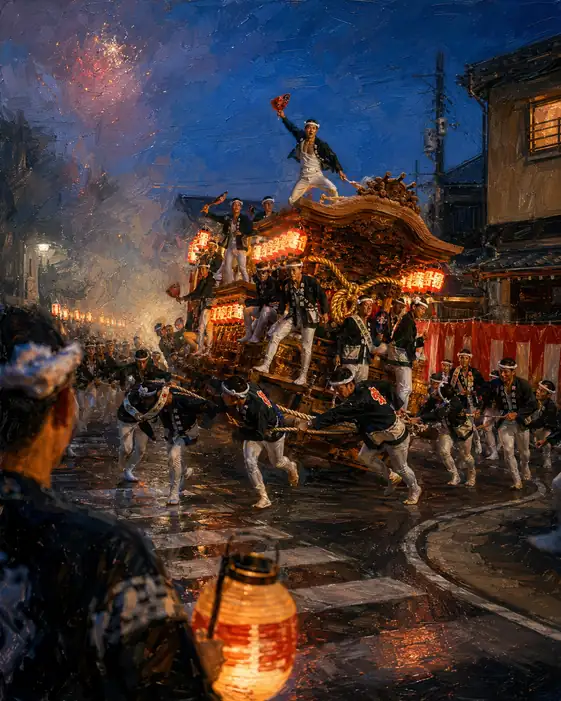 Festival Fire Rounds the Corner
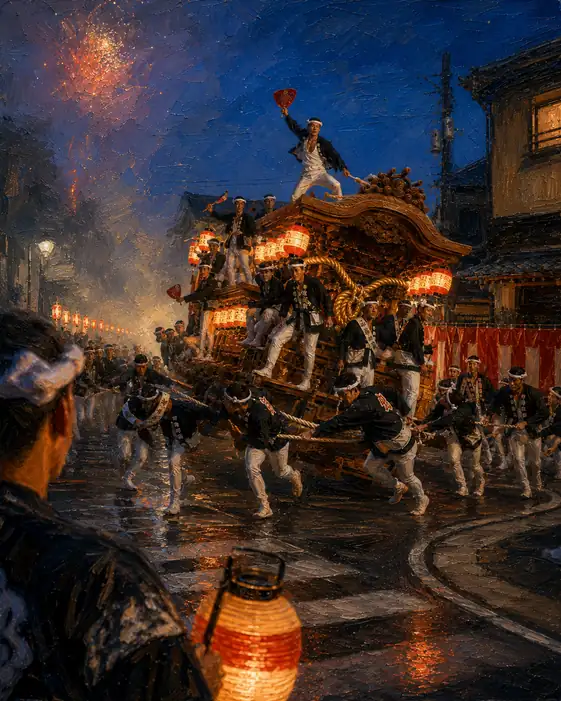 Pull the Night Until It Sings
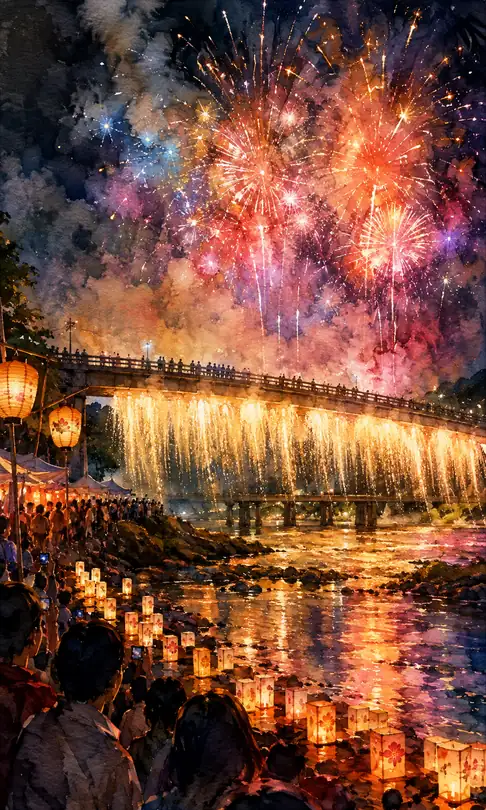 Golden Waterfall Cascading from the Bridge
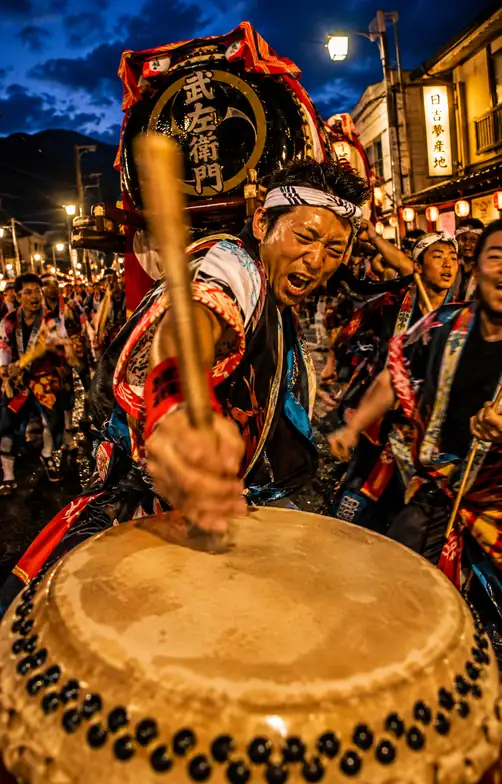 Night Roar Striking the Soul