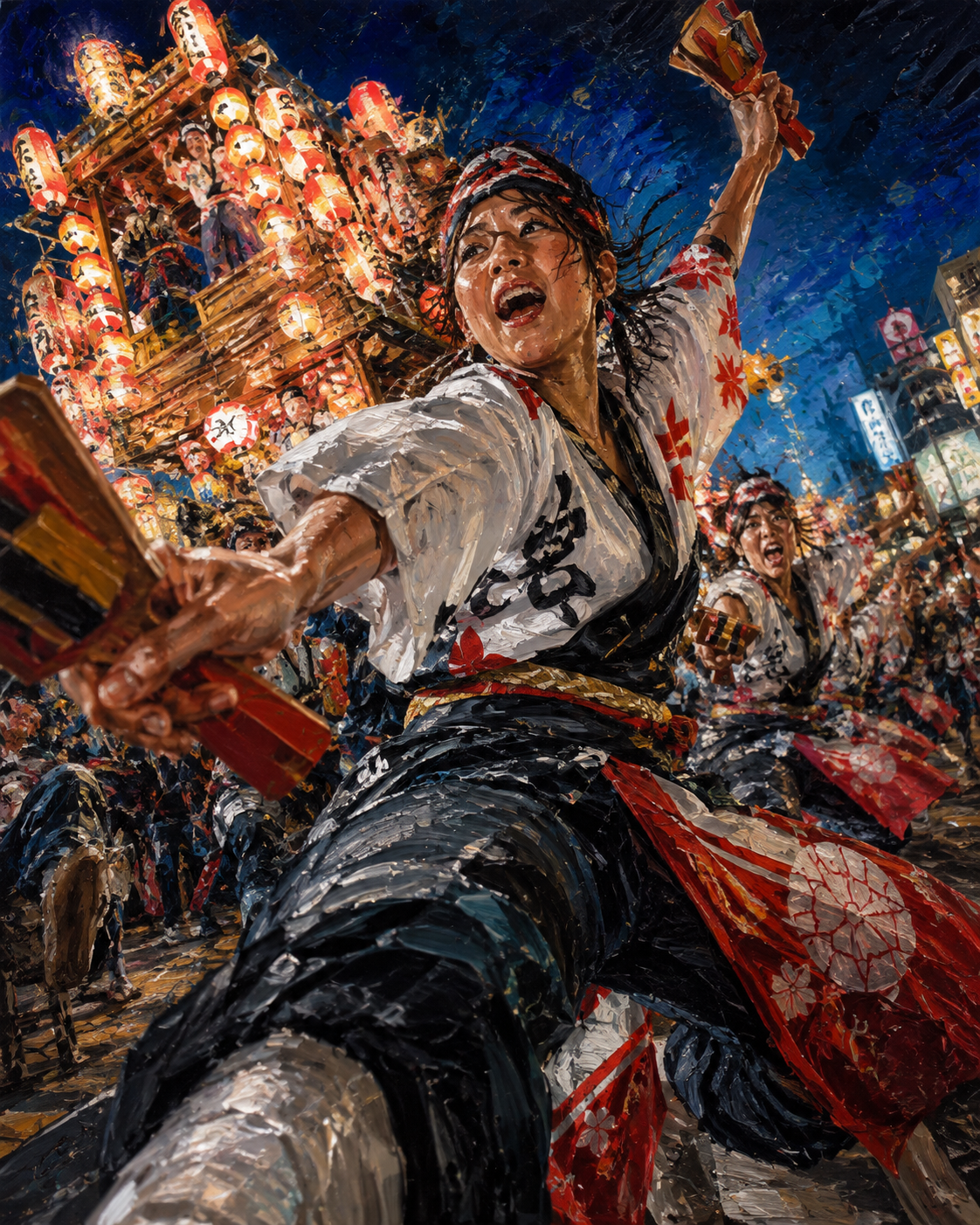
Dynamic Naruko Dance and Passionate Cries Before the Float
Critique
Introduction This painting approaches a clapper dancer before a lantern-covered float. The performer twists in white, red, and black, extending instruments in opposite directions. Following dancers and modern signs establish an urban procession. Description The dancer confines wet hair with a dark headband and calls with an open mouth. One red-black clapper rises overhead; the other reaches toward the viewer. Red floral shapes mark white sleeves, while black sash and red cloth swing around the waist. A float stacked with lanterns and performers occupies the left, followed by dancers, spectators, paving, lamps, and signs beneath blue night. Analysis A diagonal runs from near hand through face to raised arm, while the foreshortened leg drives outward. The float's vertical mass supports the twisted body, and round lanterns contrast with angular instruments. White, red, and black repeat into the procession, enclosed by orange illumination and deep blue. Thick strokes change direction across cloth, skin, wood, and hair, scattering moisture and light. Interpretation and Evaluation The splendid float remains contextual while voice, hands, waist, and legs carry the advancing festival. Opposing arms show musical beat as inseparable from bodily rotation. Descriptive skill appears in expression, wet hair, folds, wood, and lantern glow. Foreground exaggeration connects effectively to repeated group movement, and the contrast between costume colors and blue-orange city light is distinctive. Conclusion The low close view places the viewer in the dancer's path and makes the clappers feel immediate. Impasto maintains bodily and textile weight while giving scattered light speed. At first the open mouth and extended arms overwhelm; closer viewing reveals lanterns and following figures supporting communal action. Individual expression and procession order become one rotation.
Same Subcategory
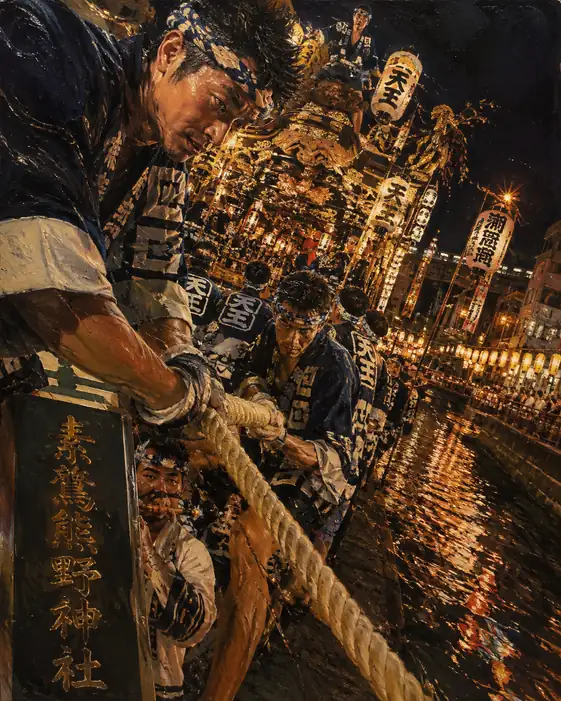 Men's Sweat and Ropes at Susanoo Shrine Tenno Festival
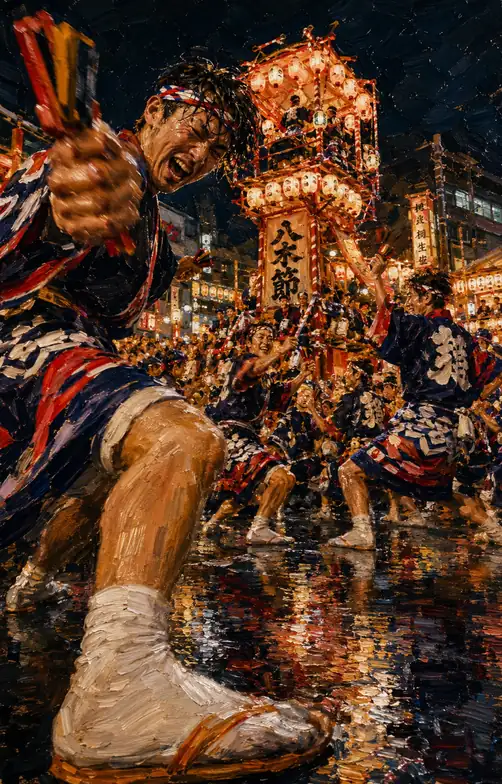 Tower and Dancing Men at Kiryu Yagibushi Festival
Similar Artworks
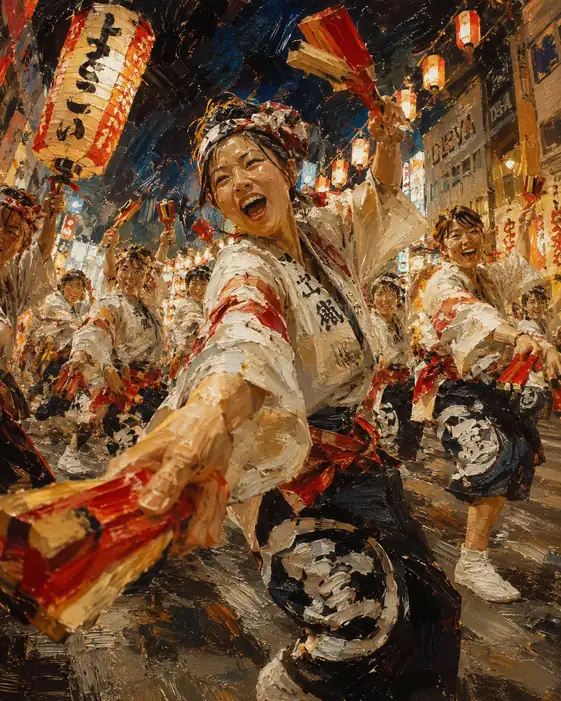 Beating Naruko and Radiant Smiles Under Street Lanterns
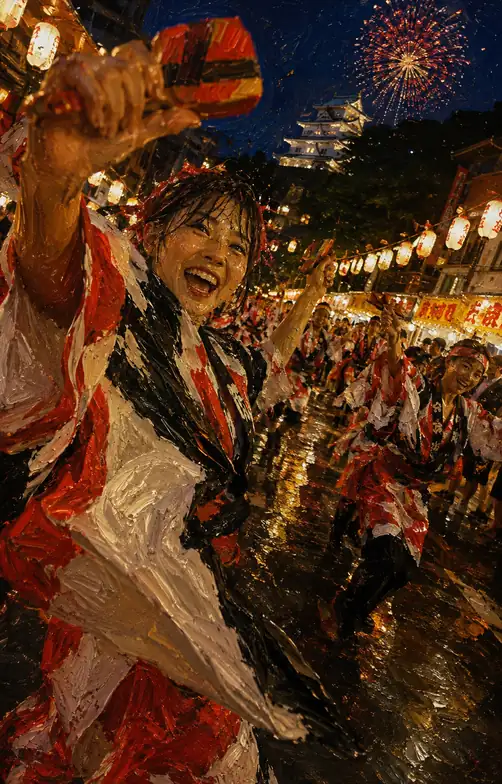 Dynamic Naruko Clapper and Yosakoi Smiles Before Castle Fireworks
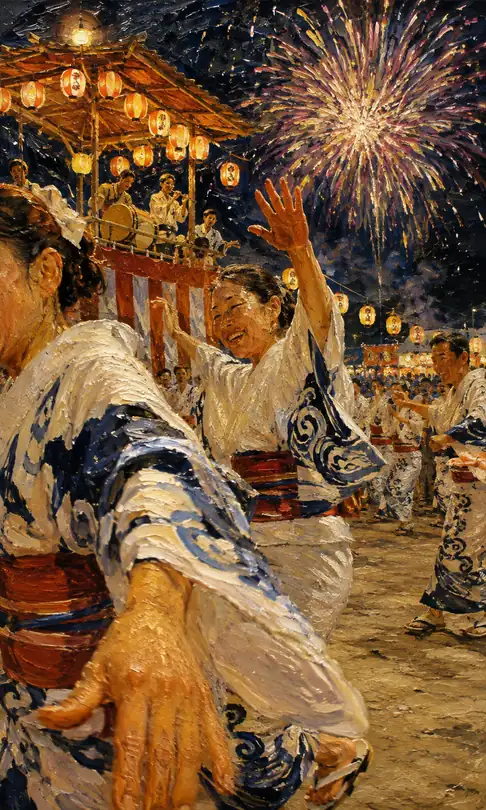 Bon Dance Dancers in Wave-Patterned Yukata Under Lanterns and Fireworks
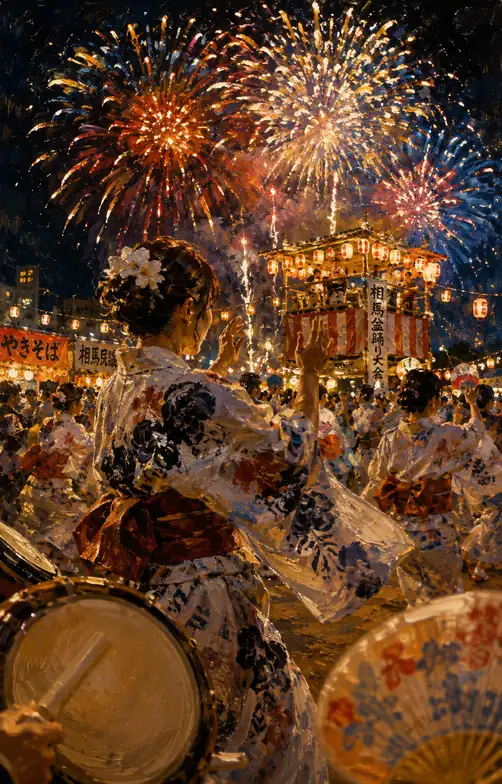 Graceful Hands Dancing Under Sky Fireworks
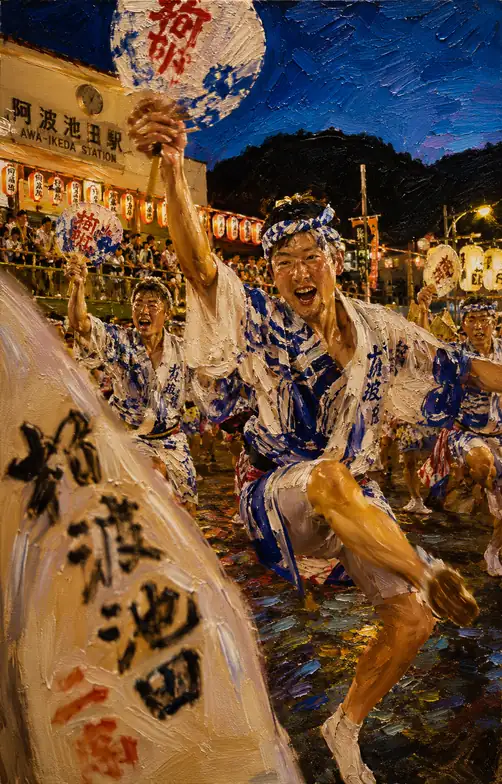 Dynamic Steps and Flying Paper Fans
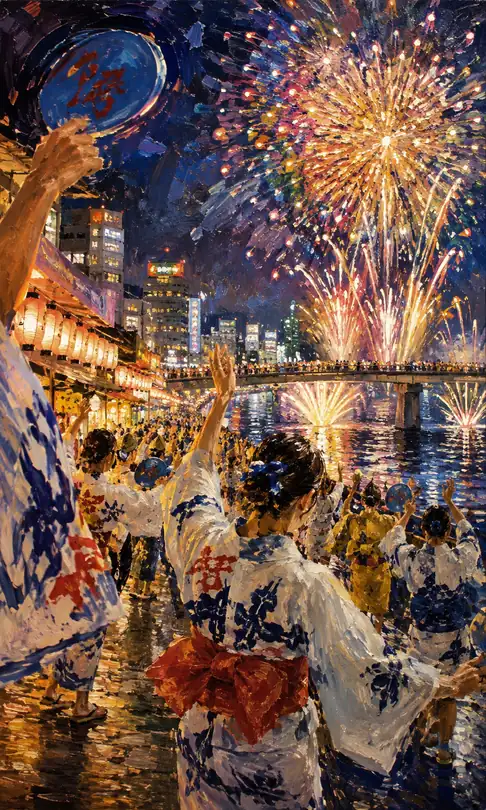 Yukata Dancers Raising Fans by the River Under Pink-Gold Fireworks
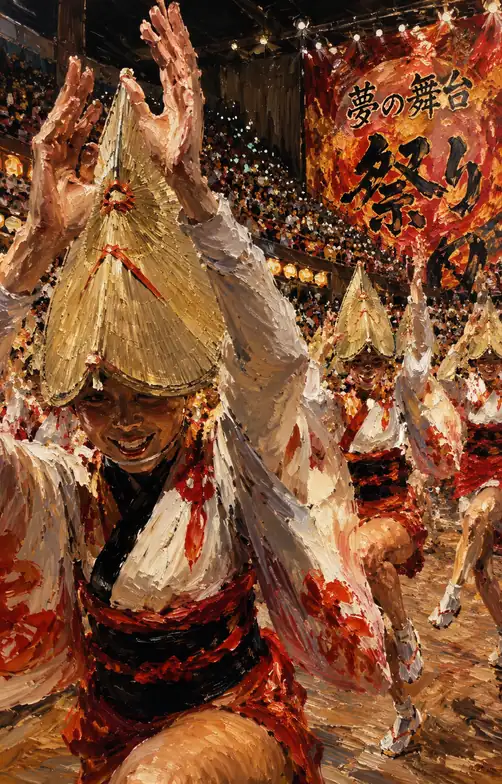 Awa Odori Dancers in Straw Hats Dancing on the Dream Stage
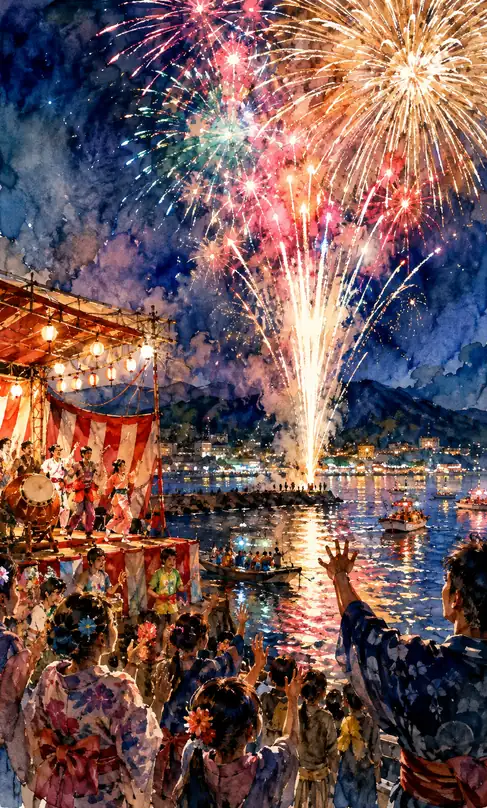 Harbor Stage and Hands of Joy Welcoming Grand Fireworks
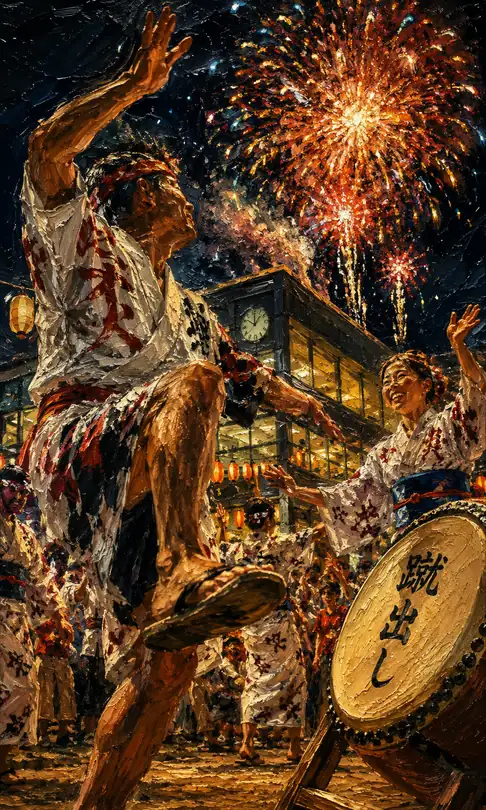 Dynamic Leap Dance by the Great Drum Under the Clock Tower Sky
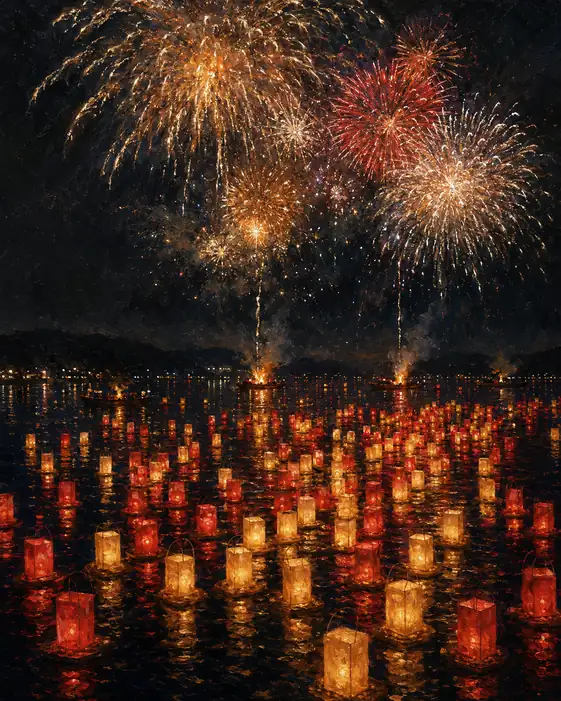 Golden Canopy Over Lake Lanterns