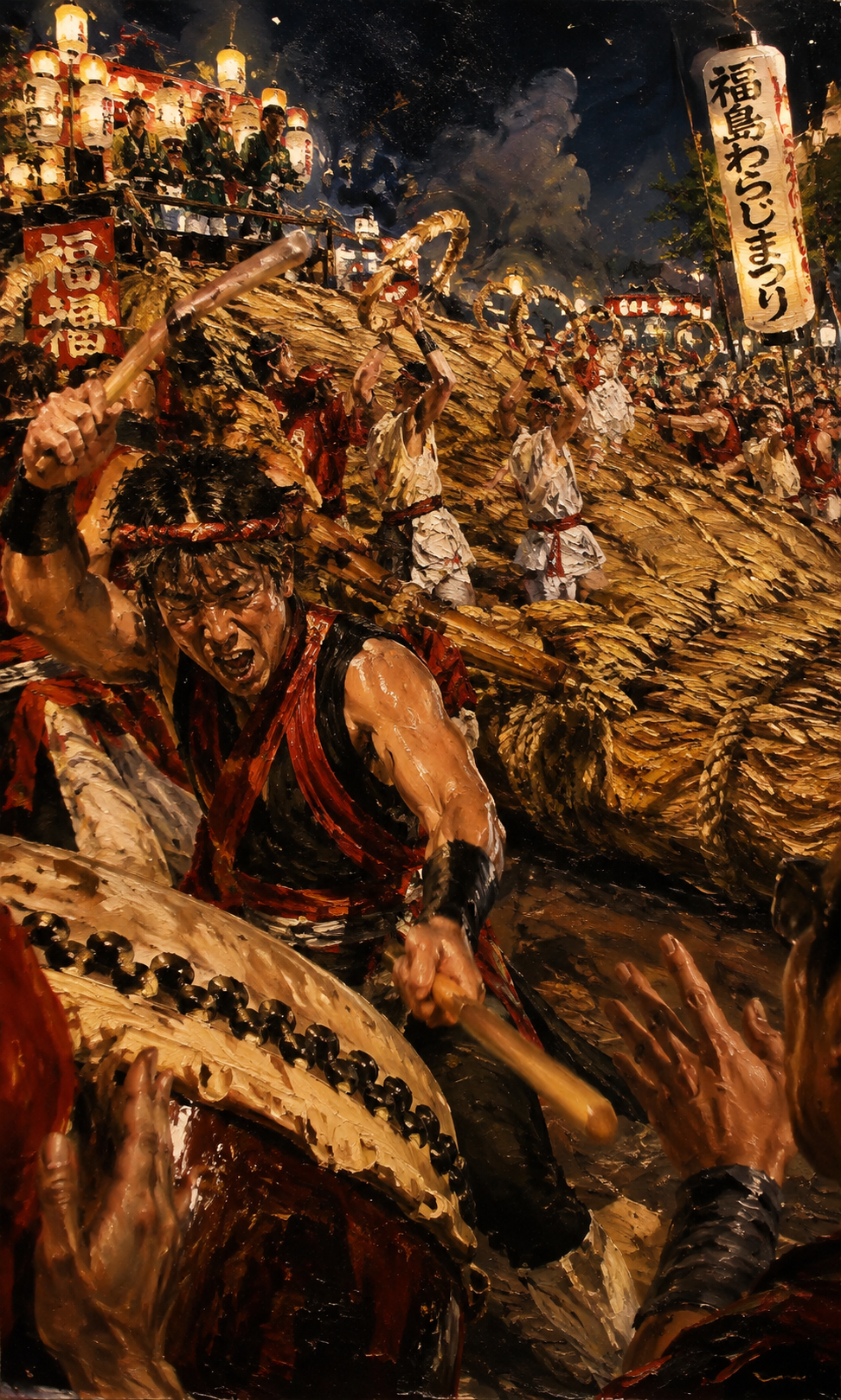
Great Straw Sandal and Resonating Drums at Fukushima Waraji Festival
Critique
Introduction This painting depicts a nighttime straw-sandal festival as a scene of strenuous communal action. A shouting drummer fills the lower foreground, while an immense woven sandal rises diagonally through the crowd. Lantern towers, smoke, and tightly packed participants establish a ceremonial setting charged with physical effort. Description The nearest man raises one drumstick and drives the other toward a large cropped drum at the bottom edge. Behind him, white-clad bearers lift looped ropes above the broad golden surface of the sandal. Rows of lanterns glow at upper left, and a tall inscribed lantern anchors the right side against the black sky. Analysis The sandal forms a steep ochre wedge that carries the eye from the drum toward the distant procession. Repeated arcs in the drumsticks, raised ropes, and bent arms establish a forceful beat across several depths. Dense black and red clothing contrasts with warm flesh and straw, while heavy strokes separate wet skin, coarse fibers, lacquered wood, drifting smoke, and paper lanterns. Interpretation and Evaluation Rather than isolating a single hero, the composition links the drummer’s exertion to the coordinated labor behind him. His open mouth and contracted face give sound a visible equivalent, while reaching hands at the lower corners implicate nearby participants. The foreshortening is convincing, the color is disciplined, and the distinctive enlargement of sandal and drum gives ritual objects monumental authority. Conclusion The work combines close observation of bodies and materials with an audaciously compressed composition. Light does more than illuminate: it measures distance from the bright foreground flesh to the smoky, crowded background. What initially seems chaotic becomes a carefully organized image of rhythm, endurance, and communal force.
Same Subcategory
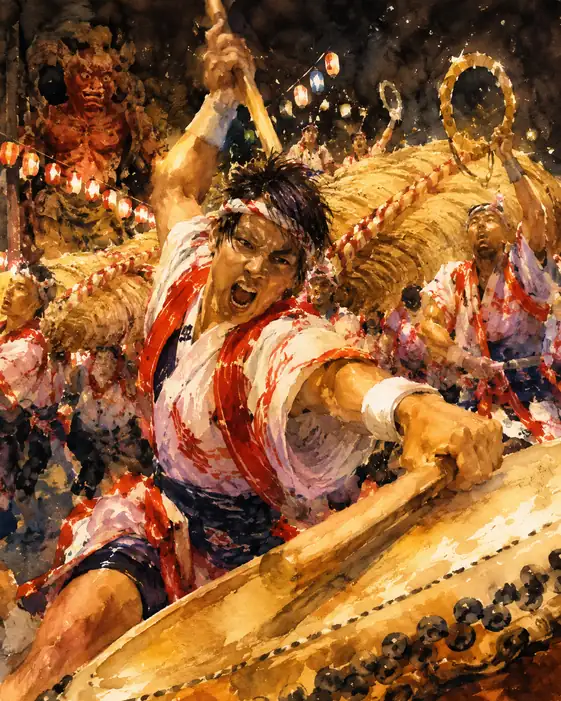 Great Drums and Straw Rope Procession Resonating Before Nio Statue
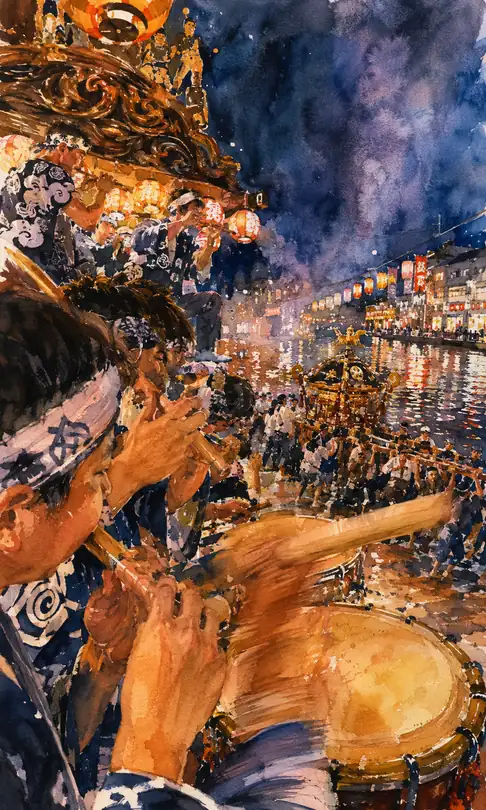 Flutes and Drums from the Float Resonating Over the Phoenix Shrine
Similar Artworks
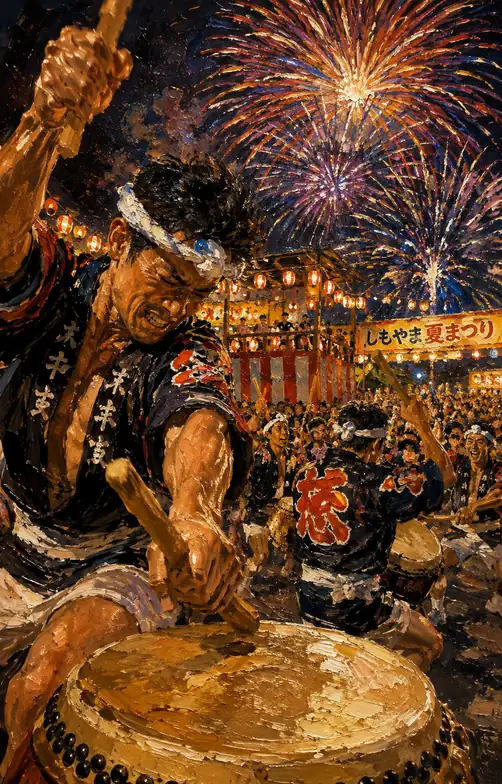 Passionate Taiko Drummer's Shout Resonating Under Shimoyama Summer Fireworks
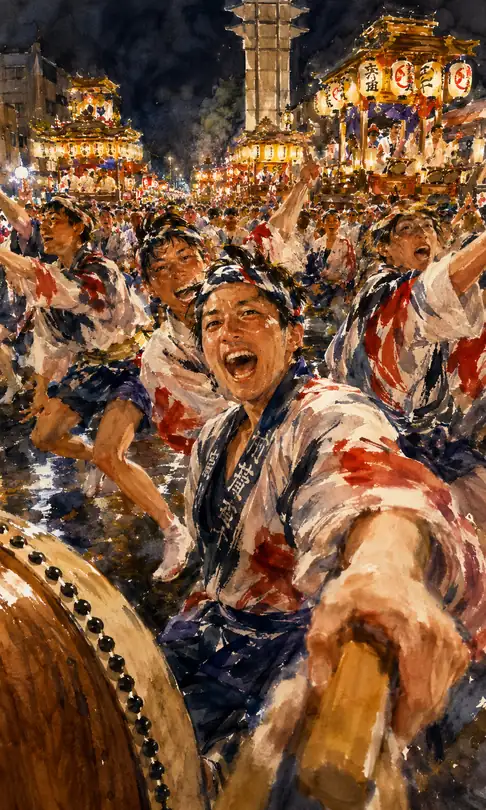 Passionate Men Beating Taiko Before Golden Floats
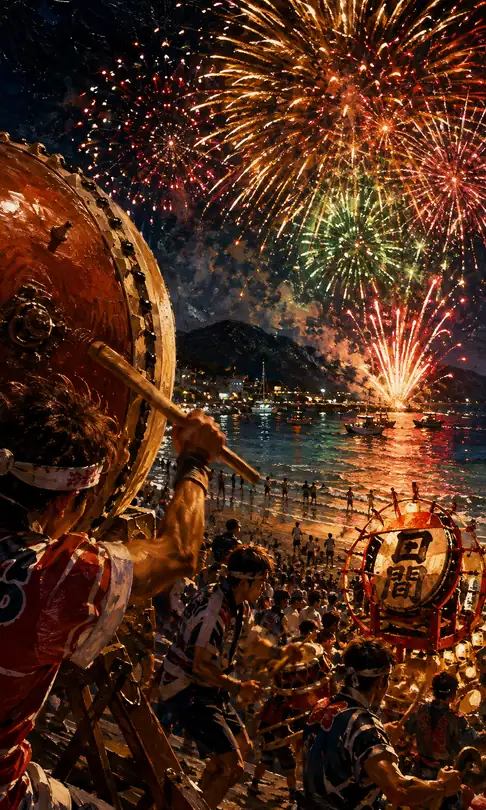 Tama Drum Platform on the Beach and Grand Fireworks Over the Sea
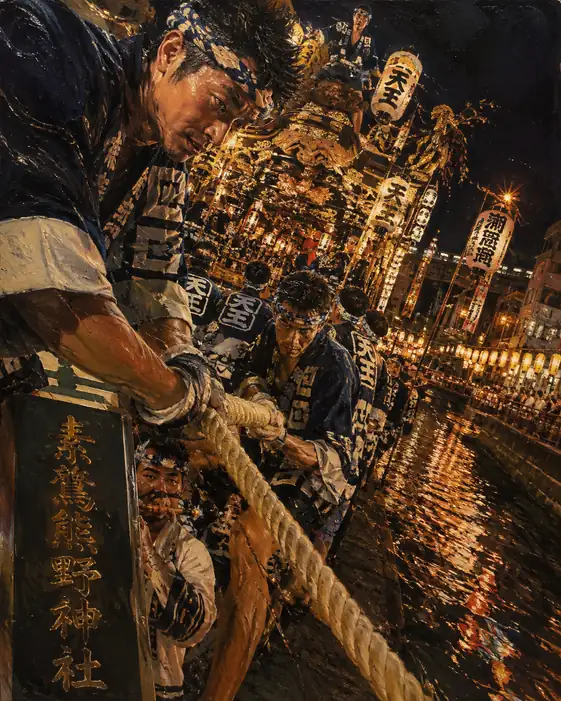 Men's Sweat and Ropes at Susanoo Shrine Tenno Festival
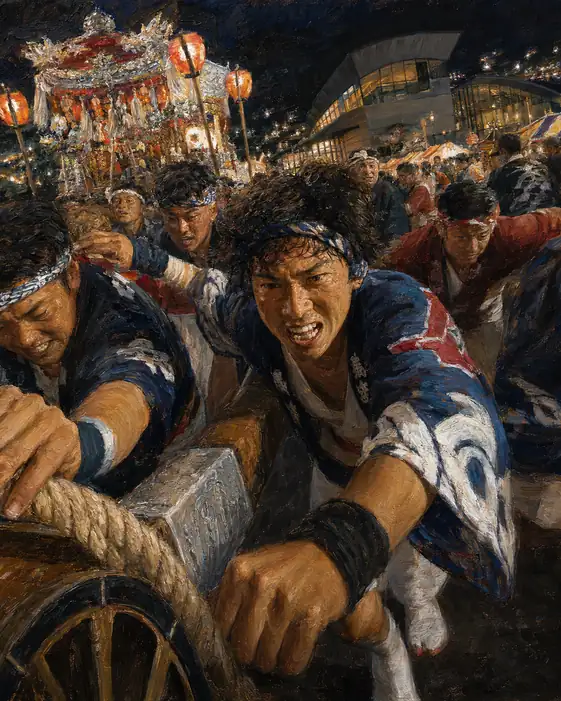 Men Pushing Forward with the Heavy Ropes and Wheels of the Festival Float
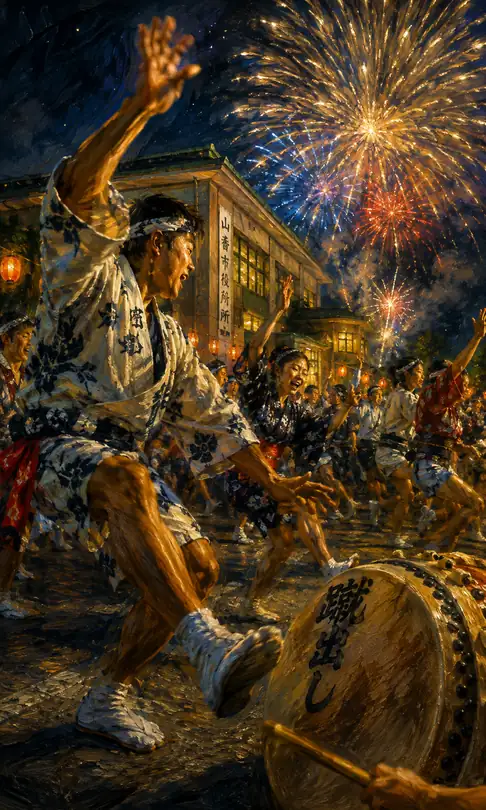 Dynamic Male Dance Leaping to Drums and Fireworks by Yamaga City Hall
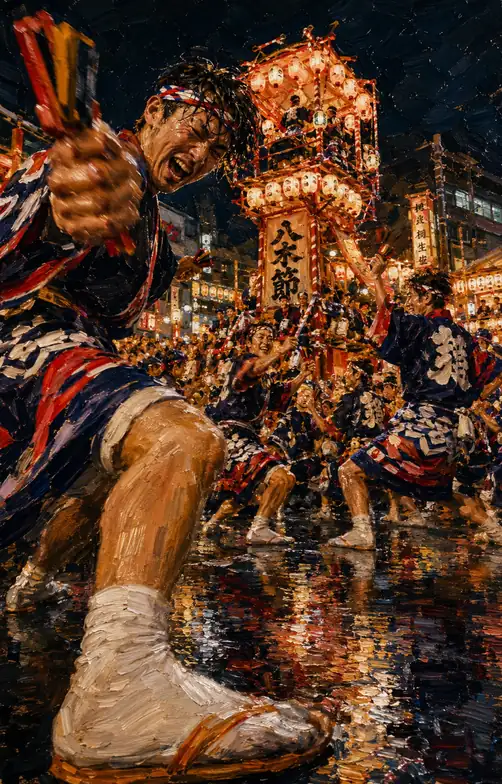 Tower and Dancing Men at Kiryu Yagibushi Festival
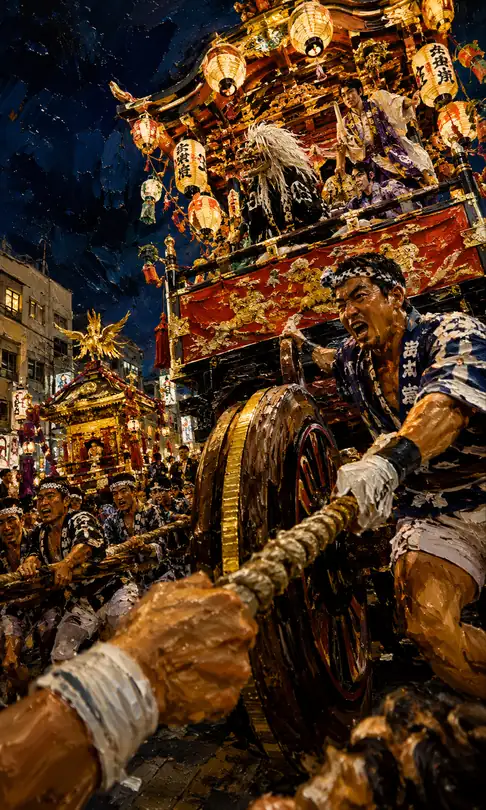 Passionate Cries of Men Pulling the Vermilion and Gold Float
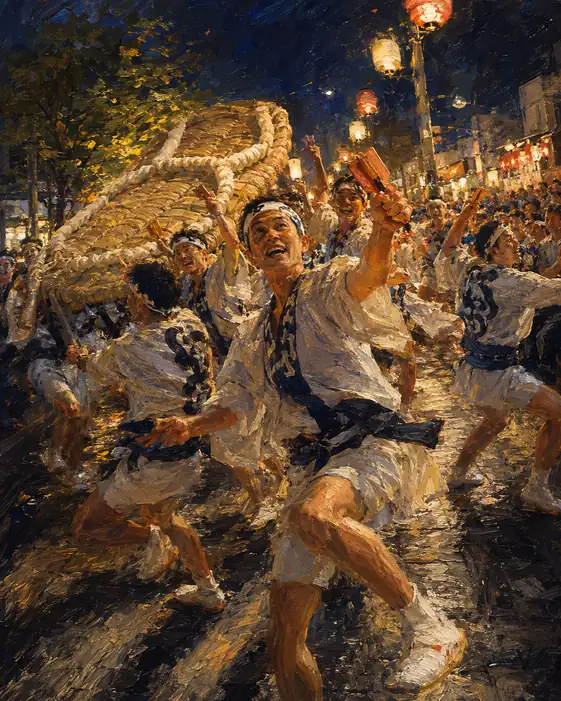 Warm Luminescence Rising in Darkness (No. 65)
 Reverberation of the Eternal Spirit