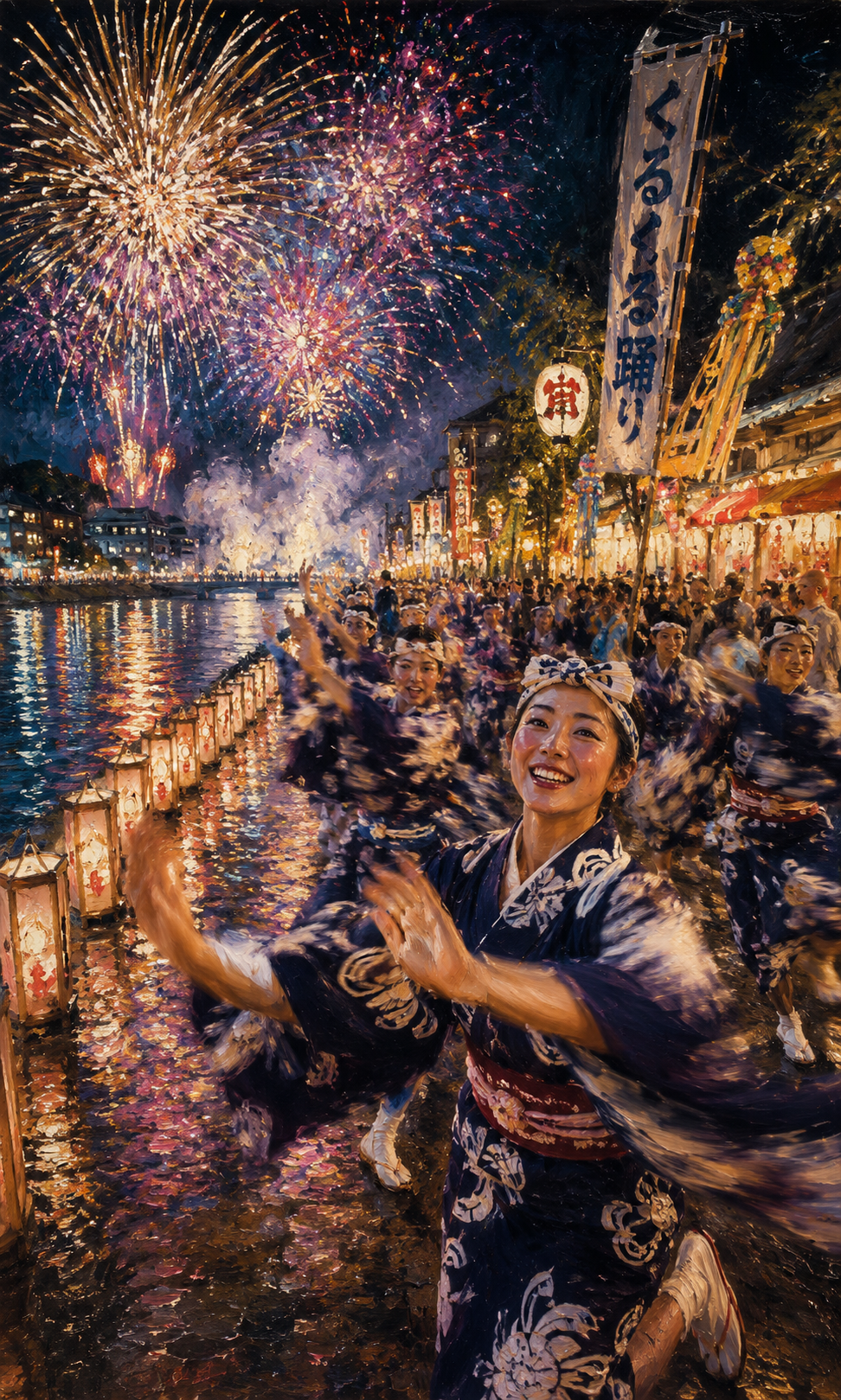
Smiling Dancers of the Kurukuru Dance and Fireworks
Critique
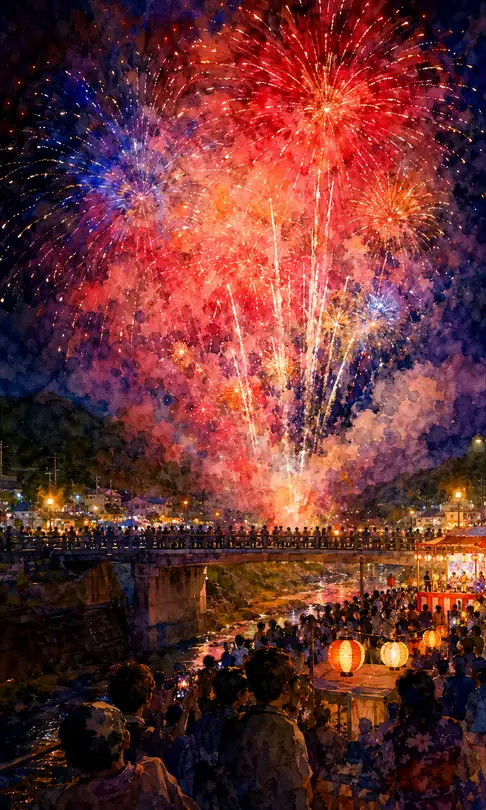
Introduction This painting presents a riverside dance and fireworks through its foremost participant. A smiling figure in navy spreads both arms. Lanterns recede beside the water, and bursts cover the town, joining bodily movement and illumination. Description The dancer wears a white headcloth, patterned navy robe, and reddish sash. Extended arms and turning sleeves are cropped, while many dancers repeat the gesture behind. Square lanterns run diagonally along the river and cast orange and violet reflections. A tall banner, streamers, stalls, and lanterns rise at right; gold, pink, and purple fireworks open through smoke at left. Analysis The foreground arms create a horizontal arc crossed by the lantern row's diagonal depth. The face remains sharp, whereas sleeves and following figures receive flowing strokes that locate the center of motion. Navy unites robe and sky, with orange, white, and pink light distributed across both. Thick marks change density among fireworks, fabric patterns, and reflections, suggesting different speeds of light. Interpretation and Evaluation An individual smile provides entry, but repeated gestures convey broad communal participation. River, lights, stalls, banner, and fireworks extend the dance into urban space rather than serving as passive scenery. Descriptive skill appears in expression, headcloth, folds, and varied reflections. The composition joins a monumental foreground body to a long procession, and the correspondence between sweeping sleeves and radiating fireworks is inventive. Conclusion The low, close viewpoint invites the viewer into the moving line, while cropped arms extend participation beyond the frame. Impasto conveys both brief illumination and the weight of cloth. At first the smiling dancer seems the sole subject; closer viewing reveals repeated gestures, lanterns, reflections, and fireworks as the image's essential structure. Delight becomes collective motion.
Same Subcategory
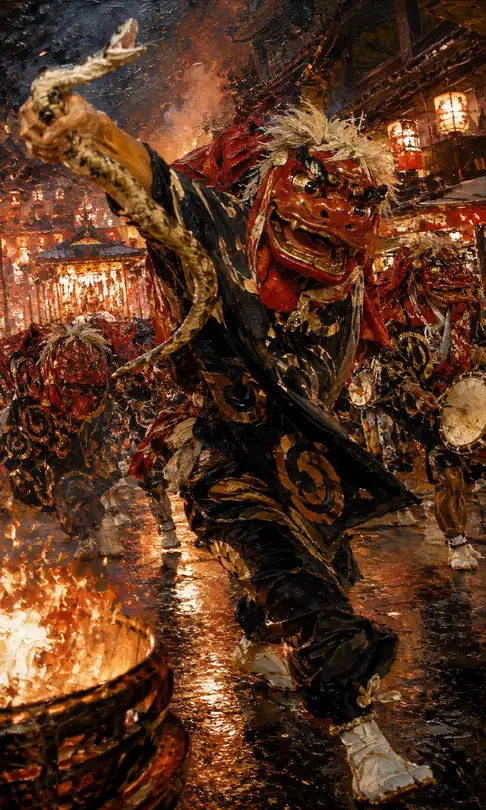 Kagura Lion Holding a Golden Snake Before the Bonfire Flame
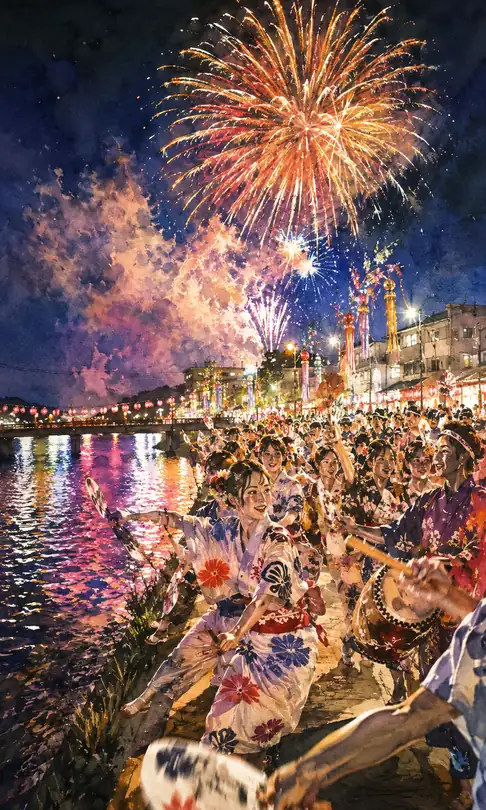 Tanabata Streamers and Fireworks Dance by the River
Similar Artworks
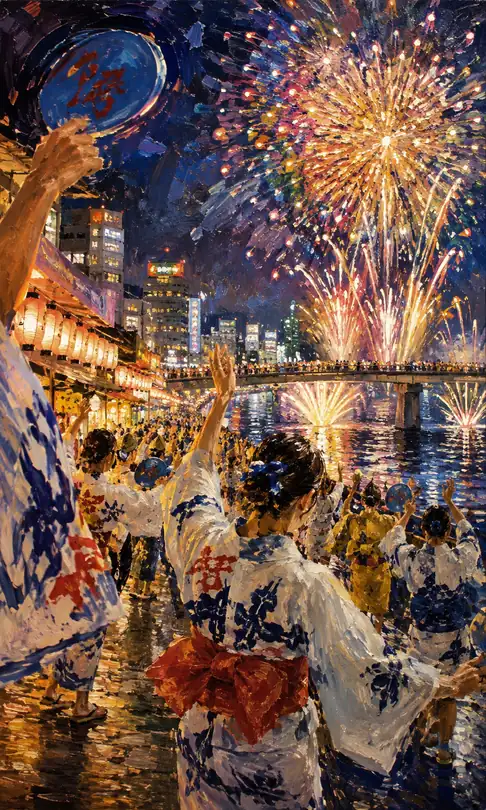 Yukata Dancers Raising Fans by the River Under Pink-Gold Fireworks
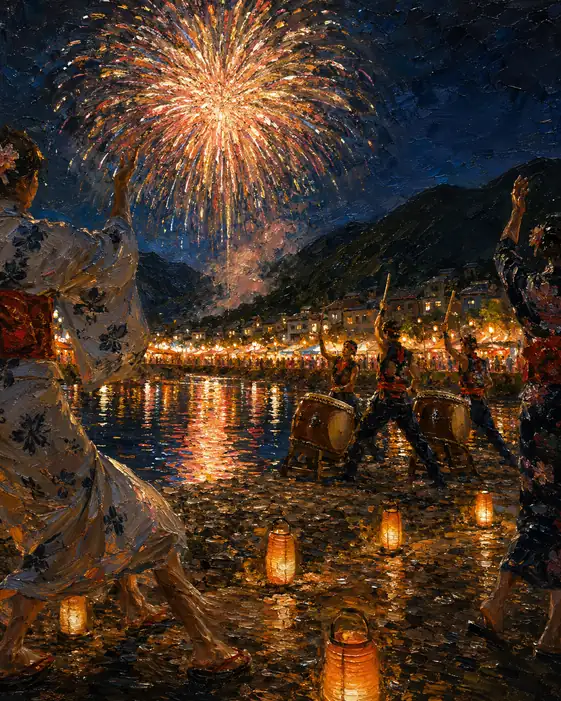 Golden Bloom Echoing River Lanterns and Taiko Beats
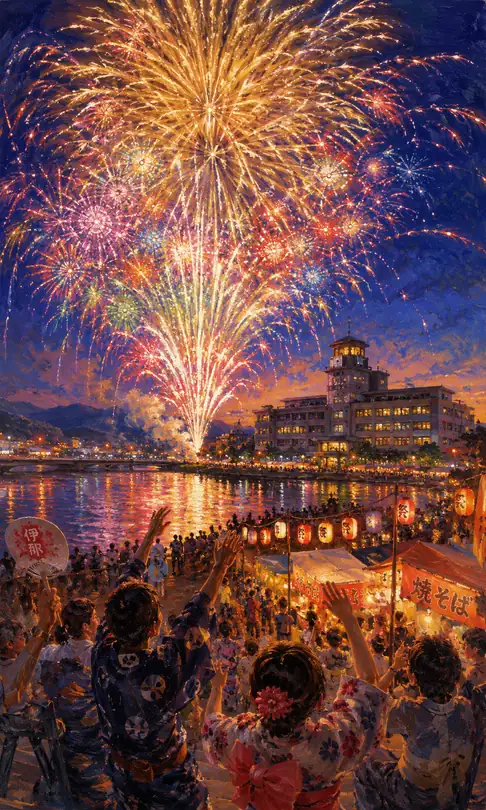 Western Building and Grand Colorful Fireworks Over the Ina Riverside
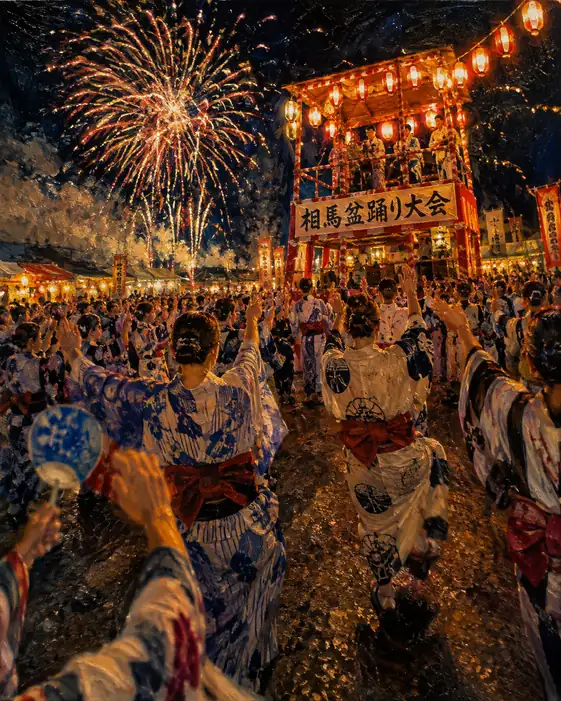 Indigo Yukata Dancing in Festive Rhythm
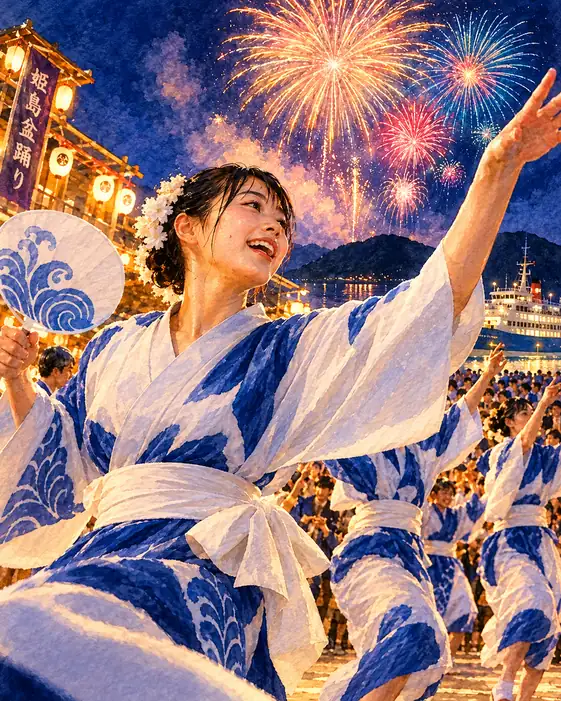 Breezy Sleeves and Radiance of Joy
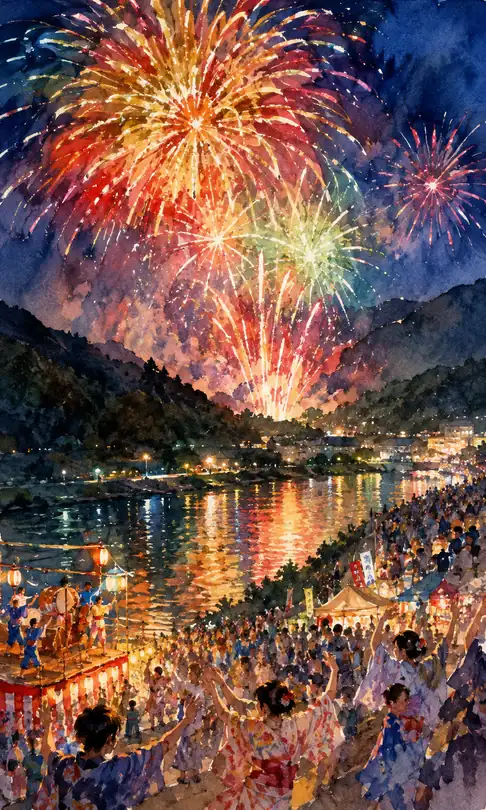 Festival Dance by the Tower and Colorful Fireworks Over the River Gorge
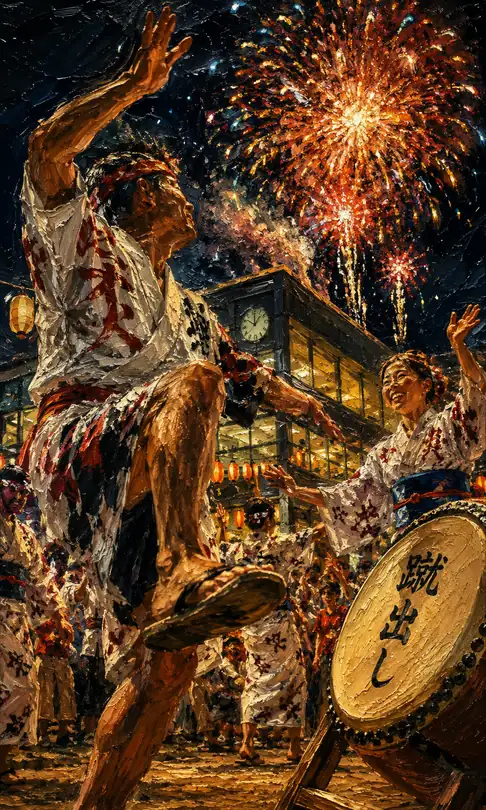 Dynamic Leap Dance by the Great Drum Under the Clock Tower Sky
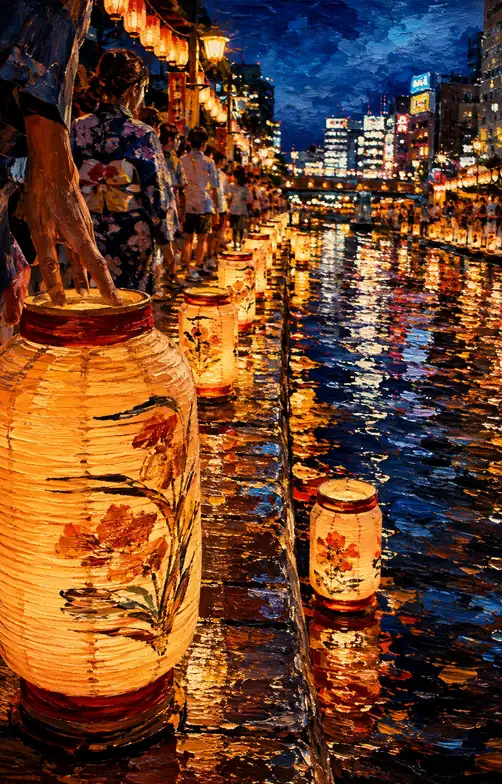 Flower Lanterns by the River and Water-Reflected City Lights
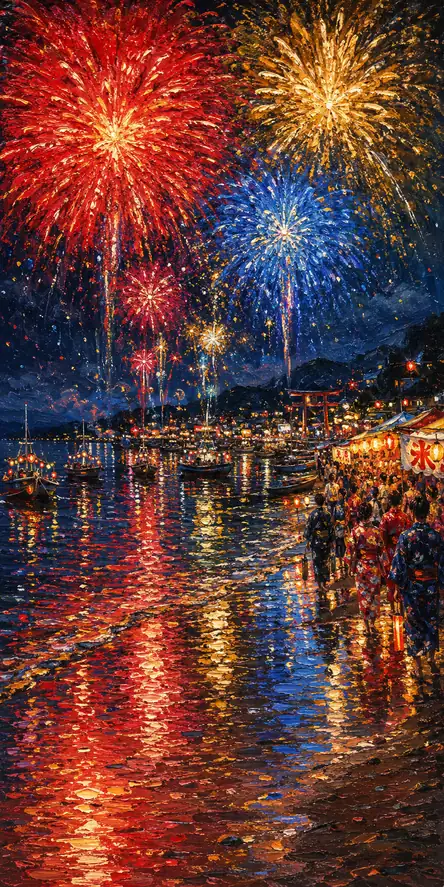 An Eternal Spark of a Passing Summer
 Scarlet Canopy Shrouding the Ancient Bridge