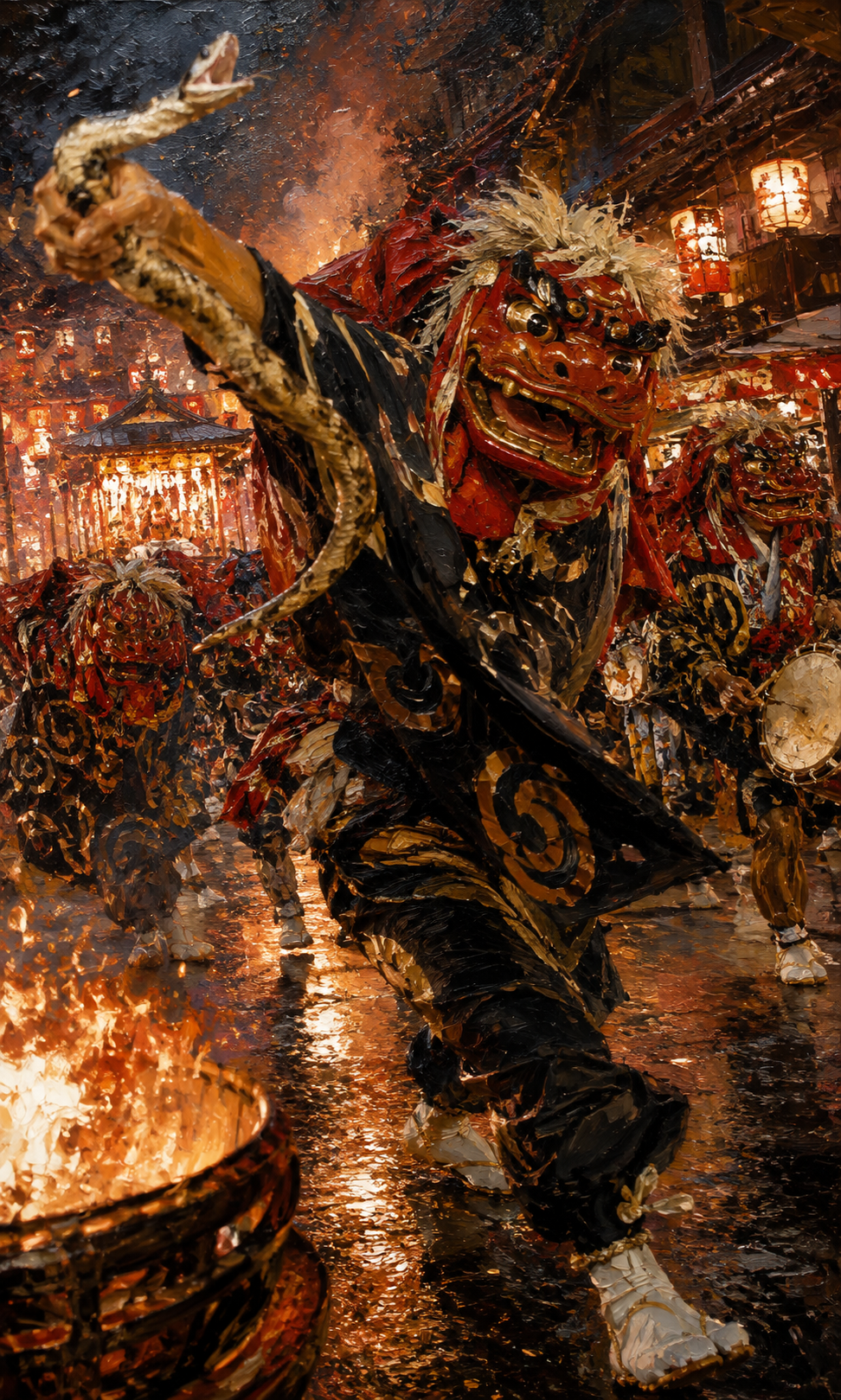
Kagura Lion Holding a Golden Snake Before the Bonfire Flame
Critique
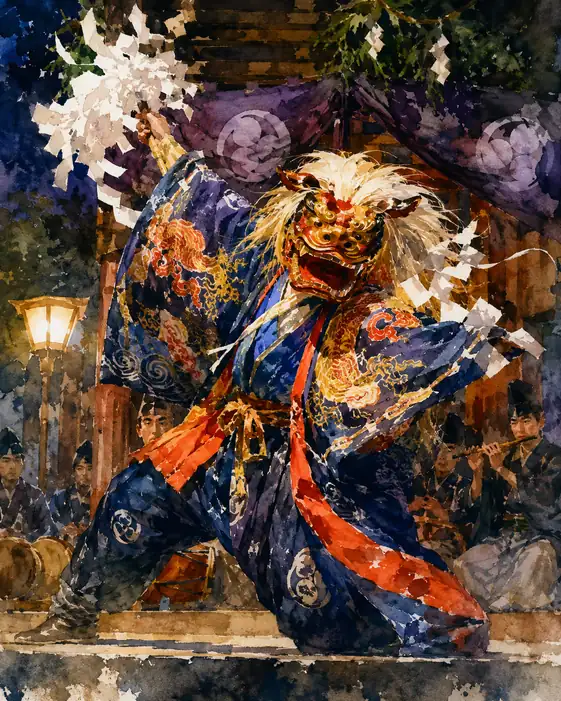
Introduction This work depicts a night lion-dance procession advancing beside open fire. The central red mask, extended serpent, black-and-gold costume, following lions, drummer, lanterns, and wet street create an image of ritual danger and controlled intensity. Description The nearest lion figure lunges from the center toward the viewer, one white-wrapped foot planted at the lower right. Its glossy red head has round gold-rimmed eyes, an open mouth, and a pale mane. From the upper left, a long spotted serpent curves toward the mask, held by the performer’s extended arm. Two smaller lions and musicians follow behind. A flaming brazier burns at lower left, while red-white lanterns line the wooden buildings. Analysis The serpent establishes a diagonal from the upper left to the mask, countered by the dancer’s bent body and forward leg. Red heads recur at decreasing scale, creating depth and collective force. Black costume absorbs surrounding light; gold patterns, orange flames, and wet reflections articulate its folds. Thick ridges make mask and cloth substantial, while scattered sparks and mane fibers produce rapid outward movement. The brazier anchors the brightest foreground. Interpretation and Evaluation The serpent may be understood as a challenge, lure, or partner within the performance, concentrating the lion’s alert gaze. Visible feet and arm disclose human effort, yet the frontal mask sustains the creature’s temporary autonomy. Foreshortening is bold, surface contrasts are vivid, and the red-black-gold palette gives ceremonial unity. The close encounter between animal forms and flame lends the procession distinctive dramatic tension. Conclusion At first the mask and fire suggest uncontrolled ferocity, but closer viewing reveals repeated spacing, balanced diagonals, musicians, and disciplined steps. The work succeeds by making transformation credible while preserving the physical labor and communal structure that produce it.
Same Subcategory
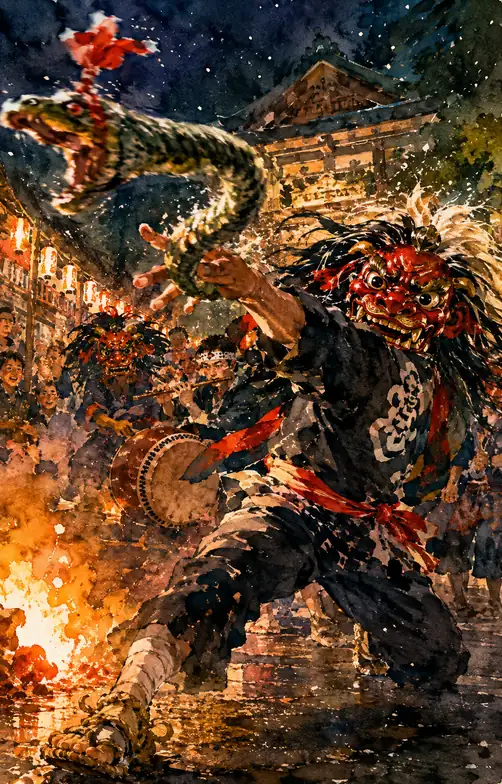 Red-Masked Lion Dancing Freely Before the Bonfire Flame
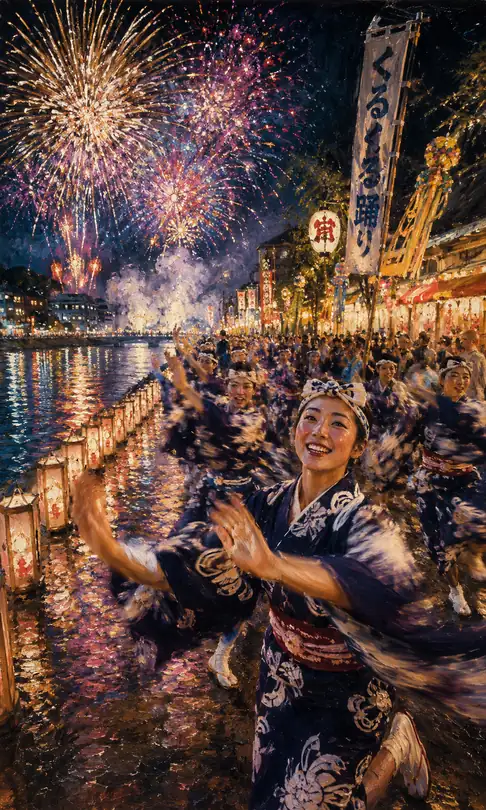 Smiling Dancers of the Kurukuru Dance and Fireworks
Similar Artworks
 Warm Luminescence Rising in Darkness (No. 36)
 Warm Luminescence Rising in Darkness (No. 34)
 Warm Luminescence Rising in Darkness (No. 78)
 Warm Luminescence Rising in Darkness (No. 38)
 Burning Tezutsu Torch and Valiant Men at Iizuna Fire Festival Shrine
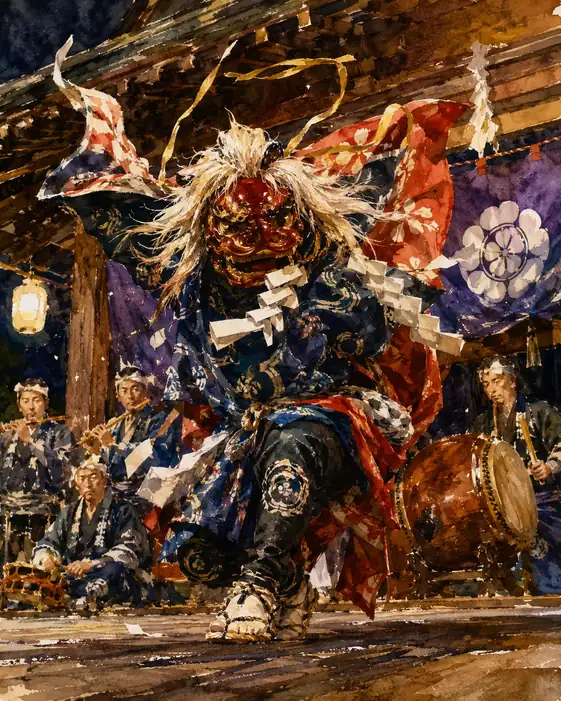 Red-Masked Lion Storming the Shrine Stage
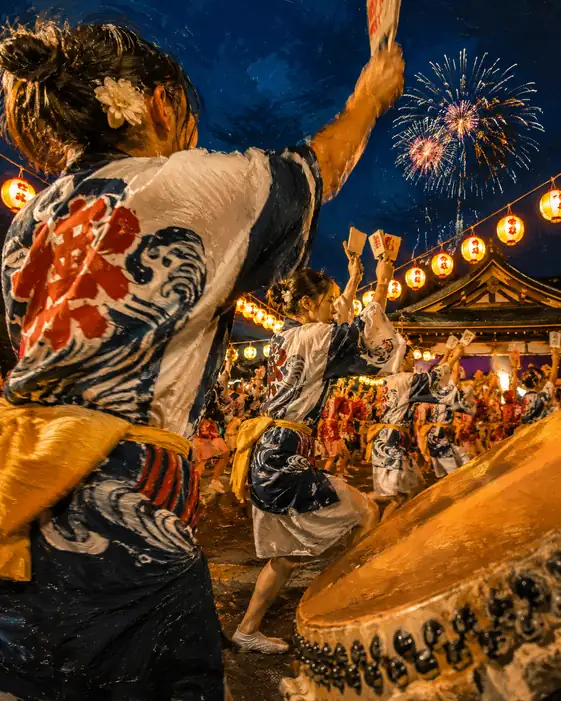 Wave-Pattern Happi Yosakoi Dance Resonating with Shrine Drums and Fireworks
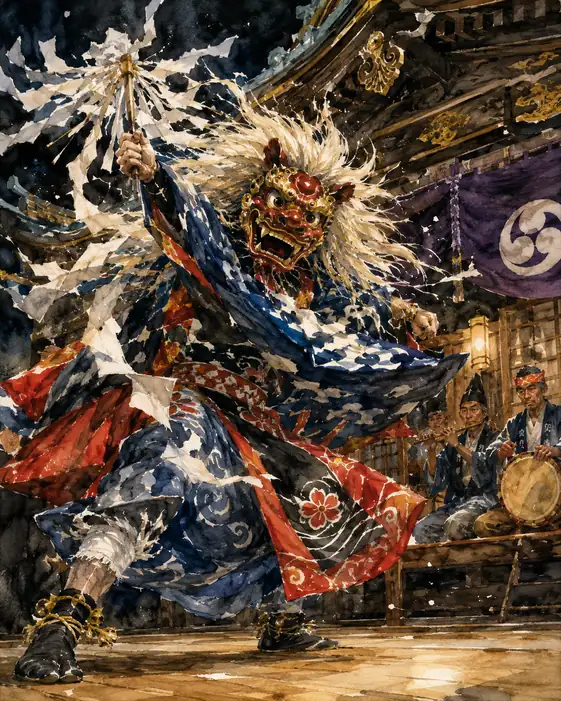 Dynamic Sacred Lion and Scattering Paper Streamers
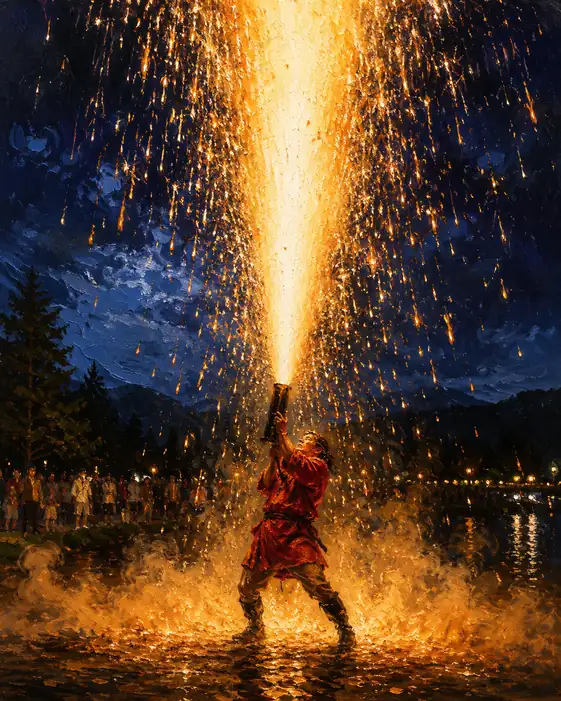 An Instant Eternity Scorching the Sky (No. 84)
 Swirling Summer Robes in Night Air (No. 73)