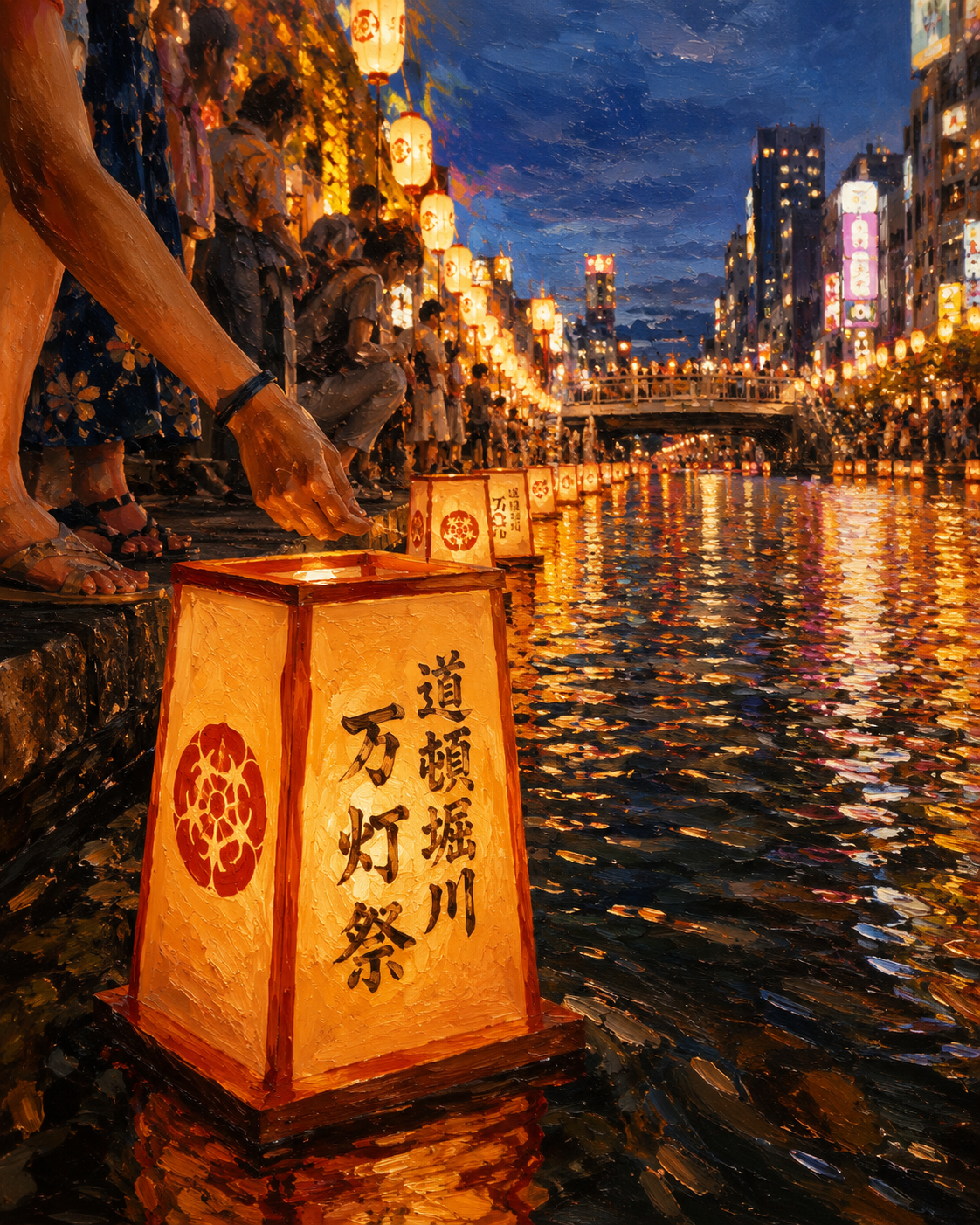
Hand Releasing a Lantern into the Water at Dotonbori River Festival
Critique
Introduction This painting places a glowing festival lantern at the edge of an urban canal, close to a crouching participant's hand. The intimate act of setting light on water opens into a long city vista crowded with spectators, signs, bridges, and reflections. Description The large square lantern occupies the lower left, framed in red and bearing black Japanese calligraphy and a circular emblem. A hand lowers a small light into its open top. Similar lanterns recede along both banks and float near the walls. Crowds sit beneath hanging lights, tall buildings rise at right, and a bridge crosses the canal in the distance. Orange, pink, white, and blue marks ripple across dark water. Analysis The lantern's bright rectangle anchors the foreground and initiates a diagonal sequence toward the bridge. Canal edges and building lines create strong central perspective. Amber light dominates the near field, while cobalt sky and water provide depth; magenta and white reflections add urban variety. Thick strokes define paper, wood, skin, and stone, whereas broken horizontal marks convey moving water. The hand supplies a precise focal gesture. Interpretation and Evaluation The act of placing one light among hundreds gives personal care a civic scale. Calligraphy makes the lantern both an object and a bearer of place-specific meaning. The composition combines close ritual and panoramic city space with originality, while controlled complementary color and varied textures demonstrate assured technique. Conclusion Initially the lantern appears to be the principal subject, but closer viewing reveals it as the first unit in a vast communal pattern. Perspective and reflected light transform a small gesture into an image of urban remembrance.
Same Subcategory
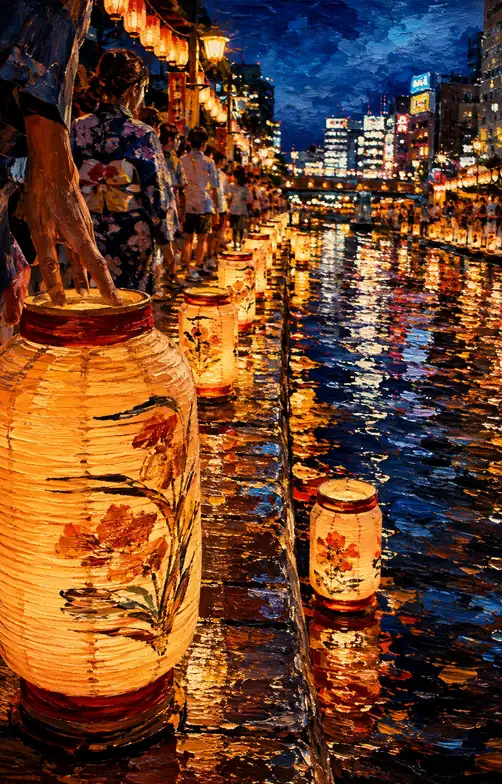 Flower Lanterns by the River and Water-Reflected City Lights
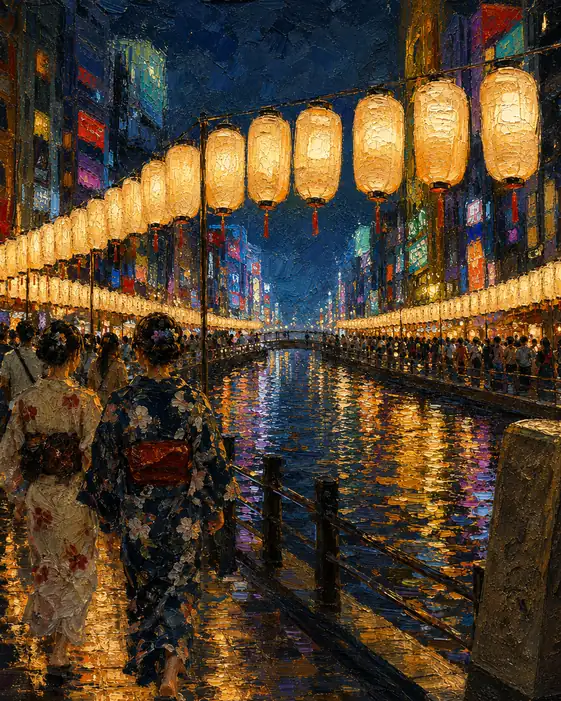 Canal Lanterns and Friends in Yukata Swaying on the Water
Similar Artworks
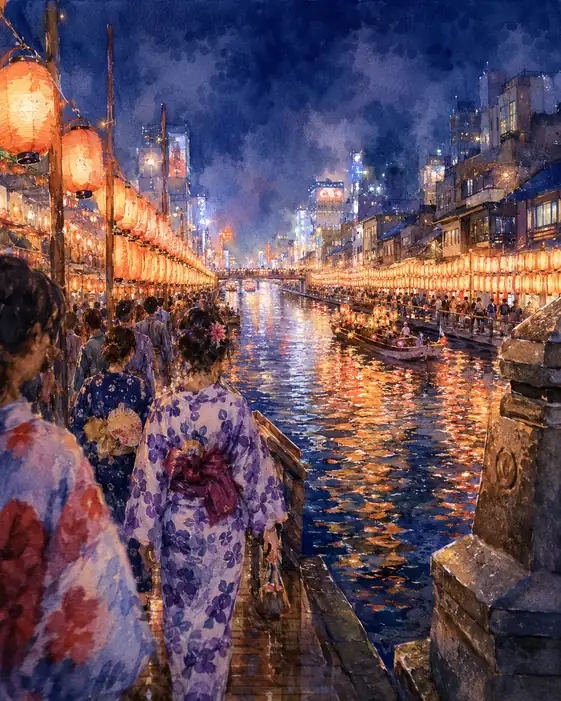 Lantern Boats and Purple Floral Yukata Along the Canal
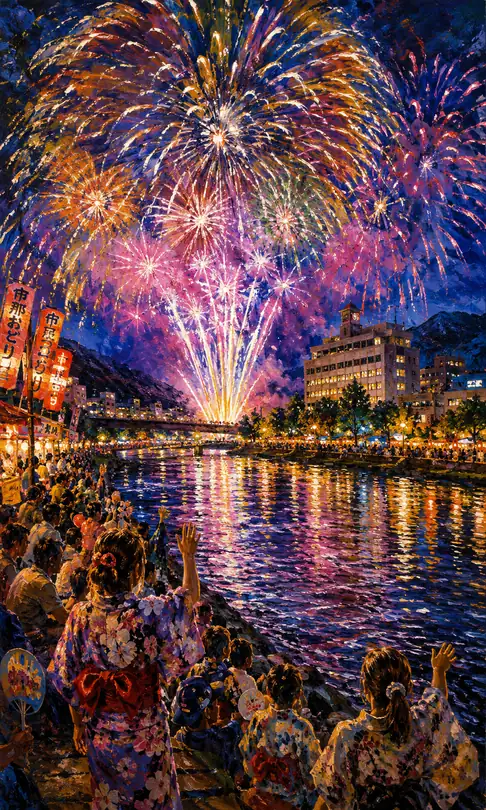 Grand Fireworks and Jubilant Spectators in Yukata by the Riverside City Hall
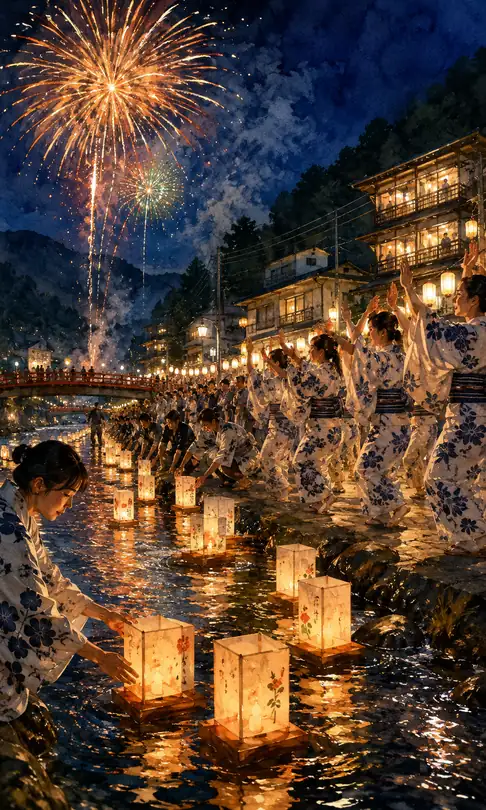 Floating Lanterns and Matching Yukata Bon Dance by the Spa Town Stream
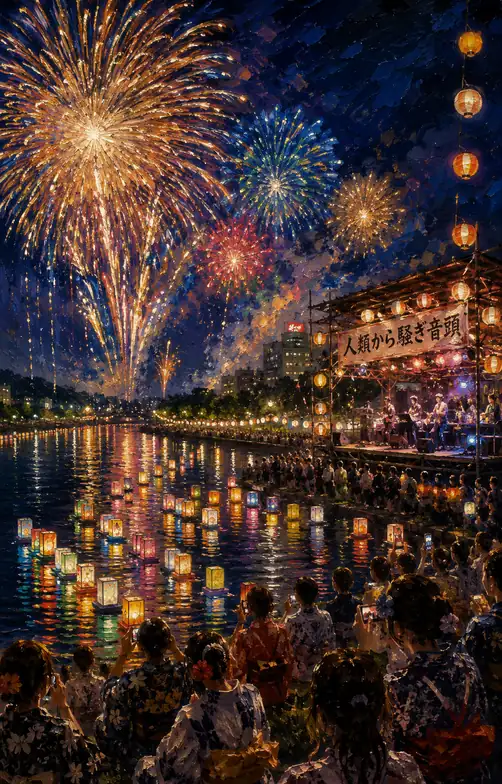 Open-Air Stage, Floating Lanterns, and Grand Fireworks Over the River
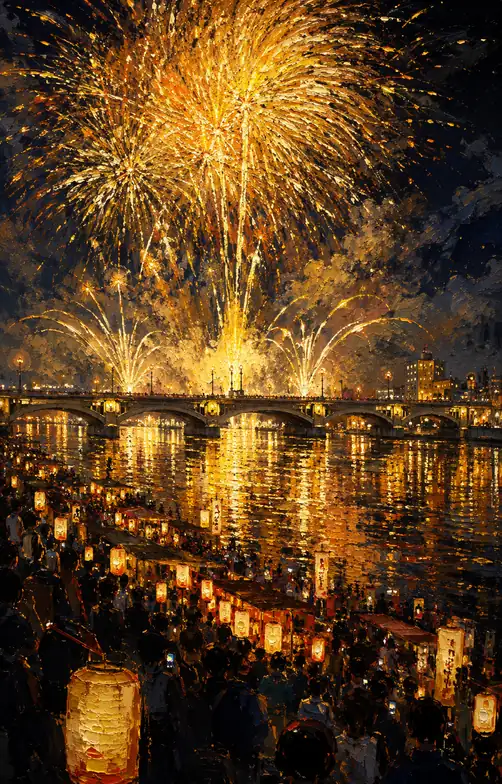 Golden Chrysanthemum Fireworks Embracing the Bridge and Stalls
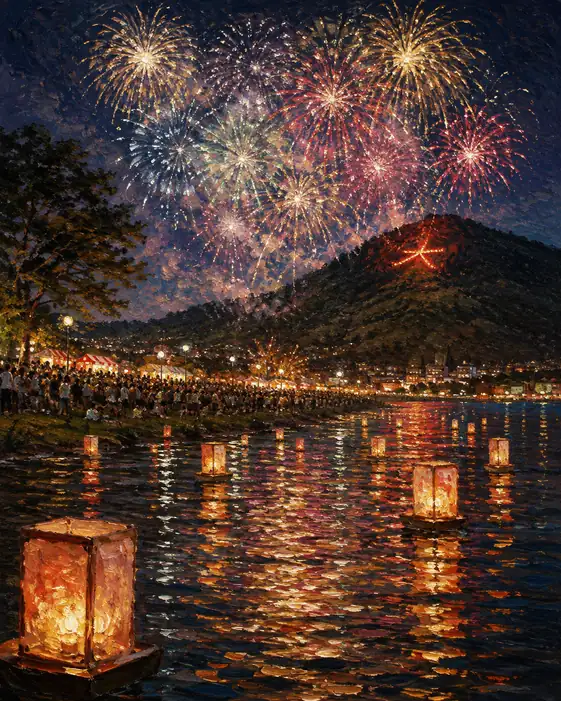 Blossoms of the Night Sky Embracing Daimonji and Floating Lanterns
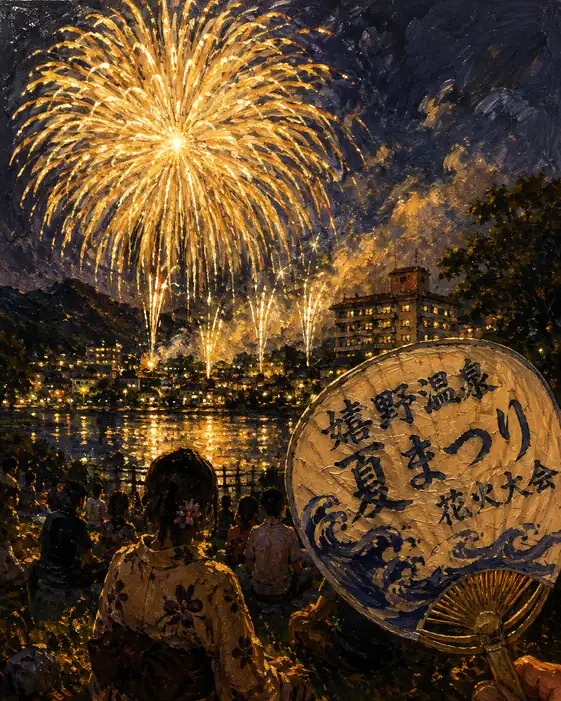 An Instant Eternity Scorching the Sky (No. 92)
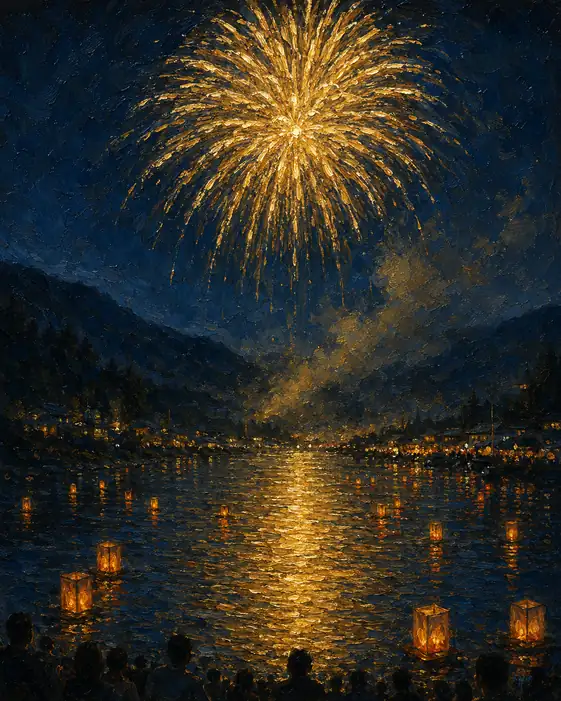 An Instant Eternity Scorching the Sky (No. 82)
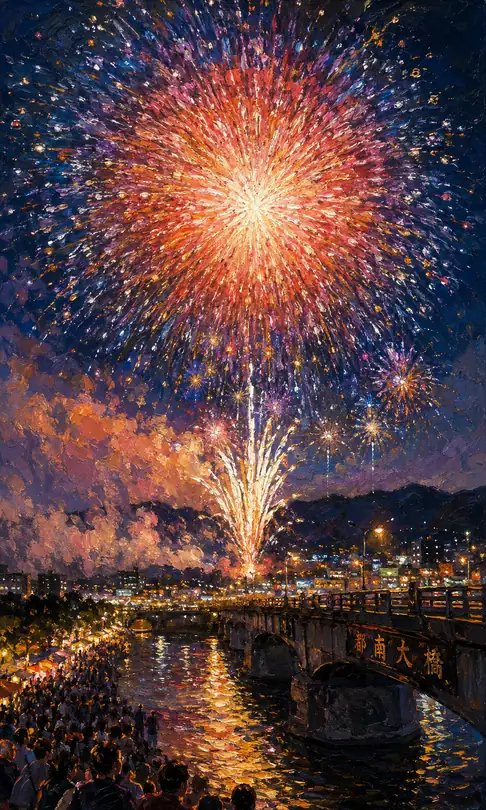 Kaleidoscope Fireworks and River Reflection by Tonan Great Bridge
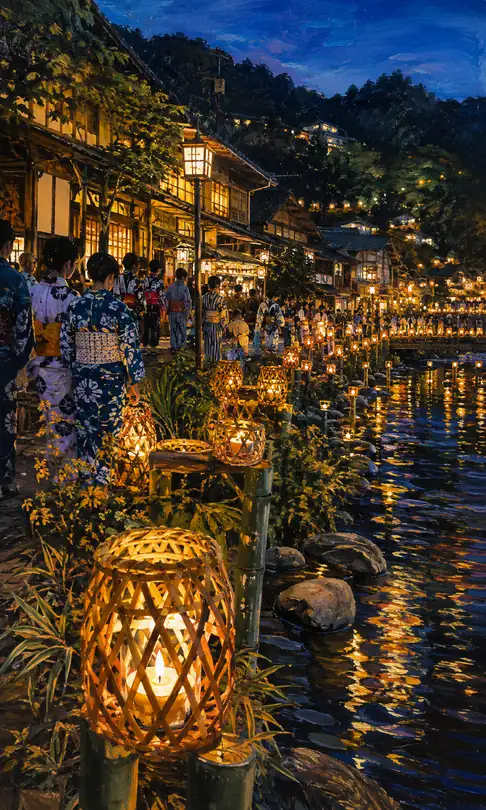 Bamboo Candle Lights and Strolling Yukata Ladies by the Hot Spring Stream