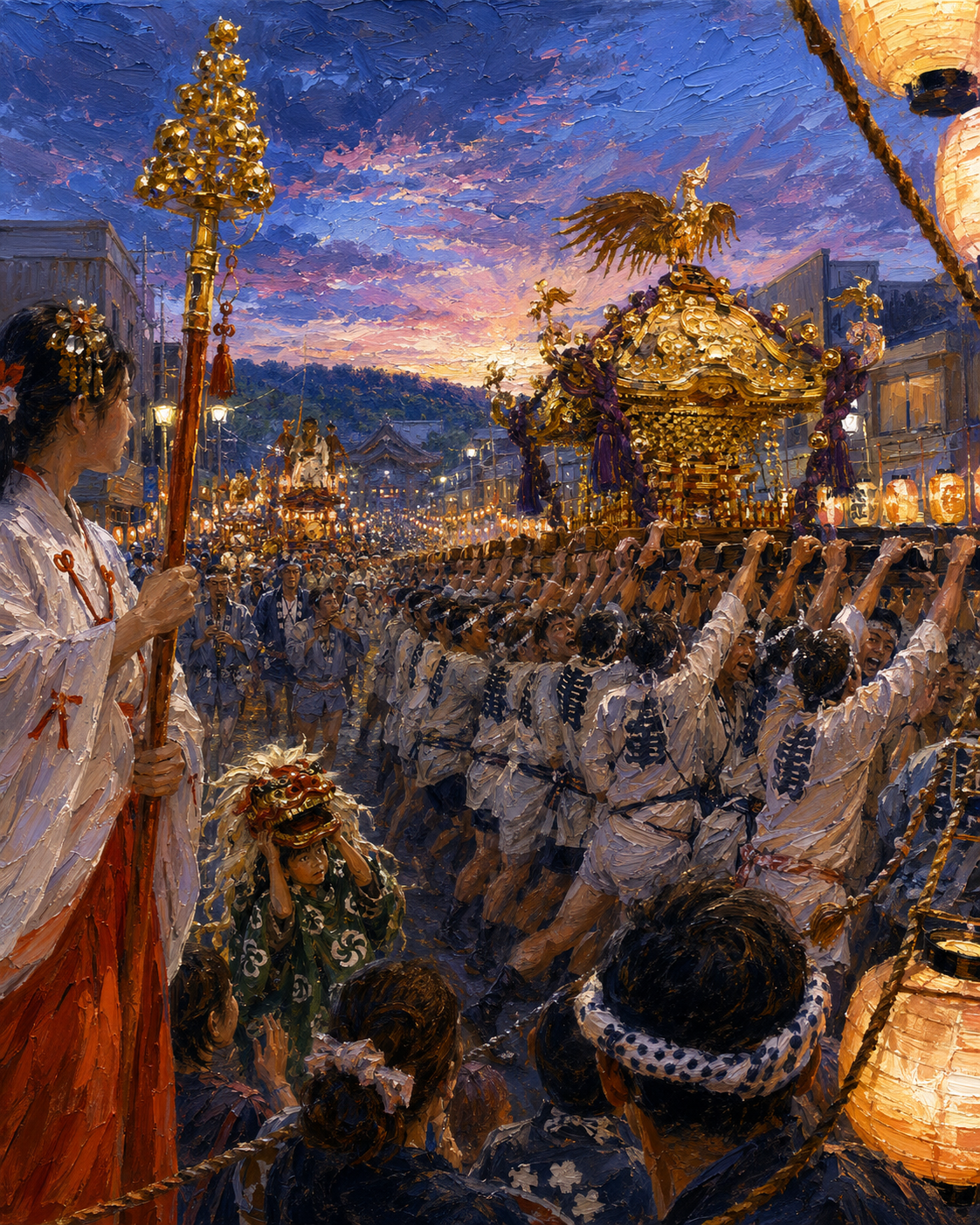
Golden Shrine Procession Under Twilight and Heated Shoulders
Critique
Introduction This painting presents a shrine procession at dusk from within the crowd. A gilded portable shrine presses forward on the right, while a white-robed figure holding a ceremonial staff anchors the left. The vertical format emphasizes both the height of the sacred objects and the density of participants. Description The shrine's phoenix, roof ornaments, fittings, and tassels shine against a violet-blue sky. Below, bearers in white and indigo garments overlap their hands upon the beam and advance shoulder to shoulder. A child beneath a lion mask appears comparatively still in the foreground. Lanterns, buildings, and another distant float narrow toward the center. Analysis A diagonal running from the staff to the shrine combines with the street's deep perspective. Gold and orange lights answer the indigo clothing and cool sky. Changes of scale among foreground backs, the central child, and the distant crowd establish depth. Thick strokes shift direction across clouds, cloth, and metal, separating atmospheric movement from hard ornament. Interpretation and Evaluation The work concerns not only the splendid shrine but also the repeated hands and shoulders sustaining it. Many bodies accepting one weight present the festival as communal cooperation. Descriptive skill appears in varied faces and intricate decoration, while the tiered arrangement clarifies distinct ceremonial roles. Warm light, cool evening color, still figures, and forceful movement are held in productive balance. Conclusion The close viewpoint places the viewer beside the procession rather than safely outside it. Impasto turns illumination into a tangible surface and reinforces the shrine's weight. At first the gilded structure dominates through spectacle; closer attention reveals that coordinated hands, gazes, and steps organize the image. Ceremonial grandeur and human effort therefore remain inseparable.
Same Subcategory
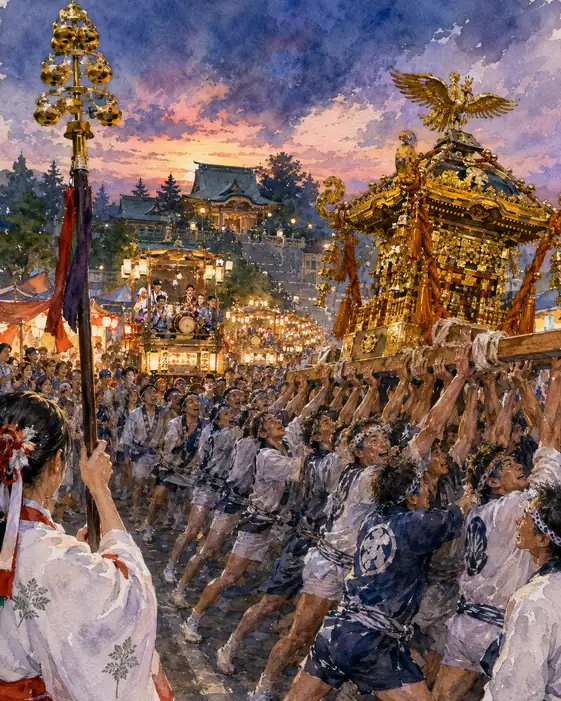 Golden Phoenix Shrine Raised High with Maiden's Bell
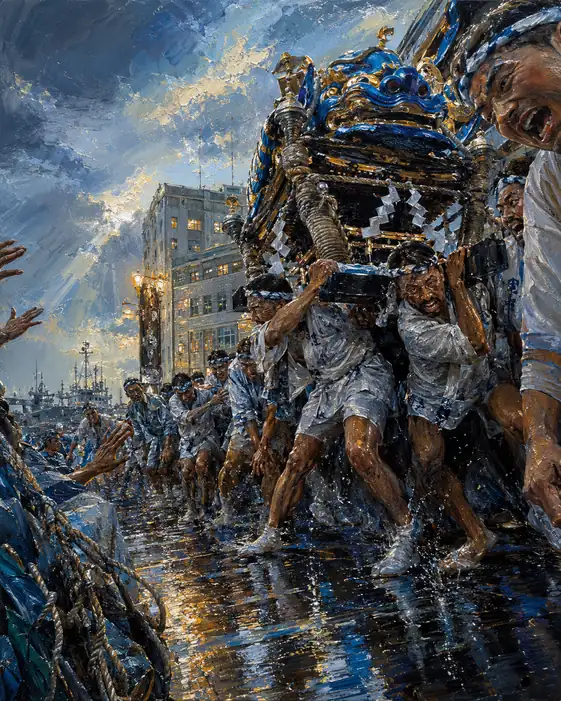 Roar of Men and Blue Lion Shrine Shaking the Port Town
Similar Artworks
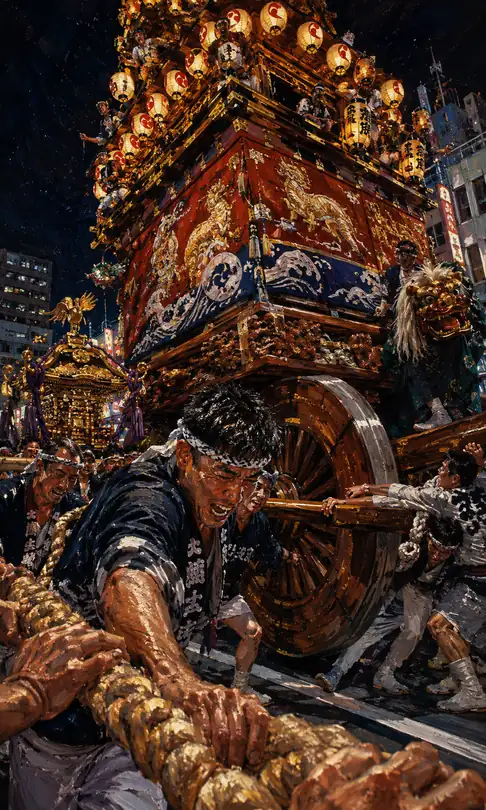 Men's Roar and Heavy Ropes Pulling a Giant Festival Float
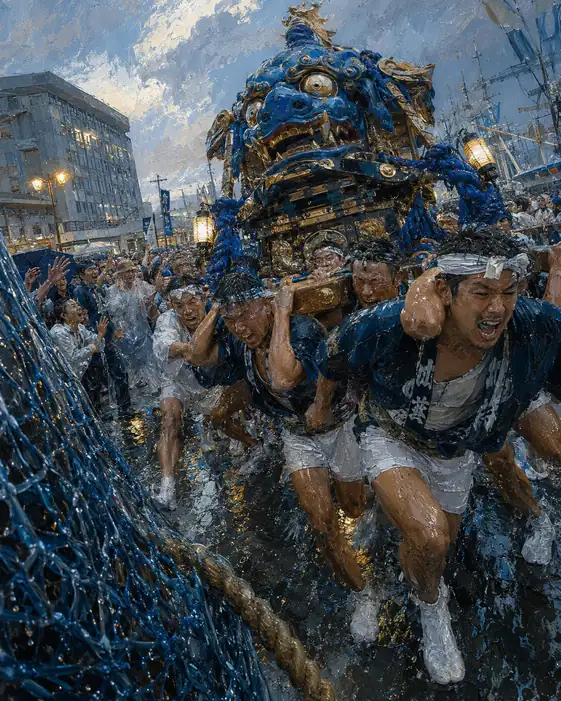 Heavy Rain and Men Carrying the Blue Lion Shrine
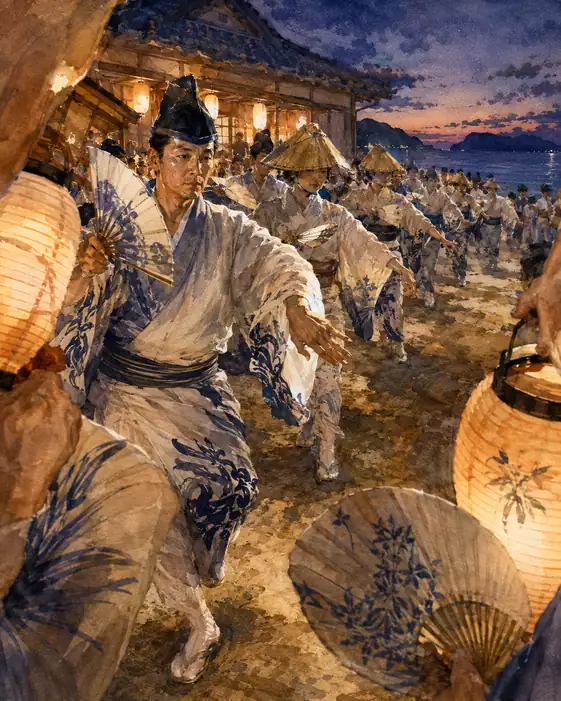 Graceful Fan Dance Wrapped in Ancient Breezes
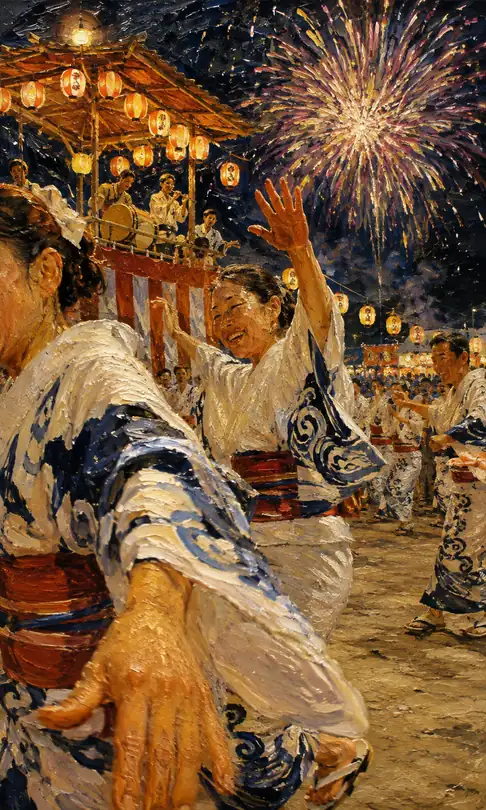 Bon Dance Dancers in Wave-Patterned Yukata Under Lanterns and Fireworks
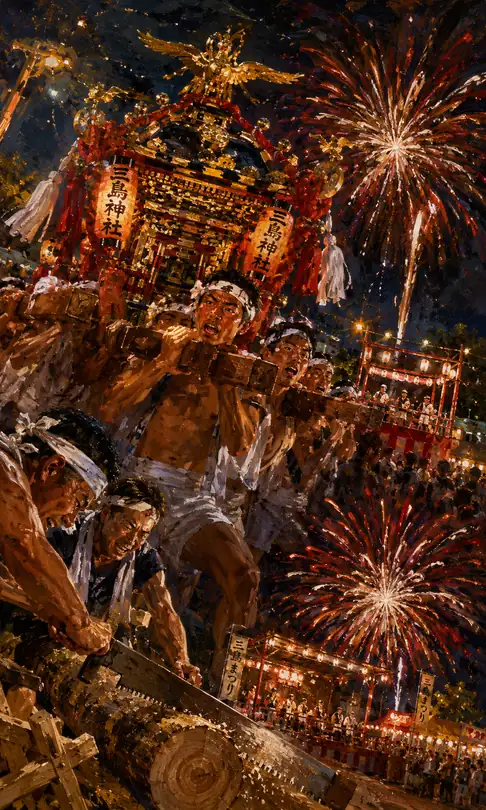 Tri-Island Shrine Phoenix Mikoshi and Men Sawing Logs in Festival Heat
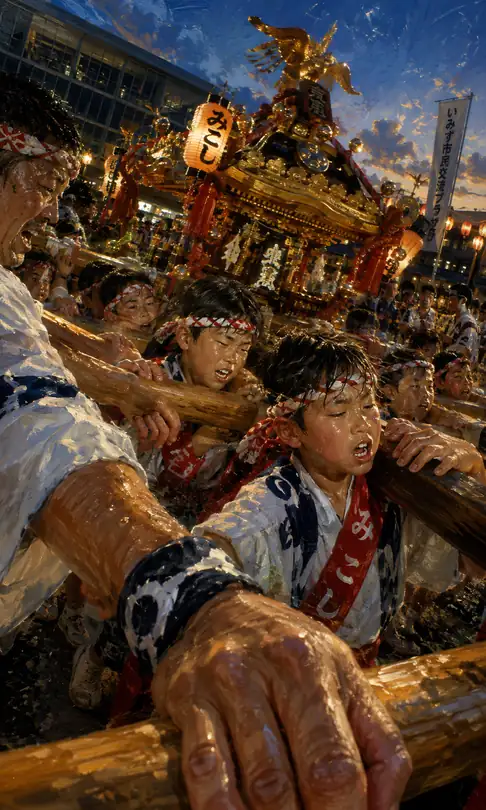 Phoenix Shrine and Children's Sweat Under the Evening Sky of Imizu
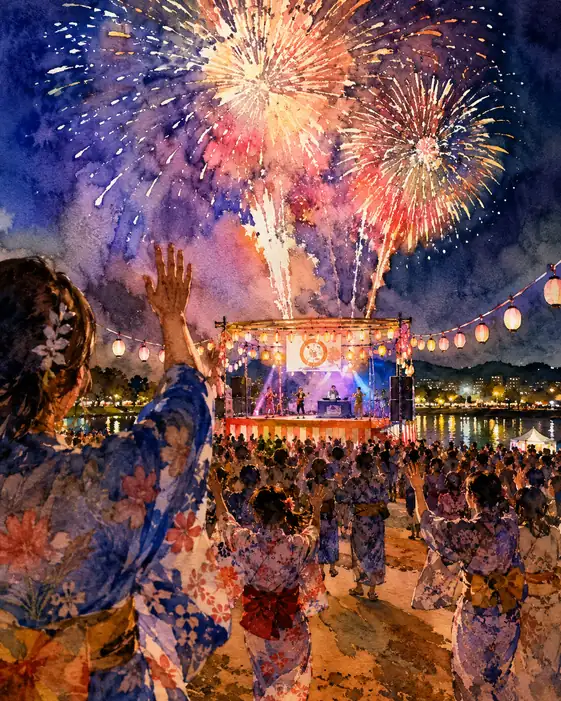 Yukata Crowd Raising Hands Before Fireworks and Open-Air Stage
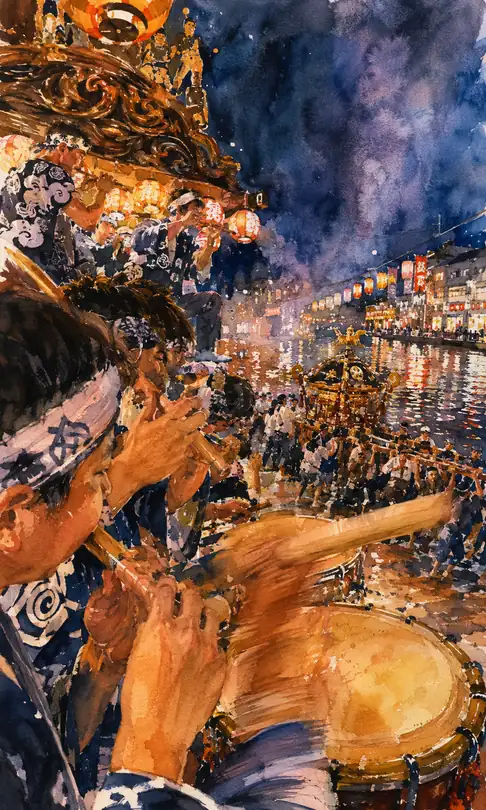 Flutes and Drums from the Float Resonating Over the Phoenix Shrine
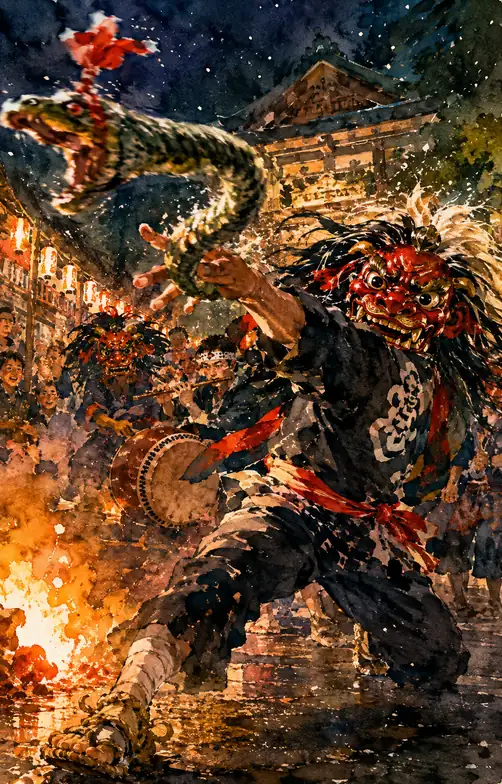 Red-Masked Lion Dancing Freely Before the Bonfire Flame
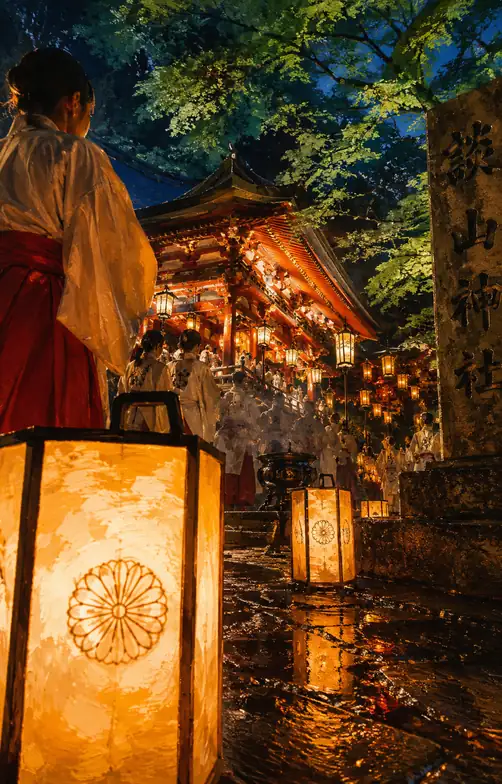 Chrysanthemum Lanterns and Maiden Procession at Tanzan Shrine