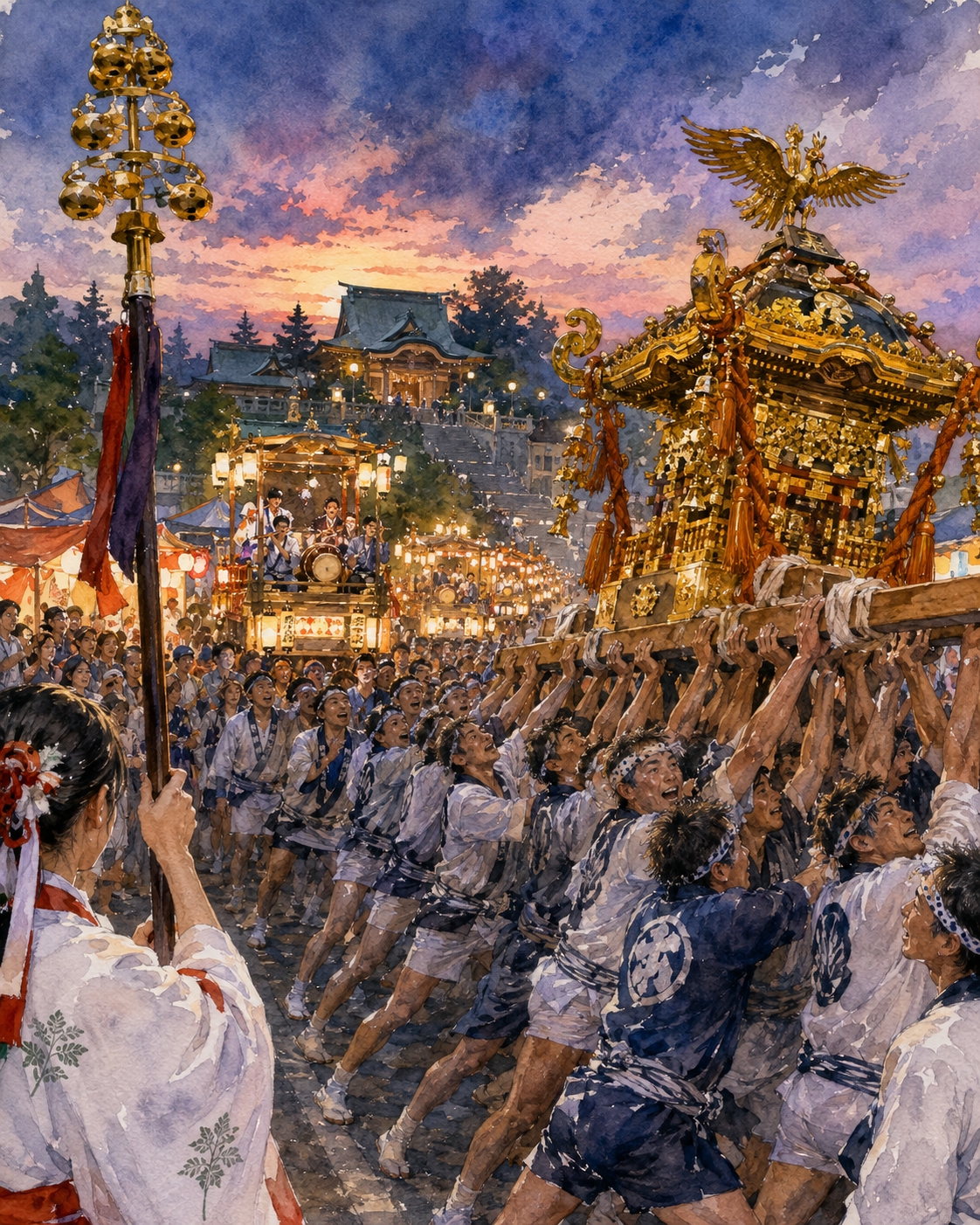
Golden Phoenix Shrine Raised High with Maiden's Bell
Critique
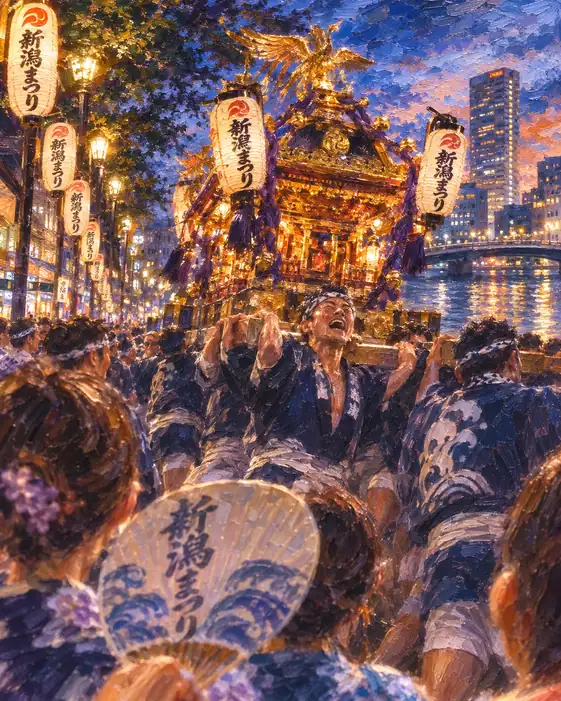
Introduction This painting portrays a portable shrine procession advancing through a crowded precinct at dusk. Shrine, carriers, a ceremonial standard, musicians, and buildings form a scene of communal effort. Description The ornate shrine rises on the right, crowned by a winged gold figure and supported on long wooden beams. Carriers in white and indigo lean backward beneath it, their arms raised in a dense sequence. At left, a woman seen from behind holds a tall standard fitted with tiers of metal bells and long colored cloths. Illuminated music carts, stalls, steps, and a main hall recede toward the sunset. Analysis The beams form a powerful diagonal from upper right toward the center, reinforced by repeated arms, tilted torsos, and bent legs. The vertical standard counters that thrust and fixes the foreground plane. Gold ornament and amber lamps advance against violet-blue clouds and pale clothing. Transparent washes preserve air between the many figures, while sharper edges on faces, hands, bells, and carved fittings establish a clear hierarchy of attention. Interpretation and Evaluation The shrine's splendor depends visibly on coordinated bodies, turning ornament into evidence of shared labor. The woman and standard introduce a quieter form of direction beside the carriers' exertion, while the distant musicians extend rhythm deep into the scene. The overlapping figures demonstrate descriptive skill, and converging architecture organizes the density. Refined color transitions, controlled watercolor, and the contrast between vertical ritual and diagonal motion create a distinctive interpretation of procession. Conclusion At first the gilded shrine commands the scene as a precious object, but closer viewing transfers attention to the chain of hands beneath it. The painting ultimately measures ceremony through human coordination, balancing grandeur with the specific gestures that make collective movement possible.
Same Subcategory
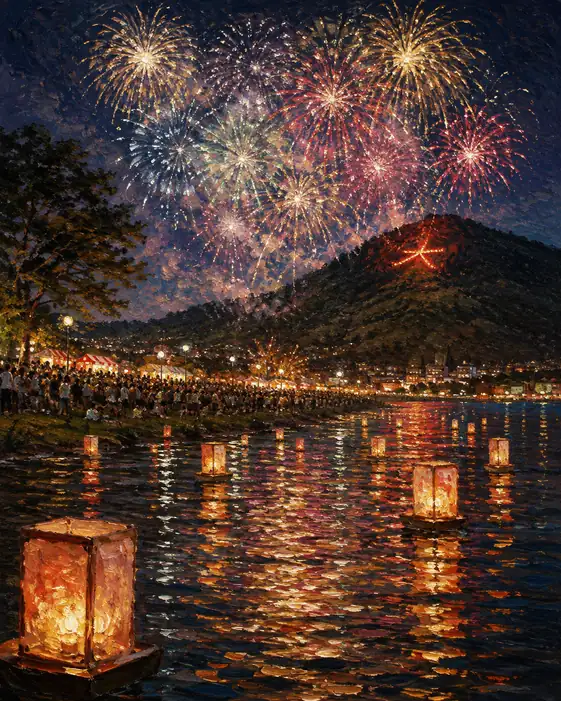 Blossoms of the Night Sky Embracing Daimonji and Floating Lanterns
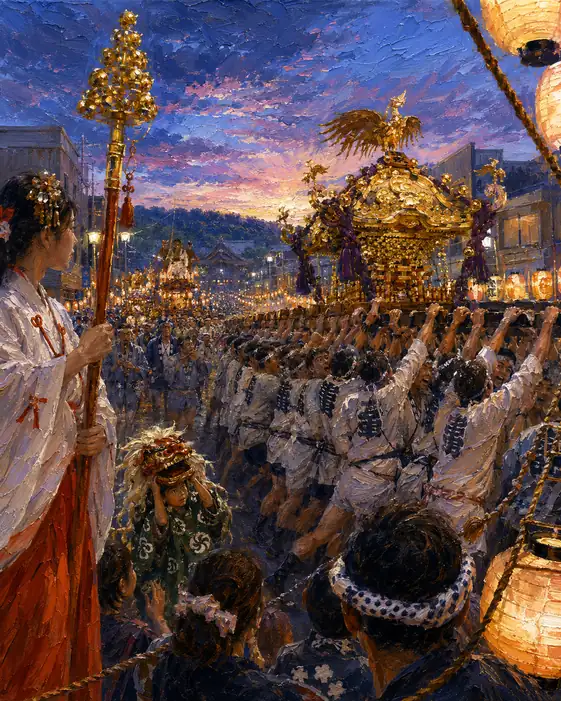 Golden Shrine Procession Under Twilight and Heated Shoulders
Similar Artworks
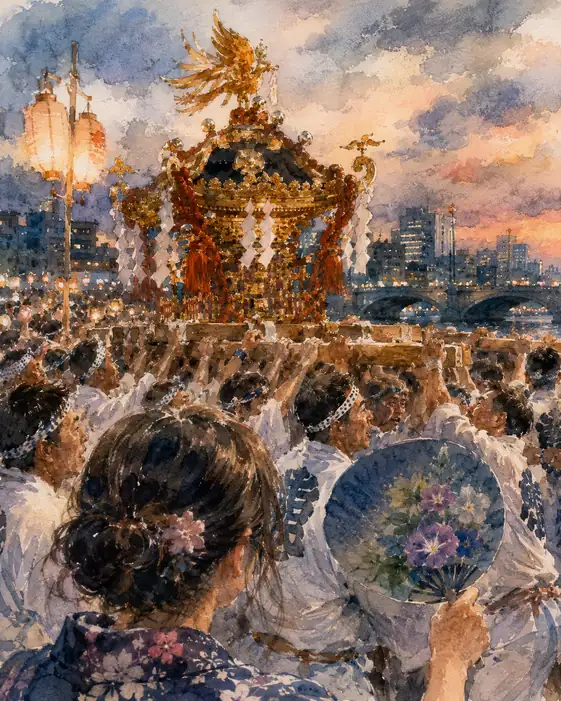 Flash of Sacred Shoulders in Dusk (No. 57)
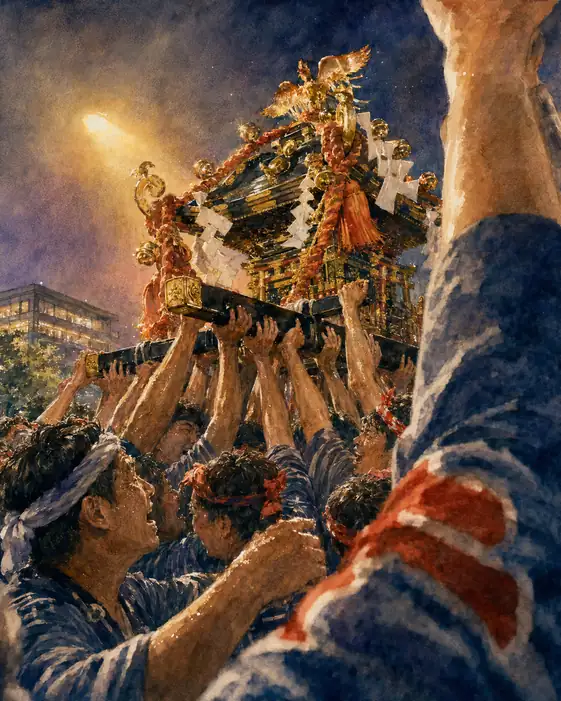 Pinnacle of Passion: Lifting the Sacred Shrine
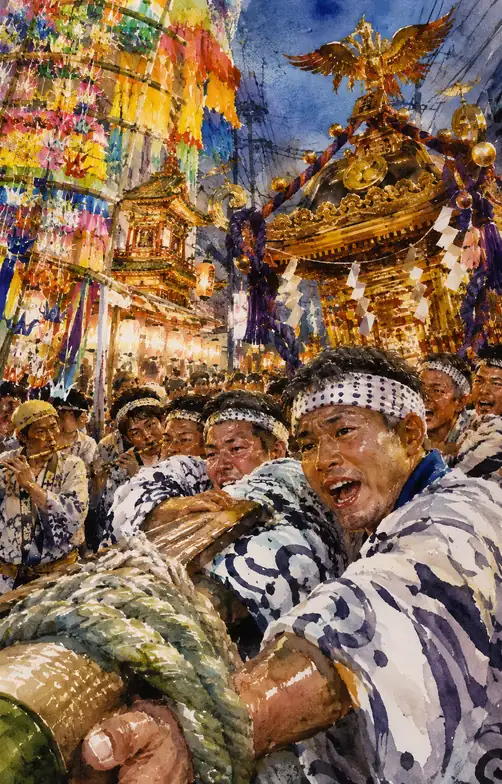 Golden Phoenix Shrine and Men's Cries Resonating in Tanabata Streamers
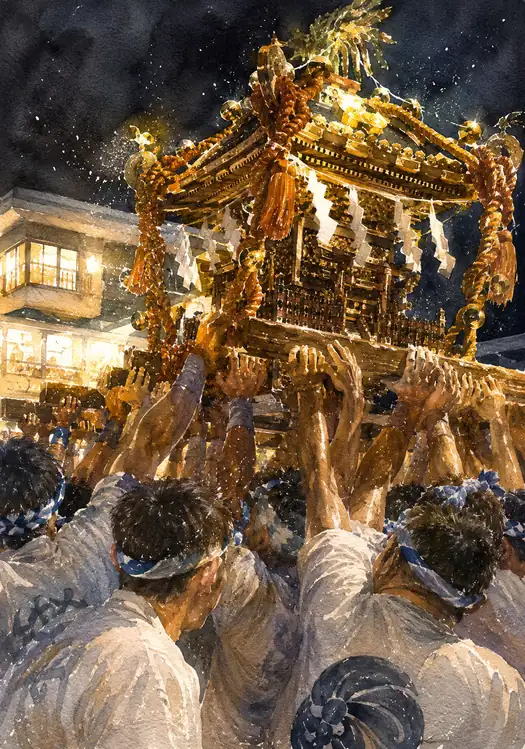 Raising the Golden Shrine Against the Night Sky
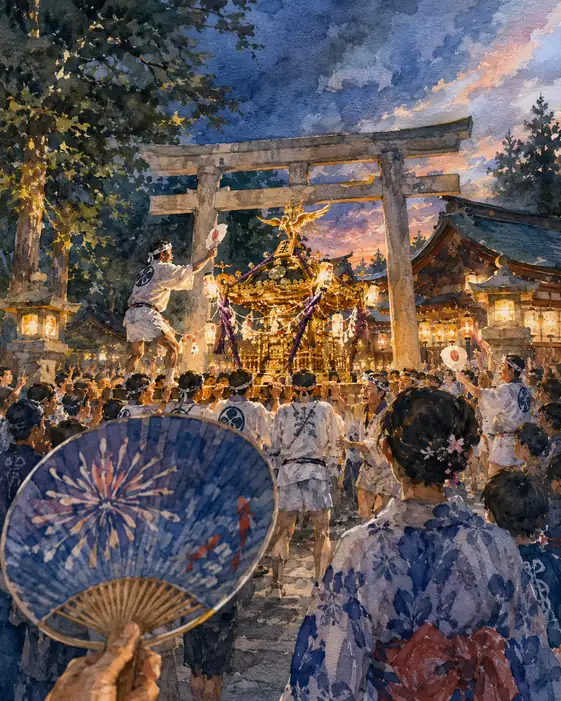 An Instant Eternity Scorching the Sky (No. 54)
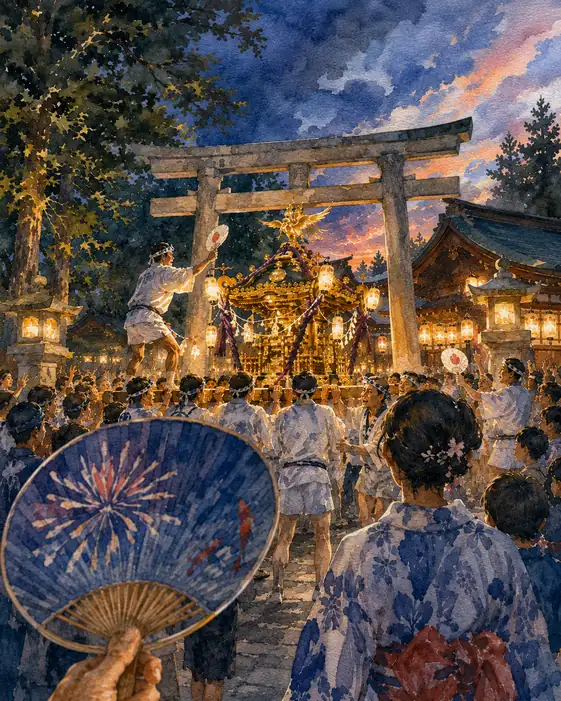 An Instant Eternity Scorching the Sky (No. 53)
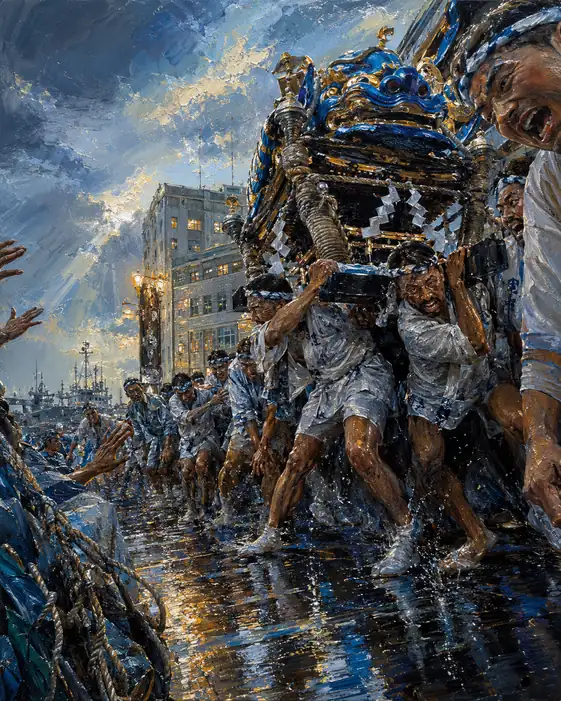 Roar of Men and Blue Lion Shrine Shaking the Port Town
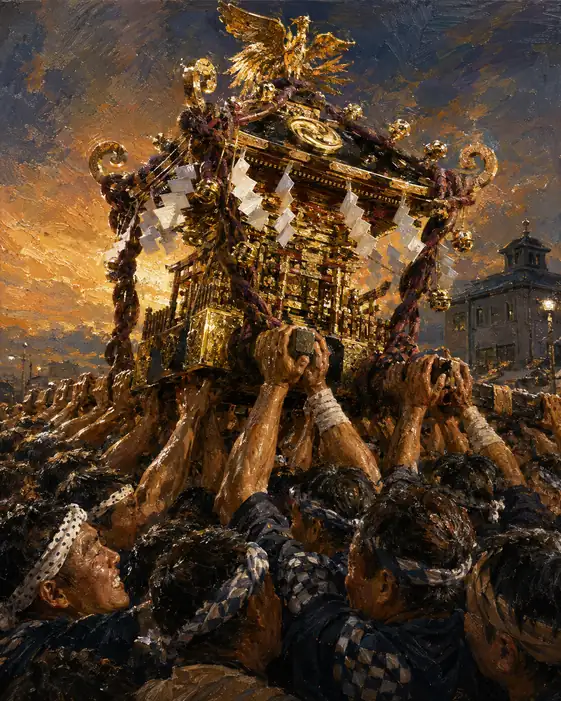 Flash of Sacred Shoulders in Dusk (No. 15)
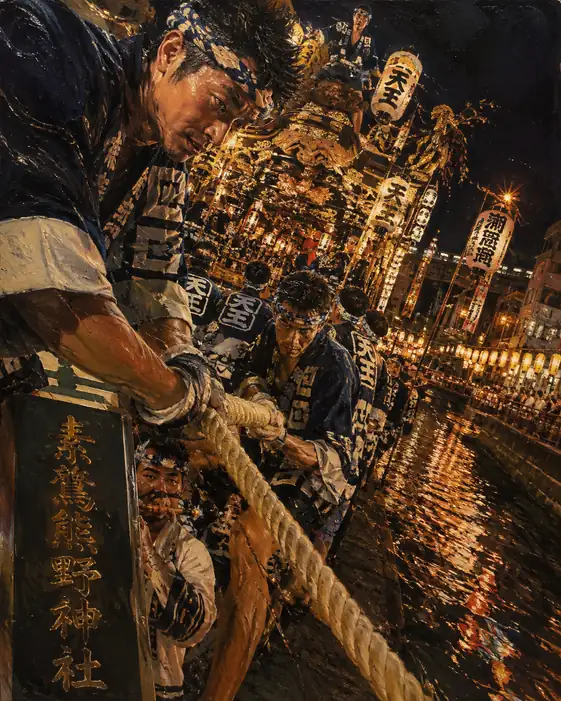 Men's Sweat and Ropes at Susanoo Shrine Tenno Festival
 Flash of Sacred Shoulders in Dusk (No. 52)