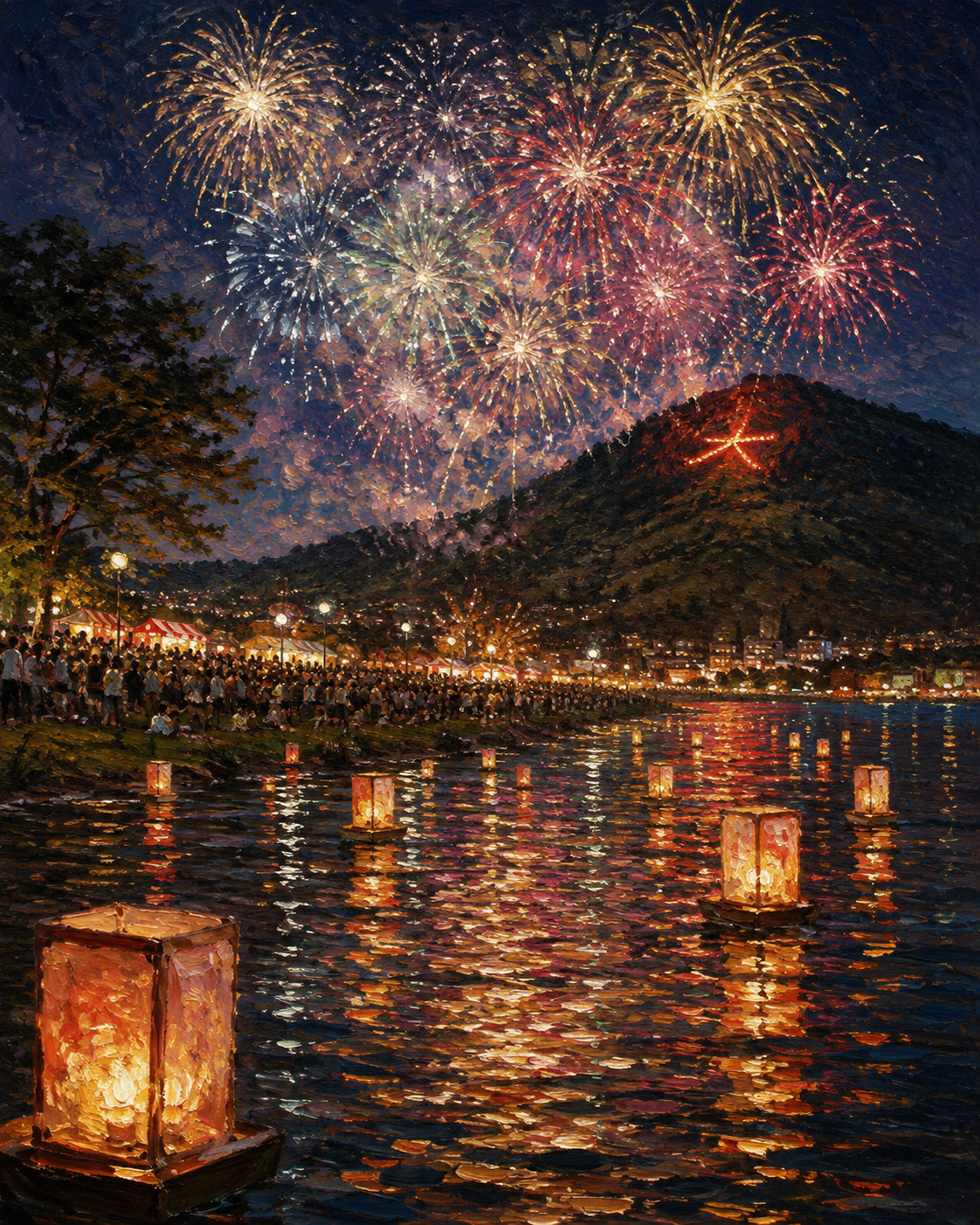
Blossoms of the Night Sky Embracing Daimonji and Floating Lanterns
Critique
Introduction This vertical painting depicts a riverside festival beneath overlapping fireworks and a glowing sign on a mountain. The close floating lanterns and thickly worked surface distinguish the scene through a strong sense of physical light. Description A large amber paper lantern occupies the lower left, its frame and crumpled translucent sides clearly visible. Smaller lanterns recede across dark water toward a crowded left bank lined with trees, lamps, and red-and-white stalls. Above the town, an angular red fire sign marks the mountain, while gold, red, green, and blue-white fireworks overlap across nearly the entire sky. Analysis The foreground lantern anchors the steep recession created by progressively smaller lights. The shoreline curves inward from the left, guiding the eye to the mountain before the radiating fireworks return it upward. Short, thick strokes break the water into dark blue, orange, pink, and white facets; similar marks construct foliage and smoke. Warm reflections form a central channel through the river, offset by cooler margins and the mountain's broad shadow. Interpretation and Evaluation Rather than treating the lanterns as minor decoration, the painting makes their fragile material presence equal to the distant spectacle. The rough surface suggests flame, wetness, and shifting air without erasing structural details. Its diagonal spatial design is persuasive, and the compressed crowd is described through economical variations of posture and value. Dense impasto, coordinated warm-cool color, and the unusually dominant foreground lantern give the familiar festival subject a distinctive intimacy. Conclusion At first the fireworks seem to supply all movement, yet closer attention reveals that the river's reflections lead the composition. The scene becomes less an inventory of celebrations than a study of how one small flame can organize distance, color, and collective attention.
Same Subcategory
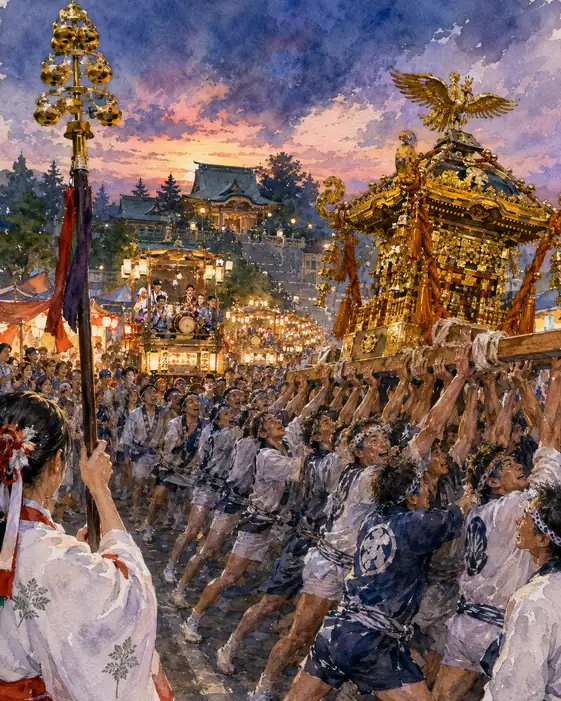 Golden Phoenix Shrine Raised High with Maiden's Bell
Similar Artworks
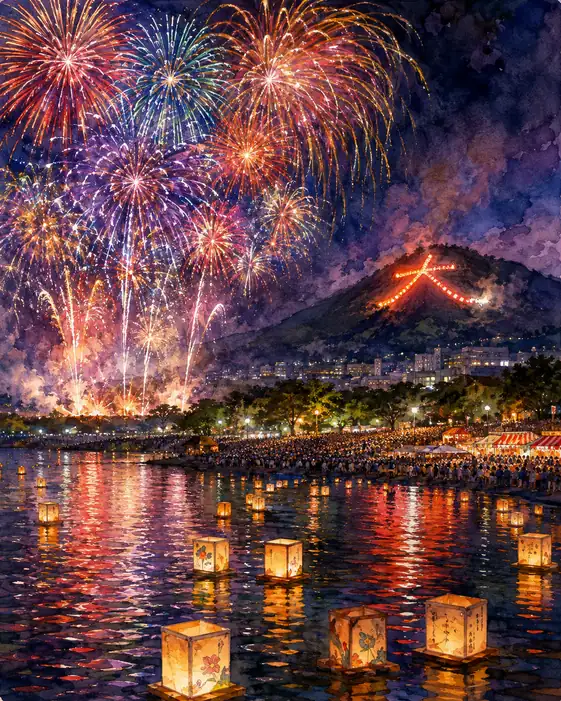 Colorful Blossoms and Floating Lanterns Under the Daimonji Mountain
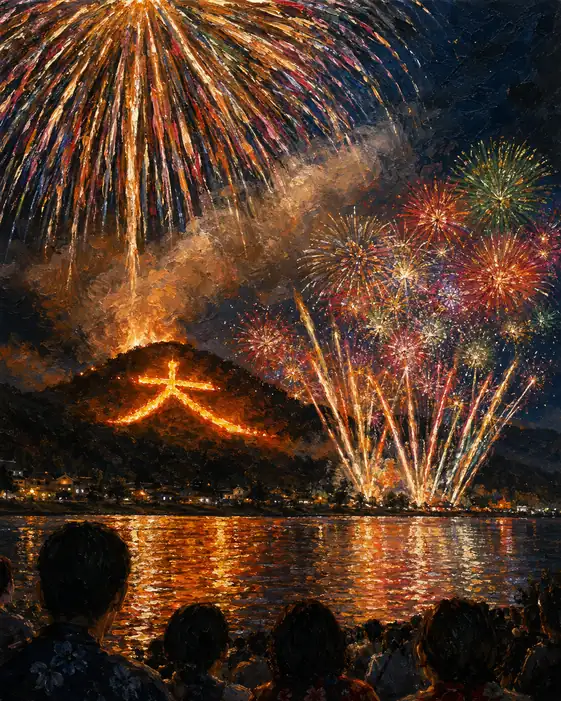 Daimonji Fire Mountain and Grand Fireworks Viewed from the Lakeside
 Open-Air Stage, Floating Lanterns, and Grand Fireworks Over the River
 An Instant Eternity Scorching the Sky (No. 82)
 Stream of Lantern Light Floating down the Gorge and Golden Willow Fireworks
 Golden Chrysanthemum Fireworks Embracing the Bridge and Stalls
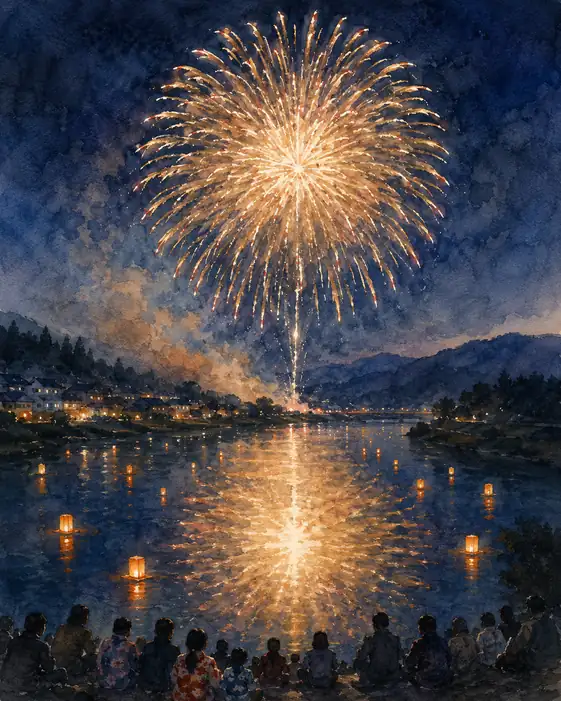 An Instant Eternity Scorching the Sky (No. 83)
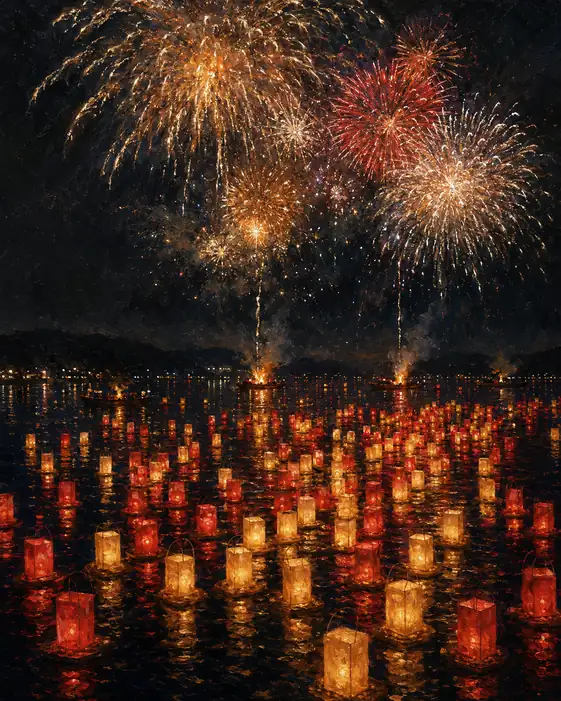 Golden Canopy Over Lake Lanterns
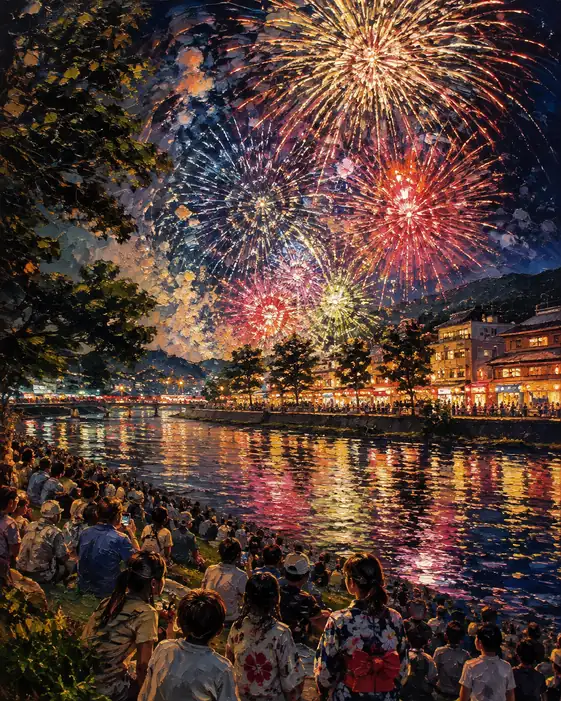 Spectators Seated on the Riverbank Watching Spa Town and Fireworks
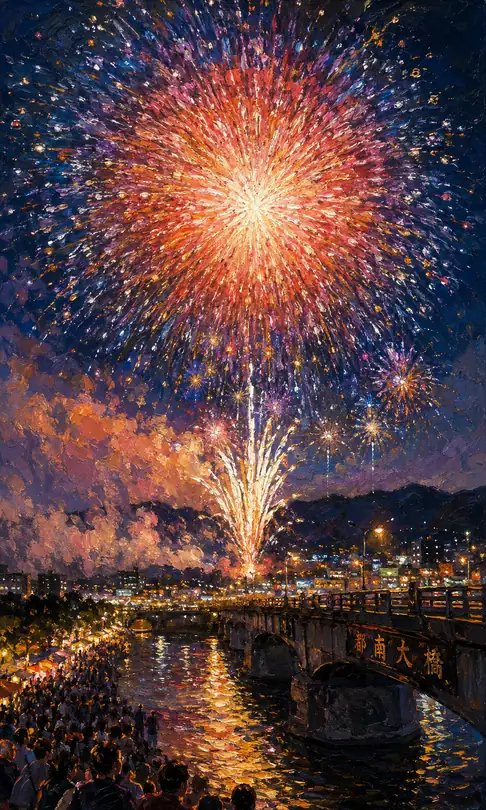 Kaleidoscope Fireworks and River Reflection by Tonan Great Bridge