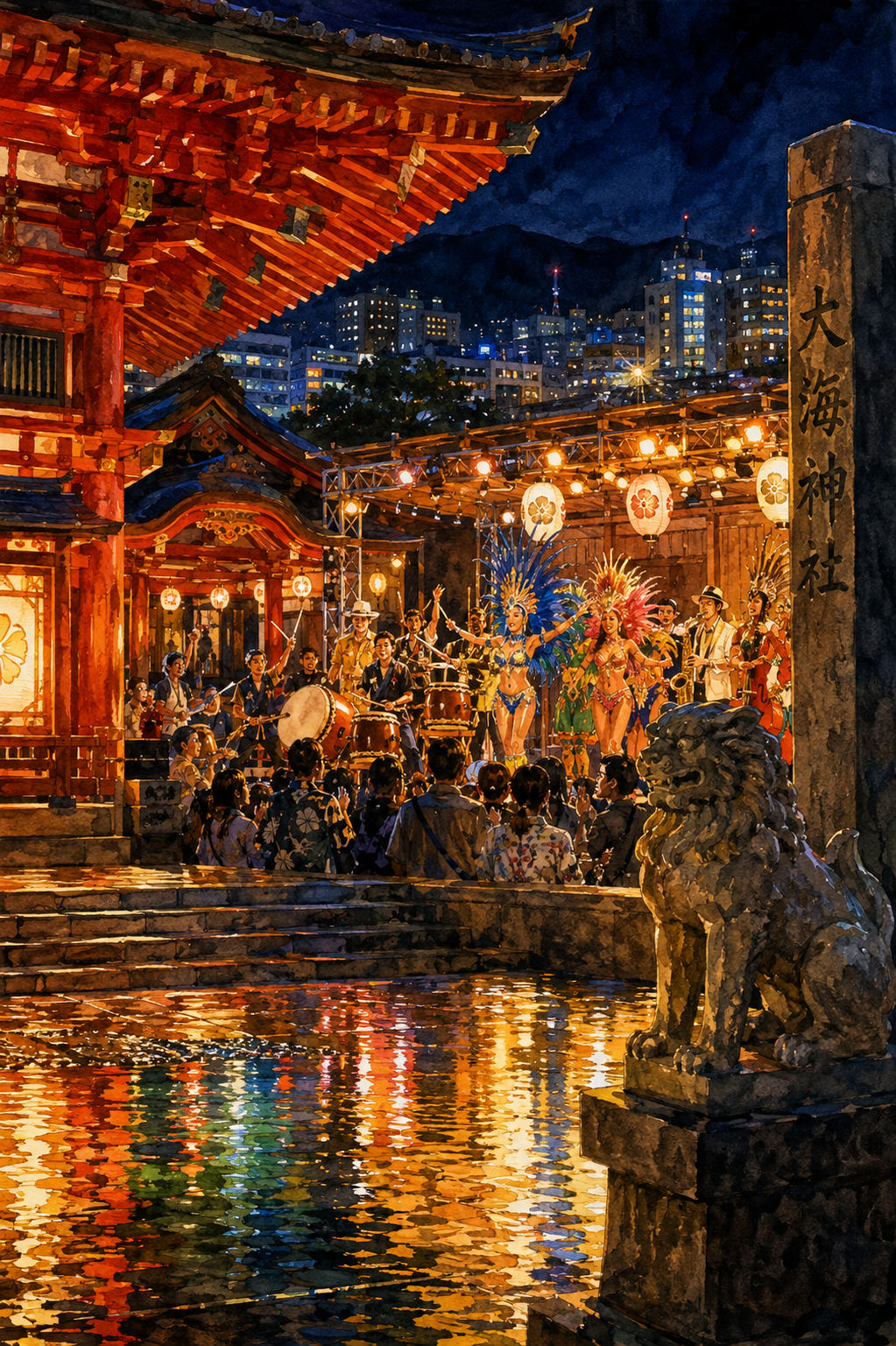
Taiko Beats and Samba Joy at Ohmi Shrine's Night Festival
Critique
Introduction This nocturnal courtyard places a colorful stage performance within shrine architecture. A red gate and eaves dominate the left, while a stone pillar and guardian frame the right, directing attention toward central dancers and musicians. Description Feathered dancers in blue and red stand before drummers and brass players under lanterns and spotlights. A seated audience fills the steps between stage and reflective pool. Vermilion beams project diagonally from the upper left, and the stone marker rises near the right edge. Beyond the precinct, apartment blocks and towers climb against dark mountains and cloudy sky. Analysis The composition creates depth through nested frames: architecture encloses the stage, the crowd forms a middle band, and water opens the foreground. Reds and golds move from shrine to lamps, costumes, and reflections, while blue-green accents connect performers to the city. The guardian's solid profile counters open arms and radiating feathers. Angular beams, circular lanterns, and vertical buildings establish distinct rhythms without fragmenting the scene. Interpretation and Evaluation The meeting of ceremonial setting, percussion, brass, and carnival dress presents tradition as an active site of exchange. The elements are linked by performance, spectatorship, and light. Architectural description is precise, the asymmetrical framing is stable, and the saturated warm-cool palette remains coherent. Extending costume colors into the pool is especially effective, turning the event into a shifting abstract pattern. Conclusion At first the feathered dancers seem to contrast sharply with the shrine, but prolonged viewing reveals visual bridges between them. Red structures, rhythmic instruments, spectators, and reflected color turn difference into continuity, making the courtyard a persuasive image of communal culture in transformation.
Same Subcategory
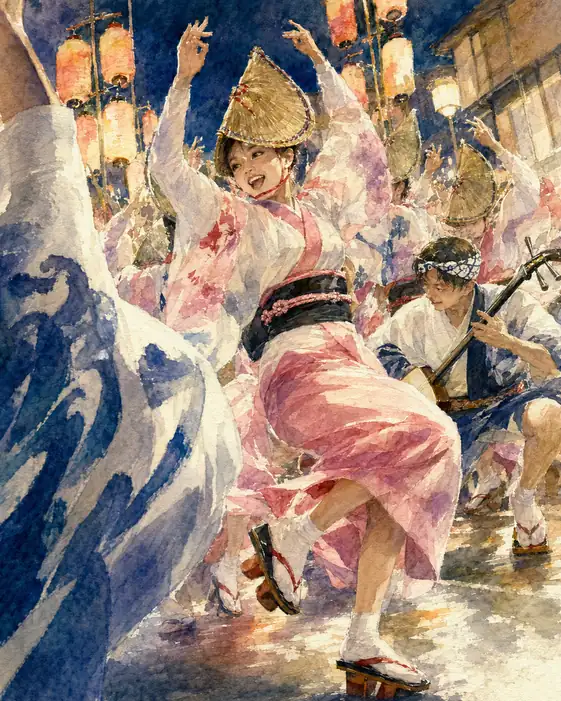 Pink Skirts Dancing Under Straw Hats and Shamisen Strumming
Similar Artworks
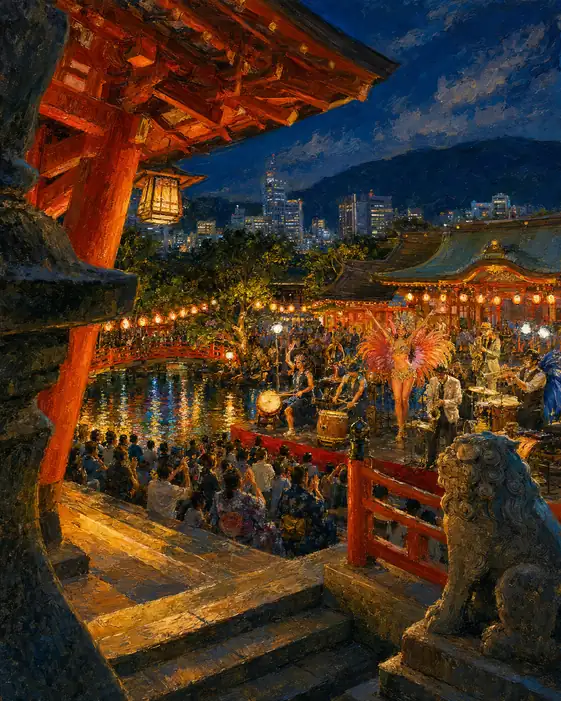 Passionate Night Under the Gate and Guard Lion
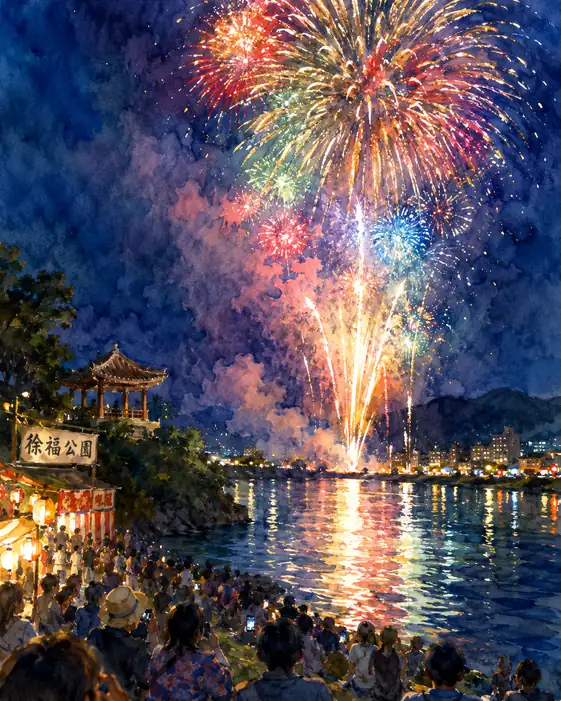 Chinese-Style Pavilion at Jofuku Park and Splendid Fireworks Over River
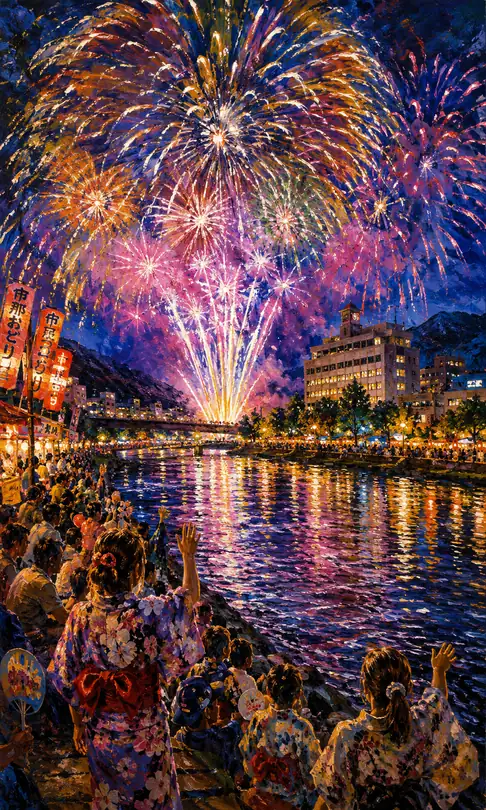 Grand Fireworks and Jubilant Spectators in Yukata by the Riverside City Hall
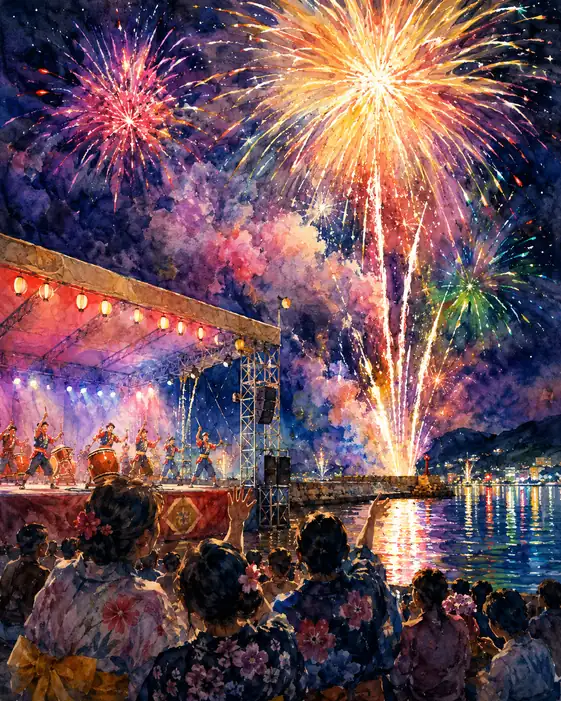 Taiko Drums Resonating on the Harbor Stage Under Gold-Pink Fireworks
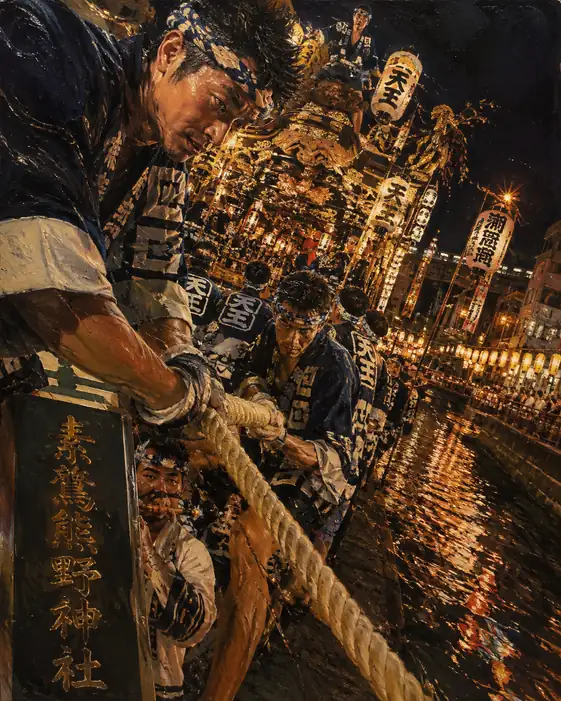 Men's Sweat and Ropes at Susanoo Shrine Tenno Festival
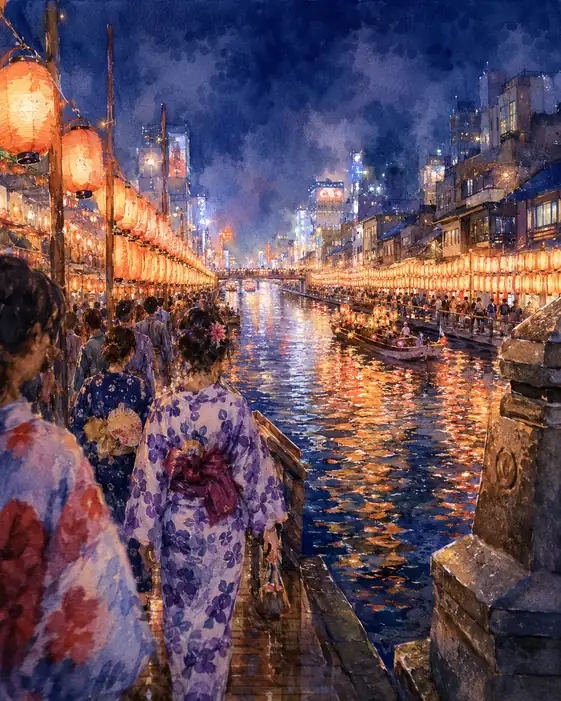 Lantern Boats and Purple Floral Yukata Along the Canal
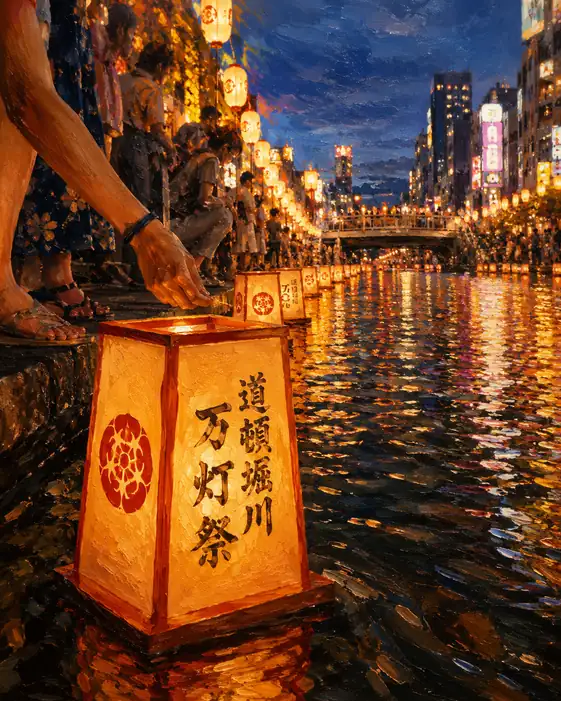 Hand Releasing a Lantern into the Water at Dotonbori River Festival
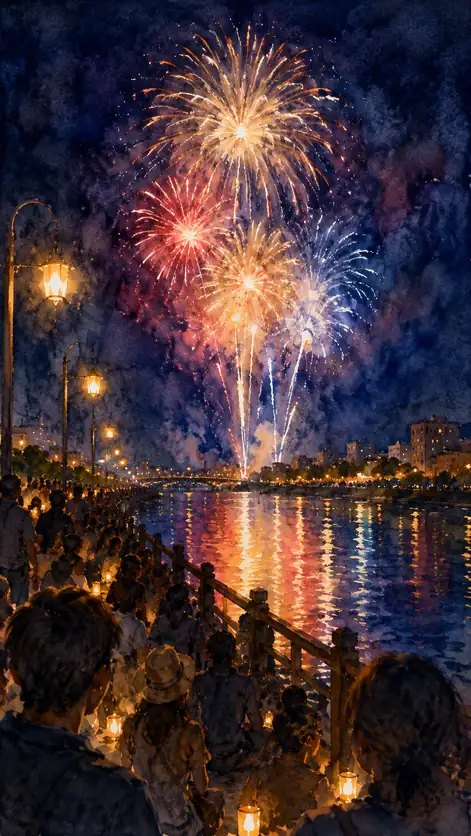 An Instant Eternity Scorching the Sky (No. 9)
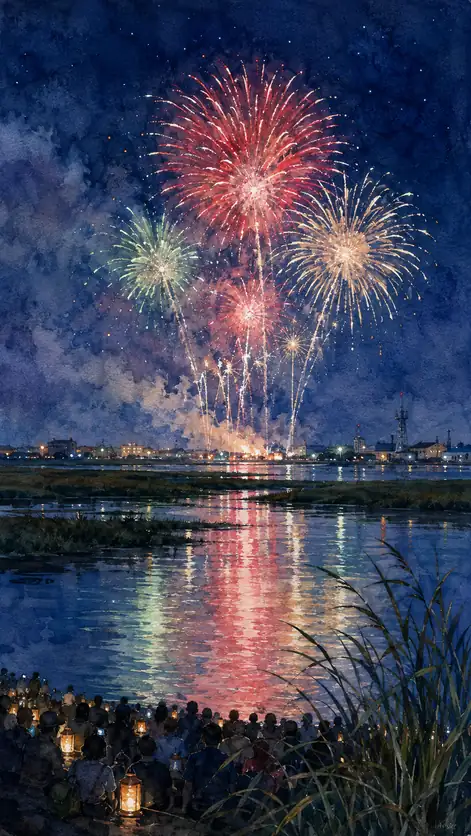 An Instant Eternity Scorching the Sky (No. 8)
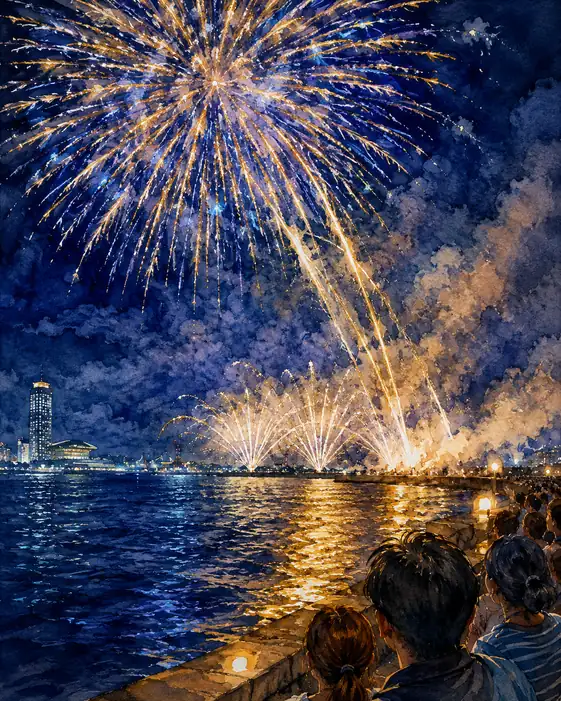 Couple on the Harbor Breakwater Watching High-Rise Tower and Blue-Gold Fireworks