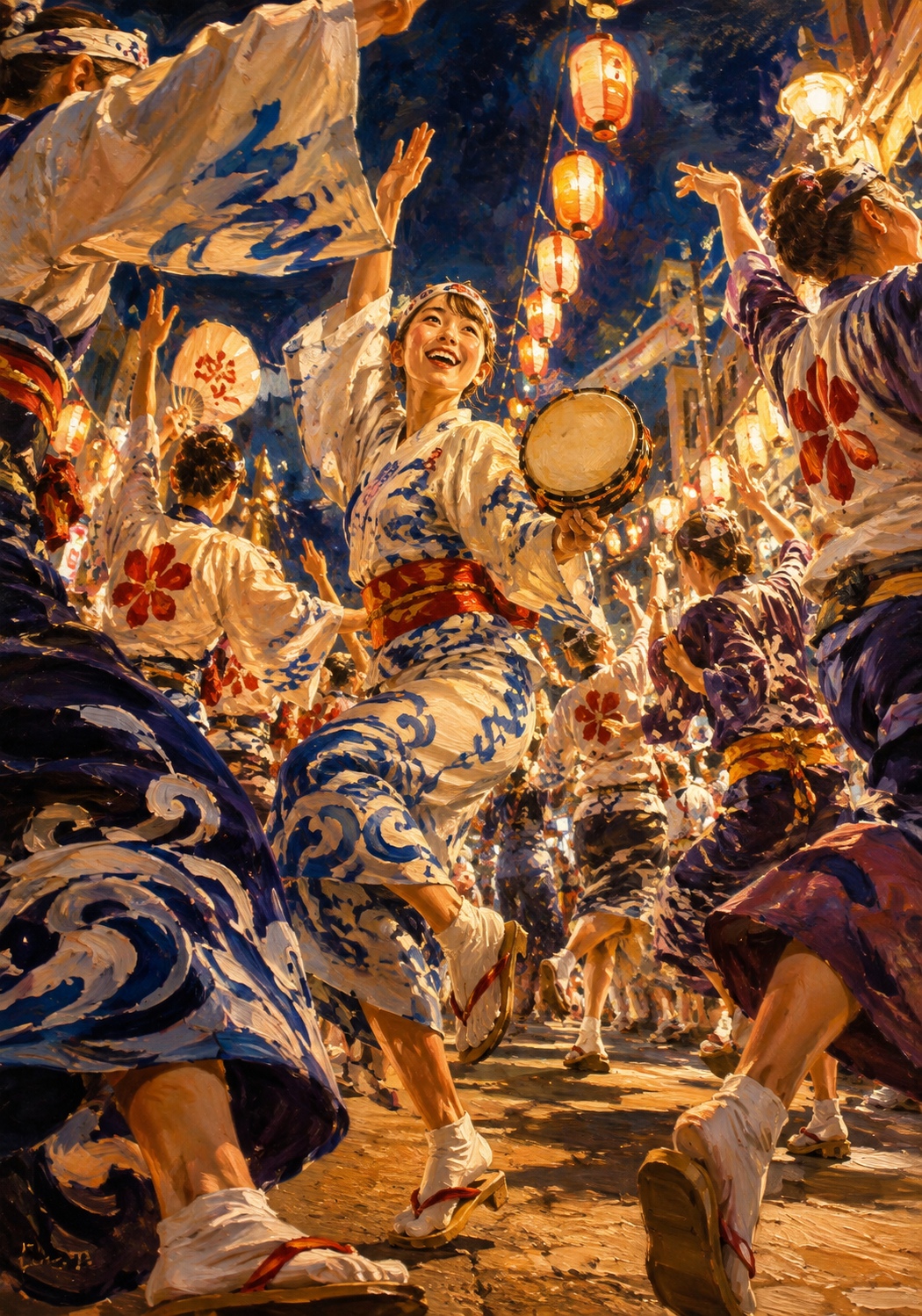
Swirling Wave-Patterned Yukata and Joyful Hand Drum
Critique
1. Introduction This painting centers on a young dancer moving through a nighttime procession. Seen from a low angle, she lifts one hand and presents a drum with the other. Surrounding bodies, lanterns, and vigorous brushwork turn the street into a channel of coordinated energy. 2. Description The central figure wears a white robe patterned with cobalt curves and secured by a red sash. Her smiling face tilts toward the lanterns as one lifted foot marks the next step. Cropped dancers in violet and white occupy both edges, their sleeves and legs entering from outside the frame. Red lanterns recede above, while fans and hands punctuate the crowd. 3. Analysis The low viewpoint enlarges the central legs and torso, creating a diagonal rise from her sandal to her raised palm. Figures along the sides bend inward, forming a corridor that concentrates attention on her face and drum. Cream highlights catch folds, cheeks, and ground, while cobalt and violet shadows balance the orange light. Visible strokes fragment contours yet follow bodily direction. 4. Interpretation and Evaluation The scene interprets festival dance as individual joy sustained by a group. The drum’s circular form answers the lanterns above, connecting personal gesture to communal rhythm. Convincing foreshortening and varied poses demonstrate strong figure drawing, and the compressed composition remains readable despite its density. Broad, textured paint gives the traditional subject unusual immediacy and distinguishes it from a detached ceremonial record. 5. Conclusion At first the central smile and lamps dominate perception, but closer viewing reveals how cropped limb and converging brushstroke supports her forward step. The work combines daring perspective, disciplined color, and tactile technique to make movement, sound, and shared celebration appear inseparable.
Same Subcategory
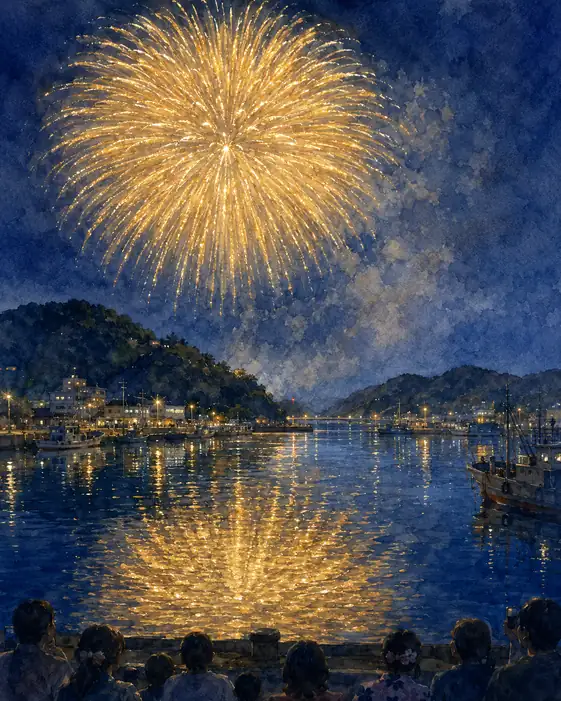 Golden Stars and Ship Silhouettes Embracing the Harbor Cove
Similar Artworks
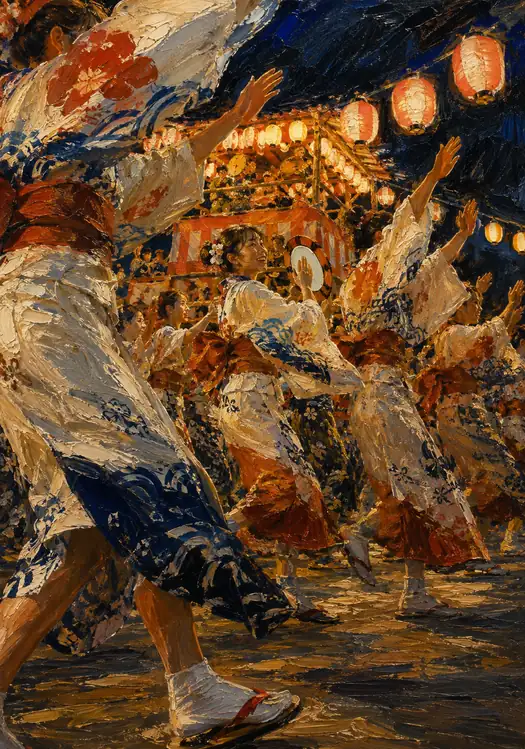 Swirling Summer Robes in Night Air (No. 94)
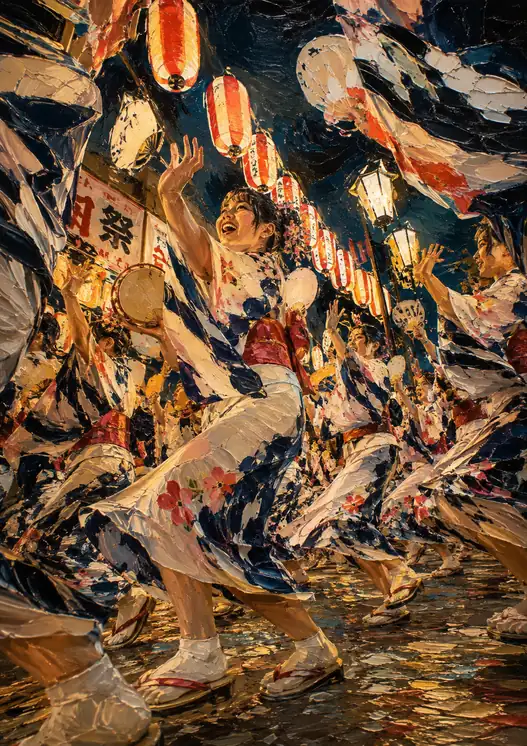 Vibrant Dance Under the Street Lanterns
 Swirling Summer Robes in Night Air (No. 37)
 Dynamic Swirls and Smiling Dancers Under the Tower Lights
 Awa Dance Blooming with Cheers and Shamisen Melodies
 Swirling Summer Robes in Night Air (No. 32)
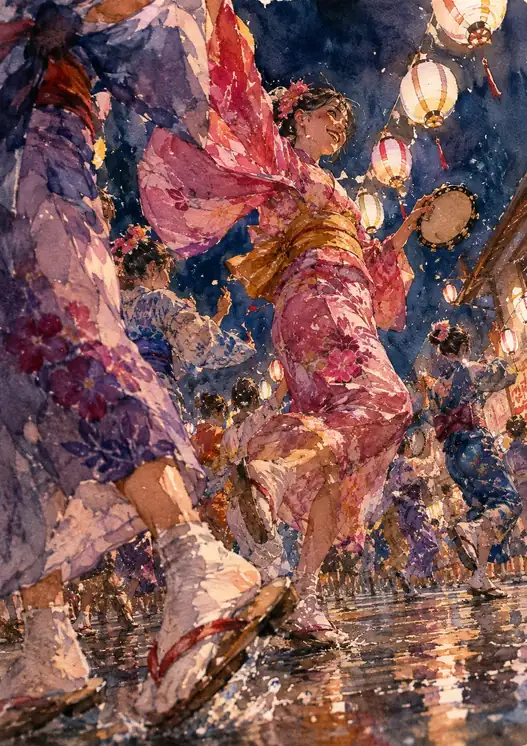 Bouncing Geta and Pink Dance on the Wet Pavement
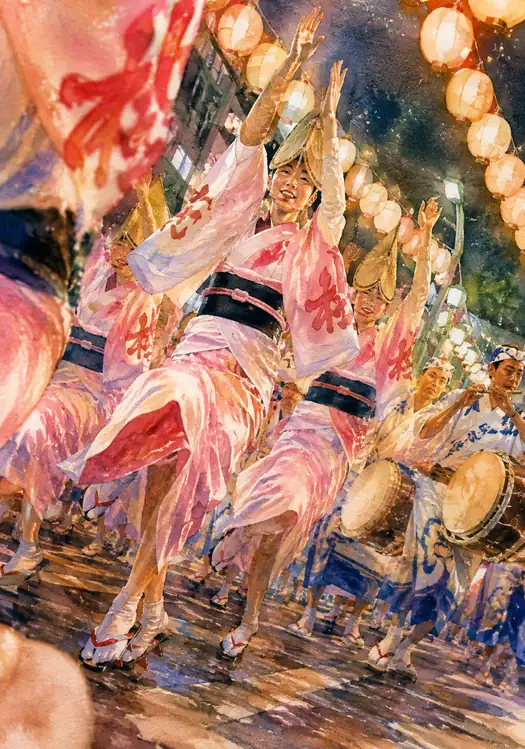 Pink Straw-Hatted Dancers Under the Lantern Light
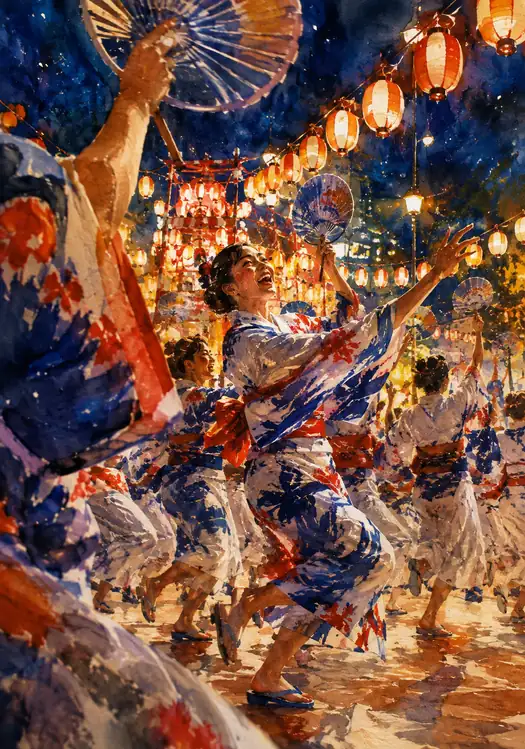 Swirling Summer Robes in Night Air (No. 97)
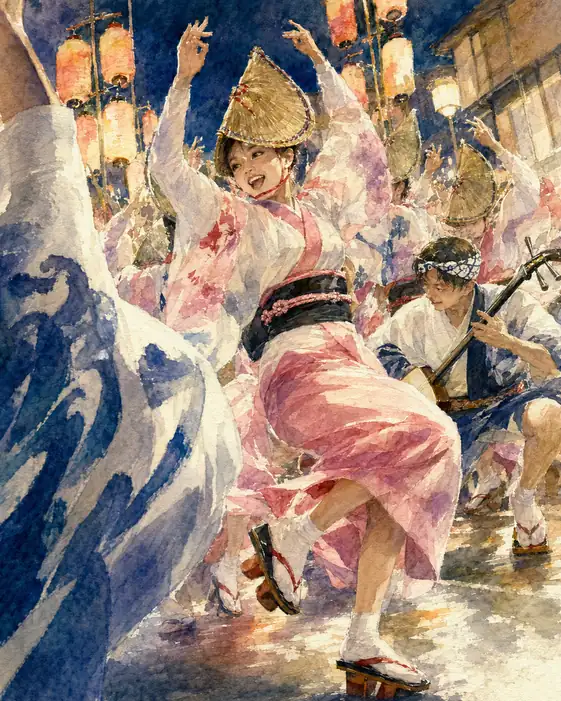 Pink Skirts Dancing Under Straw Hats and Shamisen Strumming