
Symmetrical Golden Mirror Flowers on the Lake
Critique
Introduction This symmetrical lakeside scene joins a golden firework to its expansive reflection, creating a double image of radiance above and below the horizon. Mountains, town lights, and spectators give the spectacle a precise sense of place and scale. Description A large willow-like burst opens above the central launch point, with a white core and long gold trails. Smoke rises between dark mountain ranges. Across the lake, a bridge and shoreline lamps form a thin horizontal band; small groups gather on the right bank. The water mirrors the firework as a broad inverted flower, broken by ripples. Silhouetted spectators and a fence occupy the bottom edge. Analysis The horizon divides the composition into two related halves. Above, narrow lines radiate and fall; below, their reflection becomes wider, softer, and more fragmented. A central vertical axis joins core, launch, bright water, and reflected center. Mountain diagonals converge toward the ignition point, while bridge and shoreline stabilize the depth. Interpretation and Evaluation Reflection extends the brief event and invites comparison between direct experience and memory. The upper firework is brilliant and sharply structured; its watery double is unstable yet visually generous, suggesting how recollection transforms what it receives. Spectators remain anonymous so viewers can share their position. Town and bridge lights maintain ordinary continuity beneath the singular burst. The strong symmetry feels contemplative rather than rigid because smoke, ripples, and unequal shorelines continually disturb exact correspondence. Conclusion The painting succeeds through structural clarity, restrained color, and sensitive variation of texture. Sky and lake receive equal visual weight, making the landscape an active participant in celebration. The doubled flower turns a fleeting display into an image of perception itself: one light seen, reflected, shared, and remembered.
Same Subcategory
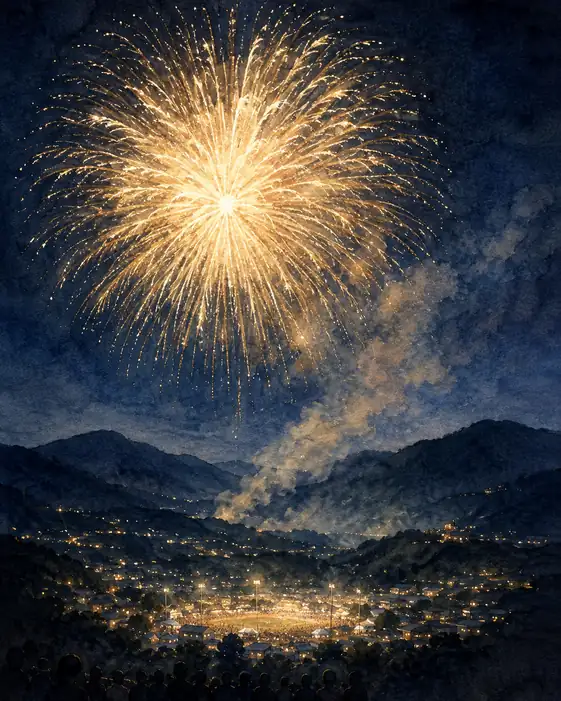 Golden Crown Radiant Over the Basin Town
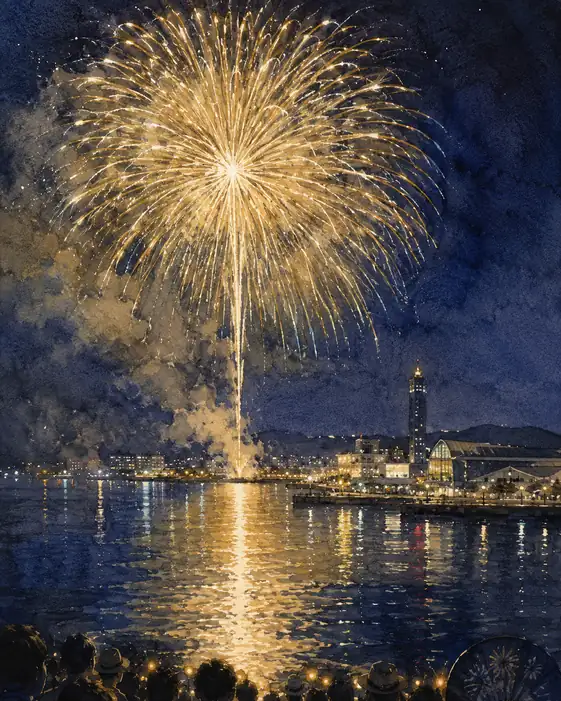 Golden Meteors Cascading Over the Harbor Tower and Sea
Similar Artworks
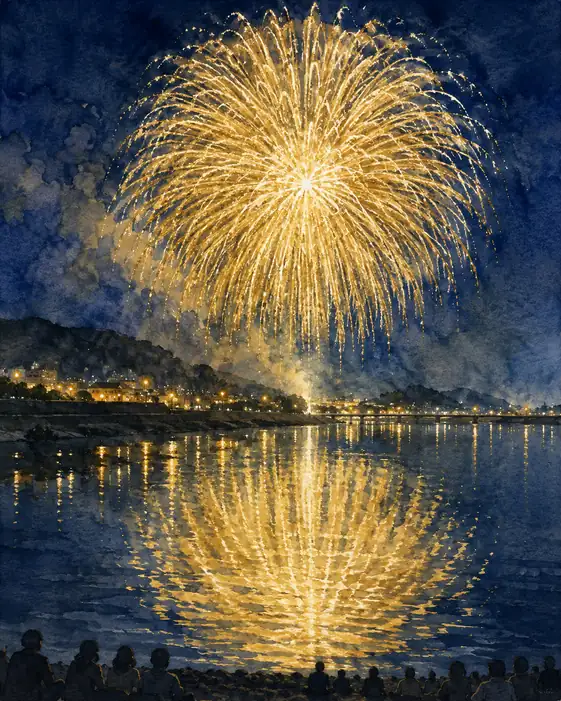 Golden Bloom Above and Reflected in the Quiet Waters
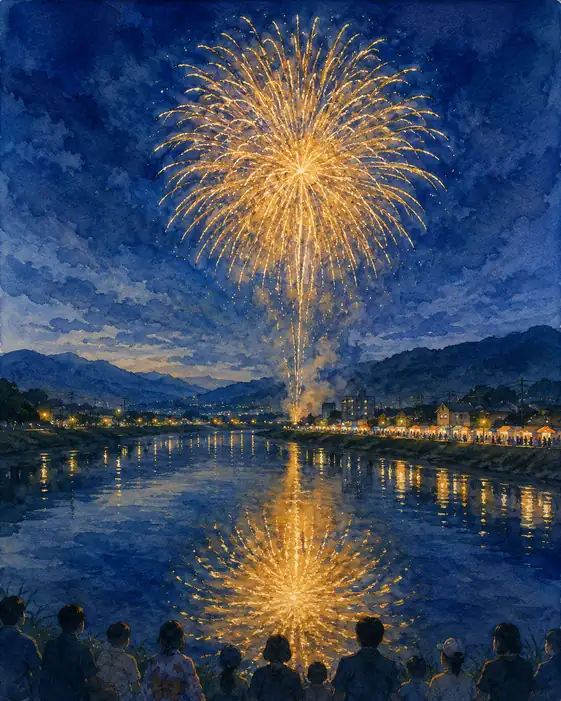 Golden Mirrored Fireworks Joining Sky and Water
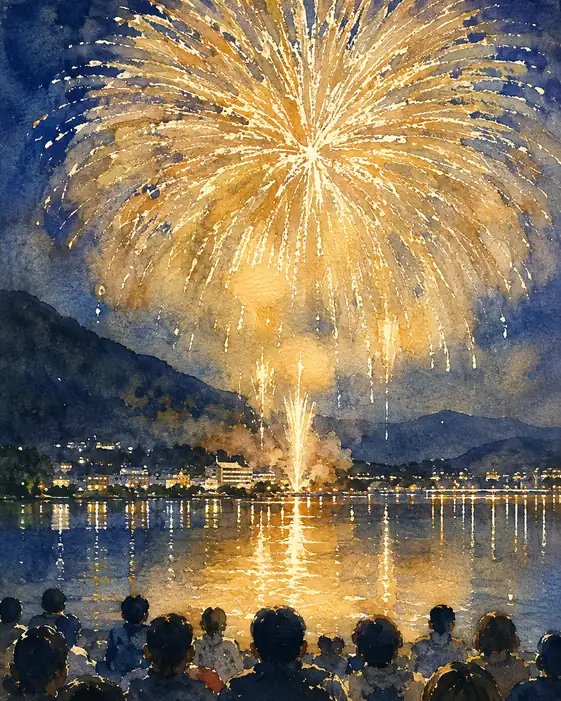 Golden Willow Canopy Over the Lake
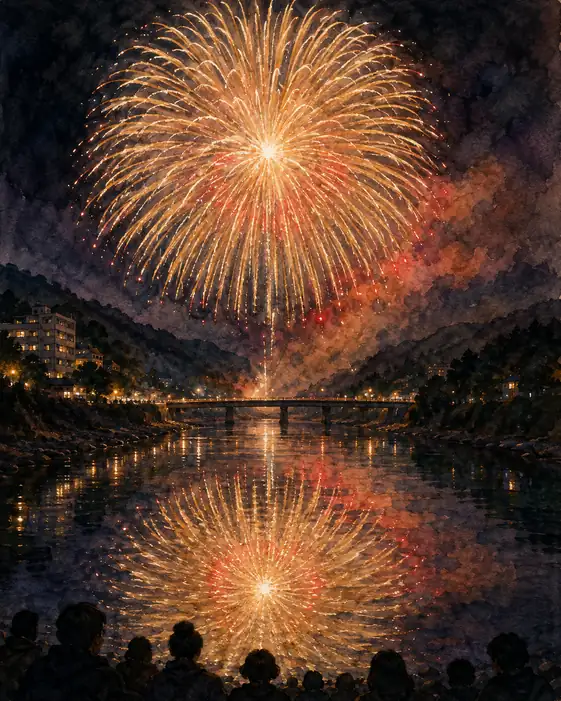 Red-Golden Bloom and Silent Crowd Reflected on the River
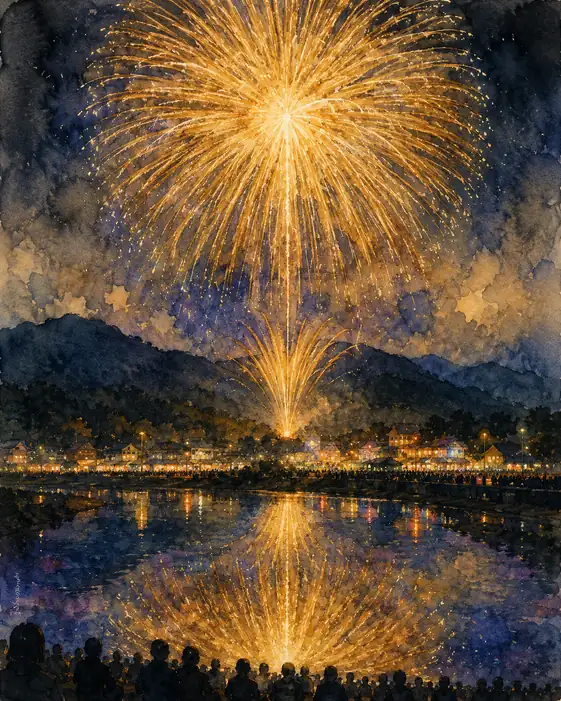 Golden Blossoms Reflected in Symmetrical Harmony
 Golden Starmine and Sea Reflections Over the Bay
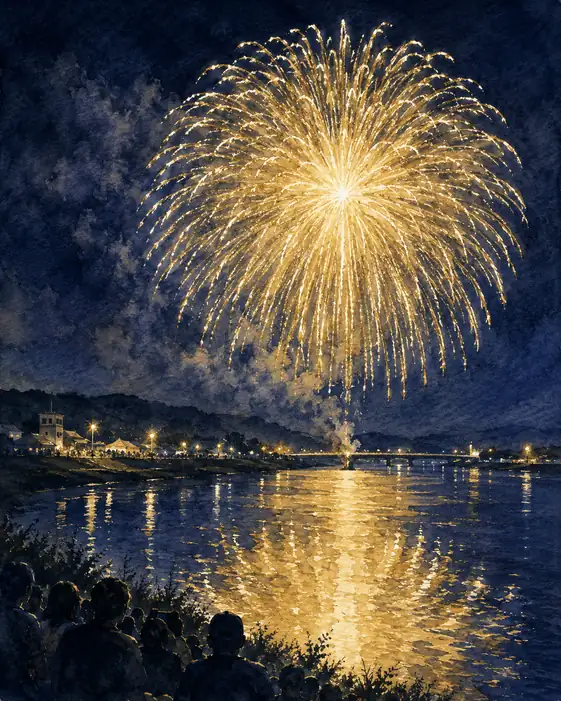 An Instant Eternity Scorching the Sky (No. 99)
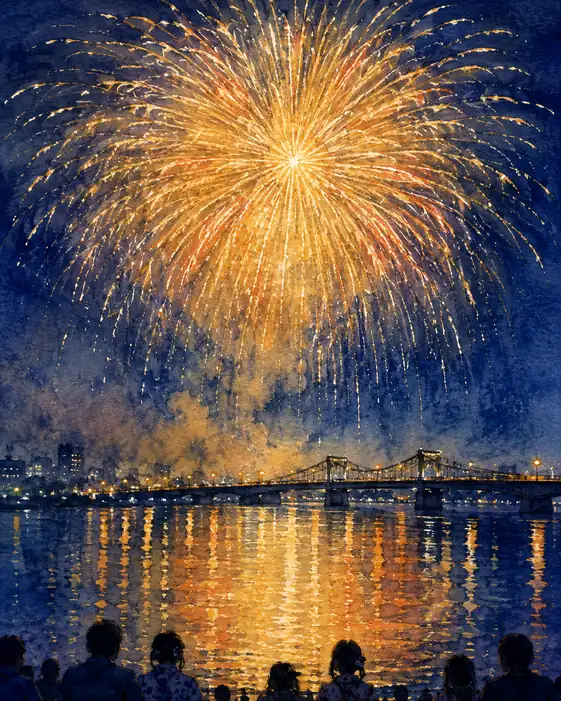 An Instant Eternity Scorching the Sky (No. 59)
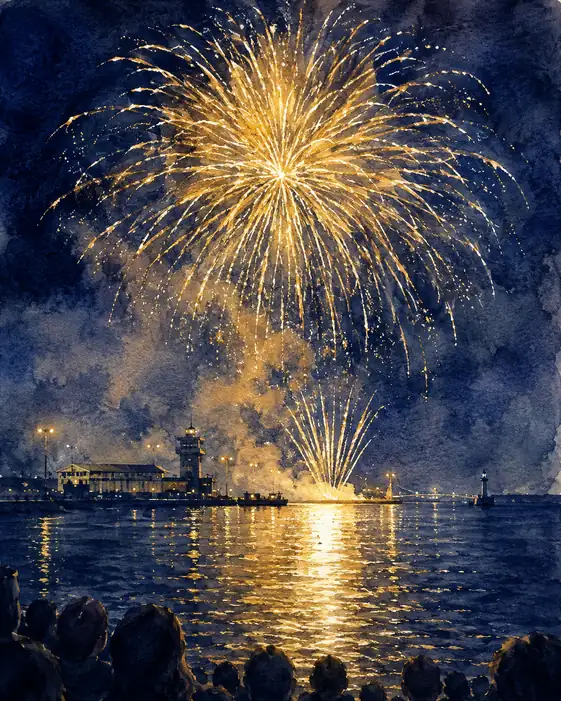 Golden Bloom Illuminating the Harbor and Sea
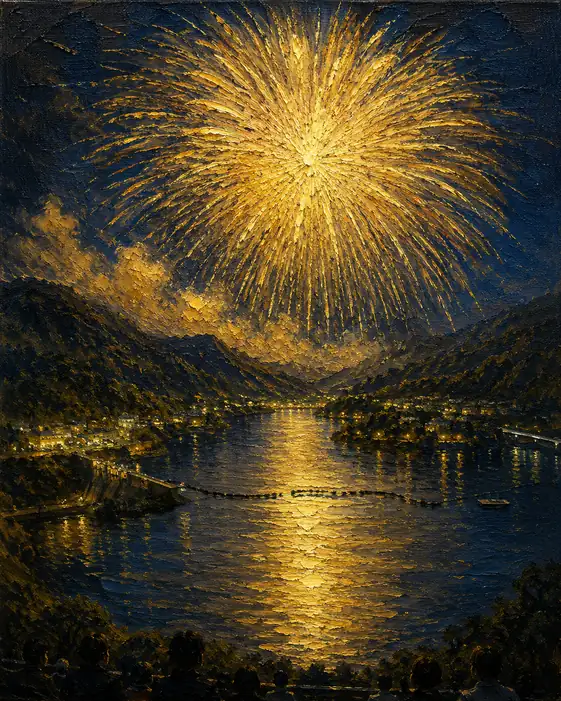 Golden Bloom Over the Mountain Lake