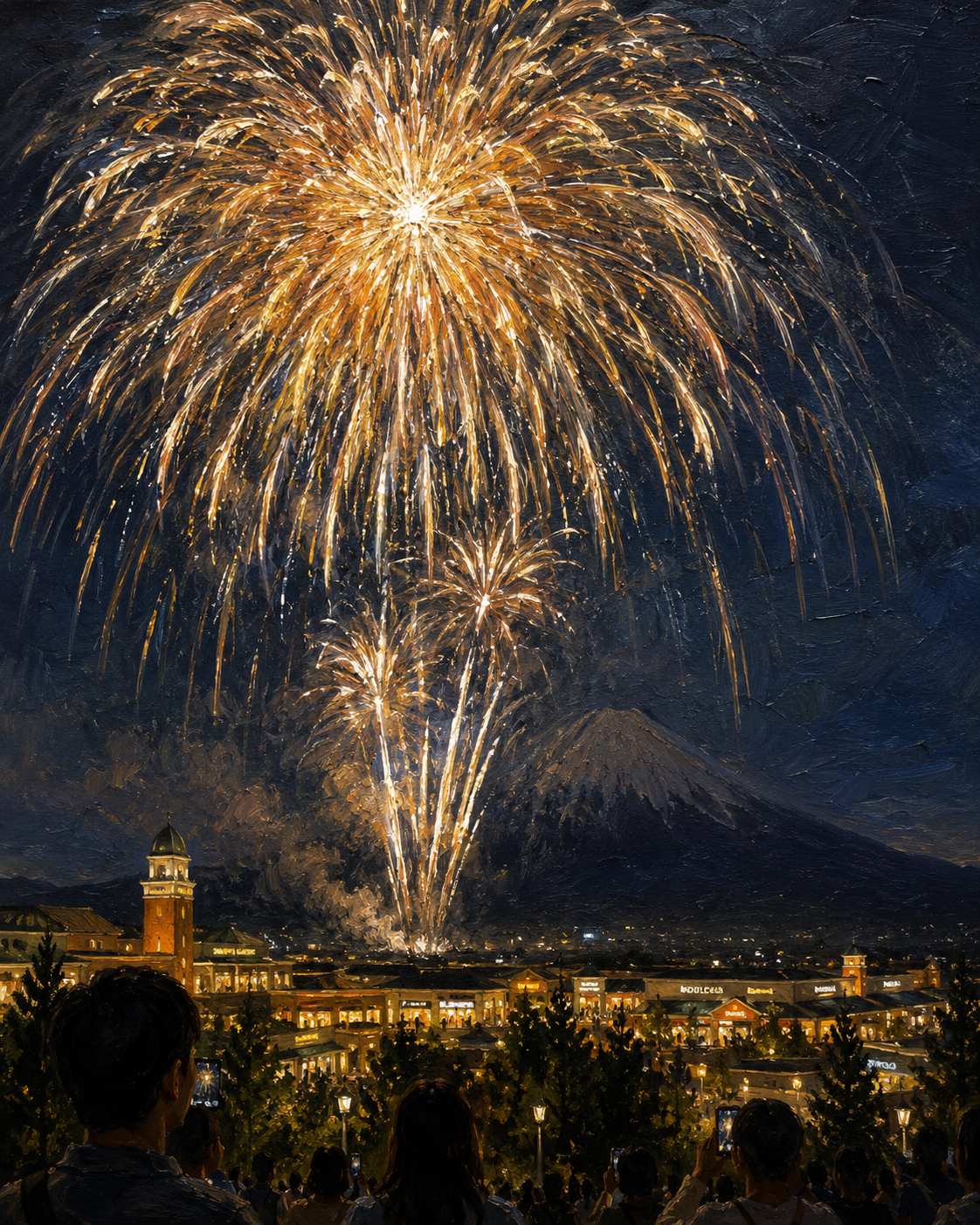
Golden Bloom Over Fuji's Ridge and the Clock Tower
Critique
Introduction This painting depicts fireworks above a brightly illuminated commercial district at the foot of a dark mountain. Viewed over a dense crowd, the scene combines monumental sky, recognizable architecture, and contemporary spectatorship within a strongly layered festival image. Description Silhouetted viewers fill the lower edge, several holding up glowing phones. Beyond trees and streetlamps, rows of shops and a tall brick-colored tower spread across the middle ground. A large mountain rises at right. White-gold fountains launch behind the buildings, while smaller bursts support an immense cascading firework whose center glows near the upper left. Analysis The descending canopy occupies most of the sky, balanced below by the long horizontal strip of architecture. Its curved trails contrast with the mountain's triangular mass and the town's rectangles. Gold repeats through fire, windows, lamps, and foliage against blue-black night. Thick directional strokes give the sparks weight, while minute lights clarify distance. Raised phones create small frames within the broader composition. Interpretation and Evaluation The spectacle temporarily enlarges an everyday shopping landscape into a ceremonial stage. Spectators record the event, yet their dark silhouettes also emphasize direct collective attention. The composition handles extreme scale convincingly, and the restricted warm-cool palette remains coherent. Distinct treatment of smoke, mountain, masonry, foliage, and luminous trails demonstrates controlled technique and descriptive range. Conclusion At first the work is dominated by the enormous firework, but sustained viewing reveals a portrait of a modern crowd and place transformed by shared light. Careful layering turns a transient display into an image of communal memory.
Same Subcategory
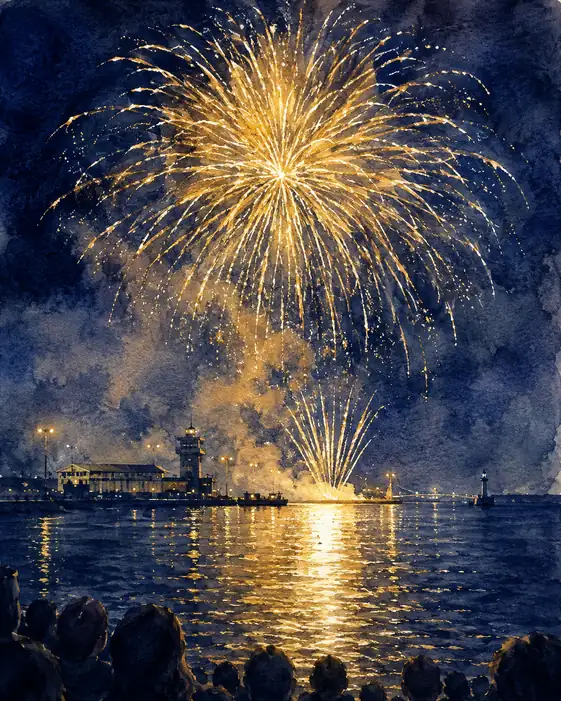 Golden Bloom Illuminating the Harbor and Sea
Similar Artworks
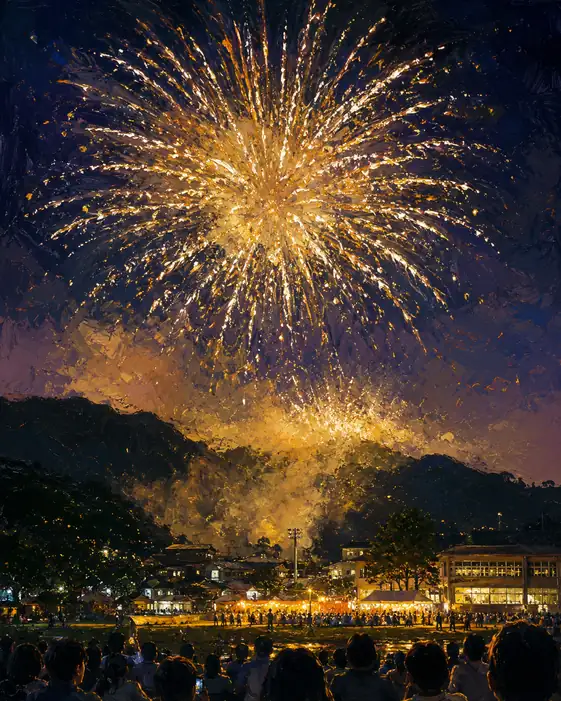 Sparkle of the Great Blossom Over the Mountain Town
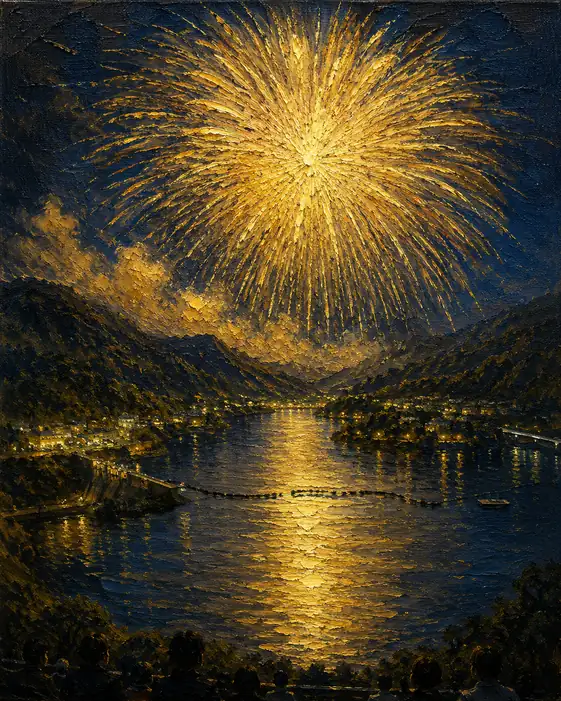 Golden Bloom Over the Mountain Lake
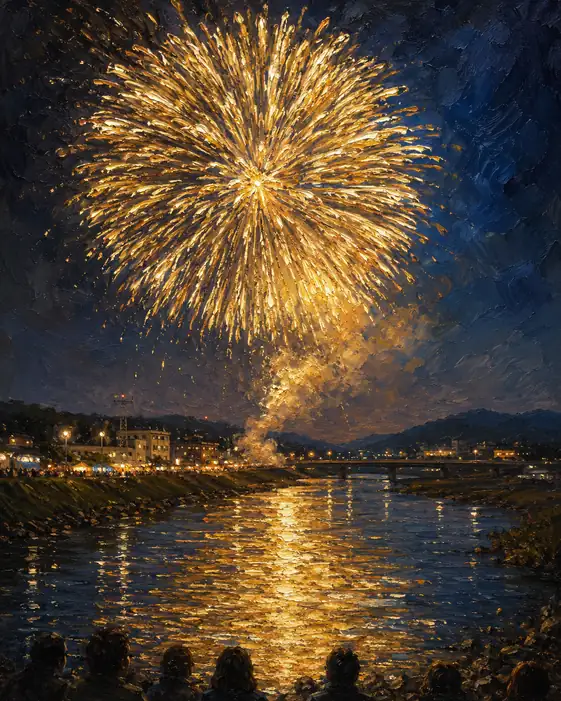 An Instant Eternity Scorching the Sky (No. 96)
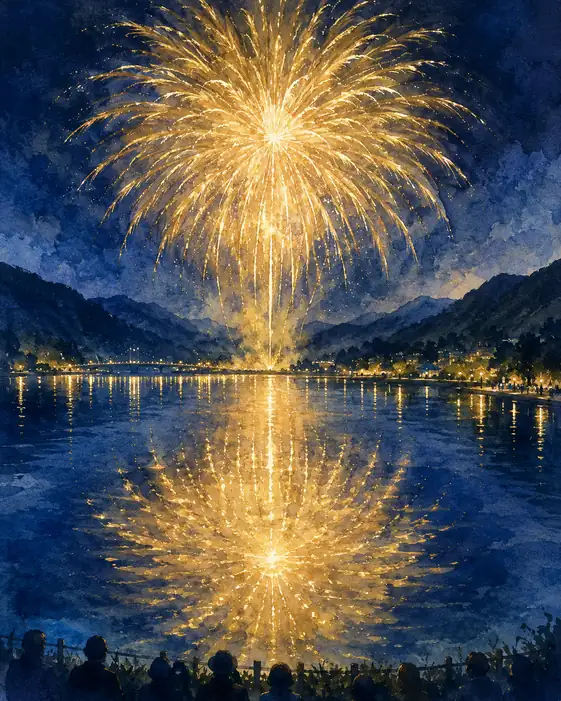 Symmetrical Golden Mirror Flowers on the Lake
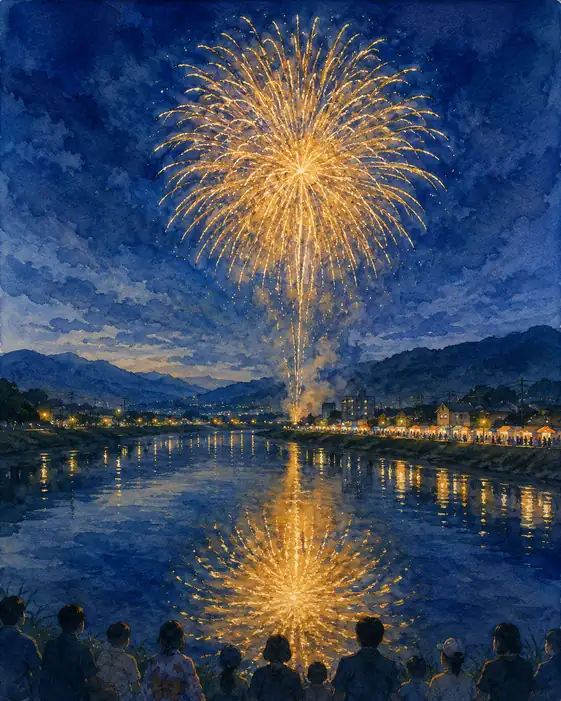 Golden Mirrored Fireworks Joining Sky and Water
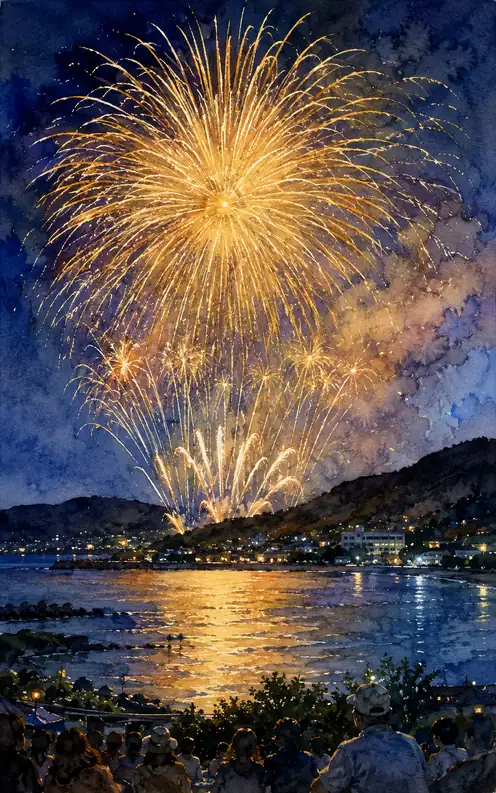 Golden Starmine and Sea Reflections Over the Bay
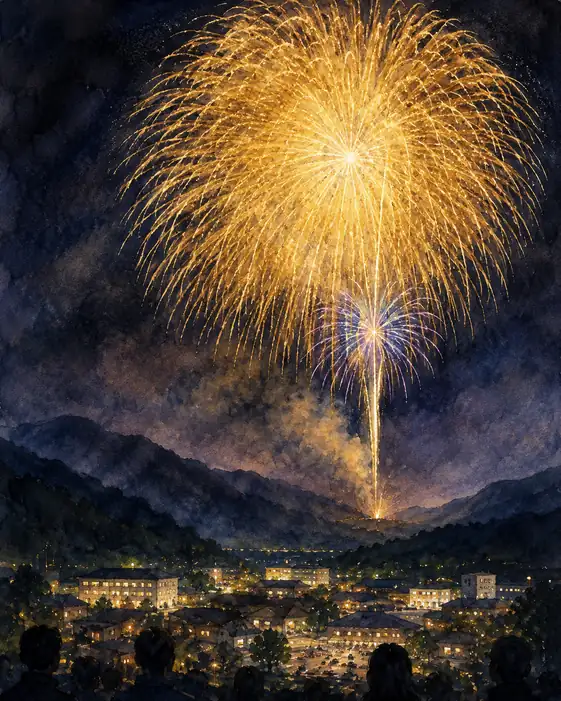 Golden Canopy Over the Valley Town
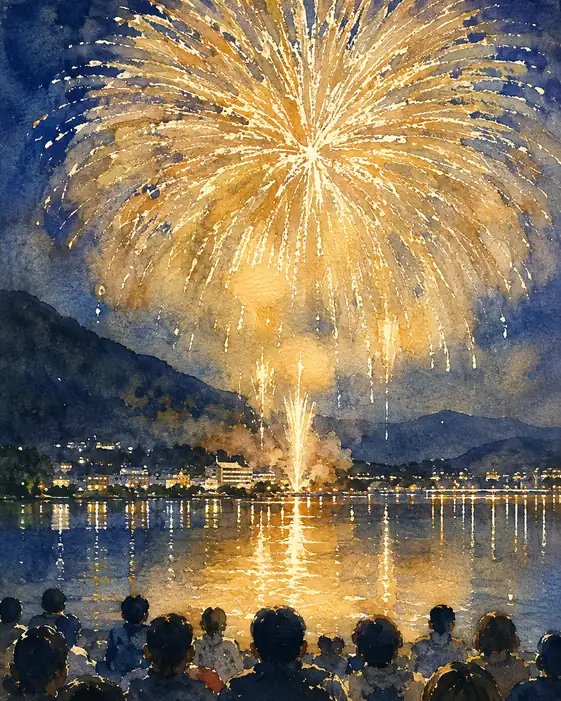 Golden Willow Canopy Over the Lake
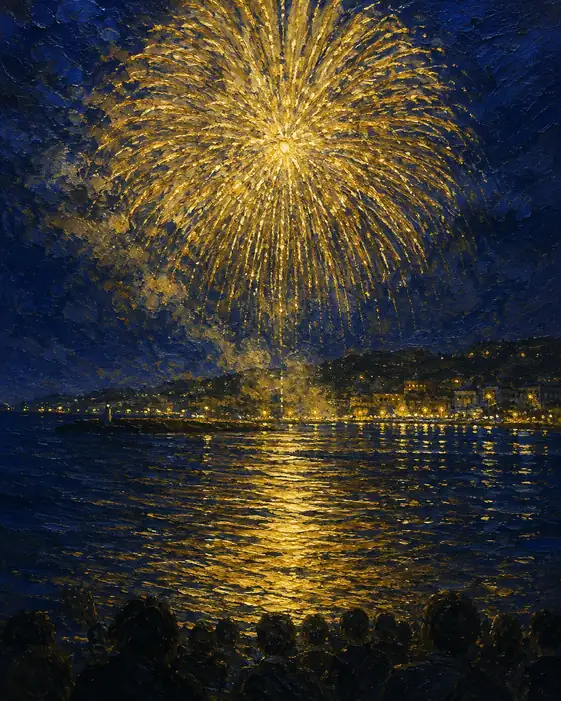 An Instant Eternity Scorching the Sky (No. 86)
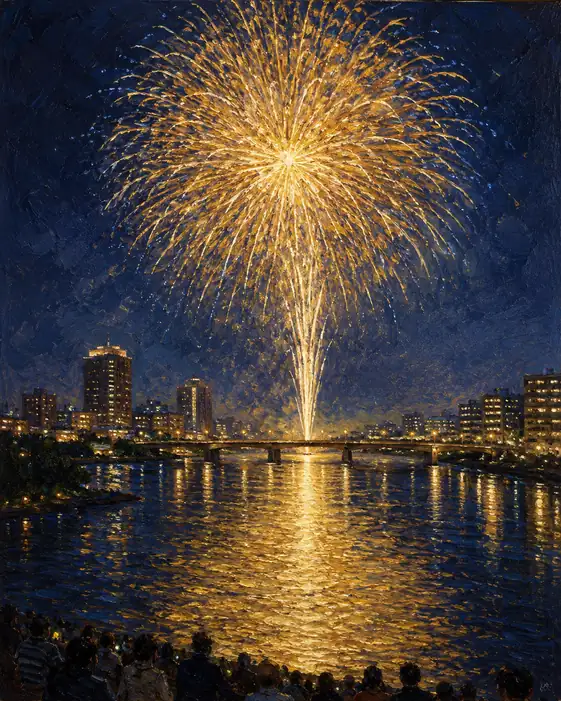 An Instant Eternity Scorching the Sky (No. 56)