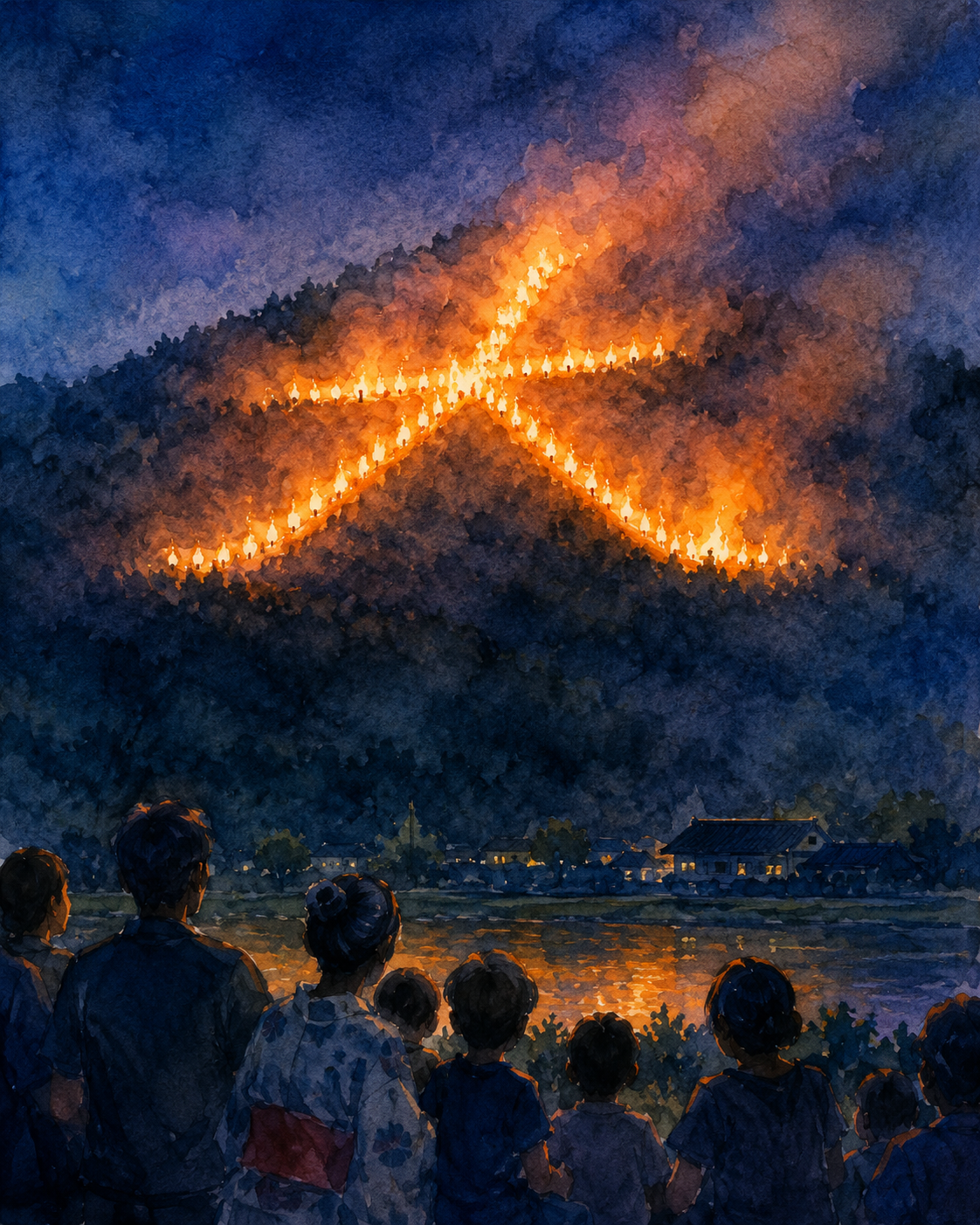
Grand Letter Reflected on the River and Quiet Family Silhouettes
Critique
Introduction This nocturnal landscape depicts a mountain fire arranged as a monumental character-like form above a waterside settlement. The luminous sign dominates the slope, while the viewers in the foreground establish a quiet human scale and a clear direction of attention. Description Lines of individual flames trace broad crossing strokes across the dark mountain, gathering most intensely near the center. Orange smoke rises diagonally toward the upper right and dissolves into a deep blue sky. Below, tiled roofs and small windows stretch beside the water; adults and children stand with their backs to the viewer, their edges touched by reflected firelight. Analysis The burning form creates a forceful geometric structure against the irregular wooded silhouette. Repeated flame points keep its long strokes visibly segmented, while overlapping orange and brown washes give the surrounding smoke volume. The dark band of water separates the audience from the mountain, and a narrow amber reflection connects the distant blaze to the tightly grouped figures. Interpretation and Evaluation The controlled placement of many small fires produces an image readable at great distance, uniting collective labor, landscape, and spectatorship. Because the crowd remains still and the water broad, the scene feels contemplative despite the heat and scale of the blaze. The composition is disciplined, the warm-cool color contrast compelling, and the differentiation of fire, smoke, vegetation, architecture, and water technically assured. Conclusion At first the bright mountain symbol appears almost independent of its surroundings, but closer viewing makes the village, reflection, and family groups essential. The work’s achievement lies in balancing monumental design with intimate observation, allowing public ritual to remain both visually powerful and quietly communal.
Same Subcategory
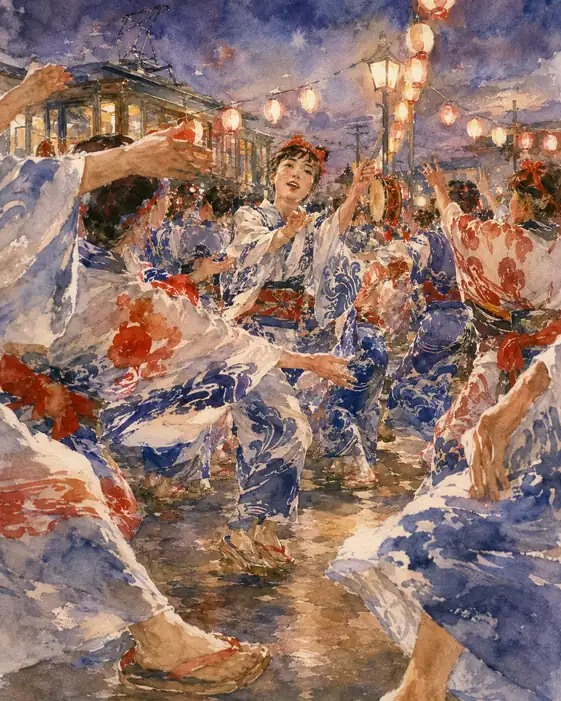 Small Drum Beats and Smiles Along the Retro Tramway
Similar Artworks
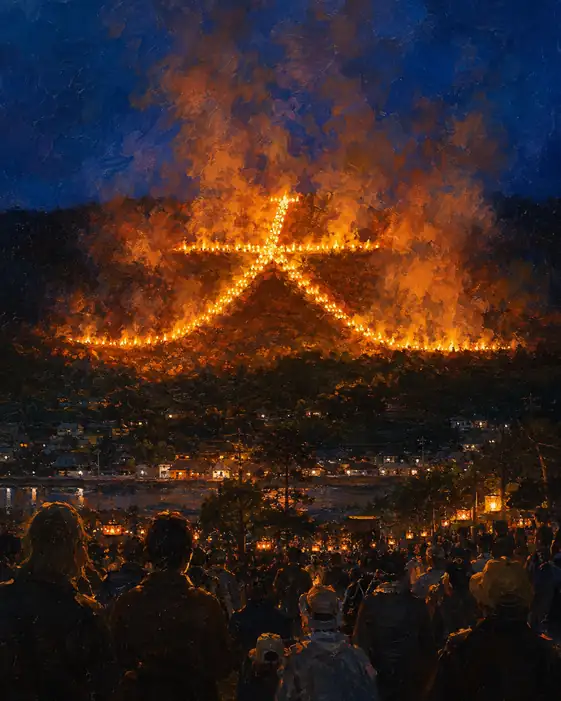 Flame of the Grand Letter on the Night Mountain
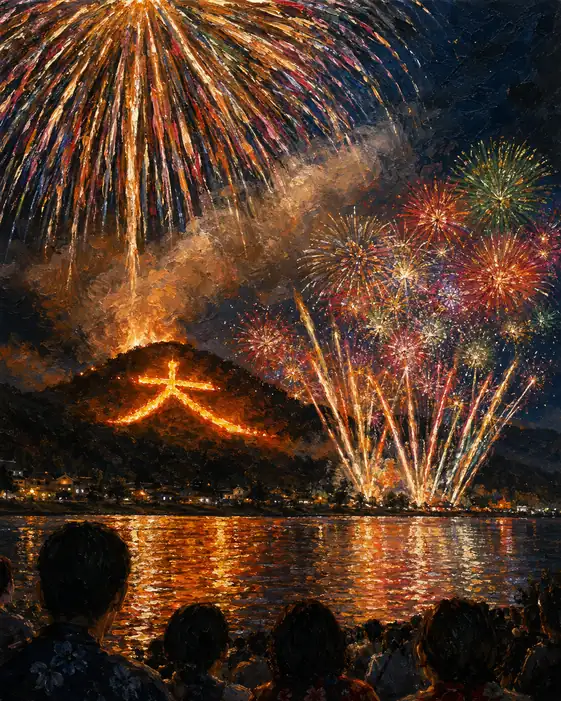 Daimonji Fire Mountain and Grand Fireworks Viewed from the Lakeside
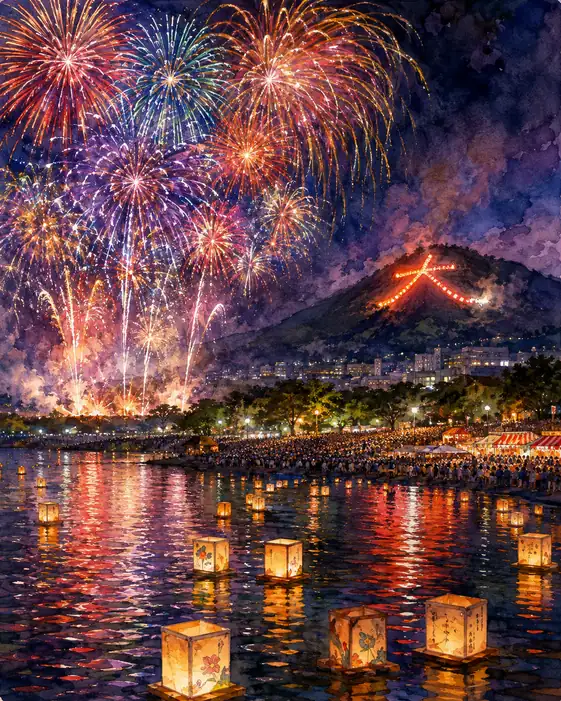 Colorful Blossoms and Floating Lanterns Under the Daimonji Mountain
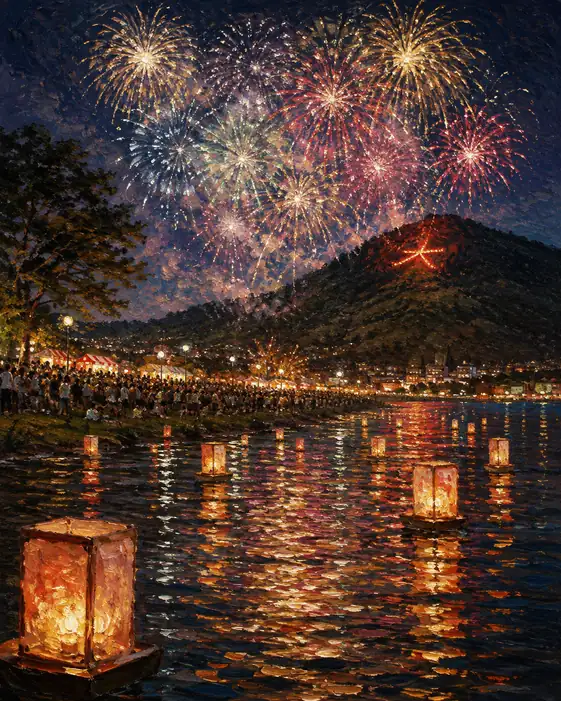 Blossoms of the Night Sky Embracing Daimonji and Floating Lanterns
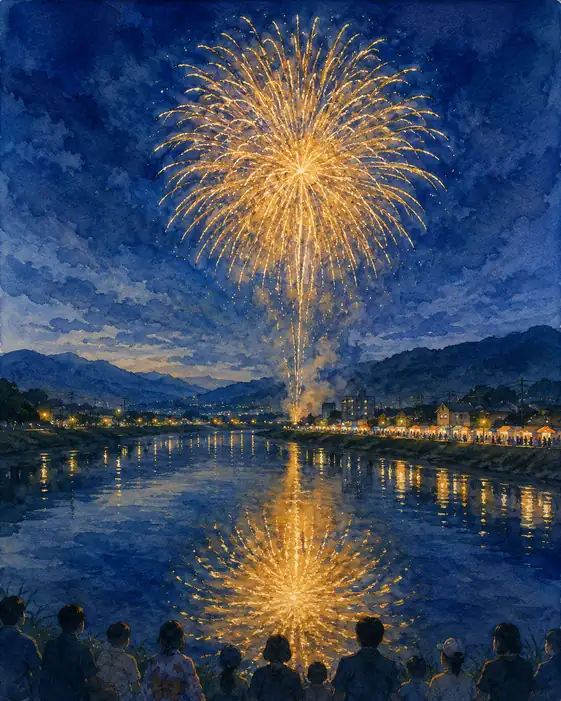 Golden Mirrored Fireworks Joining Sky and Water
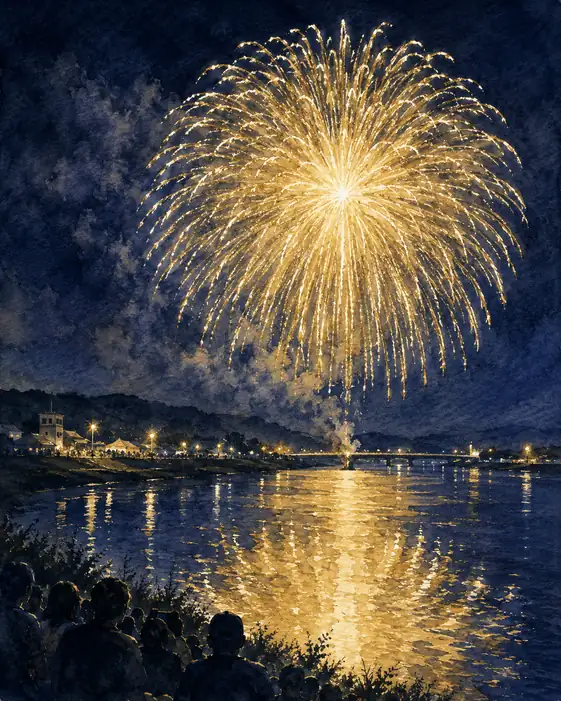 An Instant Eternity Scorching the Sky (No. 99)
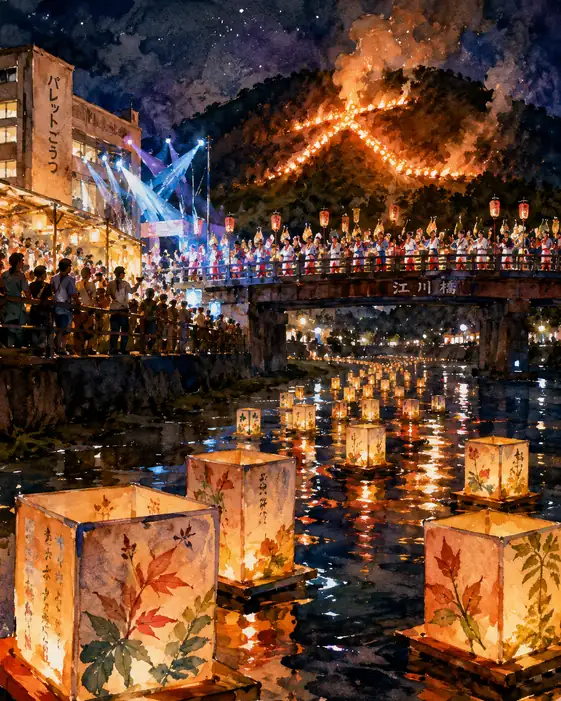 Sacred Flames on the Mountain Ridge
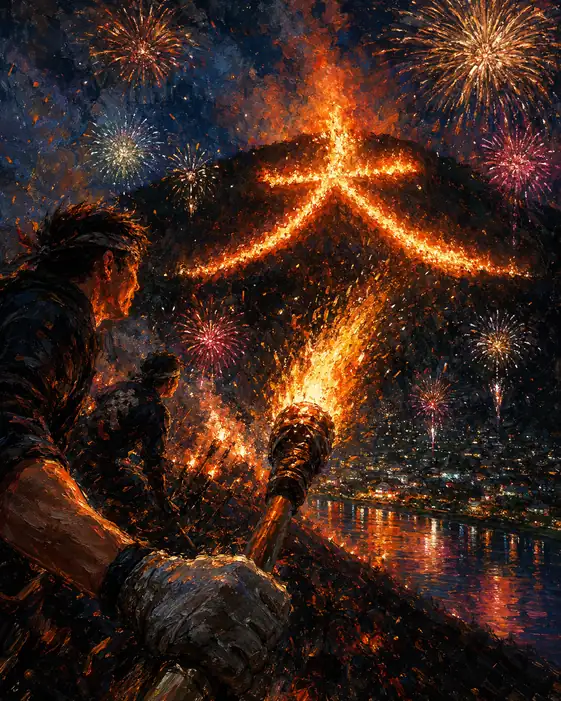 Burning Torches and Hands of Men Lighting the Daimonji Fire
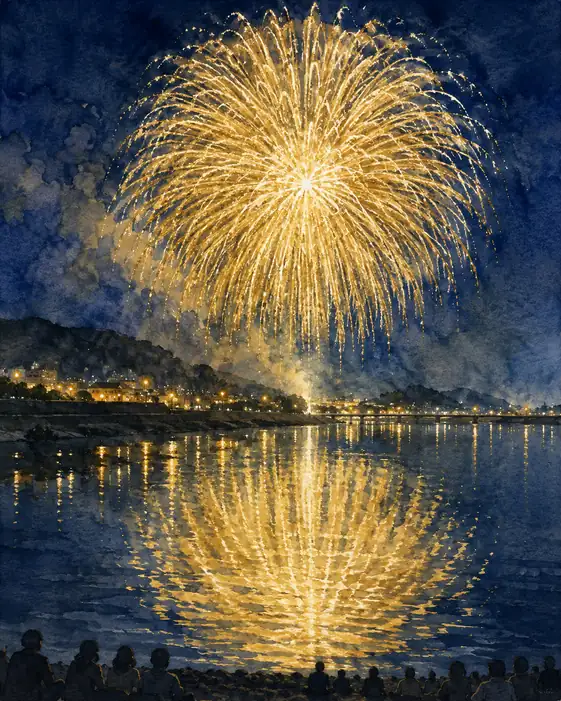 Golden Bloom Above and Reflected in the Quiet Waters
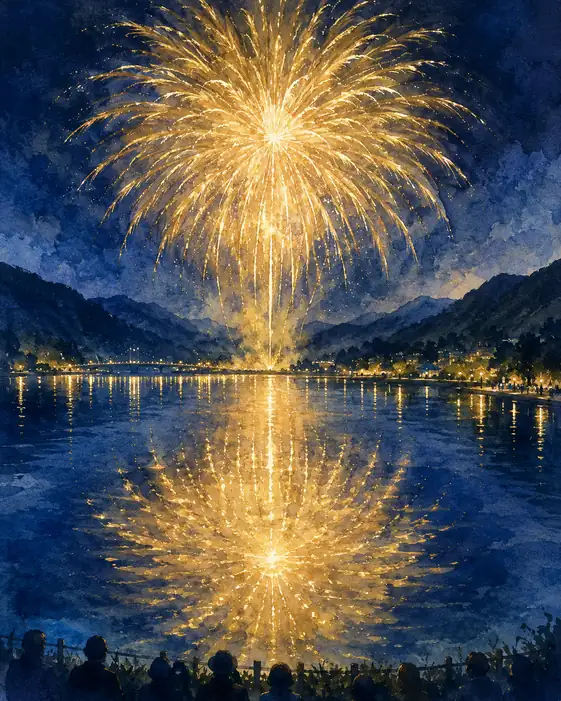 Symmetrical Golden Mirror Flowers on the Lake