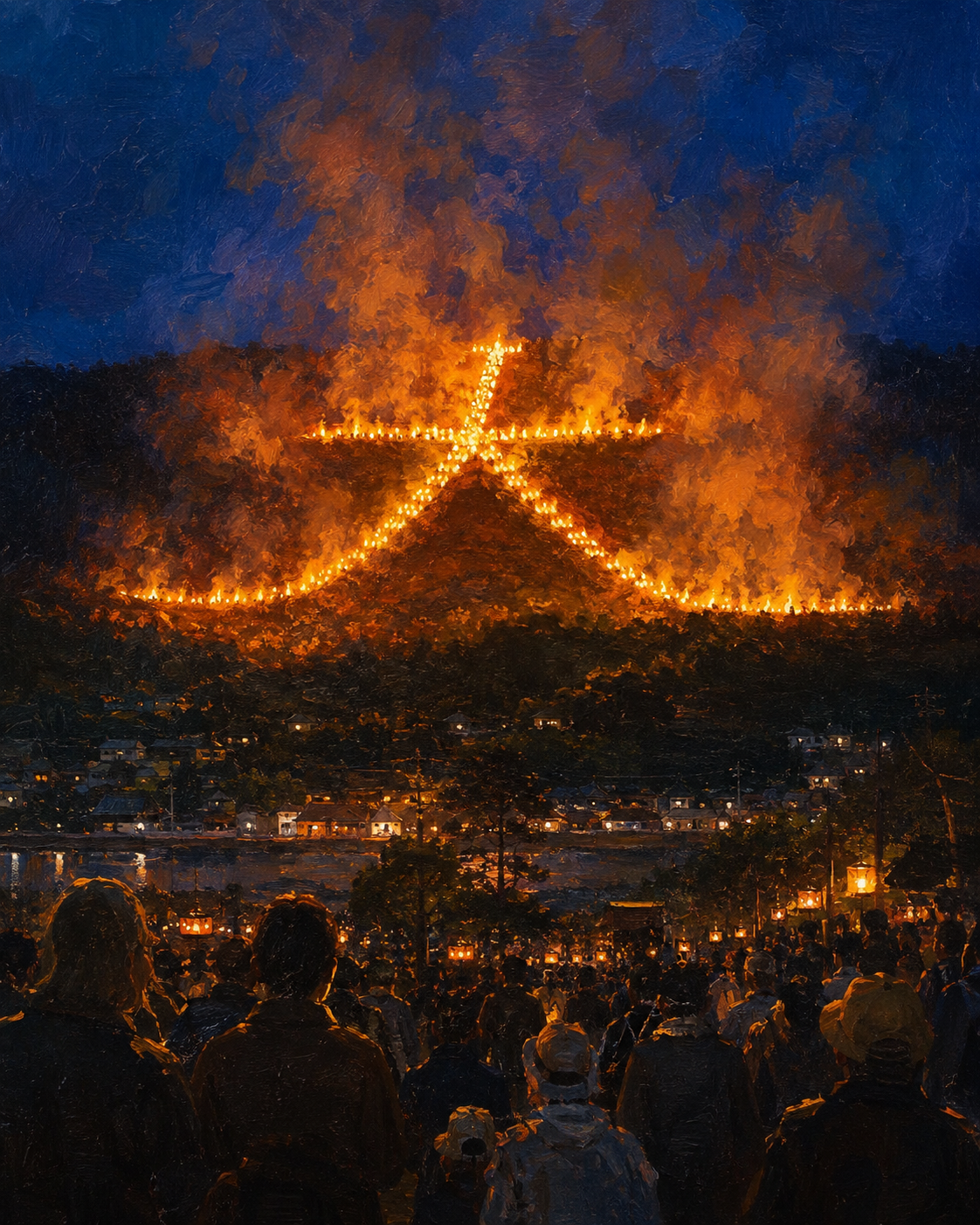
Flame of the Grand Letter on the Night Mountain
Critique
Introduction This nocturnal landscape portrays a mountainside fire festival as an immense sign suspended above a lakeside town. Lines of flame form a character or emblem, joining communal ceremony, topography, and elemental danger in one commanding view. Description Across the dark slope, fires trace a long horizontal line, two descending diagonals, and a bright upward stroke. Orange smoke billows into the deep blue sky, obscuring parts of the ridge. Below, a town extends along reflective water with scattered windows and lamps. The foreground is filled by spectators seen from behind, including children and a person in a pale cap. Small lanterns guide the crowd toward the viewpoint. Analysis The flaming geometry dominates the composition, its sharp scaffold softened by turbulent smoke and broken brushwork. The mountain serves as both ground and enormous dark screen. Orange fire against saturated blue creates a powerful complementary contrast. Smaller town and lantern lights repeat the principal glow at descending scales. Interpretation and Evaluation The fire figure turns landscape into a temporary communal inscription. Because its lines follow the mountain rather than floating independently, culture appears written through local terrain. The watching crowd completes the ritual: the sign gains meaning through shared recognition rather than visual form alone. Smoke introduces uncertainty, reminding us that the emblem is produced by consuming material and risk. Domestic lights remain below, balancing ceremonial intensity with continuing everyday life. The severe simplicity of the symbol gives the otherwise atmospheric painting memorable force. Conclusion The work succeeds through elemental contrast, clear hierarchy, and social scale. It presents fire as language, spectacle, and physical event at once. By placing a dark community before a burning mountain, the painter makes collective memory feel anchored to both place and peril.
Same Subcategory
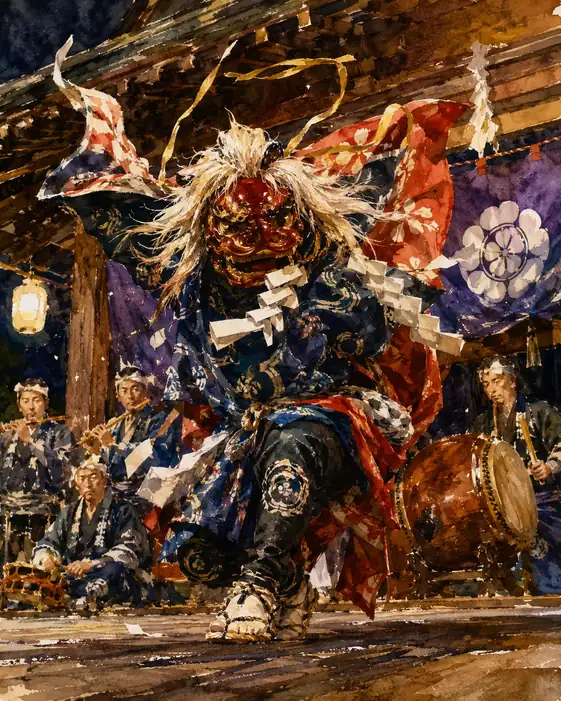 Red-Masked Lion Storming the Shrine Stage
Similar Artworks
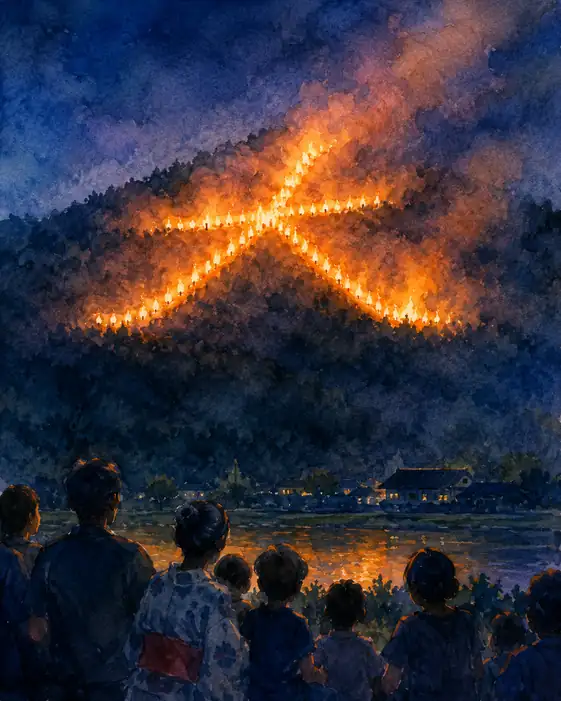 Grand Letter Reflected on the River and Quiet Family Silhouettes
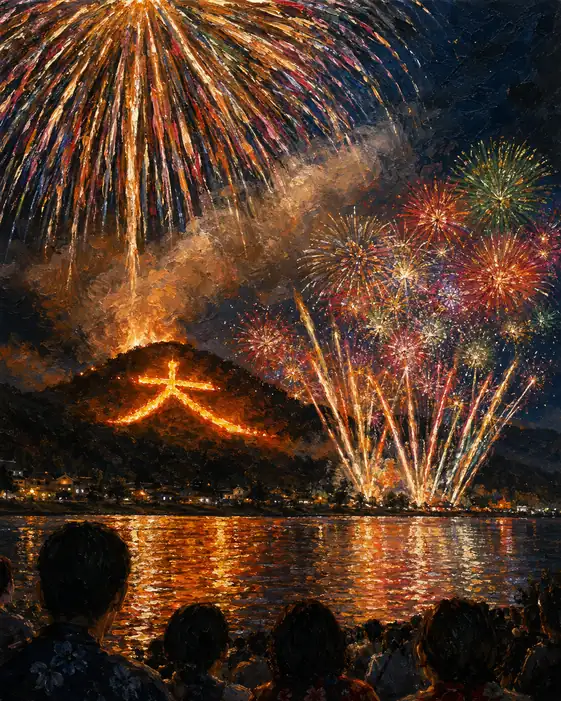 Daimonji Fire Mountain and Grand Fireworks Viewed from the Lakeside
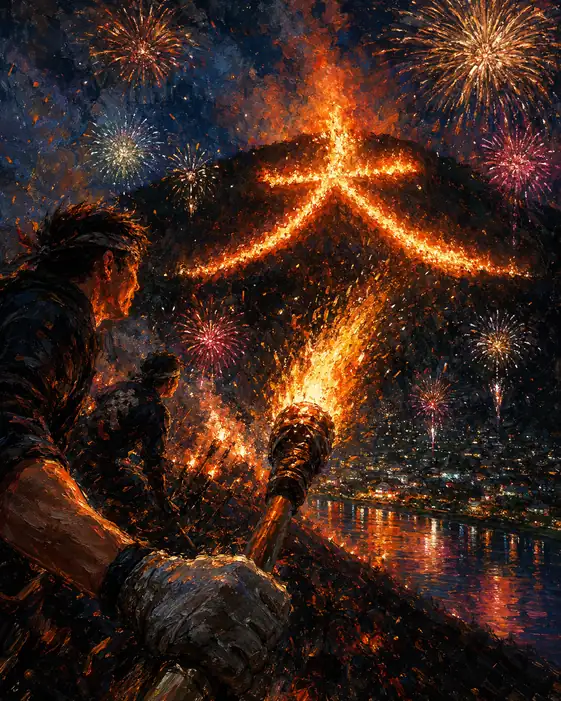 Burning Torches and Hands of Men Lighting the Daimonji Fire
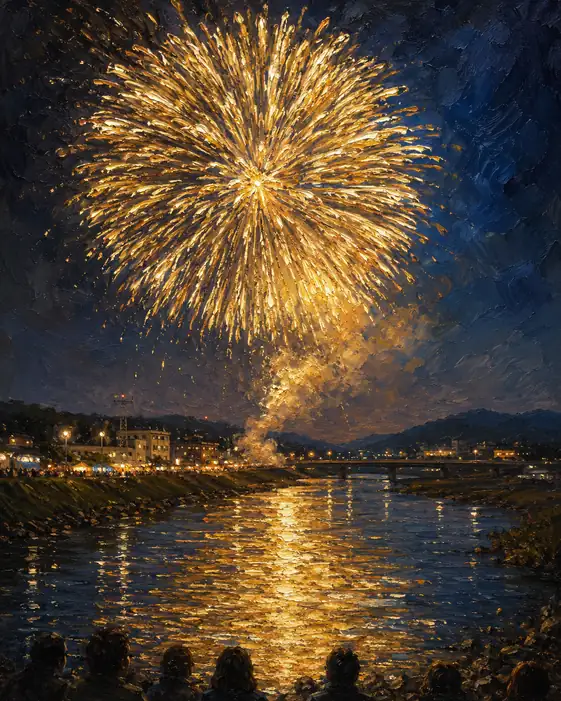 An Instant Eternity Scorching the Sky (No. 96)
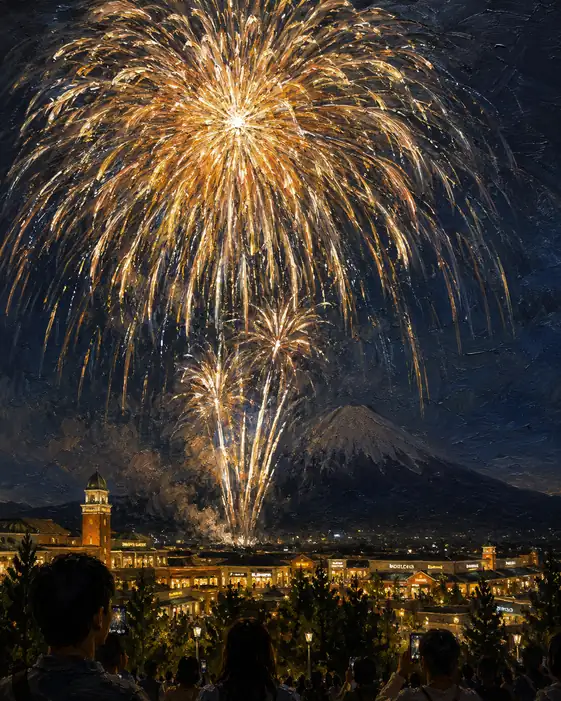 Golden Bloom Over Fuji's Ridge and the Clock Tower
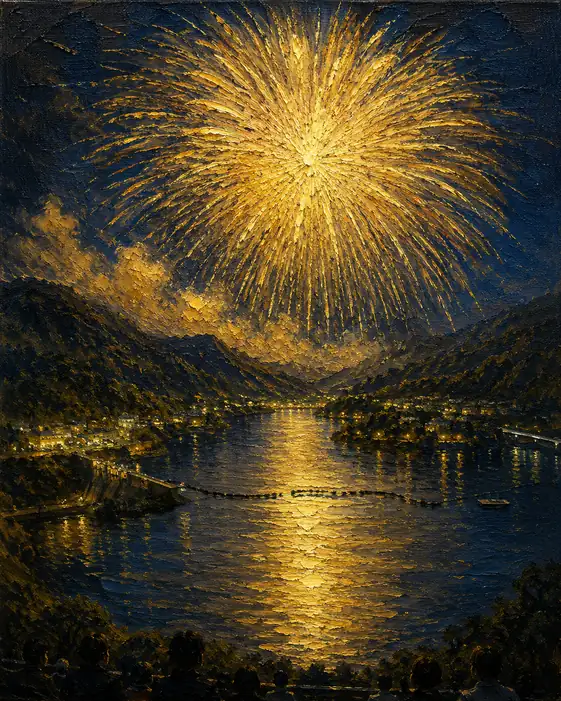 Golden Bloom Over the Mountain Lake
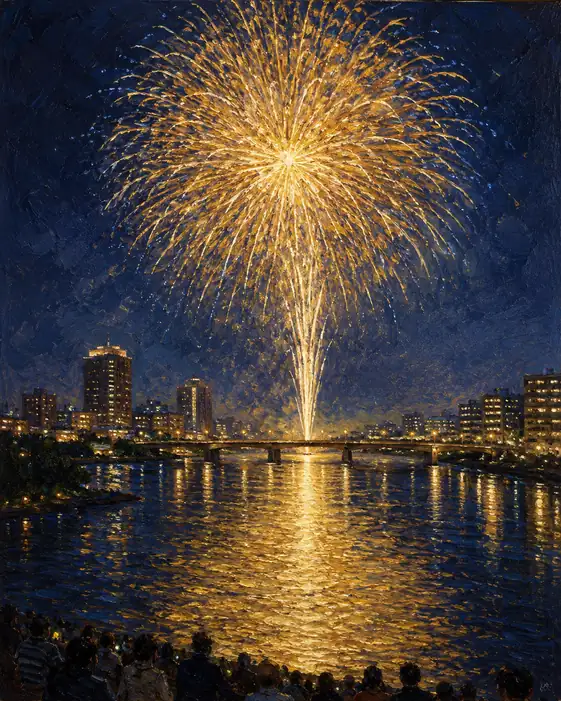 An Instant Eternity Scorching the Sky (No. 56)
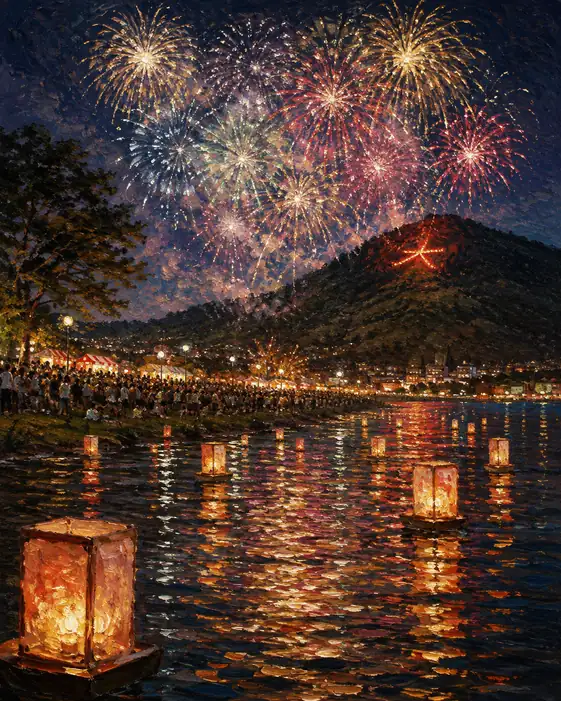 Blossoms of the Night Sky Embracing Daimonji and Floating Lanterns
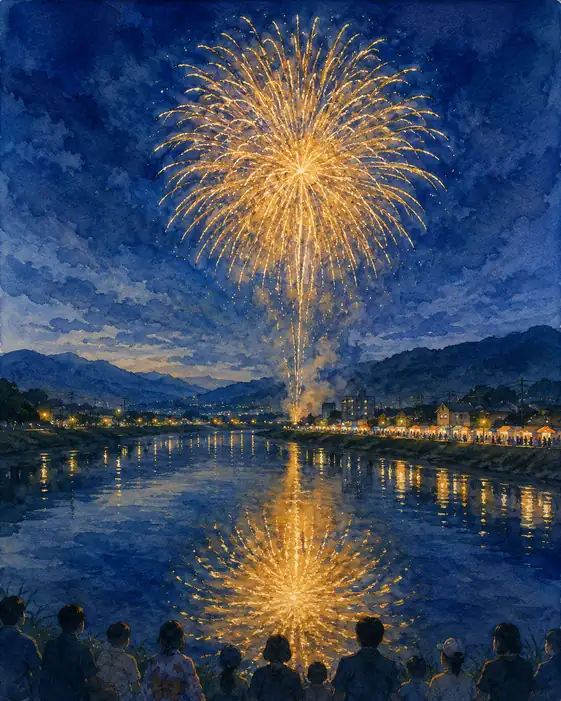 Golden Mirrored Fireworks Joining Sky and Water
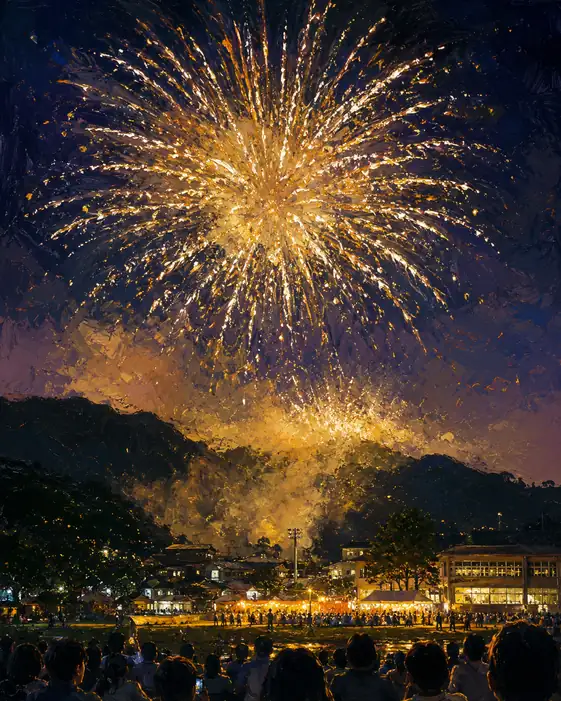 Sparkle of the Great Blossom Over the Mountain Town