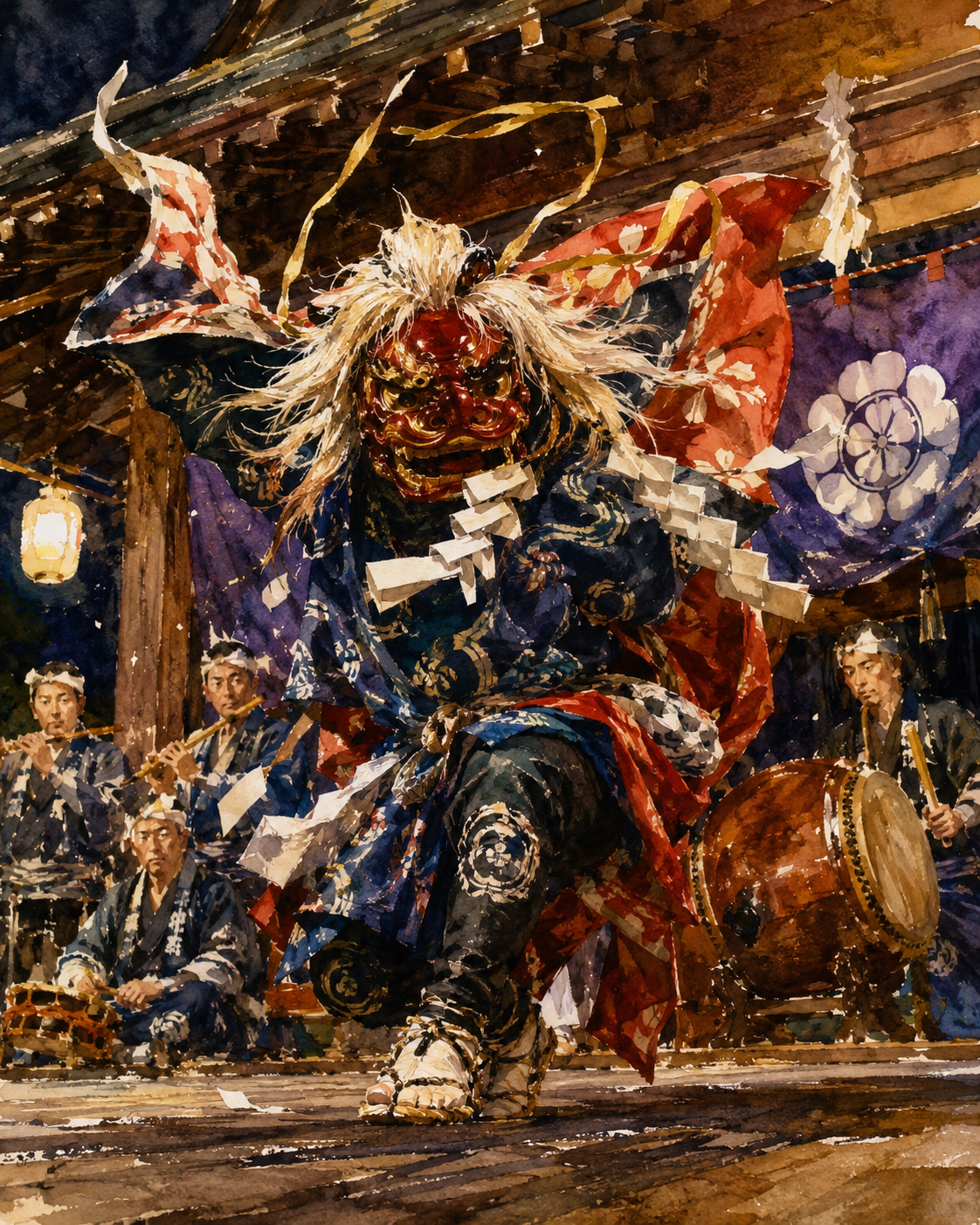
Red-Masked Lion Storming the Shrine Stage
Critique
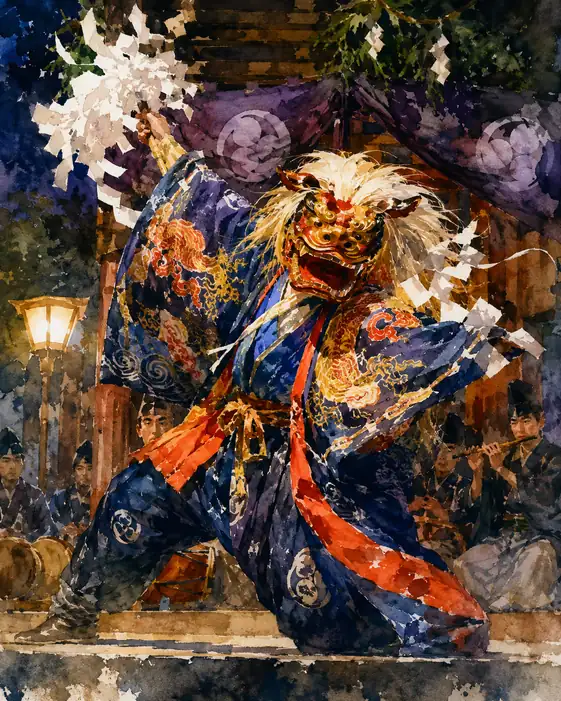
Introduction This dramatic ritual painting centers on a masked dancer advancing from a shrine stage. The red face, streaming white mane, flying cloth, and musicians behind create a charged encounter between theatrical spectacle and sacred transformation. Description The performer crouches forward with one wrapped foot planted near the viewer. A glossy red mask bears fierce eyes, gold details, bared teeth, and a wild pale mane. Layered navy, black, and red robes spread around the body, patterned with crests and wave-like forms. White paper streamers cross the chest and flutter overhead. Behind, flutists and drummers in blue sit beneath timber eaves, purple hangings, and a flower-like emblem. Analysis The forward leg and mask establish a steep diagonal into depth, while the outspread textiles widen the silhouette like wings. Red cloth on both sides frames the dark central body. White mane and paper strips break contours into rapid, airborne accents. Warm timber and drum skins contrast with indigo costume and night. The musicians’ stable horizontal row anchors the dancer’s turbulence. Interpretation and Evaluation The mask replaces personal identity with a larger ritual presence. Its ferocity is intensified by the dancer’s low, approaching stance, yet visible hands, foot wrappings, and musicians preserve the human labor behind transformation. Flying streamers suggest purification or spiritual energy, while the stage architecture gives that energy formal boundaries. The painting avoids treating tradition as static costume: every textile appears activated by breath, rhythm, and momentum. Conclusion The work succeeds through confrontation, layered movement, and material contrast. It lets viewers feel both the allure and unease of masked performance. By placing a transformed figure close while retaining the ensemble behind, the painter makes ritual an event created collectively but encountered with startling personal intensity.
Same Subcategory
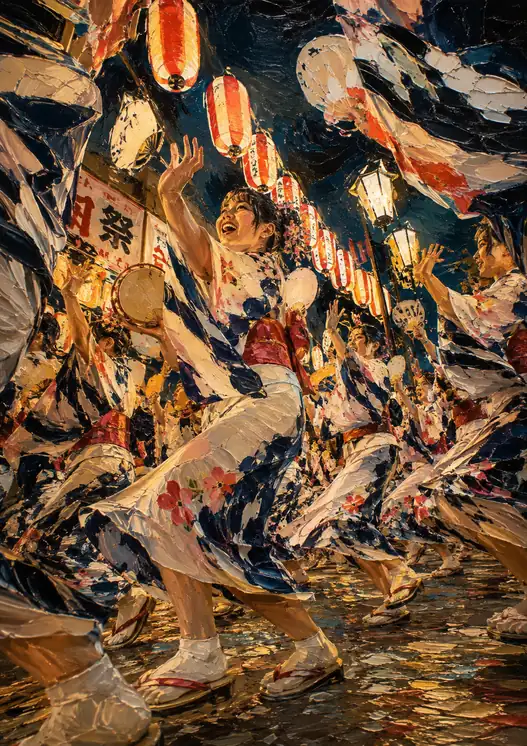 Vibrant Dance Under the Street Lanterns
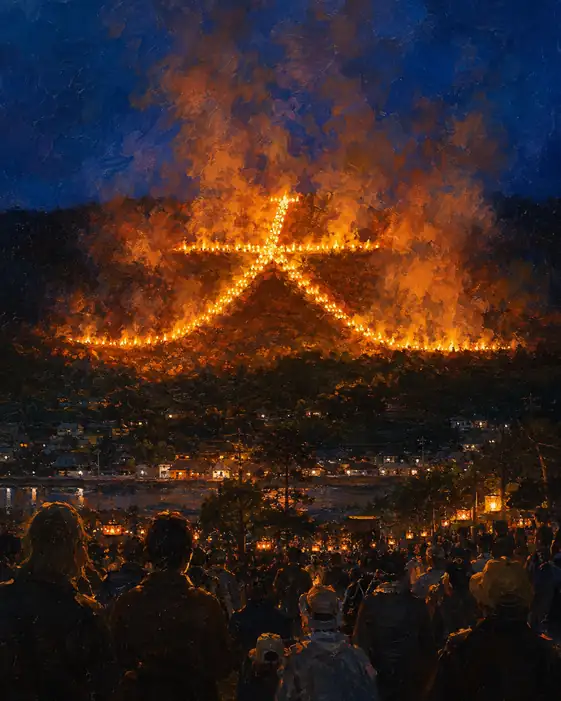 Flame of the Grand Letter on the Night Mountain
Similar Artworks
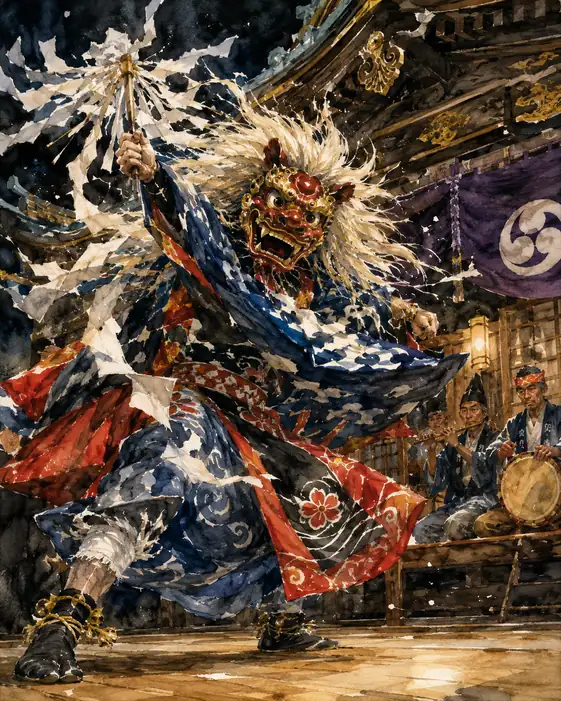 Dynamic Sacred Lion and Scattering Paper Streamers
 Swirling Summer Robes in Night Air (No. 73)
 Warm Luminescence Rising in Darkness (No. 38)
 Warm Luminescence Rising in Darkness (No. 78)
 Warm Luminescence Rising in Darkness (No. 36)
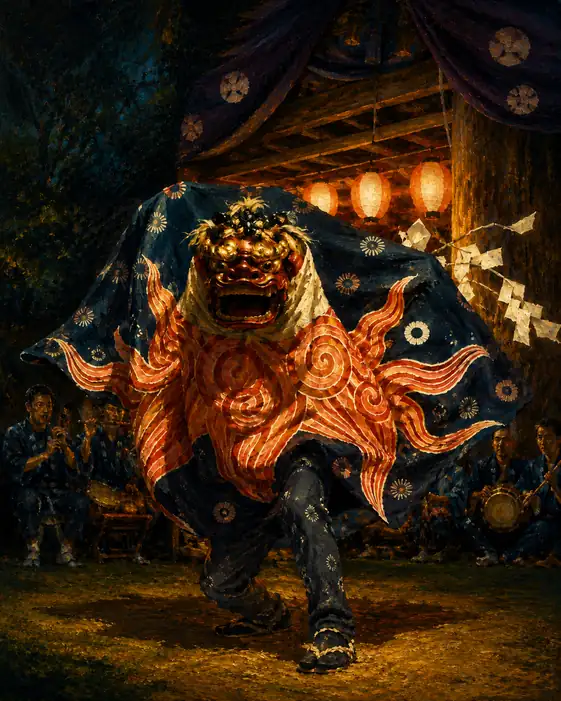 Warm Luminescence Rising in Darkness (No. 34)
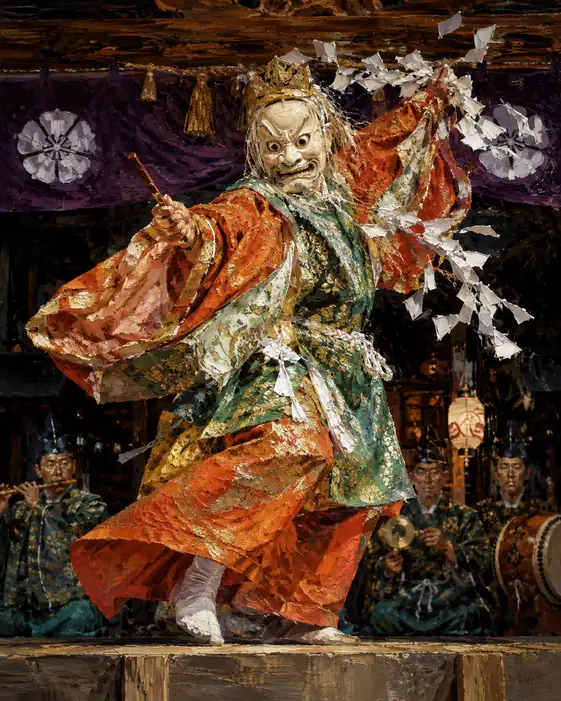 Swirling Summer Robes in Night Air (No. 76)
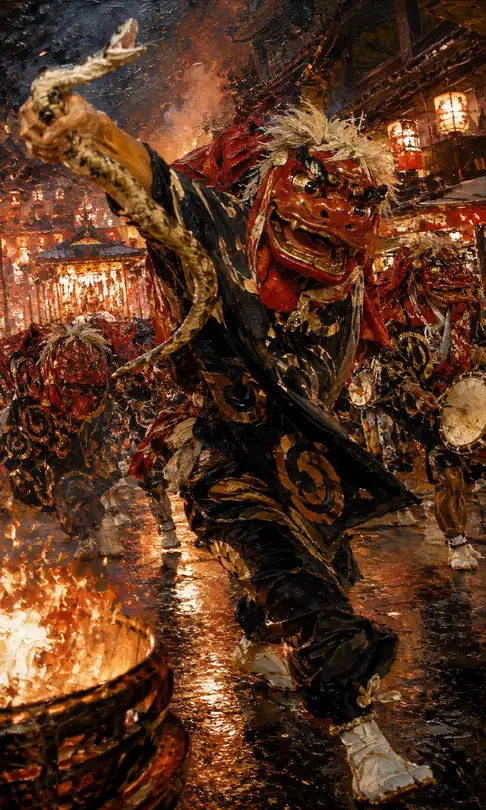 Kagura Lion Holding a Golden Snake Before the Bonfire Flame
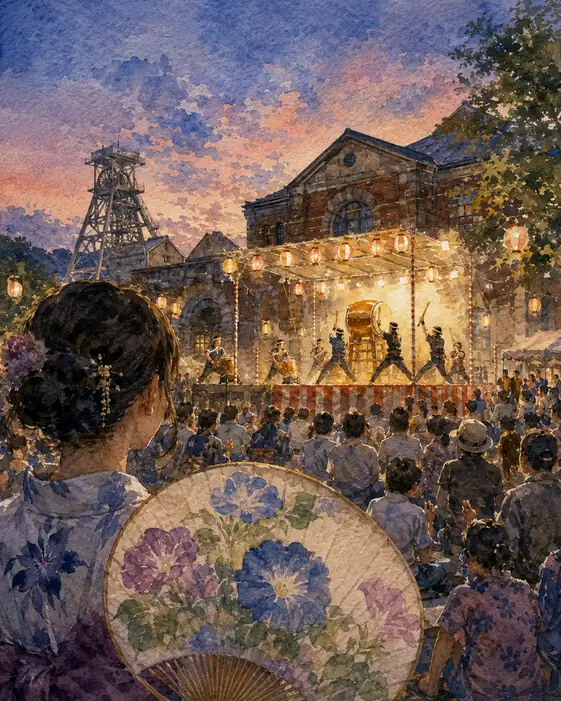 Taiko Beats and Morning Glory Fan Before Industrial Heritage
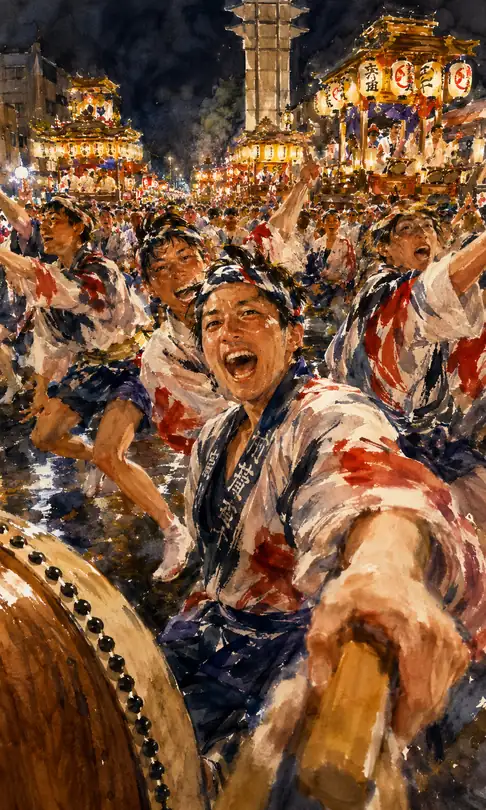 Passionate Men Beating Taiko Before Golden Floats