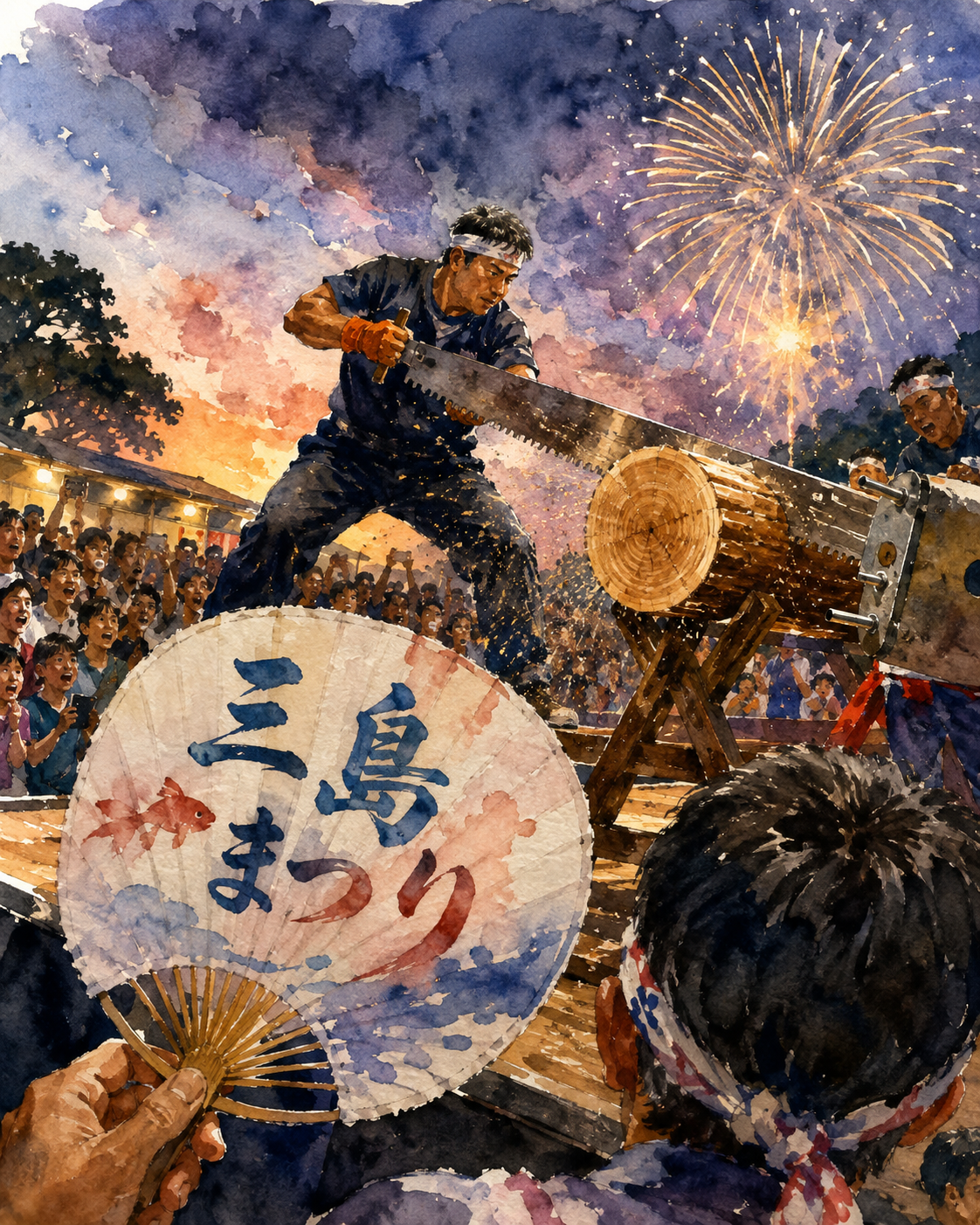
Crosscut Saw Competition and Fireworks at Mishima Festival
Critique
Introduction This work depicts a traditional hand-sawing contest during an evening festival. A worker straddling a massive saw, the bright log end, cheering crowd, foreground fan, and fireworks connect strenuous craft to seasonal celebration. Description At center, a man in navy clothing and a white headband pulls a long two-handled saw across a horizontal log. His legs spread widely above the blade, and his focused face turns toward the cut. The timber rests on a trestle and metal support, with assistants working at the right. A round fan marked with blue and red characters and a small fish fills the lower left. Spectators crowd behind, while fireworks bloom in a violet sky. Analysis The long saw forms a descending diagonal from the worker’s hands to the log, visually binding effort to resistance. His wide stance creates an arch over the crowd, and the circular wood grain supplies a stable focal counterform. Orange sawdust scatters across dark clothes and timber, echoing the sparks above. Transparent sky washes and soft faces contrast with precise teeth, handles, clamps, and rings. The enlarged fan establishes extreme foreground depth. Interpretation and Evaluation Manual labor becomes a communal trial witnessed and encouraged by the surrounding audience. The fan identifies the event as local celebration while also cooling the nearby spectator, linking practical use and festival symbolism. The spatial construction is ambitious, the tool is convincingly described, and warm-cool color balance unifies wood, sunset, fireworks, and clothing. The pairing of sawdust below with sparks above gives the scene a memorable visual analogy. Conclusion At first the contest and fireworks seem to compete for attention, but closer viewing shows how their radiating particles and concentrated energies correspond. The painting succeeds by turning a precise act of cutting into the earthly center of a much larger public celebration.
Same Subcategory
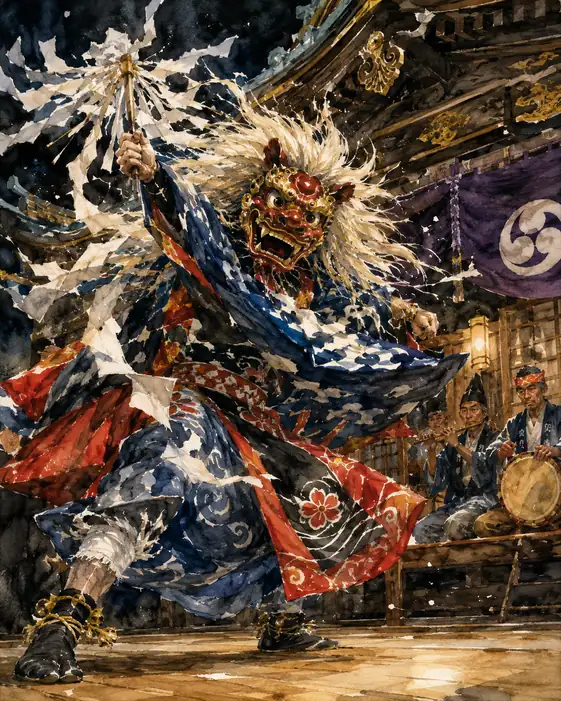 Dynamic Sacred Lion and Scattering Paper Streamers
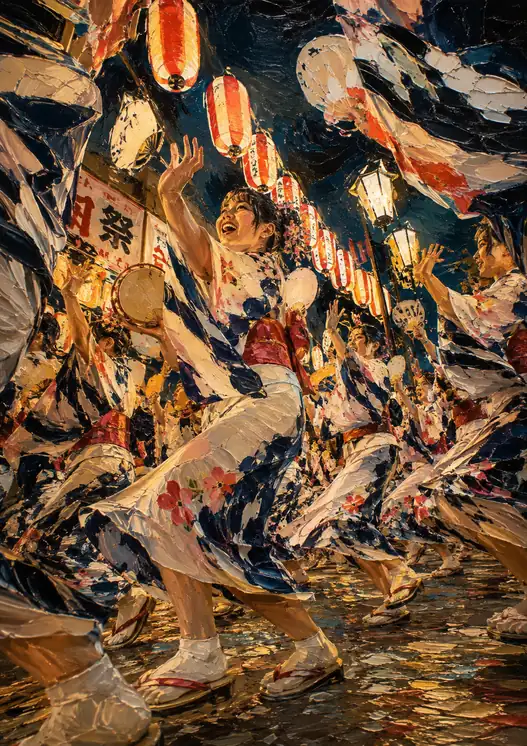 Vibrant Dance Under the Street Lanterns
Similar Artworks
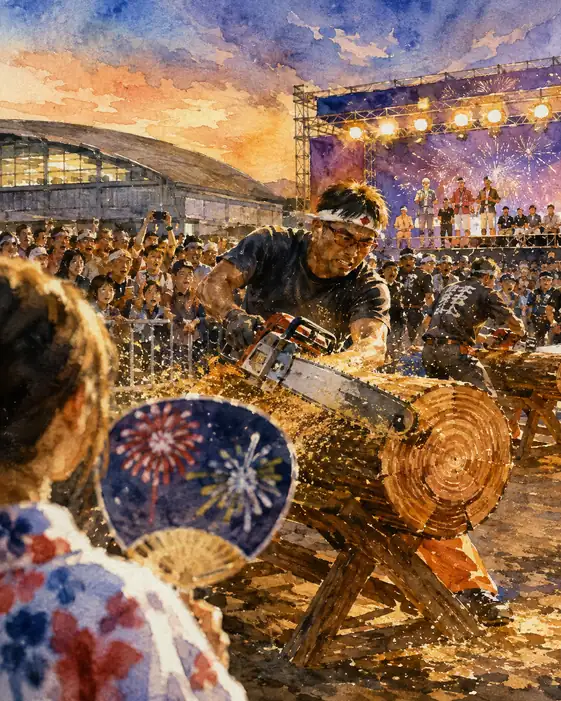 Sawdust Flying with a Single Saw Stroke
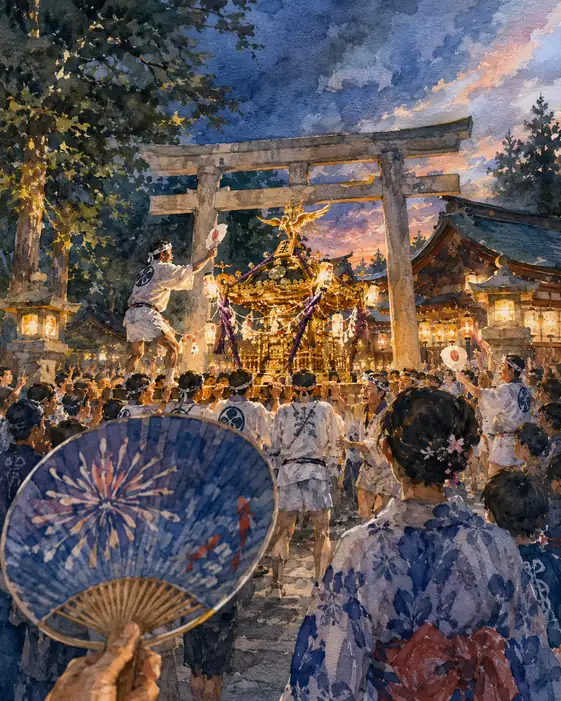 An Instant Eternity Scorching the Sky (No. 54)
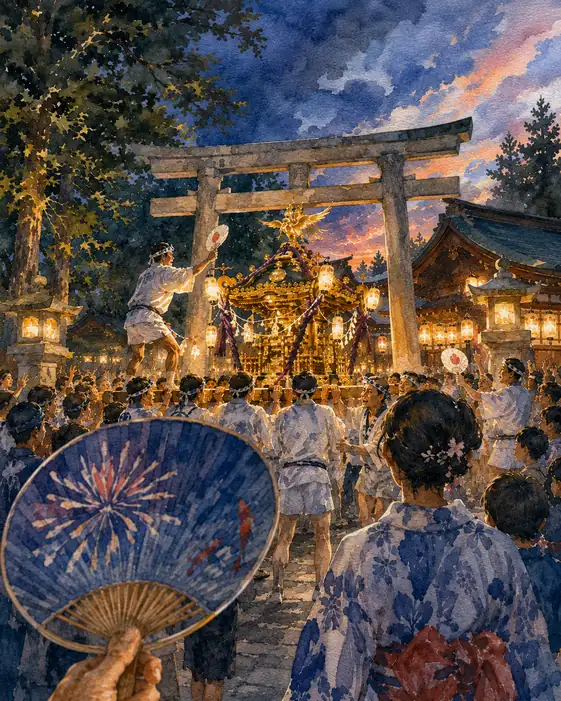 An Instant Eternity Scorching the Sky (No. 53)
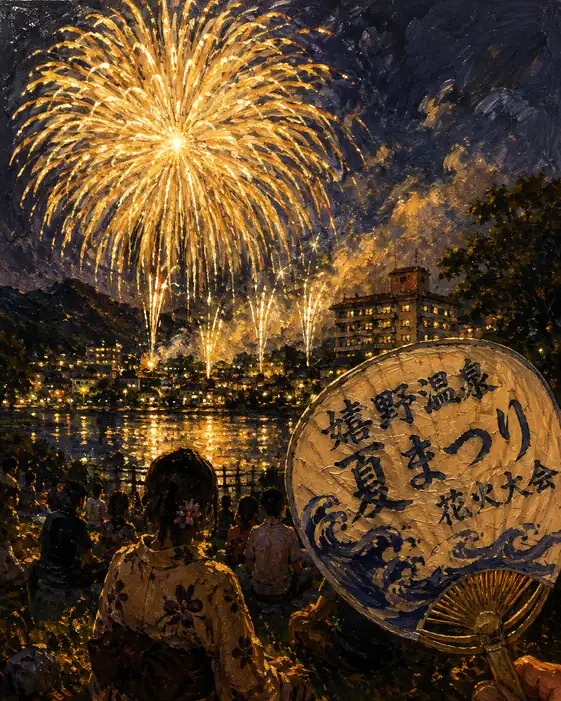 An Instant Eternity Scorching the Sky (No. 92)
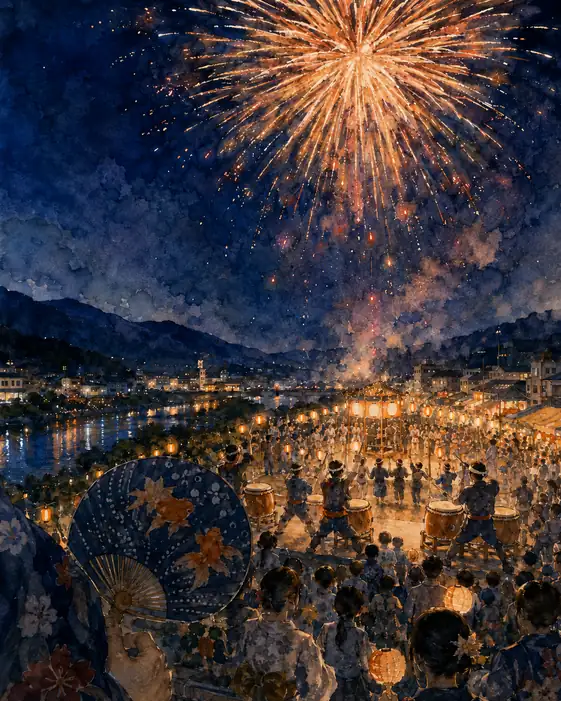 Halo on the Waters and Heartbeat of the River
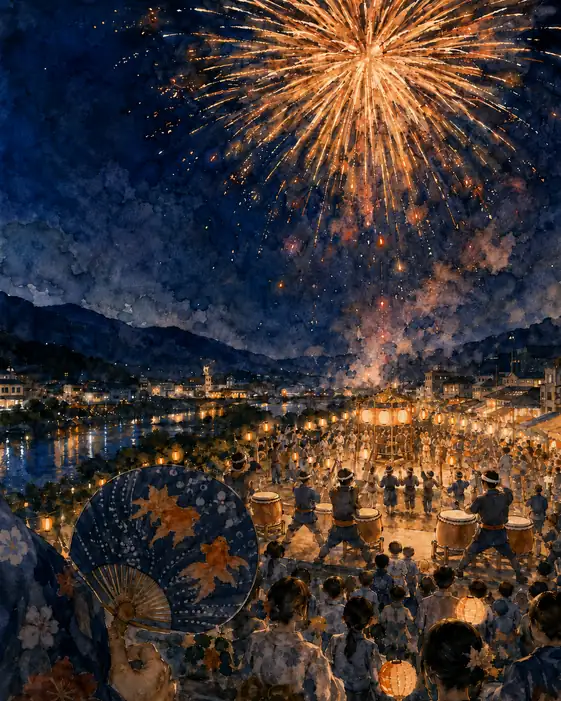 Halo on the Waters and Heartbeat of the River
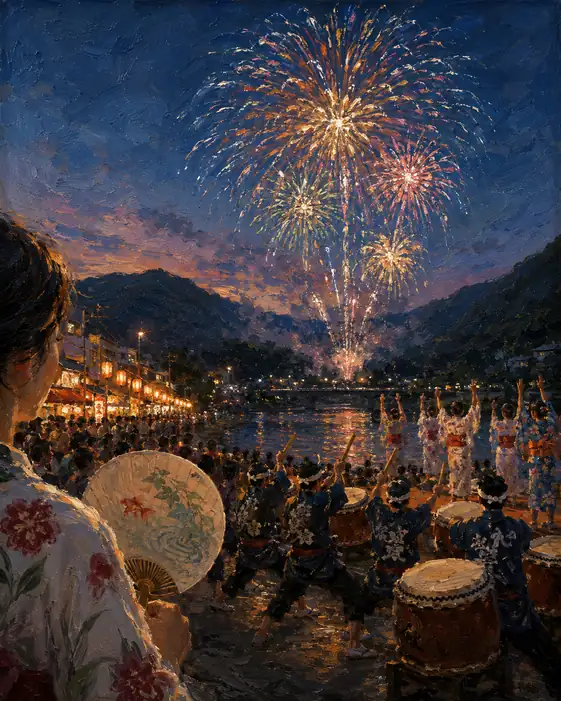 Halo on the Waters and Heartbeat of the River
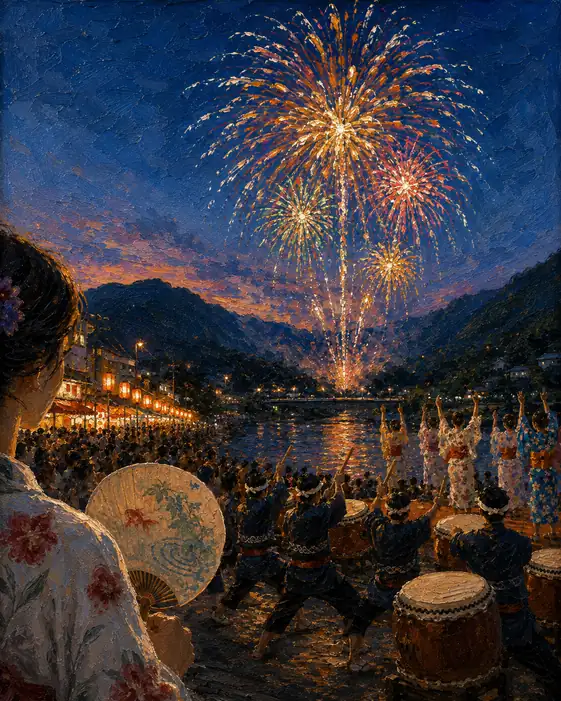 Halo on the Waters and Heartbeat of the River
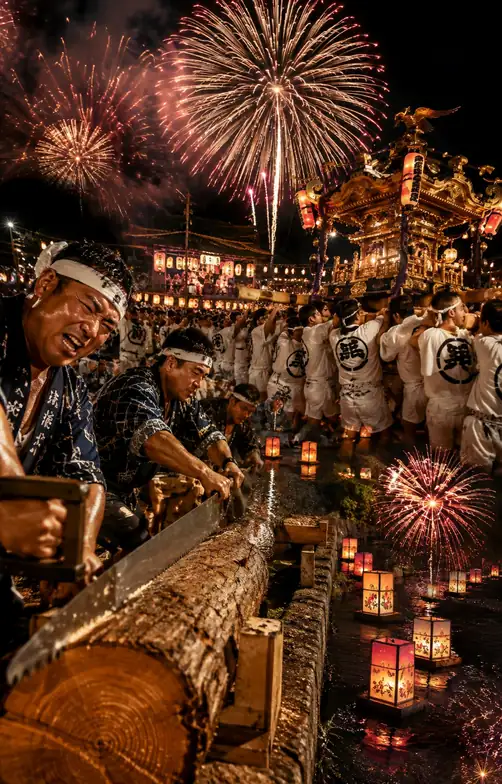 Craftsmen Sawing Logs and Grand Fireworks Over the Phoenix Shrine
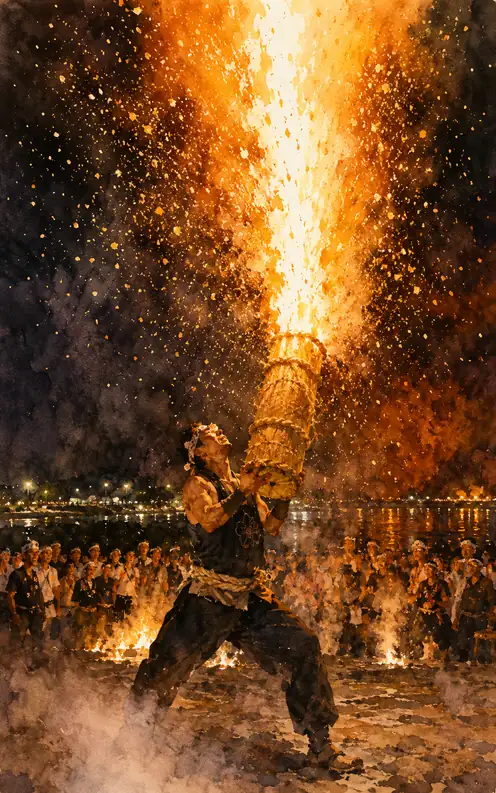 Soul Holding the Column of Fire