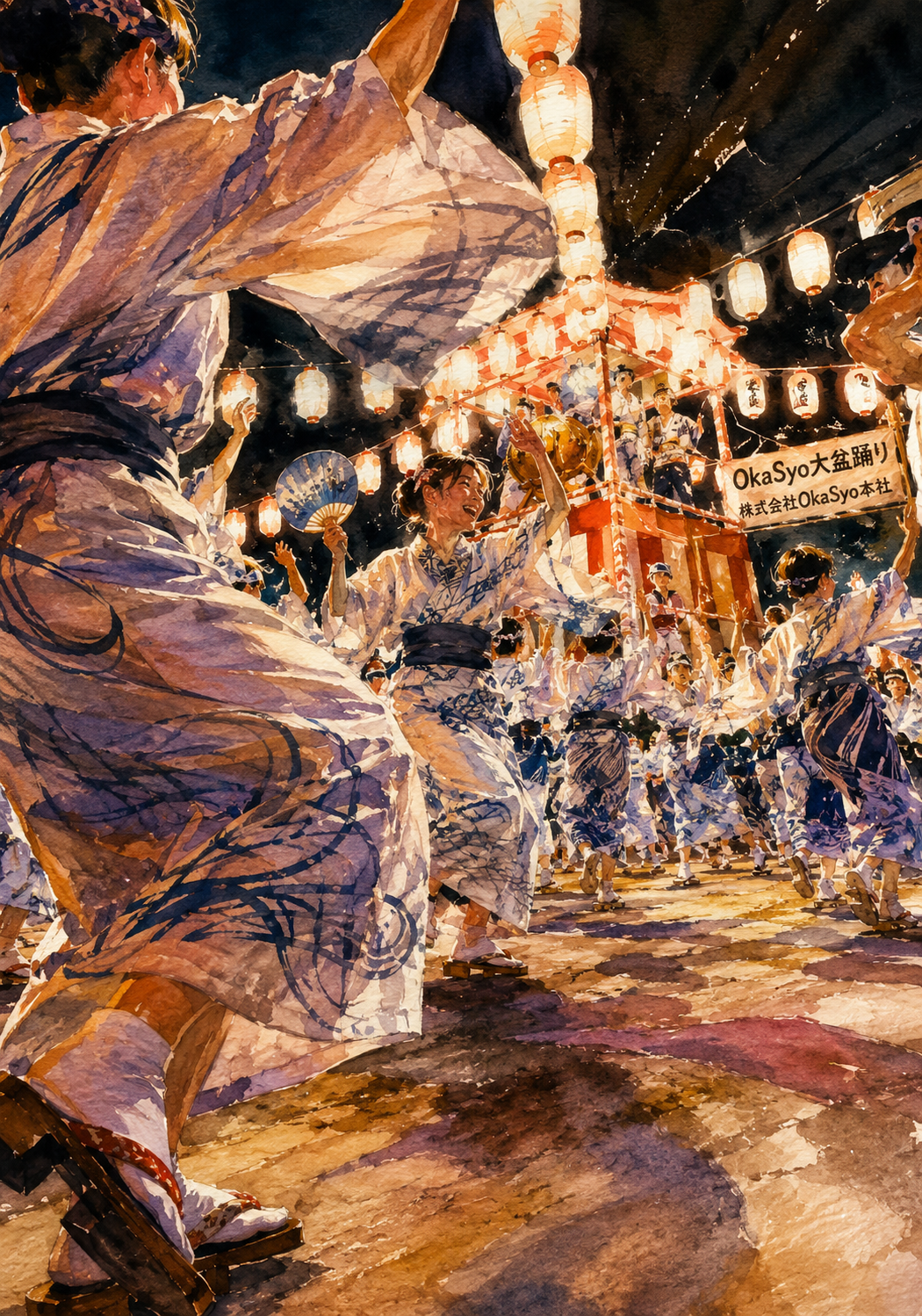
Flowing Sleeves Under the Tower Lanterns
Critique
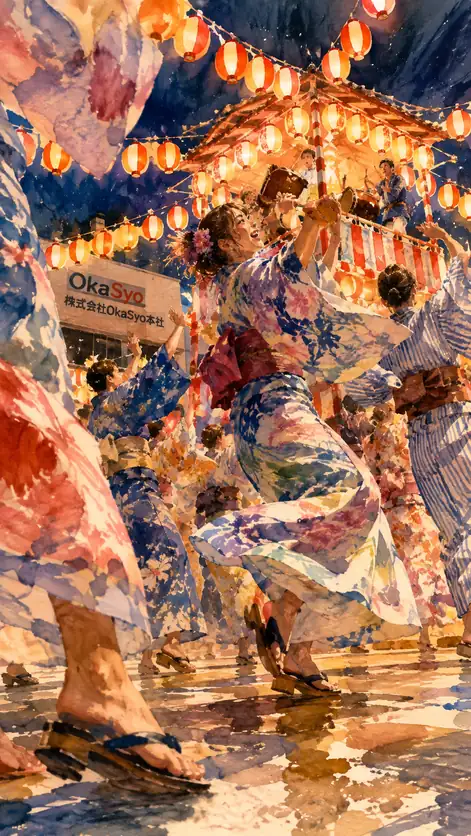
Introduction This festival painting captures bon dance as a flowing exchange between individual gestures and collective rhythm. A close dancer’s sweeping sleeve opens onto a lantern tower, smiling participants, and a street filled with patterned motion. Description The left foreground is dominated by the back and wide sleeve of a dancer in a pale purple-and-blue yukata. At center, a smiling woman steps forward, holding a blue fan while raising her other hand. Many similarly dressed dancers circle a red-and-white tower where musicians perform. Strings of lanterns cross the black sky. A commercial banner hangs at right, and warm reflections spread across the pavement. Analysis Extreme cropping turns the nearest robe into a diagonal curtain, revealing the central figure through a moving gap. Her fan, hands, and face form a compact focal triangle. Repeated lanterns and fans supply circular beats, while lifted arms and stepping feet create alternating verticals below. Cream, violet, indigo, and orange recur across clothing, tower, and ground. Interpretation and Evaluation The scene presents tradition as both organized and spontaneous. The tower, musicians, and repeated steps establish communal order, while varied poses and expressive sleeves preserve individual presence. The corporate banner introduces contemporary sponsorship without displacing the ritual core, suggesting how festivals inhabit present-day civic life. The foreground obstruction is especially effective because participation rarely offers a perfect view; one sees through neighboring bodies. Visual abundance remains readable through the central woman’s illuminated face and fan. Conclusion The painting succeeds as an immersive study of rhythm. Its layered bodies and lantern lines allow movement to circulate beyond the frame, while the tower anchors shared time. Through luminous color and energetic cropping, familiar dance becomes an immediate encounter with community in motion.
Same Subcategory
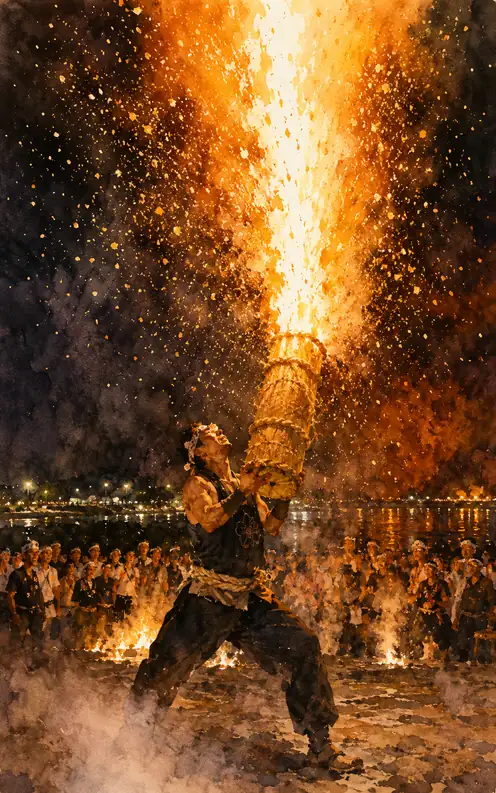 Soul Holding the Column of Fire
Similar Artworks
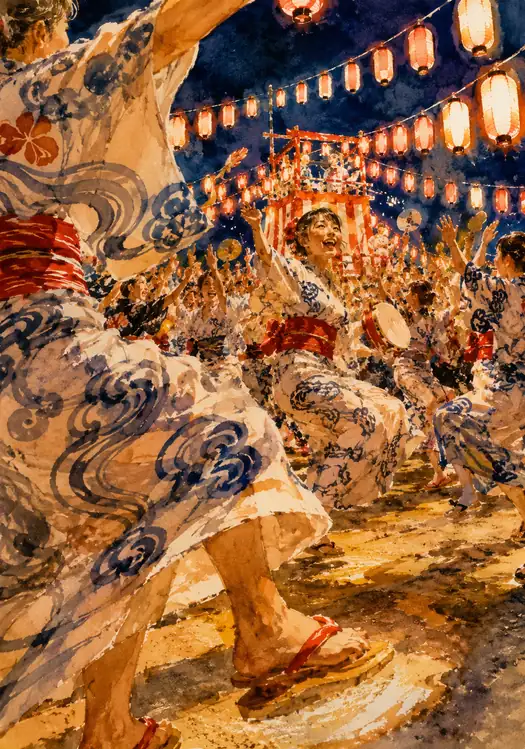 Dynamic Swirls and Smiling Dancers Under the Tower Lights
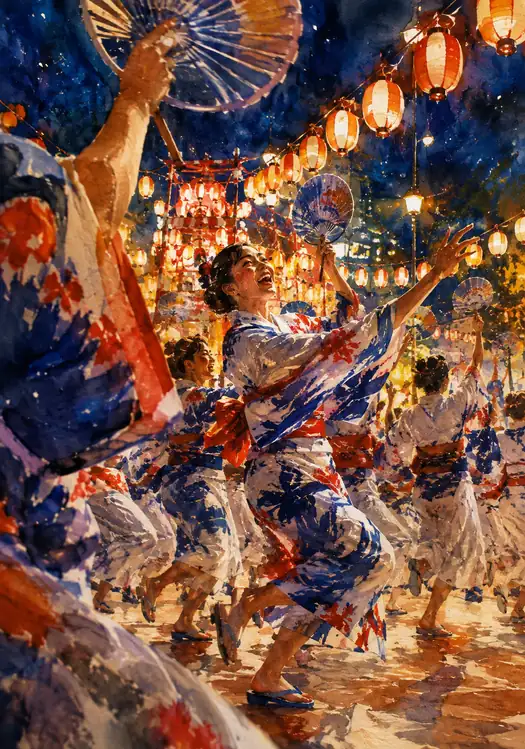 Swirling Summer Robes in Night Air (No. 97)
 Floral Yukata and Taiko Beats Under Tower Lights
 Halo on the Waters and Heartbeat of the River
 An Instant Eternity Scorching the Sky (No. 71)
 Swirling Summer Robes in Night Air (No. 28)
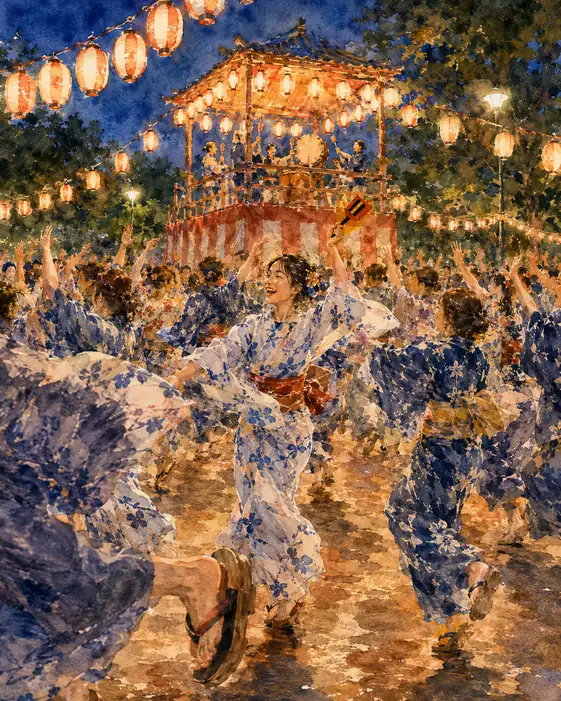 Swirling Summer Robes in Night Air (No. 19)
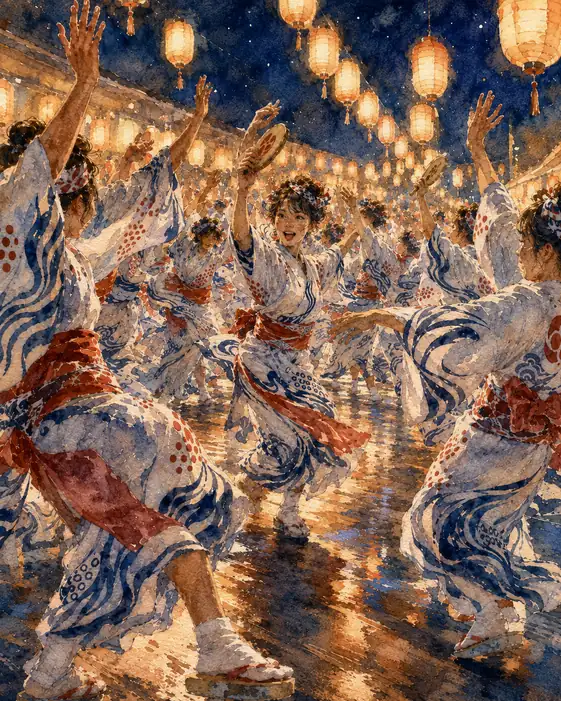 Swirling Summer Robes in Night Air (No. 32)
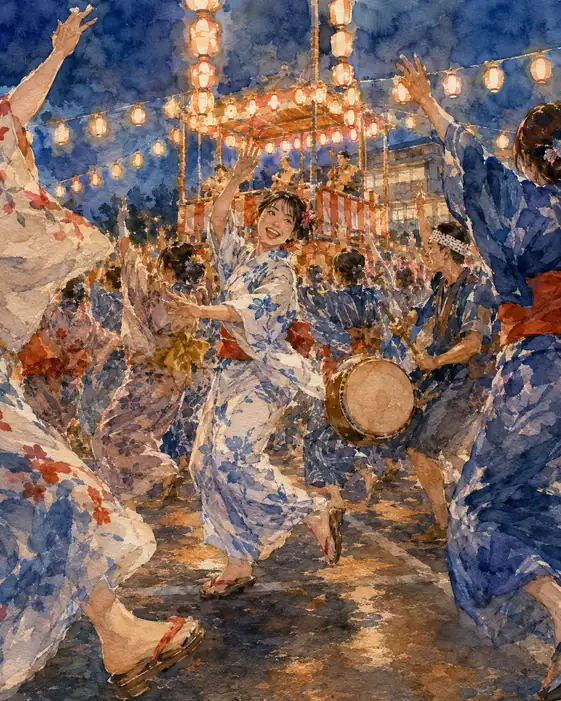 Swirling Summer Robes in Night Air (No. 30)
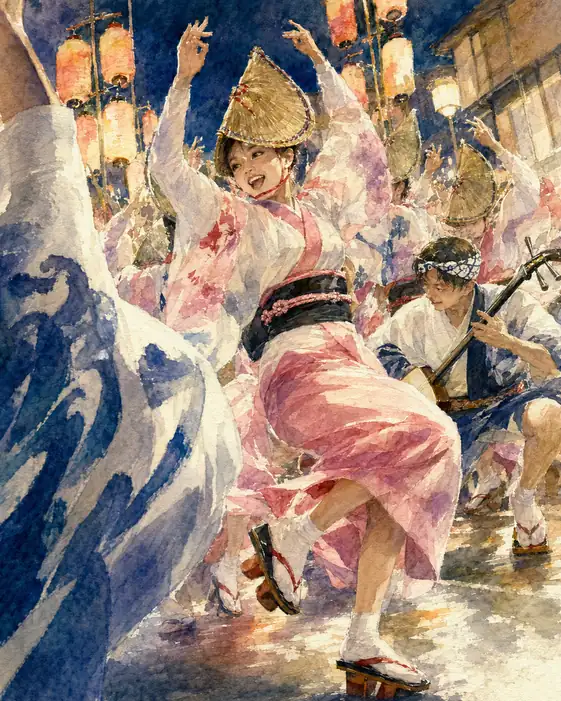 Pink Skirts Dancing Under Straw Hats and Shamisen Strumming