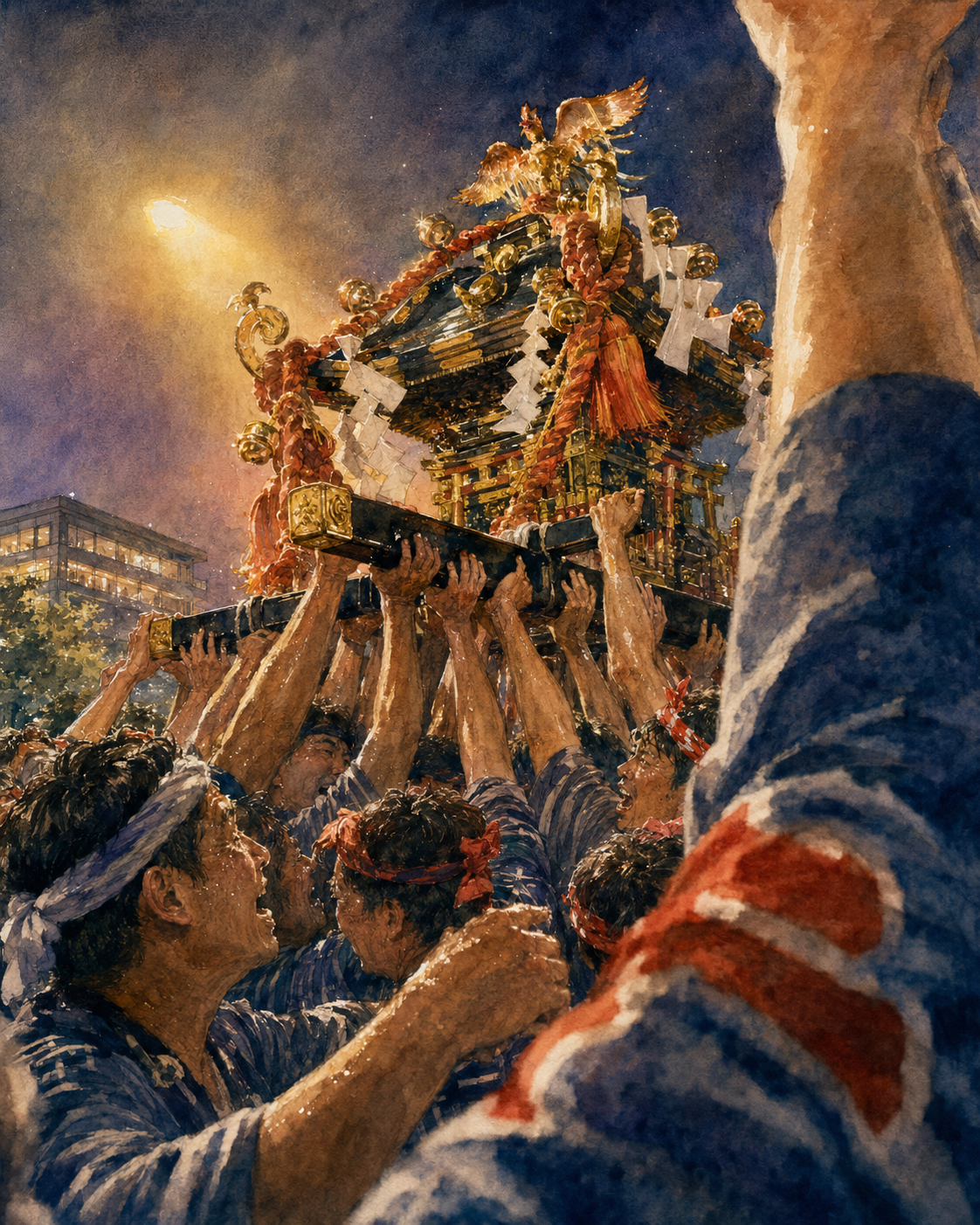
Pinnacle of Passion: Lifting the Sacred Shrine
Critique
Introduction This painting immerses the viewer beside a mikoshi procession, emphasizing heat, weight, and collective effort. The portable shrine glows above interlocking arms, while a cropped bearer at right makes the scene feel immediate rather than ceremonially distant. Description Men in blue striped coats and red or white headbands pack the lower frame. Their raised hands support two dark horizontal beams carrying an ornate shrine. Gold bells, metal fittings, red ropes, tassels, white streamers, and a winged bird crown its roof. A bright streetlamp burns through humid air at left, with a modern building behind. The enlarged shoulder and arm at right partly conceal the shrine. Analysis The composition rises through layered heads, forearms, beams, and roof. Diagonal arms converge beneath the shrine, conveying distributed pressure, while the beams provide hard horizontal resistance. Blue cloth and night surround warm skin, gold, and red, intensifying bodily heat. The cropped figure acts as a close framing device and denies an unobstructed, touristic view. Interpretation and Evaluation The shrine’s splendor is inseparable from the bearers’ strain. Open mouths, wet faces, and uneven grips reveal coordination under pressure rather than effortless unity. The bird at the summit suggests ascent, but the entire structure depends on hands pushing from below. Modern architecture and artificial light situate inherited ritual in the present city. The intrusive foreground shoulder is especially effective: it places viewers inside the crush, accepting partial sight as the truthful condition of participation. Conclusion The work succeeds by joining devotional ornament to palpable human weight. Its low angle monumentalizes the shrine without hiding the labor that elevates it. Through compression, warm-cool contrast, and tactile surface, communal tradition appears not preserved at a distance but remade through bodies acting together.
Same Subcategory
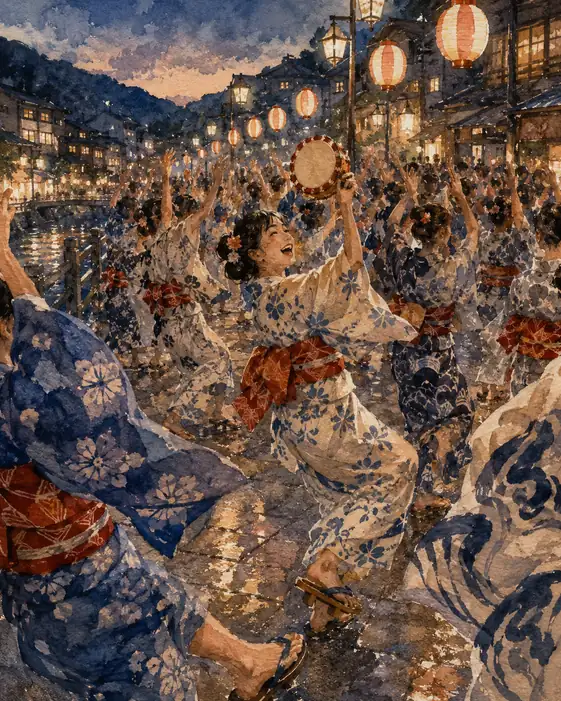 Echoes of Geta and Smiles Under Lantern-Lit Streets
Similar Artworks
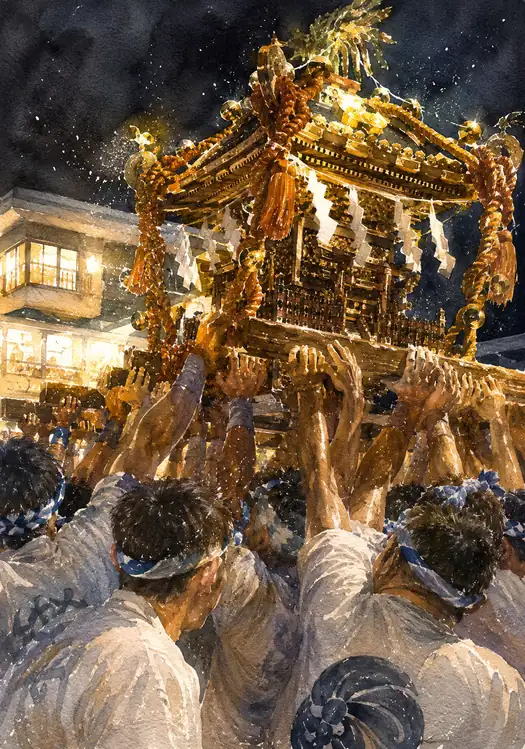 Raising the Golden Shrine Against the Night Sky
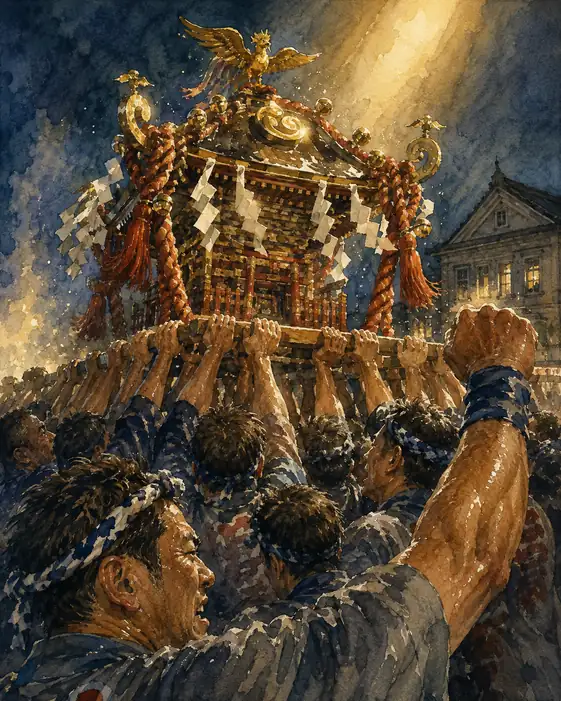 Flash of Sacred Shoulders in Dusk (No. 16)
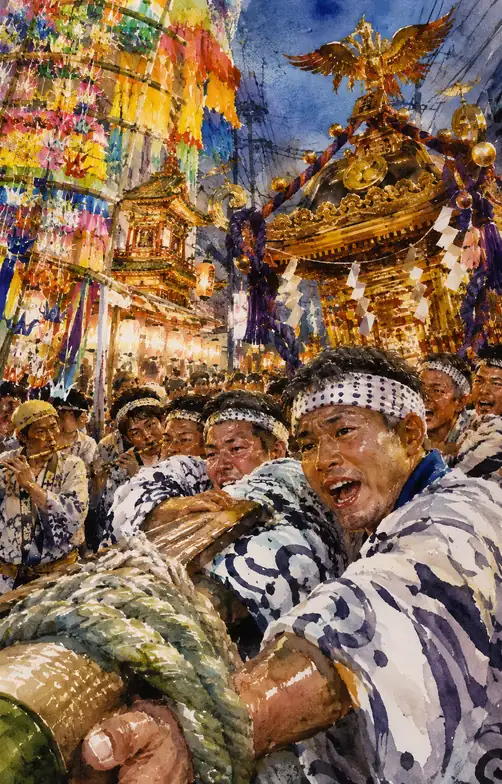 Golden Phoenix Shrine and Men's Cries Resonating in Tanabata Streamers
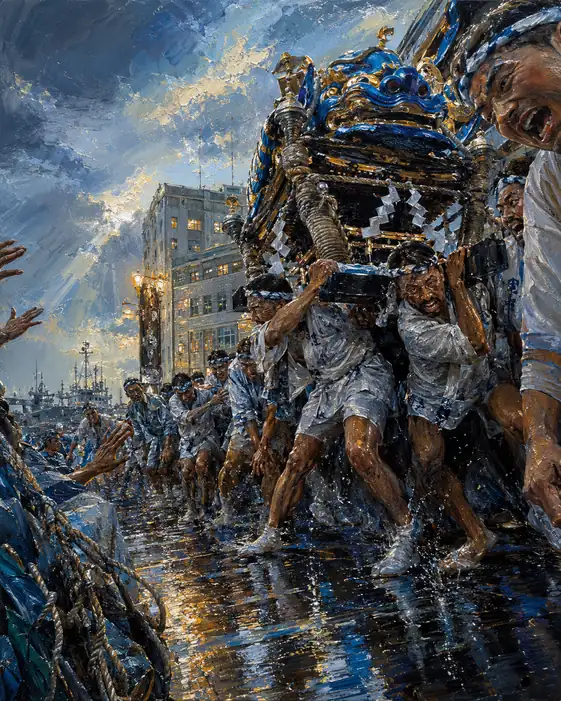 Roar of Men and Blue Lion Shrine Shaking the Port Town
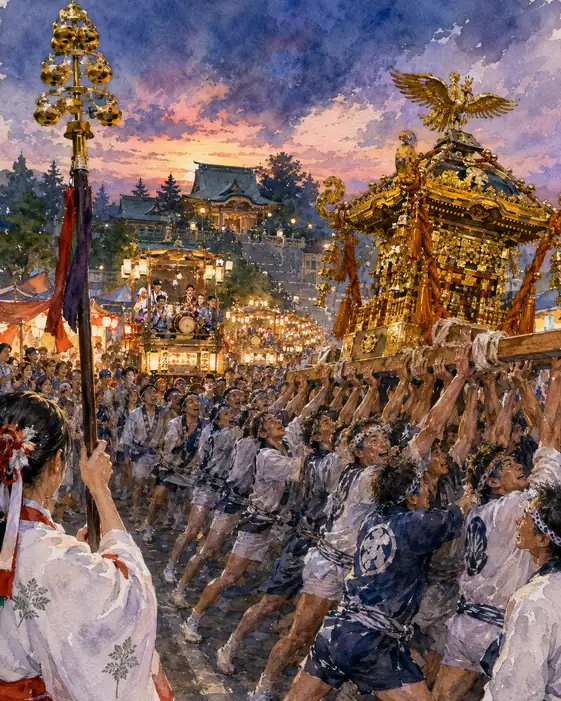 Golden Phoenix Shrine Raised High with Maiden's Bell
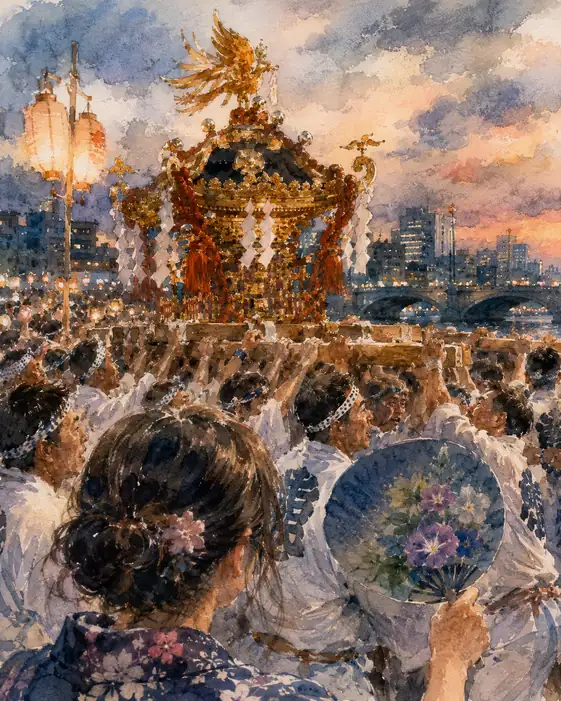 Flash of Sacred Shoulders in Dusk (No. 57)
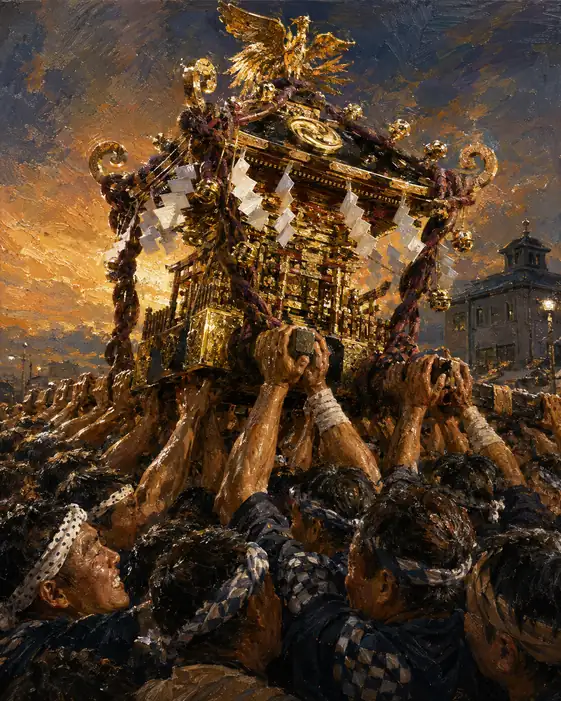 Flash of Sacred Shoulders in Dusk (No. 15)
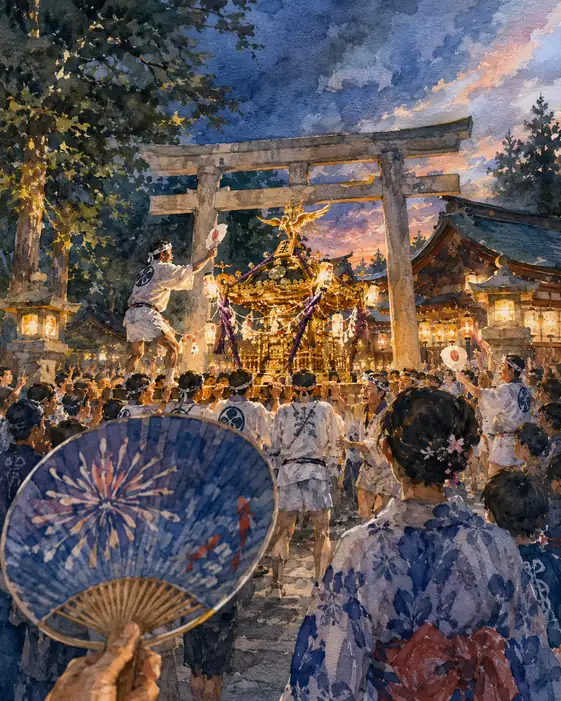 An Instant Eternity Scorching the Sky (No. 54)
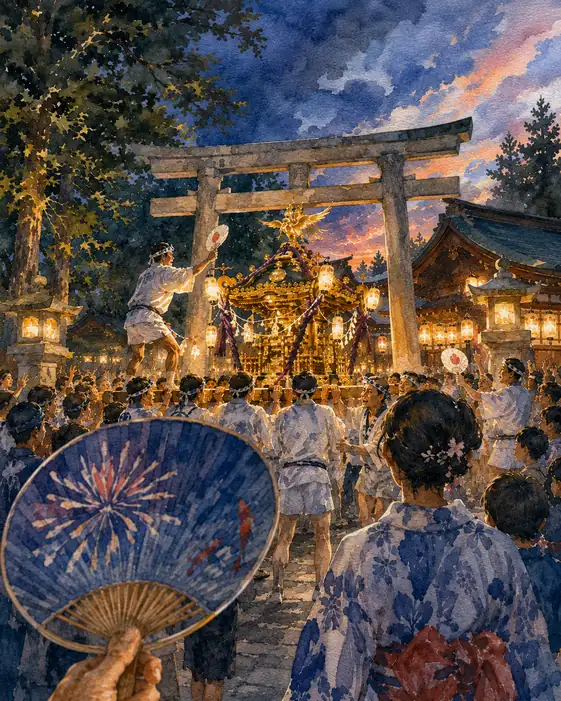 An Instant Eternity Scorching the Sky (No. 53)
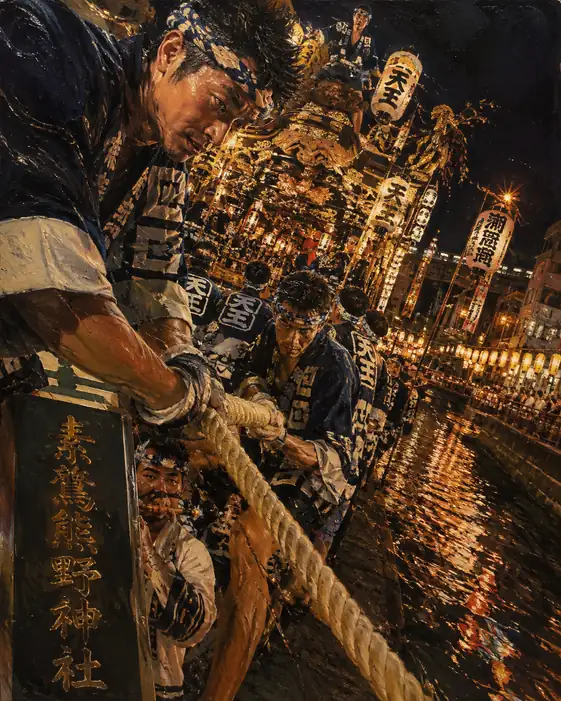 Men's Sweat and Ropes at Susanoo Shrine Tenno Festival