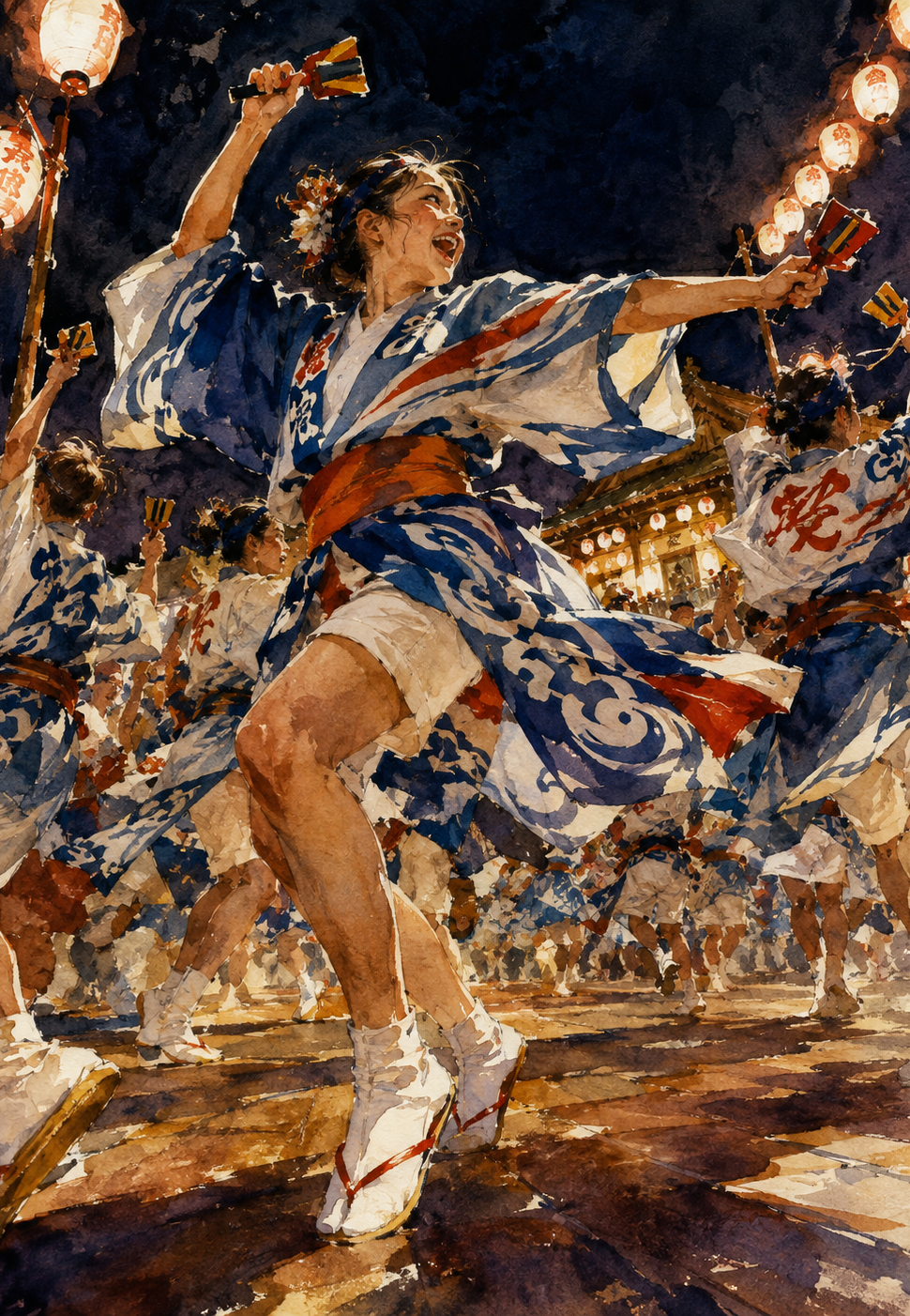
Joyful Dance in the Summer Rhythm
Critique
Introduction This festival scene focuses on a dancer captured from a very low viewpoint at the height of her movement. Her open stance, raised clappers, and animated expression make bodily energy the central subject, while surrounding performers and lanterns establish a collective celebration. Description The principal dancer occupies most of the vertical frame, stepping forward in white footwear with one knee bent. A blue-and-white patterned coat swings around a red sash, and both arms extend in opposing diagonals as she holds striped wooden clappers. Other dancers echo her costume and gesture; rows of paper lanterns, a glowing festival structure, and a dark sky fill the background. Analysis Foreshortening enlarges the nearest leg and sleeve, giving the figure unusual immediacy. The two arms create a wide diagonal span that counters the upright format, while cropped limbs and costumes at the edges make the procession seem to continue beyond the image. Saturated indigo and vermilion repeat across fabric, lantern lettering, and accessories, held together by warm ochre light on faces and pavement. Interpretation and Evaluation The upward view transforms the dancer from one participant into an emblem of shared momentum without separating her from the group. Her turning head, open mouth, and wind-lifted hair convey sound and motion through visible signs. The figure drawing is persuasive, the composition daring, and the broken watercolor edges effectively distinguish cloth, skin, and illuminated paper while preserving speed. Conclusion At first the dancer’s scale overwhelms the scene, but closer viewing reveals a carefully coordinated network of repeated gestures and colors. The work succeeds by making a single instant of movement communicate both individual exhilaration and the disciplined rhythm of a public festival.
Same Subcategory
 Golden Bloom Over the Mountain Lake
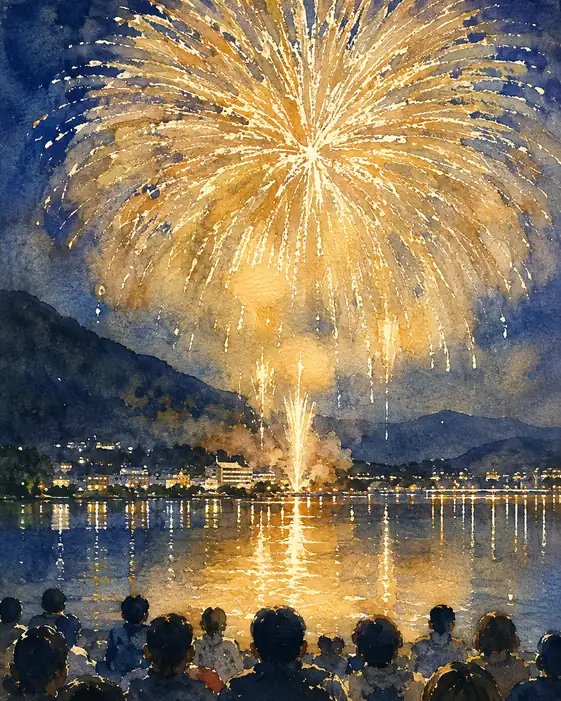 Golden Willow Canopy Over the Lake
Similar Artworks
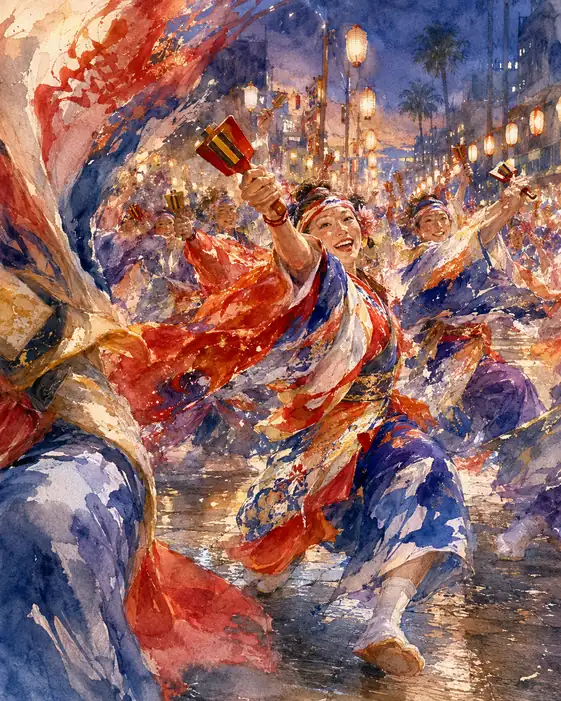 Swirling Summer Robes in Night Air (No. 77)
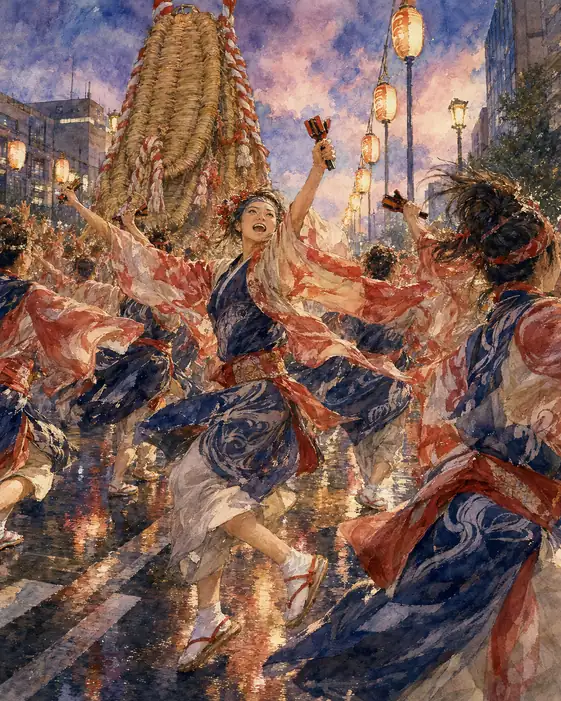 Swirling Summer Robes in Night Air (No. 68)
 Swirling Summer Robes in Night Air (No. 47)
 Swirling Summer Robes in Night Air (No. 43)
 Swirling Summer Robes in Night Air (No. 74)
 Swirling Summer Robes in Night Air (No. 44)
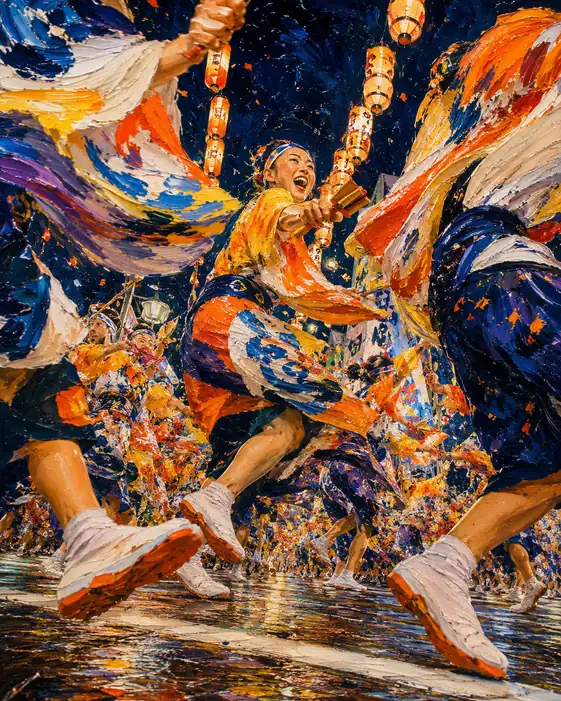 Swirling Summer Robes in Night Air (No. 41)
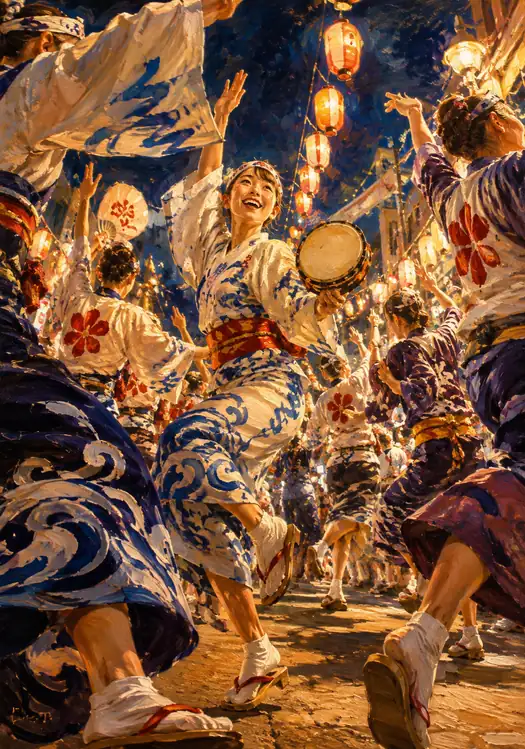 Swirling Wave-Patterned Yukata and Joyful Hand Drum
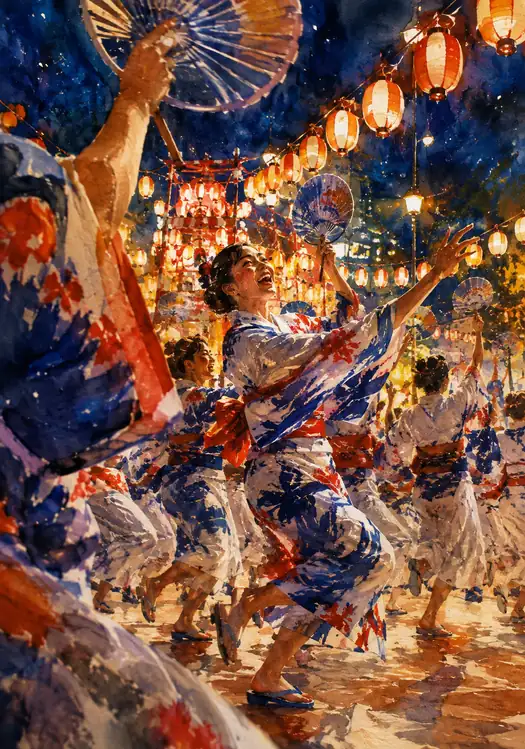 Swirling Summer Robes in Night Air (No. 97)
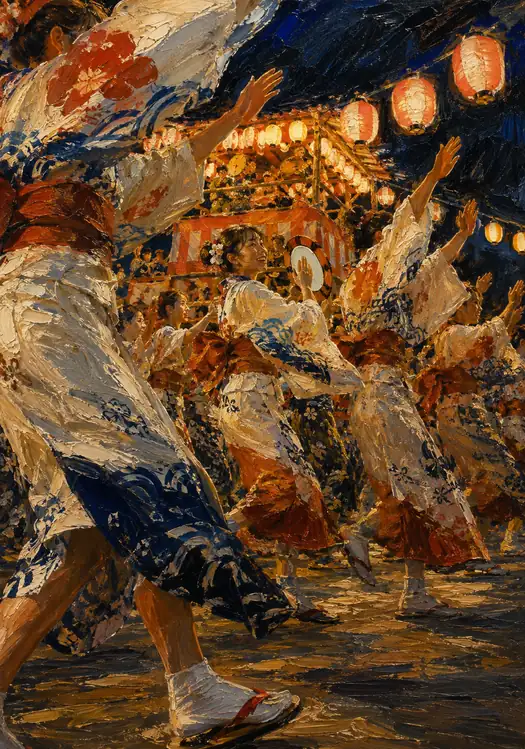 Swirling Summer Robes in Night Air (No. 94)