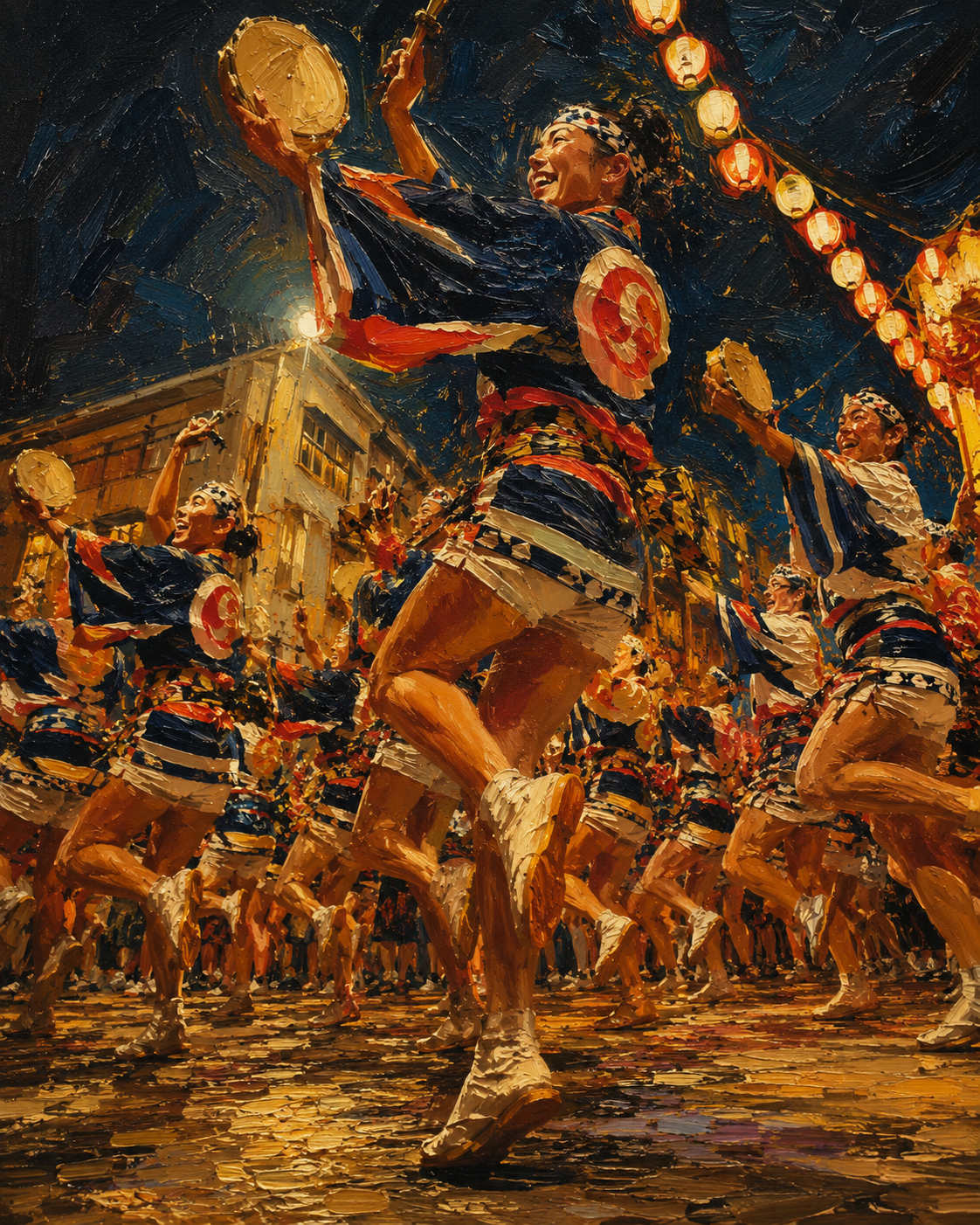
Swirling Summer Robes in Night Air (No. 100)
Critique
Introduction This dynamic festival painting immerses the viewer in a group dance. A low viewpoint, airborne feet, raised drums, and sweeping lanterns transform a crowded street into an arena of coordinated exertion and contagious delight. Description The central dancer leaps forward, one knee lifted high, smiling as he raises a round hand drum and short beater. He wears a dark blue, red, and white costume with a headband and wrapped white footwear. Other men repeat the pose across the street, their bodies cropped at both edges. A diagonal chain of lanterns climbs toward the upper right, where a lit float or structure glows. Old buildings enclose the route. Analysis The low angle magnifies legs and makes the nearest lifted foot project toward the viewer. Repeated bent knees, circular drums, and upraised arms establish a syncopated rhythm across depth. The lantern diagonal counters the central body’s upward thrust and carries attention toward the distant procession. Warm orange skin, lamps, and pavement reflections press against navy garments and sky. Interpretation and Evaluation The scene treats joy as bodily labor. The central smile is supported by visibly strained thighs, grounded companions, and the disciplined repetition of a shared step. Drums function as both instruments and visual emblems, their circles punctuating the angular anatomy. The heroic scale of the closest dancer might dominate, but echoed poses distribute energy through the group. Architecture and lanterns situate this exuberance within inherited streets and customs rather than an abstract spectacle. Conclusion The painting succeeds through kinetic composition and forceful material handling. It places viewers near the pavement, where rhythm is felt through feet and reflected light. By joining individual exhilaration to repeated communal movement, the work makes tradition appear demanding, alive, and triumphantly renewed.
Same Subcategory
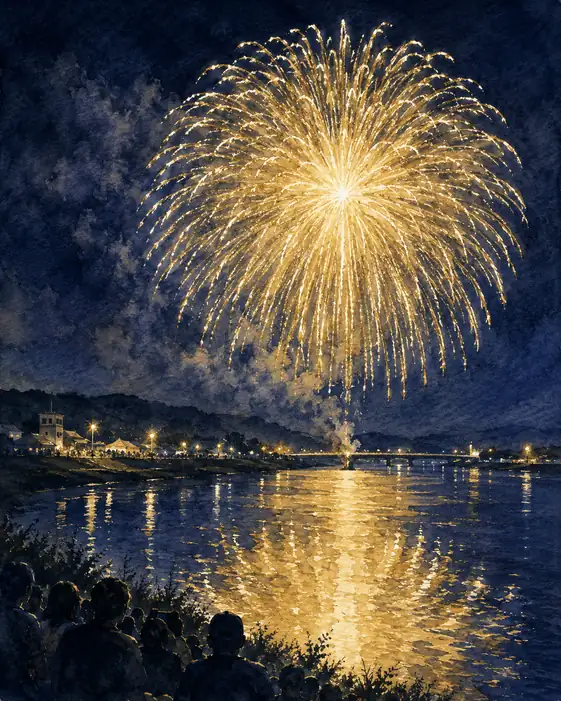 An Instant Eternity Scorching the Sky (No. 99)
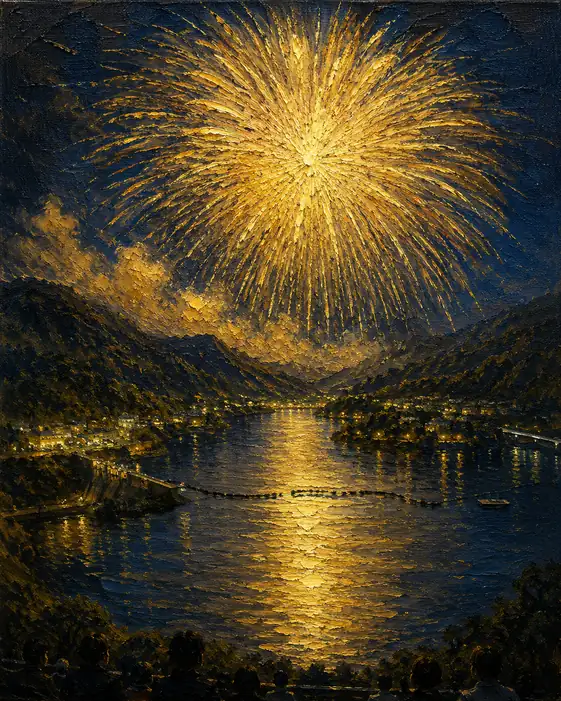 Golden Bloom Over the Mountain Lake
Similar Artworks
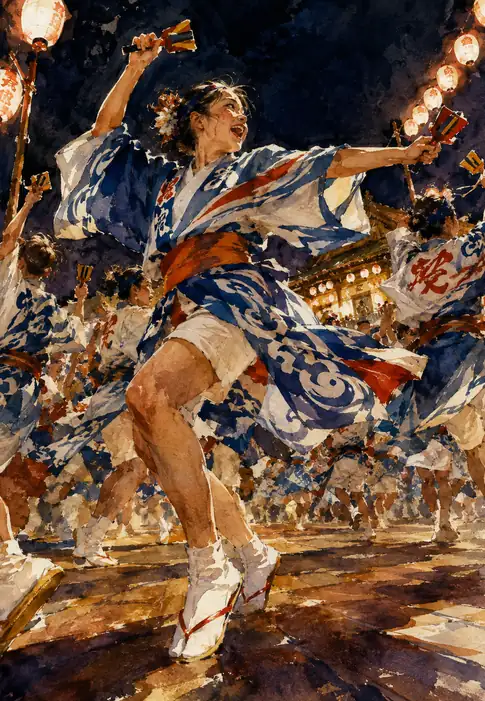 Joyful Dance in the Summer Rhythm
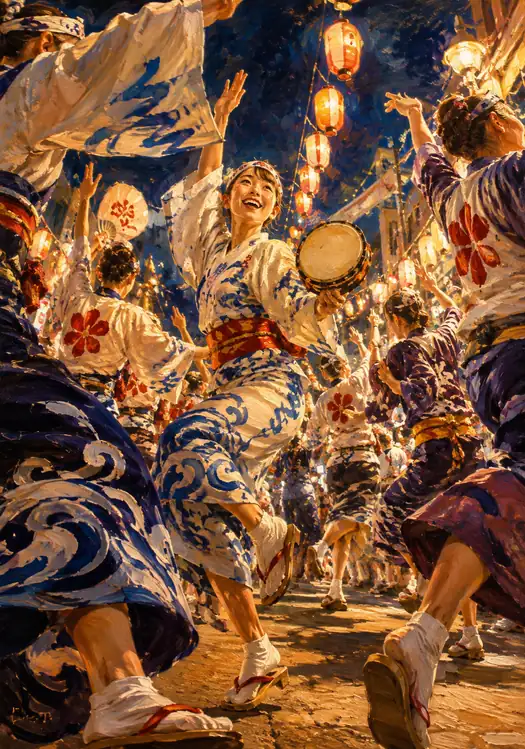 Swirling Wave-Patterned Yukata and Joyful Hand Drum
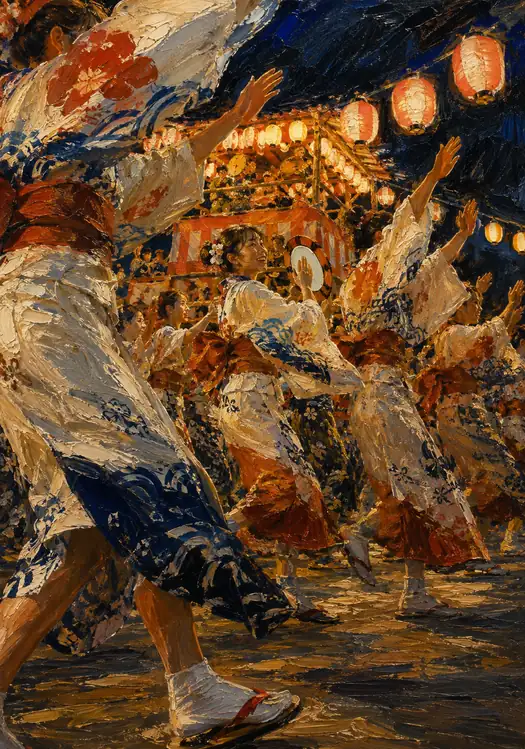 Swirling Summer Robes in Night Air (No. 94)
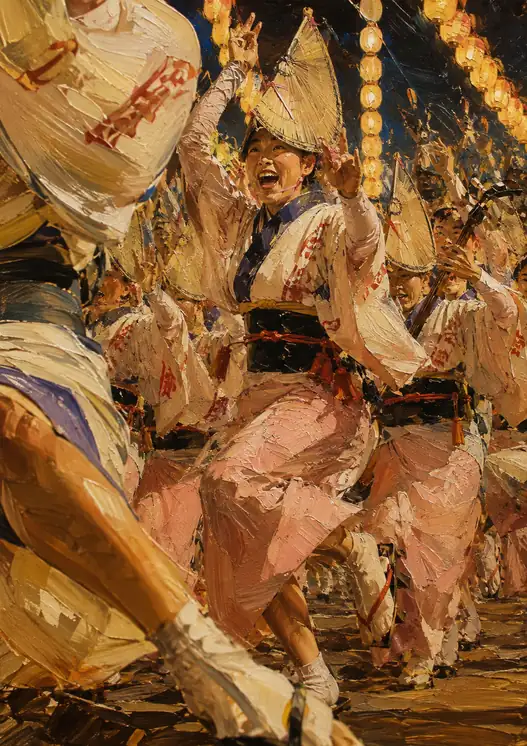 Awa Dance Blooming with Cheers and Shamisen Melodies
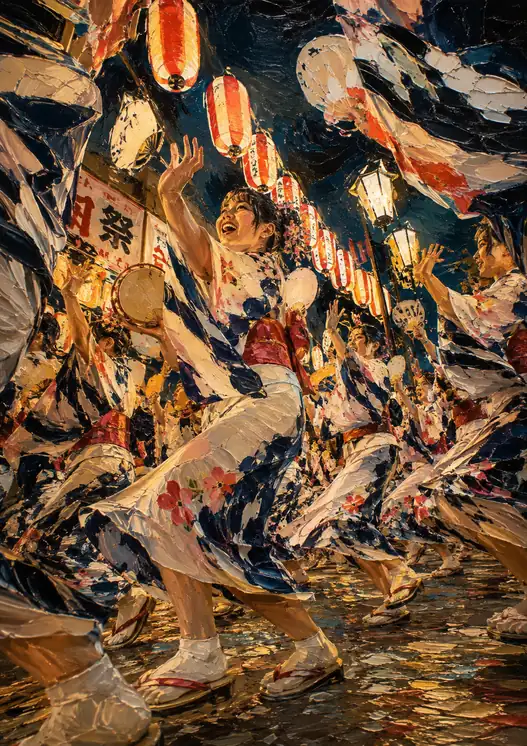 Vibrant Dance Under the Street Lanterns
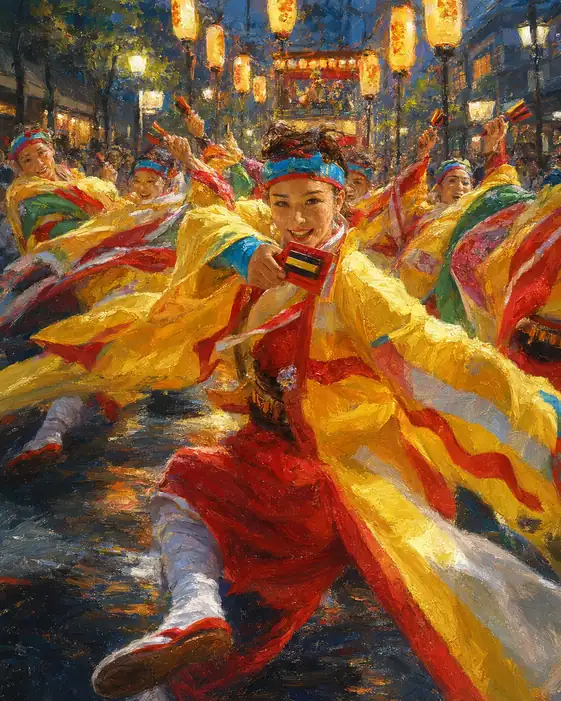 Swirling Summer Robes in Night Air (No. 74)
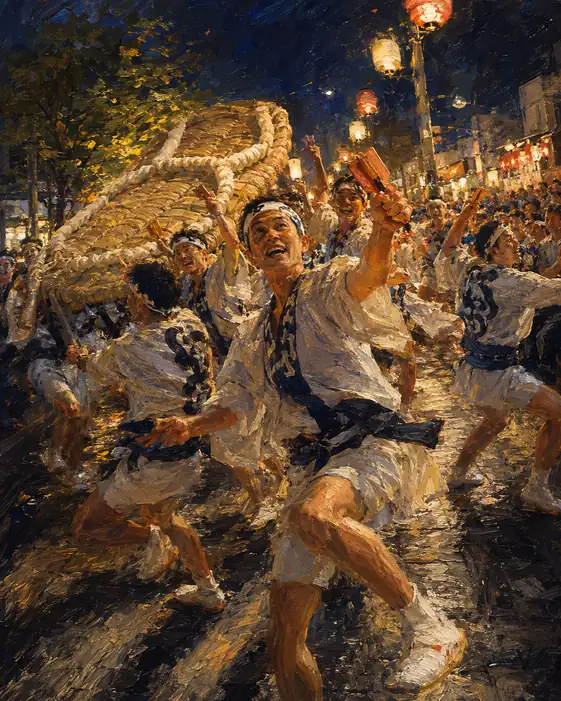 Warm Luminescence Rising in Darkness (No. 65)
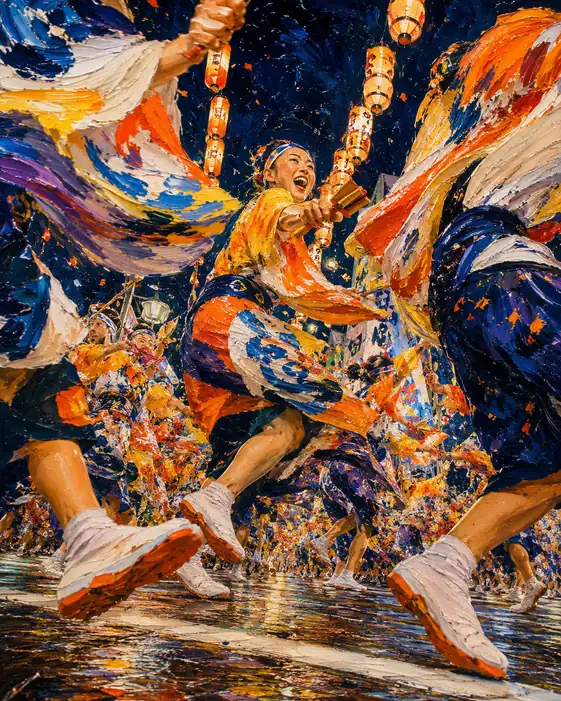 Swirling Summer Robes in Night Air (No. 41)
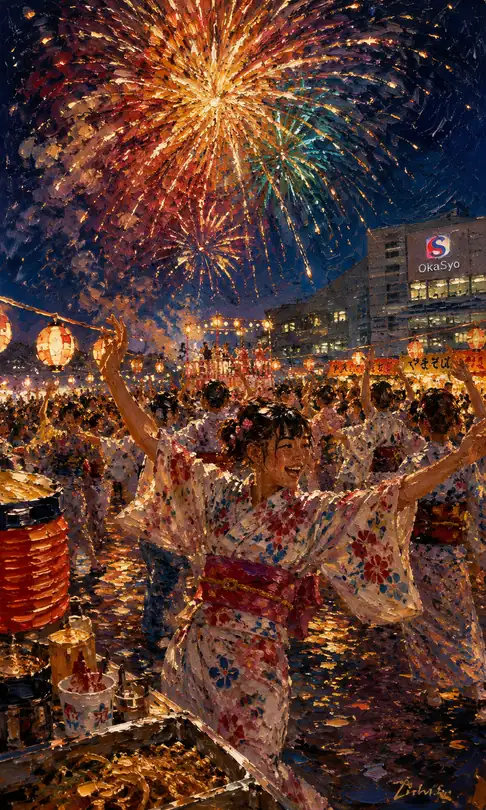 Smiling Yukata Dance Under Yakisoba Stalls and Grand Fireworks
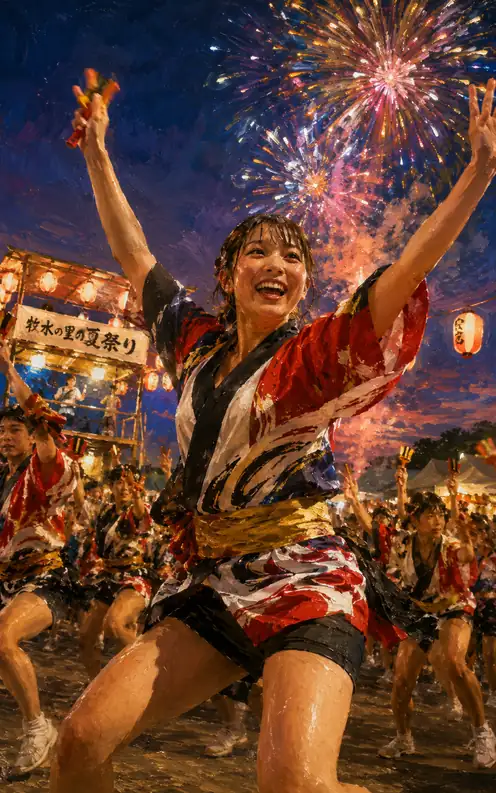 Beating Naruko and a Dancer's Radiance at Bokusui Country Summer Festival