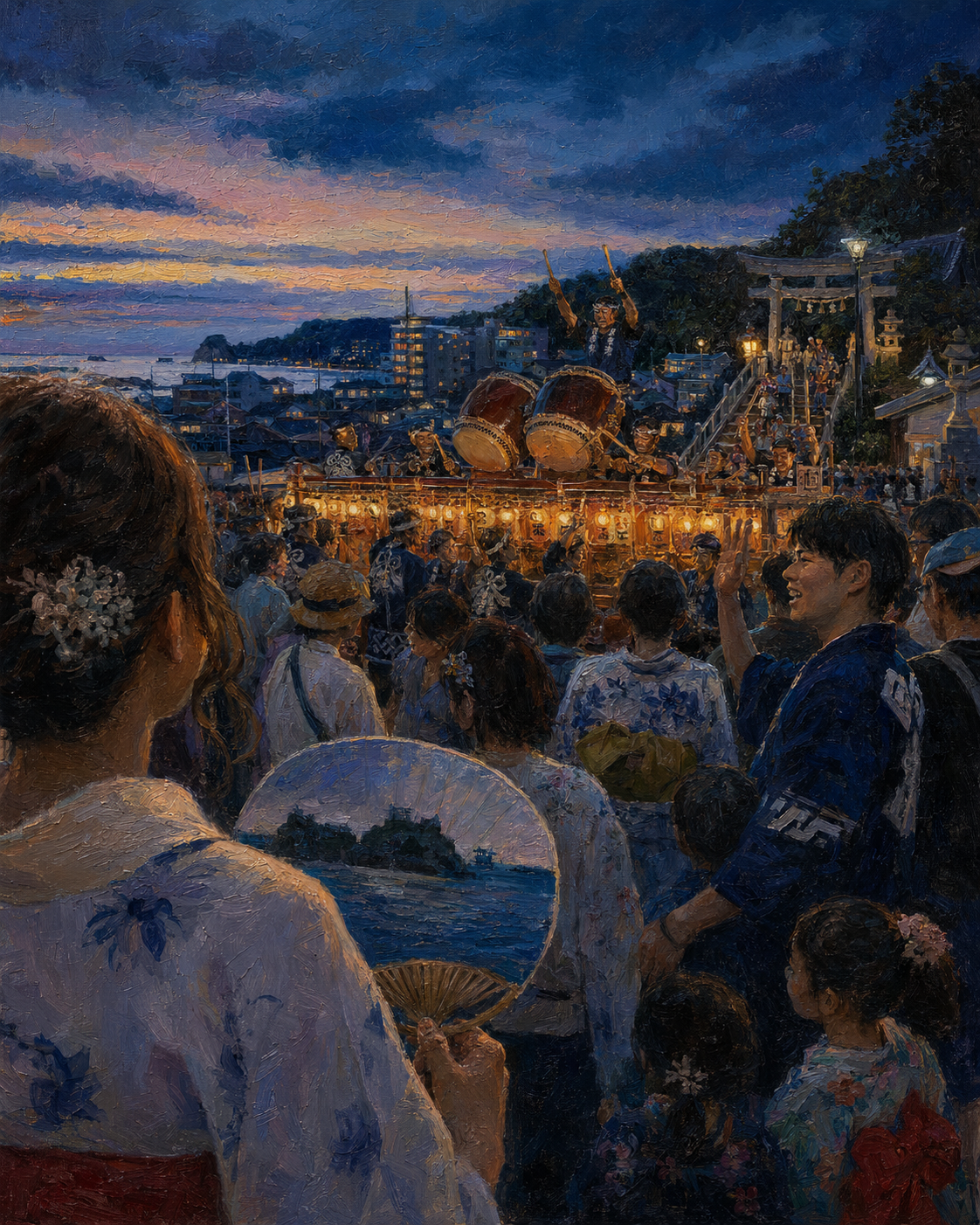
Warm Luminescence Rising in Darkness (No. 98)
Critique
Introduction This painting views an evening festival from within a dense crowd, combining public spectacle with intimate observation. A drum platform becomes the distant focus, while backs, profiles, fans, and children establish the experience of communal attendance. Description The foreground is crowded by festivalgoers in pale floral yukata. At left, a woman’s head and ornament are seen close; near center, a round fan carries a coastal landscape. A man in dark blue raises his hand at right. Beyond them, musicians perform on an illuminated float or platform beneath two large drums. Stone steps climb toward a torii gate, while buildings, harbor, and twilight sky recede leftward. Analysis Strong depth results from three compressed zones: cropped figures, glowing performance, and cool townscape. The circular fan provides a picture within the picture, echoing the harbor beyond and offering a quiet counterpoint to the drums. Warm lantern gold gathers around the platform, surrounded by blue-violet dusk. Heads and shoulders create an irregular lower rhythm, directing sight through narrow openings. The stairway’s diagonal pulls the eye from spectacle toward the shrine. Interpretation and Evaluation The scene values spectatorship as a social act. No single person fully dominates; instead, glances, gestures, and overlapping bodies convey many simultaneous experiences. The raised hand suggests greeting or keeping time, and the painted fan turns local scenery into a cherished emblem held by a participant. Sacred gate, popular music, modern buildings, and harbor coexist without conflict, presenting tradition as embedded in contemporary life. Conclusion The painting succeeds by making crowding emotionally expansive. It joins personal details to a broad civic setting and lets warm performance light mediate between individual viewers and place. The result is a richly observed portrait of festival memory: partial, layered, and shared.
Same Subcategory
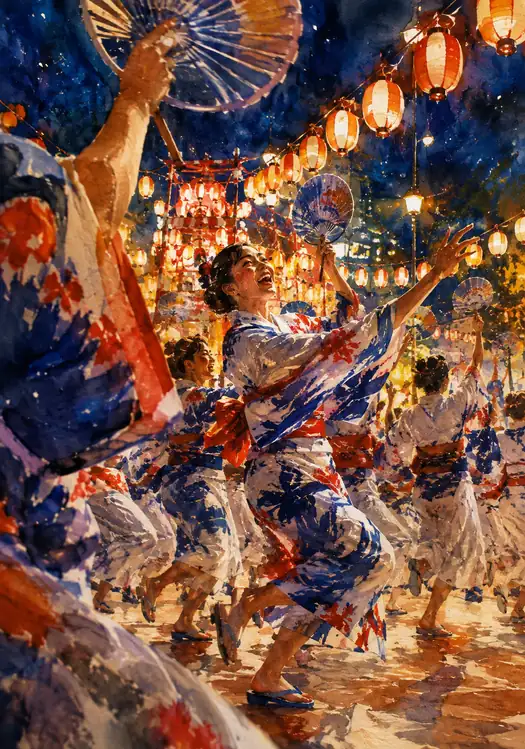 Swirling Summer Robes in Night Air (No. 97)
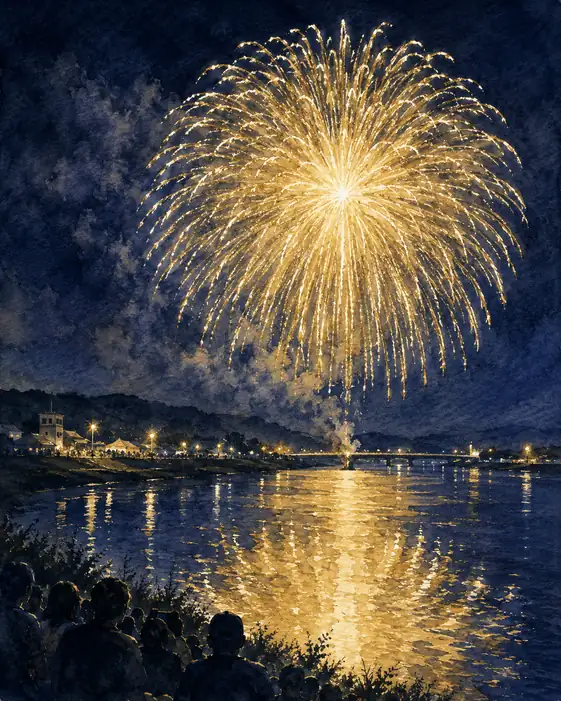 An Instant Eternity Scorching the Sky (No. 99)
Similar Artworks
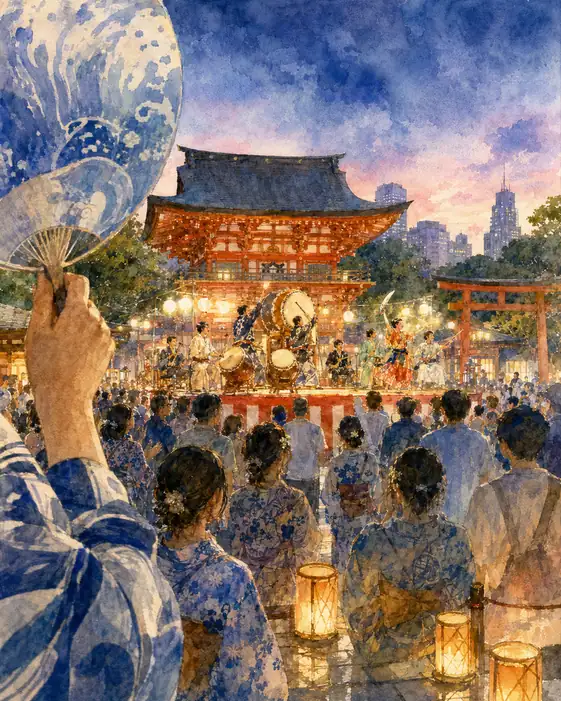 Warm Luminescence Rising in Darkness (No. 14)
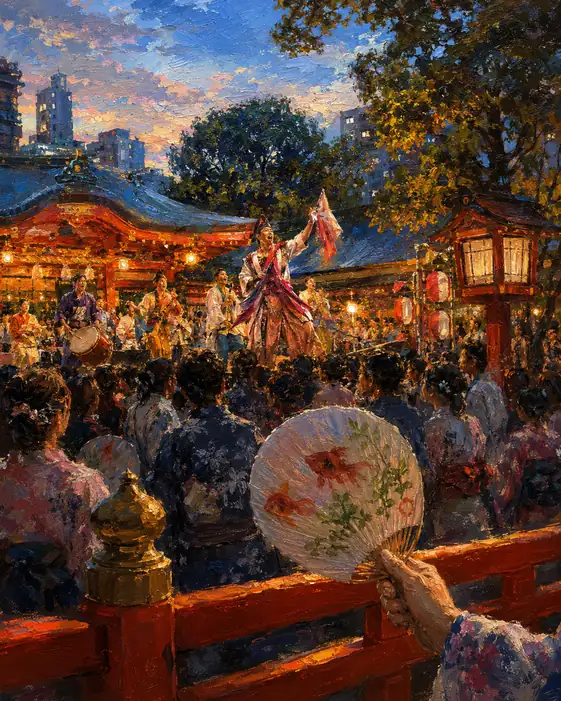 Warm Luminescence Rising in Darkness (No. 11)
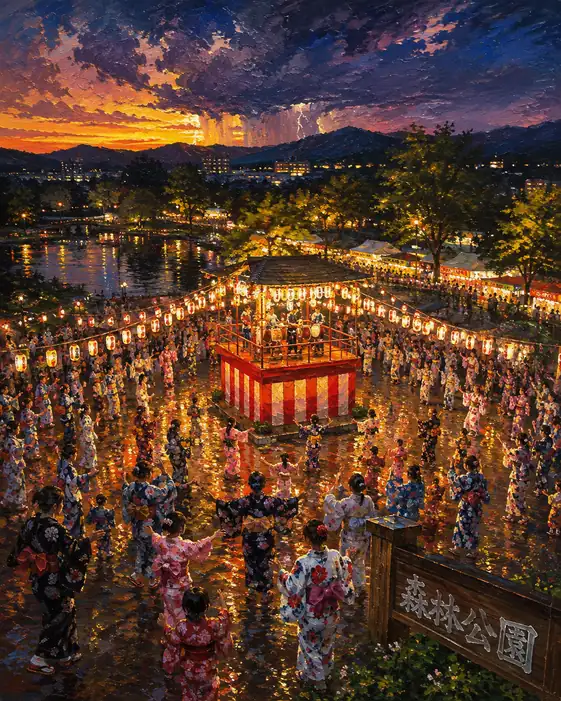 Great Bon Dance Ring in the Twilight of Shinrin Park
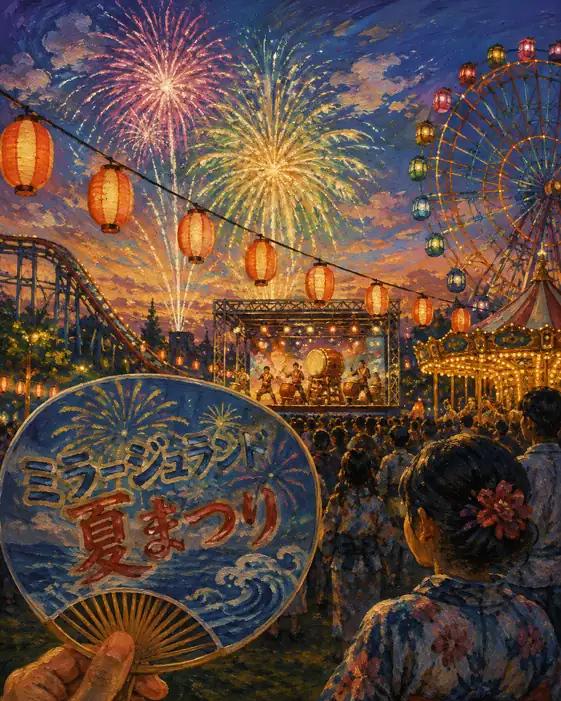 Festival Rondo and Fireworks at Mirage Land
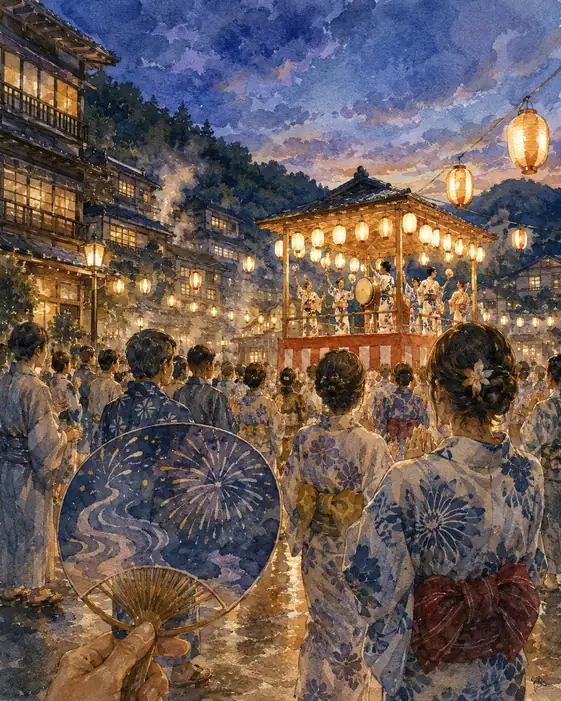 Taiko Beats by the Hot Springs Tower and Chrysanthemum Yukata
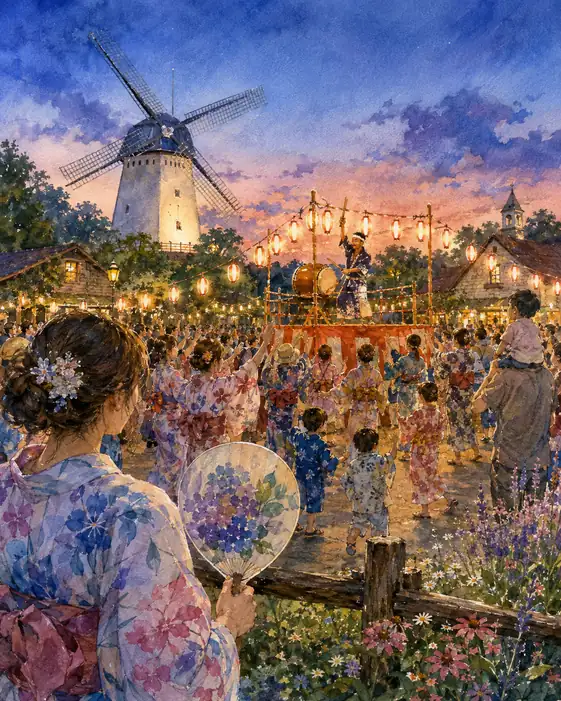 Windmill Twilight and the Hydrangea Fan at the Summer Festival
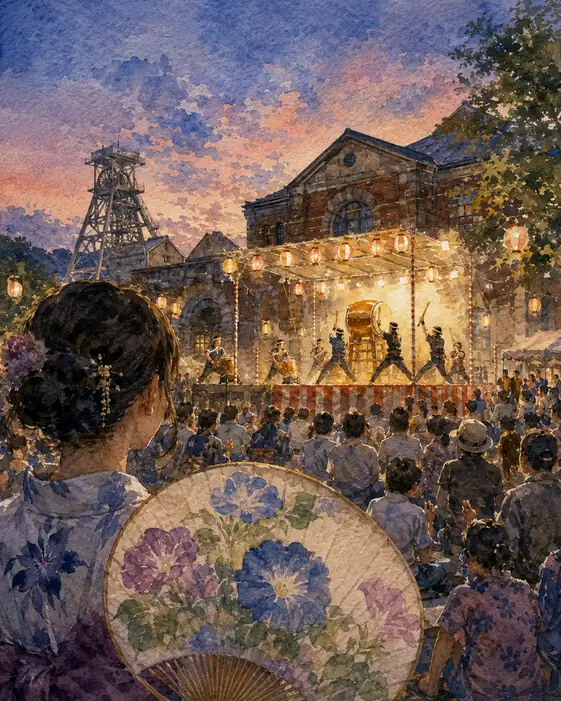 Taiko Beats and Morning Glory Fan Before Industrial Heritage
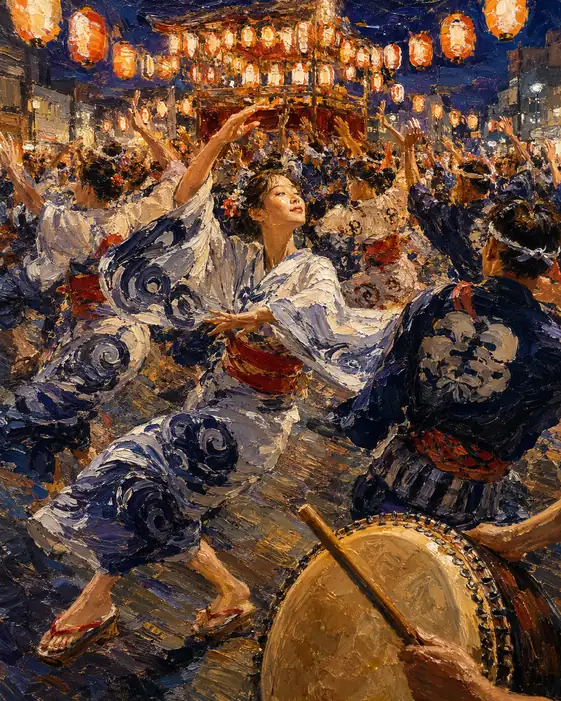 Swirling Summer Robes in Night Air (No. 67)
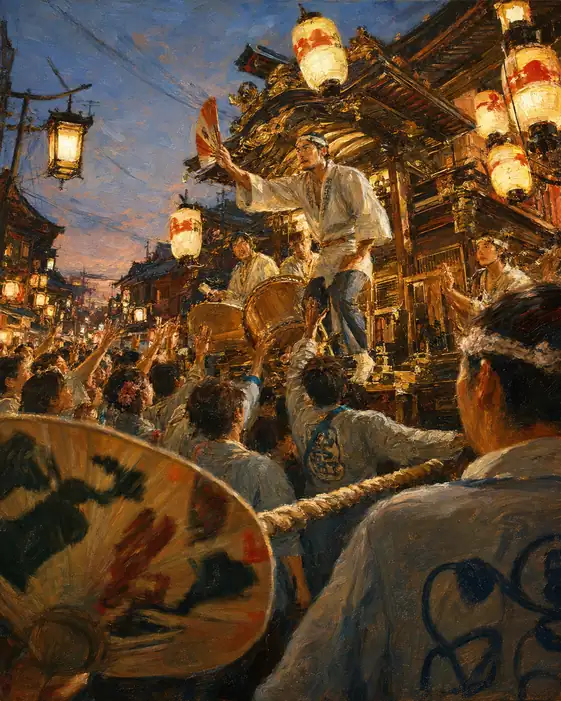 Warm Luminescence Rising in Darkness (No. 50)
 Swirling Summer Robes in Night Air (No. 39)