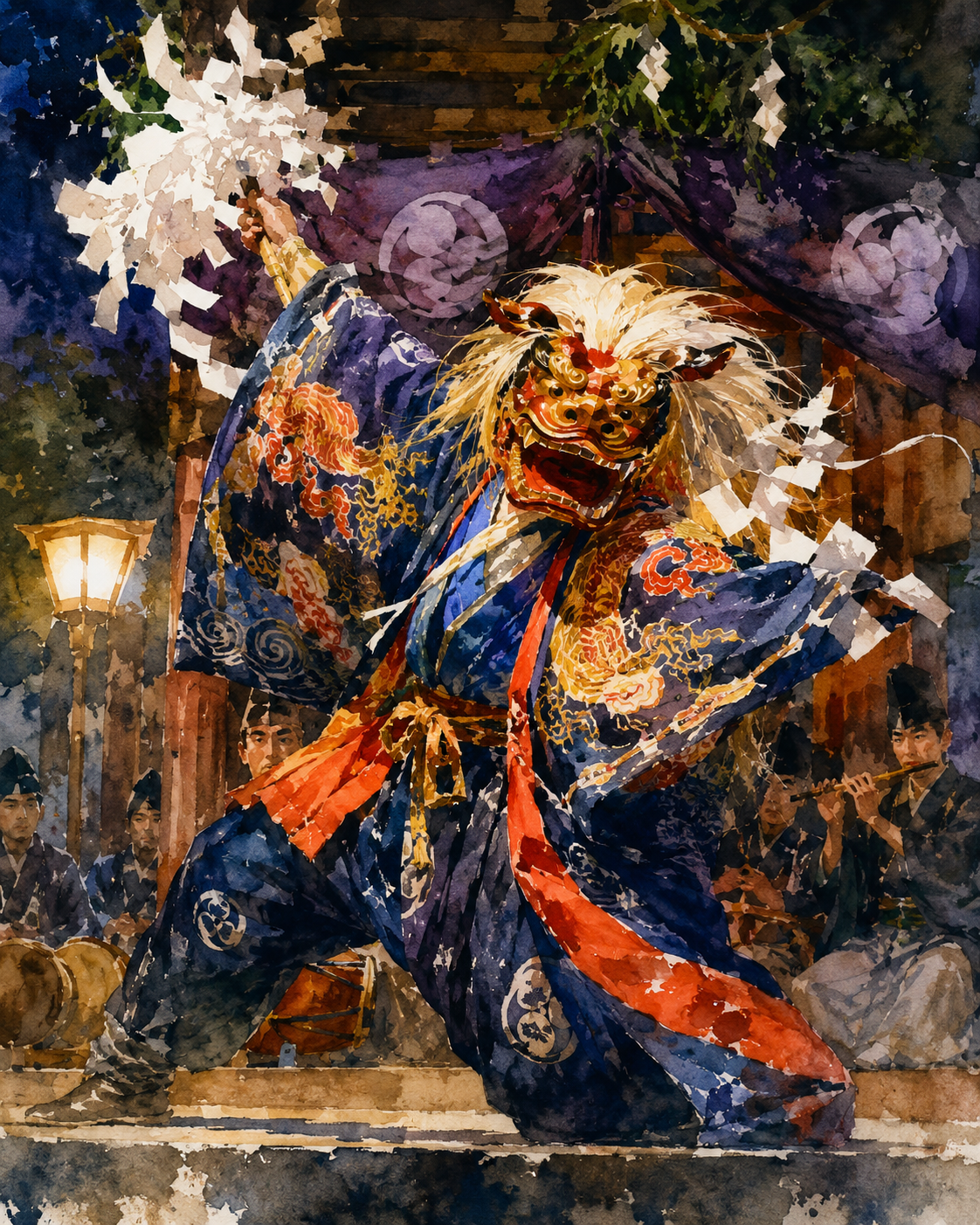
Swirling Summer Robes in Night Air (No. 73)
Critique
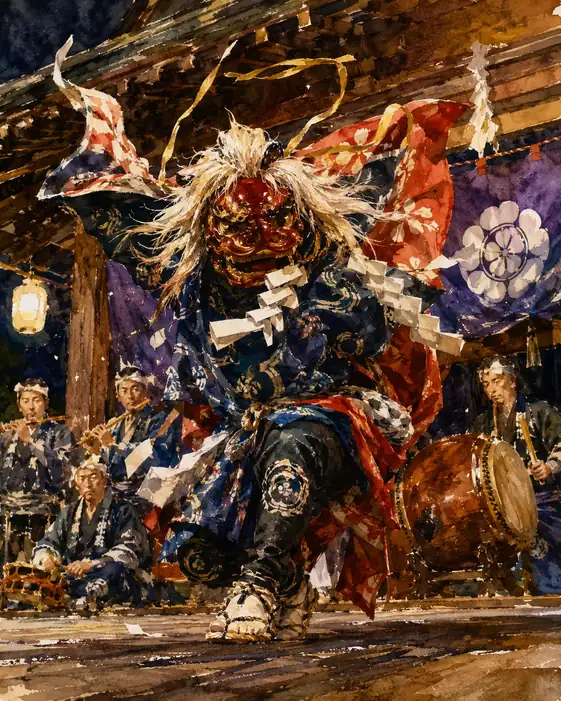
Introduction This watercolor focuses on a masked lion dancer performing before musicians at a shrine-like stage. The single figure fills most of the vertical composition, giving a ritual action both theatrical immediacy and concentrated symbolic weight. Description The dancer kneels with one leg extended, spreading enormous dark-blue sleeves patterned with red, gold, and pale emblems. A red-faced mask, open mouth, curling horns, and streaming white mane form the upper focal point. White paper streamers break across the corners, while seated drummers and a flutist remain visible beneath purple curtains behind the performer. Analysis The body forms an asymmetrical triangle: the raised left arm drives upward, the right sleeve projects sideways, and the lowered knee secures the base. Red sashes sweep diagonally through the blue costume and lead toward the mask. Transparent washes soften cloth and shadow, whereas sharper orange and black marks define the carved face. Reserved whites connect mane, streamers, and flashes of light. Interpretation and Evaluation The contrast between concealed performer and expressive mask makes transformation the scene’s central idea. Musicians provide a steady, observant enclosure, while the dancer’s expanded sleeves appear to convert sound into visible motion. The composition balances ritual formality with instability, and its color scheme remains coherent despite elaborate patterns. Varied wet and dry brushwork convincingly distinguishes hair, painted wood, paper, and fabric. Conclusion At first the fierce mask commands attention, but closer viewing reveals how costume, streamers, and musicians construct its authority. Strong figure design, selective detail, luminous color, and disciplined watercolor technique create an image that is dramatic without becoming chaotic. The work presents ceremonial performance as a coordinated passage between human control and an assumed, larger presence.
Same Subcategory
 Warm Luminescence Rising in Darkness (No. 72)
 Swirling Summer Robes in Night Air (No. 74)
Similar Artworks
 Dynamic Sacred Lion and Scattering Paper Streamers
 Red-Masked Lion Storming the Shrine Stage
 Warm Luminescence Rising in Darkness (No. 78)
 Warm Luminescence Rising in Darkness (No. 38)
 Warm Luminescence Rising in Darkness (No. 36)
 Warm Luminescence Rising in Darkness (No. 34)
 Swirling Summer Robes in Night Air (No. 76)
 Kagura Lion Holding a Golden Snake Before the Bonfire Flame
 Taiko Beats and Morning Glory Fan Before Industrial Heritage
 Reverberation of the Eternal Spirit