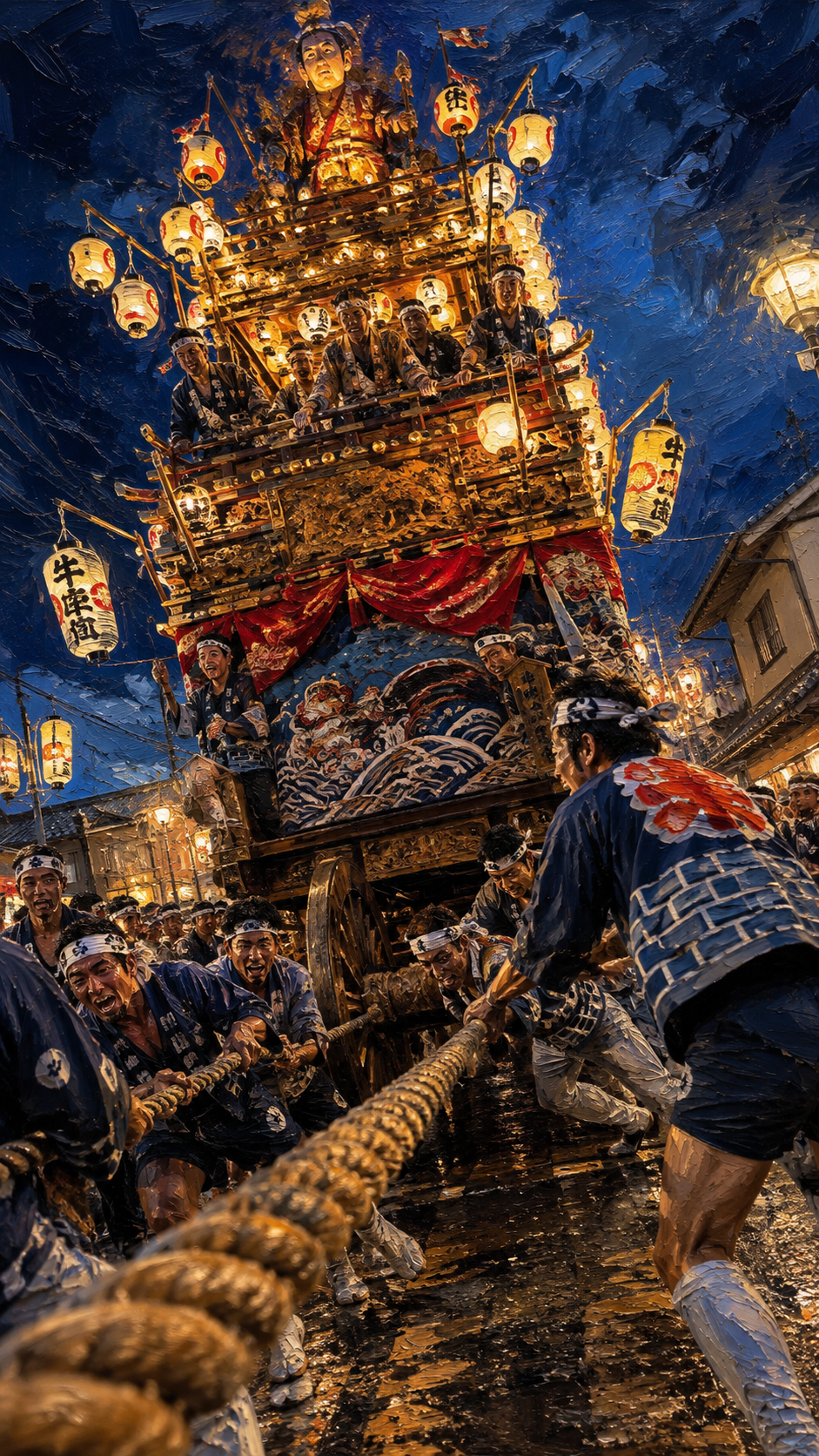
Warm Luminescence Rising in Darkness (No. 72)
Critique
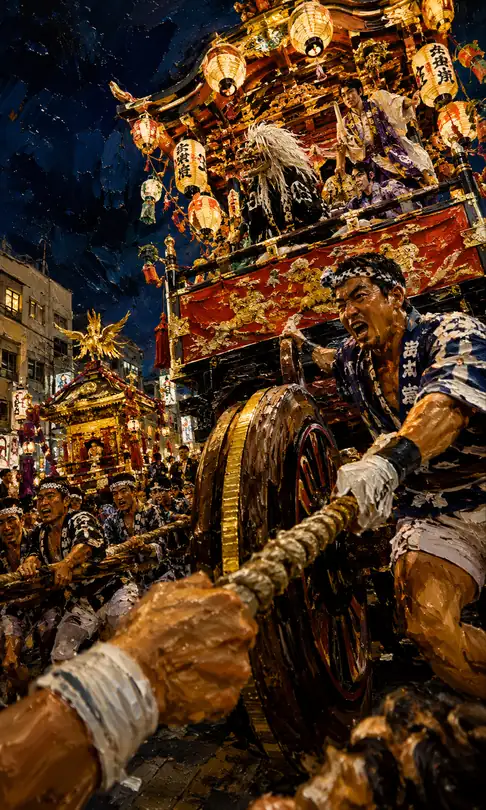
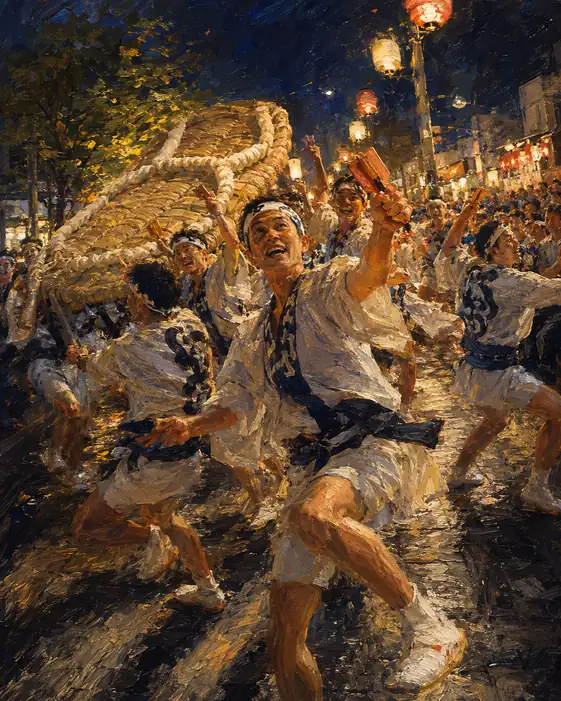
Introduction This painting shows a towering festival float advancing directly down a wet street at night. Seen from an extremely low frontal viewpoint, the structure rises above the pulling crew like a mobile stage, combining physical strain with ceremonial grandeur. Description A thick rope begins at the bottom edge and runs toward men crouching around the float’s large wheels. Above them, carved panels, red drapery, rows of lanterns, musicians, and an illuminated figure form successive tiers. Houses and streetlamps press along the margins beneath a densely brushed blue sky. Analysis The central rope acts as a perspective line that pulls the viewer inward, while the float’s stacked horizontals redirect attention upward. Near symmetry gives the architecture authority, yet asymmetrical bodies, swaying lanterns, and tilted poles keep the scene unstable. Golden light separates faces and ornament from deep blue darkness, and heavy strokes make mud, wet cloth, timber, and cloud share a rugged material presence. Interpretation and Evaluation The close frontal arrangement turns the approaching float into both spectacle and burden. Pullers strain toward the viewer while attendants above lean outward, linking ground-level labor to elevated ceremony. The figure drawing is vivid without idealizing exertion, and the composition’s daring scale conveys collective power. Red accents and reflective gold prevent the imposing darkness from becoming visually inert. Conclusion The first impression is one of monumental height, but closer viewing shifts attention to the rope and the many hands directing that mass. Through emphatic perspective, disciplined color contrast, dense texture, and a distinctive fusion of portrait-like faces with architectural detail, the painting presents tradition as an achievement continually produced through coordinated human action.
Same Subcategory
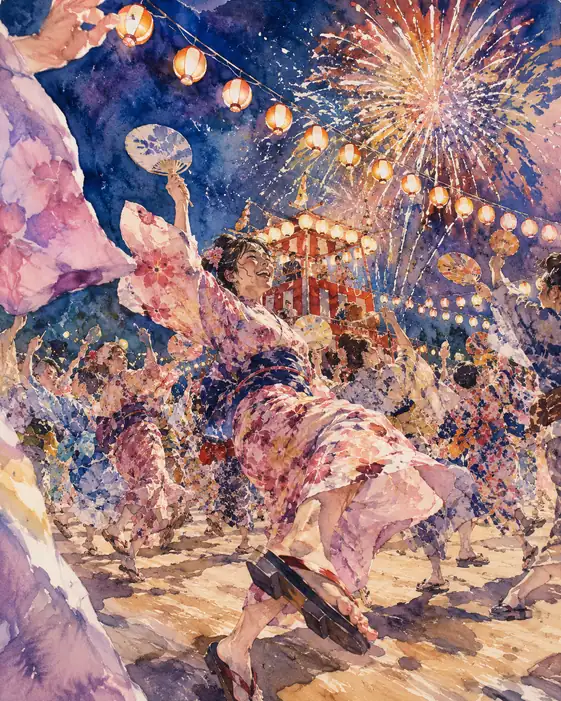 An Instant Eternity Scorching the Sky (No. 71)
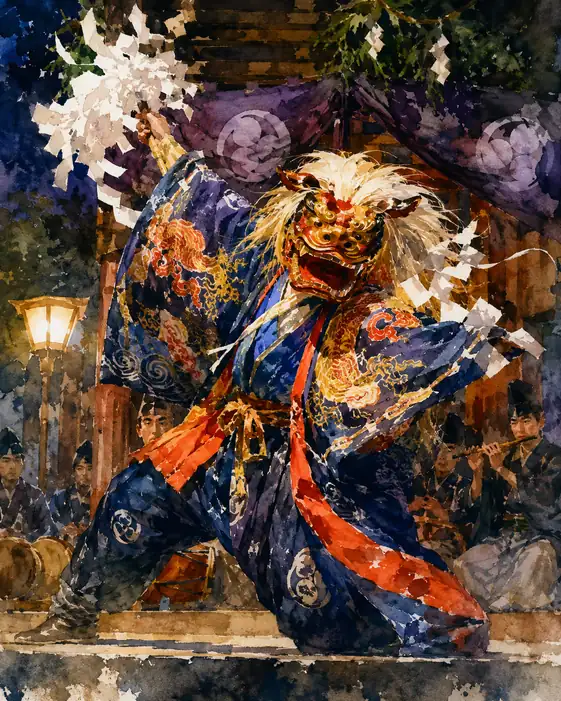 Swirling Summer Robes in Night Air (No. 73)
Similar Artworks
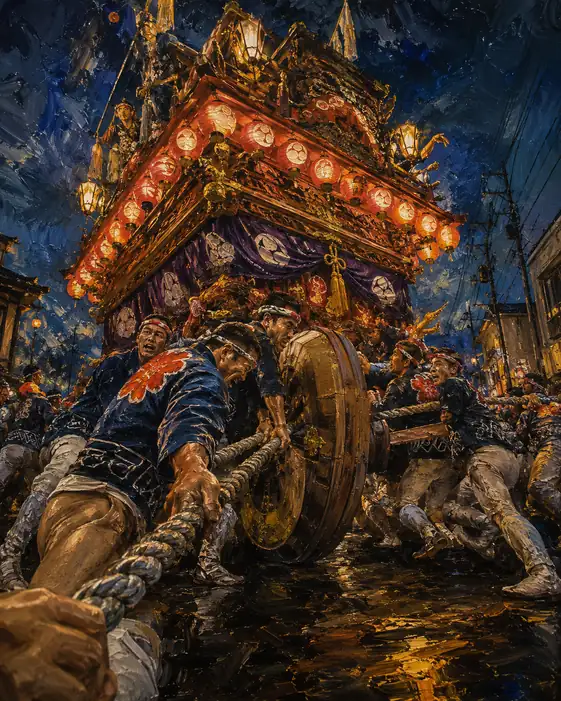 Warm Luminescence Rising in Darkness (No. 69)
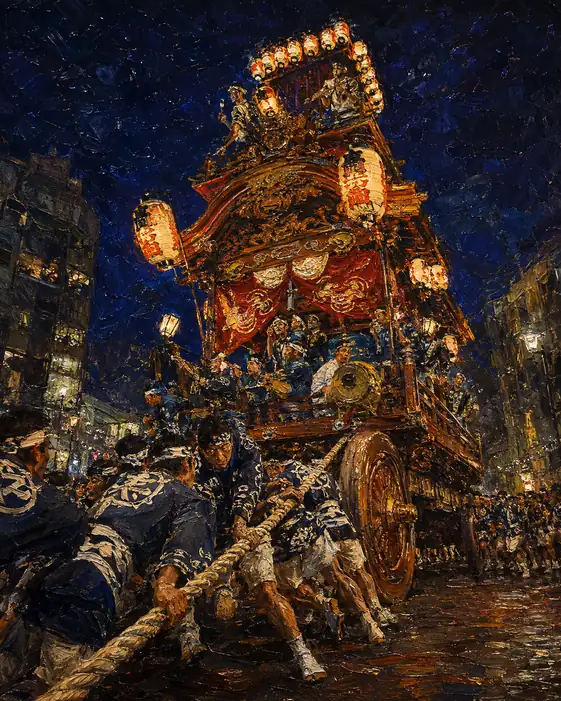 Warm Luminescence Rising in Darkness (No. 61)
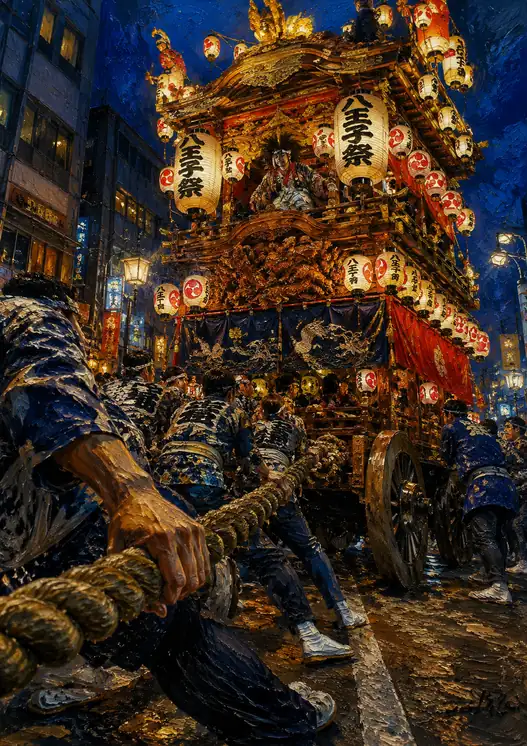 Warm Luminescence Rising in Darkness (No. 58)
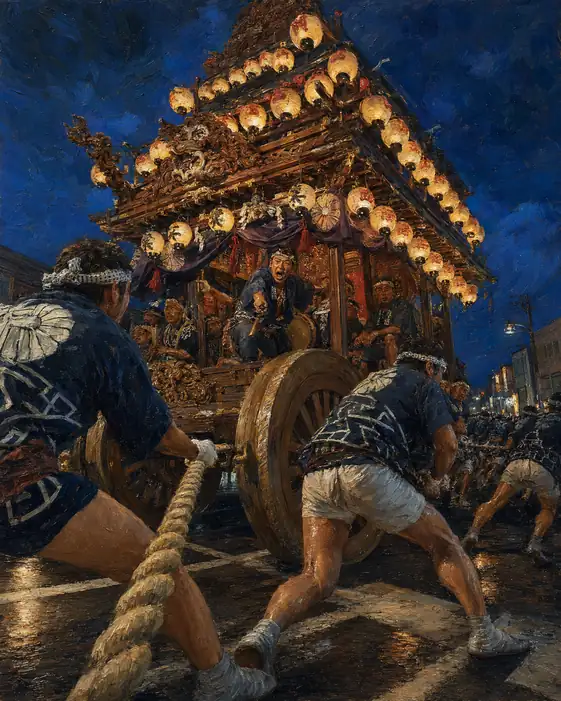 Warm Luminescence Rising in Darkness (No. 18)
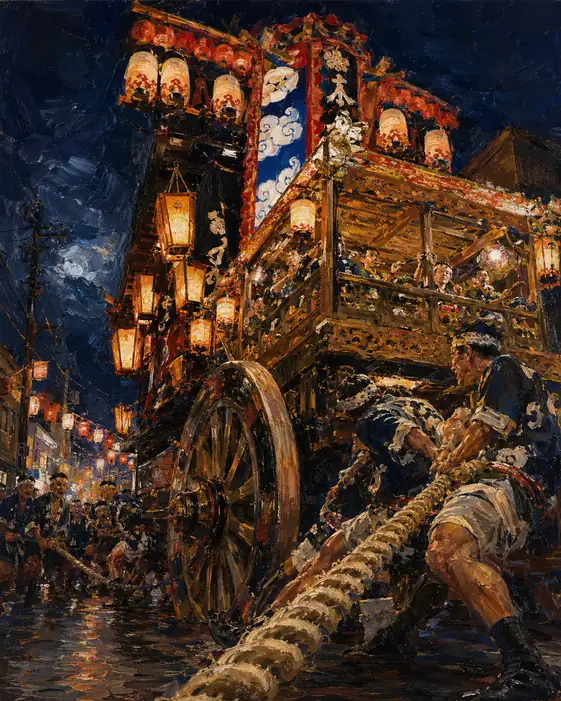 Warm Luminescence Rising in Darkness (No. 13)
 Warm Luminescence Rising in Darkness (No. 50)
 Men Pushing Forward with the Heavy Ropes and Wheels of the Festival Float
 Passionate Cries of Men Pulling the Vermilion and Gold Float
 Warm Luminescence Rising in Darkness (No. 55)
 Warm Luminescence Rising in Darkness (No. 65)