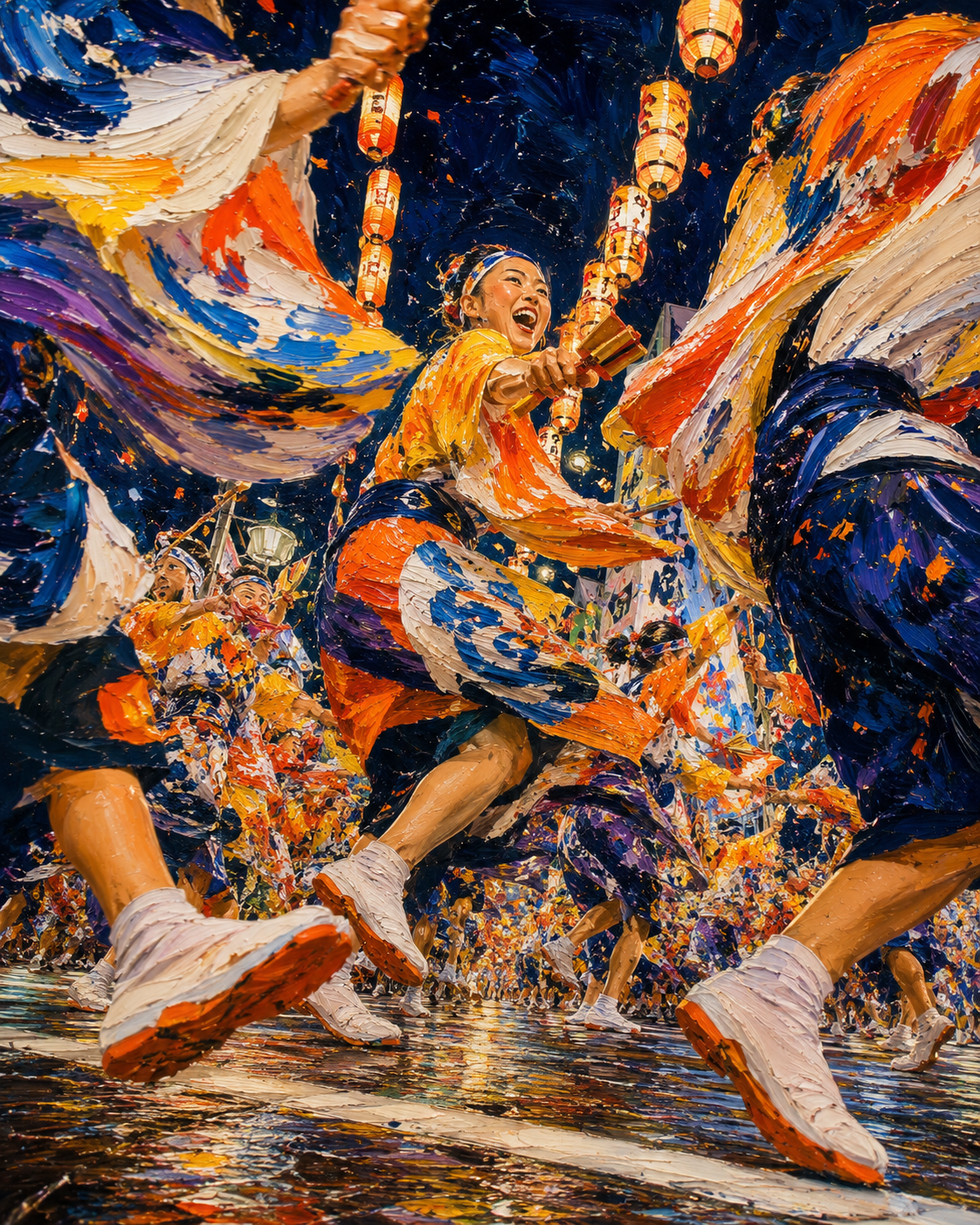
Swirling Summer Robes in Night Air (No. 41)
Critique
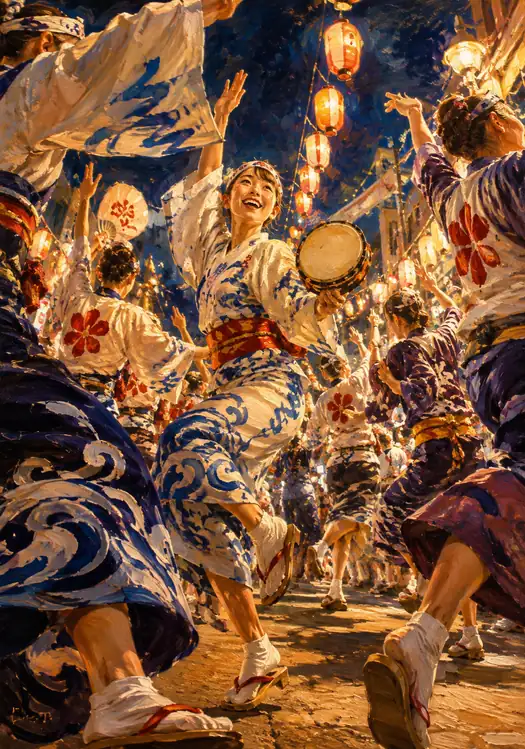
Introduction This work depicts a vividly colored festival dance from pavement level. A laughing central performer, sweeping cloth, lanterns, and lunging legs fill the frame, creating an image in which bodily motion and painted material appear inseparable. Description The central woman wears orange, yellow, blue, white, and purple garments and extends a wooden clapper toward the right. Her bent leg crosses the lower center, while dancers at both edges stride so close that their shoes and robes are cropped. Large lengths of multicolored cloth surge inward from the upper corners. Rows of lanterns hang against a dark blue sky, and a dense procession continues behind the principal figure. Analysis The low viewpoint turns soles and knees into foreground shapes and makes the central dancer rise above the crowd. Curving cloth forms opposing waves that converge around her face and hand. Orange and yellow advance from ultramarine and violet, while white bands keep the palette legible. Heavy ridges of paint follow limbs and fabric; scattered flecks across sky and street amplify speed and noise. Interpretation and Evaluation The work treats celebration as an embodied release rather than an orderly spectacle. The central laugh offers an emotional focus, but surrounding fragments prevent the scene from becoming a single portrait. Foreshortening and overlapping are boldly managed, the complementary color structure is forceful, and the thick surface has a sculptural intensity. The unusual ground-level position gives familiar festival imagery a distinctive physical immediacy. Conclusion Initially overwhelming in color and movement, the painting gradually reveals a precise system of converging curves, repeated lanterns, and alternating warm and cool masses. Its success lies in making the viewer feel the procession’s pressure and acceleration while maintaining a clear central gesture.
Same Subcategory
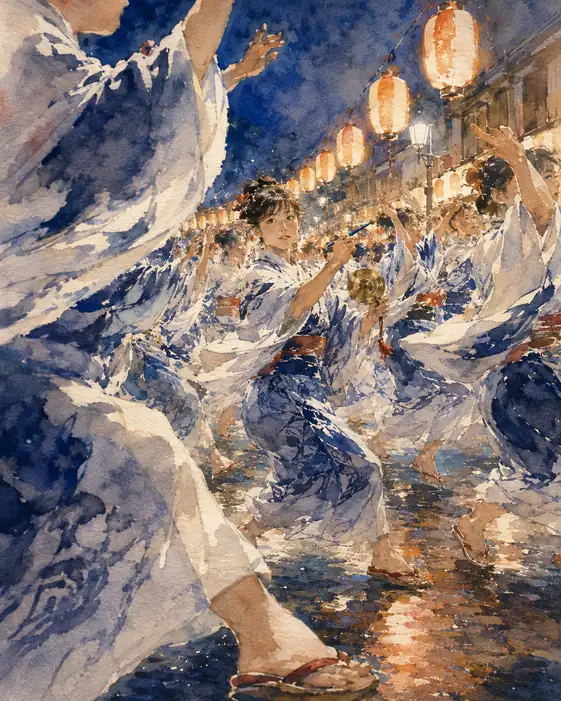 Swirling Summer Robes in Night Air (No. 40)
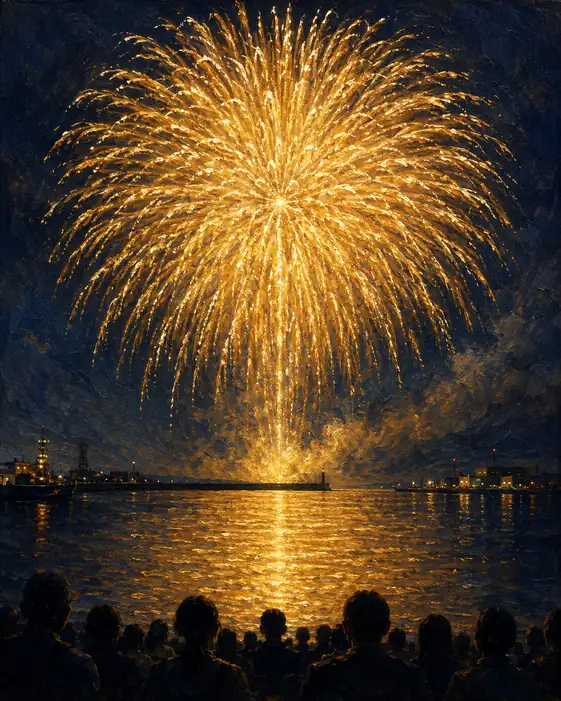 An Instant Eternity Scorching the Sky (No. 42)
Similar Artworks
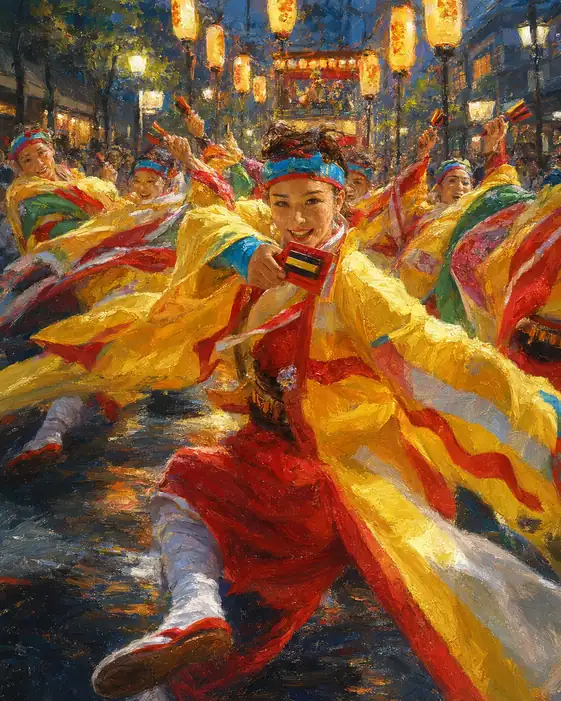 Swirling Summer Robes in Night Air (No. 74)
 Joyful Dance in the Summer Rhythm
 Swirling Summer Robes in Night Air (No. 77)
 Swirling Summer Robes in Night Air (No. 37)
 Swirling Summer Robes in Night Air (No. 68)
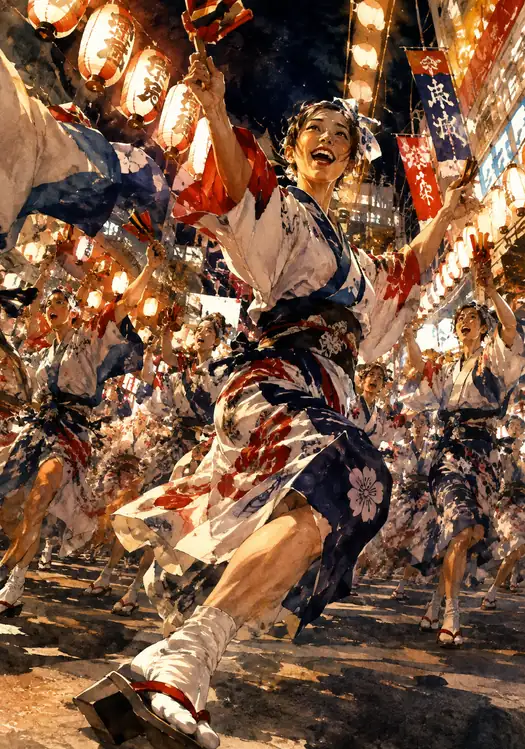 Swirling Summer Robes in Night Air (No. 47)
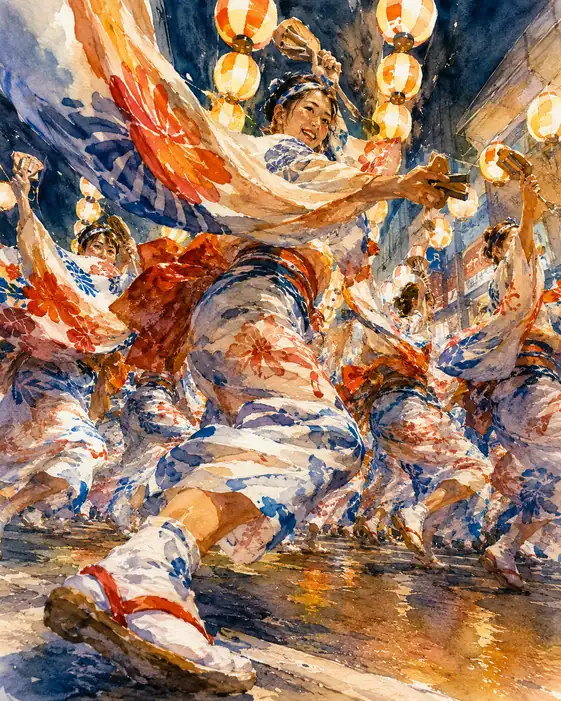 Swirling Summer Robes in Night Air (No. 43)
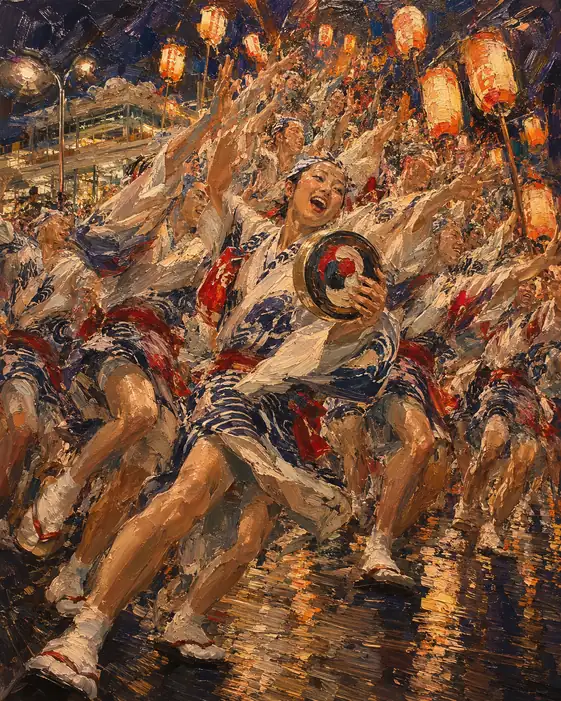 Swirling Summer Robes in Night Air (No. 39)
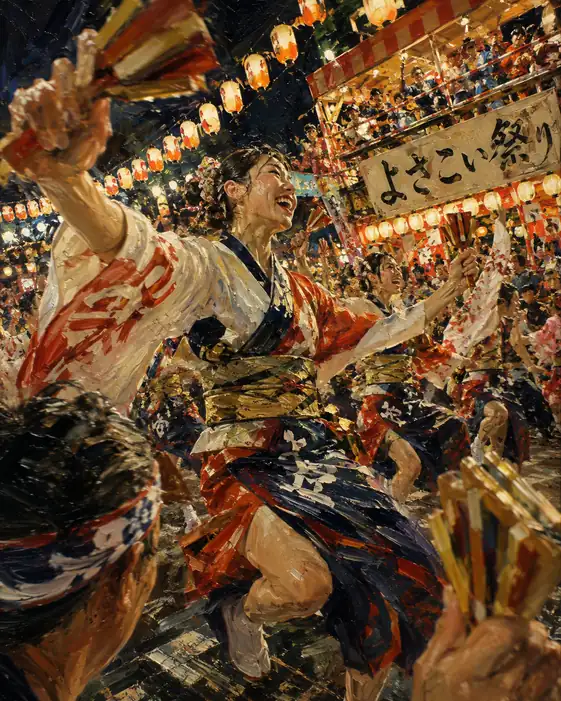 Beating Naruko and Joyful Smiles Dancing in the Yosakoi Festival Heat
 Swirling Wave-Patterned Yukata and Joyful Hand Drum