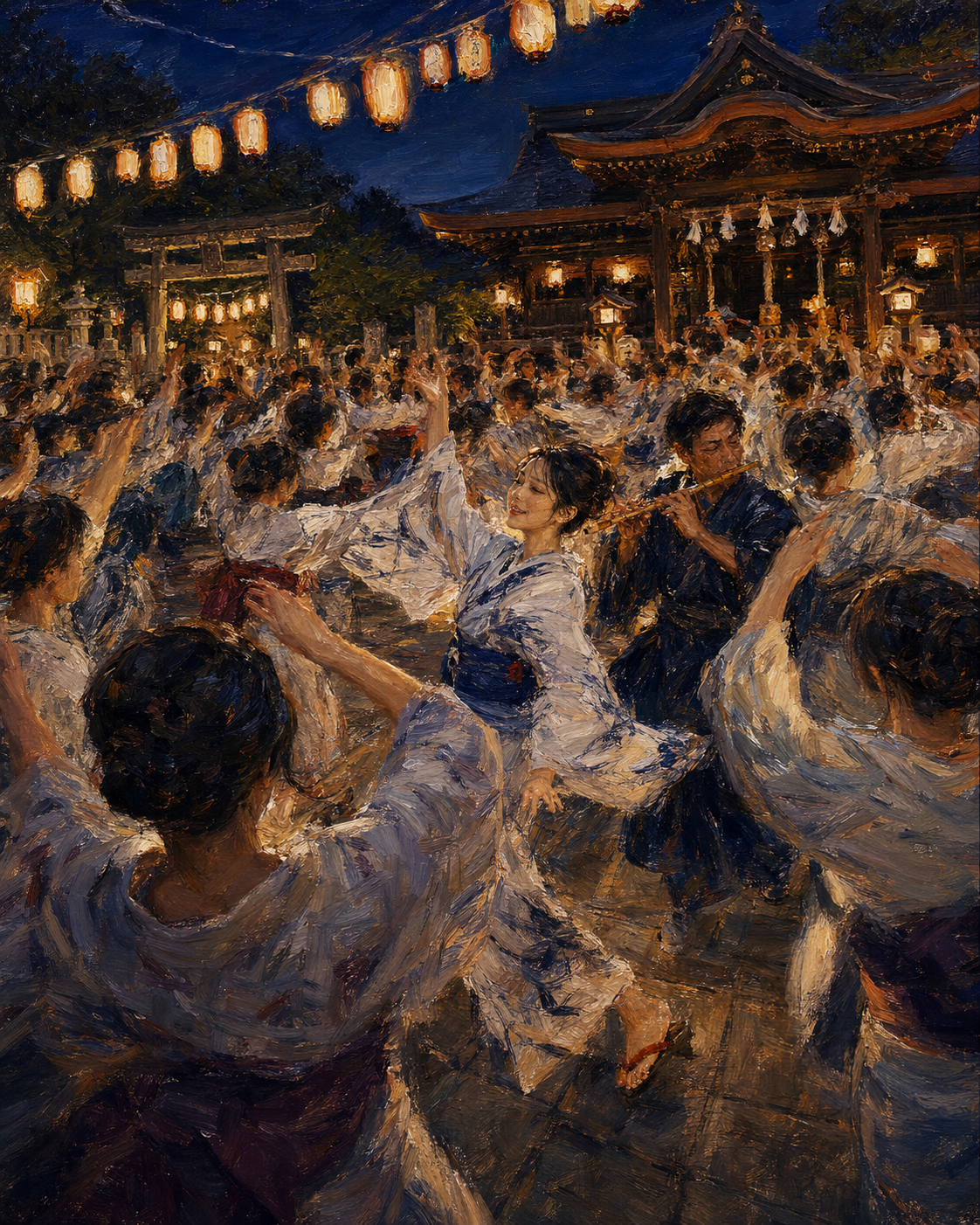
Swirling Summer Robes in Night Air (No. 33)
Critique
Introduction This painting depicts a circle dance within a shrine precinct at night, with a flute player embedded among women in pale robes. Dark wooden sanctuary buildings, a torii, hanging lanterns, and ritual streamers give the crowded movement a distinctly sacred setting. Description The central woman in a white-blue robe turns gracefully with one arm lifted and the other lowered, her face calm and eyes partly closed. A male musician immediately behind her plays a transverse flute. Dancers fill foreground and distance, their pale sleeves forming overlapping arcs. A large dark shrine hall occupies the upper right beneath rows of paper lanterns and white streamers. Another gate stands at left among trees. Analysis The woman's curved arms and torso create a quiet center amid repeated diagonals. The flute forms a sharp horizontal line crossing the surrounding vertical gestures. Pale garments reflect amber light against navy architecture and sky, while deep purple sashes add weight below. Dense impasto gives timber and near bodies substance; softer marks merge distant dancers into rhythmic atmosphere. Lantern rows establish depth and enclosure. Interpretation and Evaluation Dance and flute music appear as offerings enacted within architectural ritual space. The central woman's inward expression contrasts with the crowd's outward energy, suggesting concentration within participation. The composition balances intimacy and multitude, and its blue-white-gold palette remains controlled. Varied handling of cloth, skin, bamboo flute, wood, paper, and wet ground shows technical assurance. Conclusion At first the crowd appears to define the festival, but sustained viewing reveals a contemplative core within its movement. The work joins communal rhythm to sacred attention.
Same Subcategory
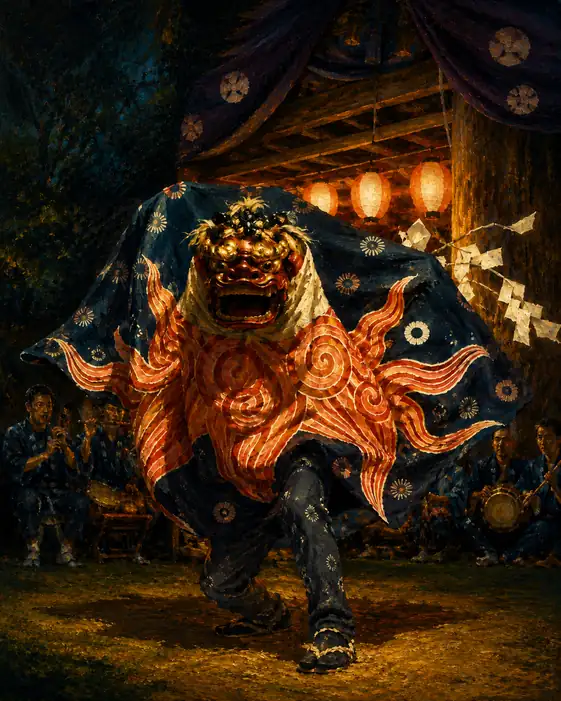 Warm Luminescence Rising in Darkness (No. 34)
Similar Artworks
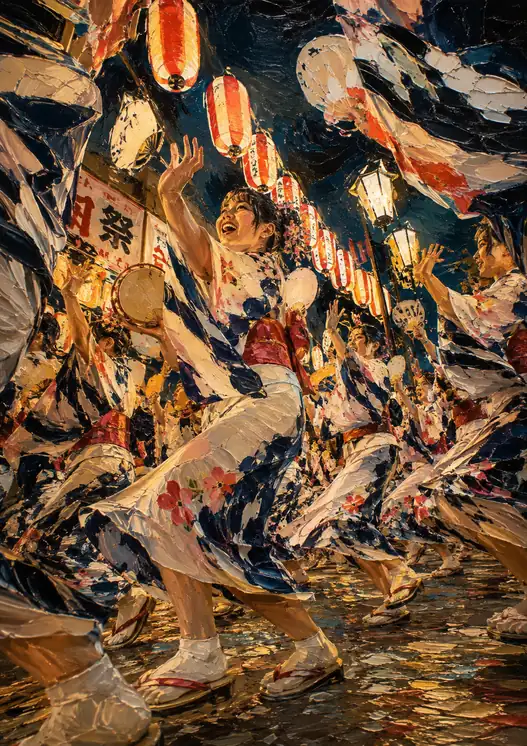 Vibrant Dance Under the Street Lanterns
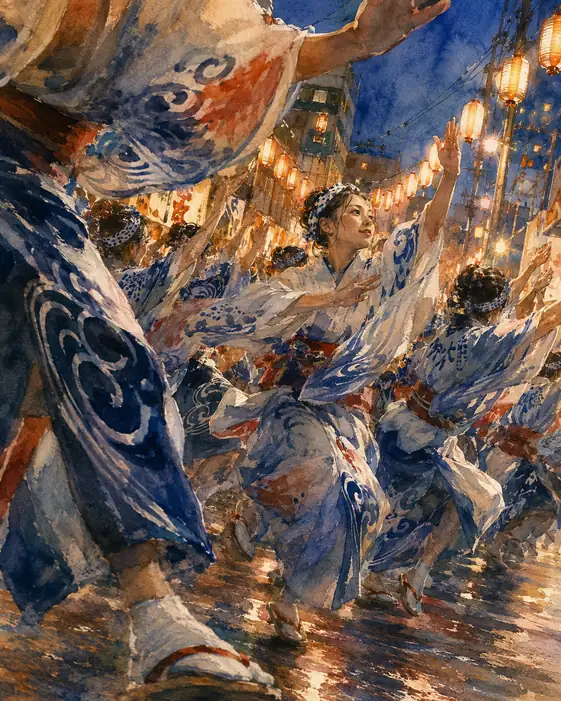 Swirling Summer Robes in Night Air (No. 70)
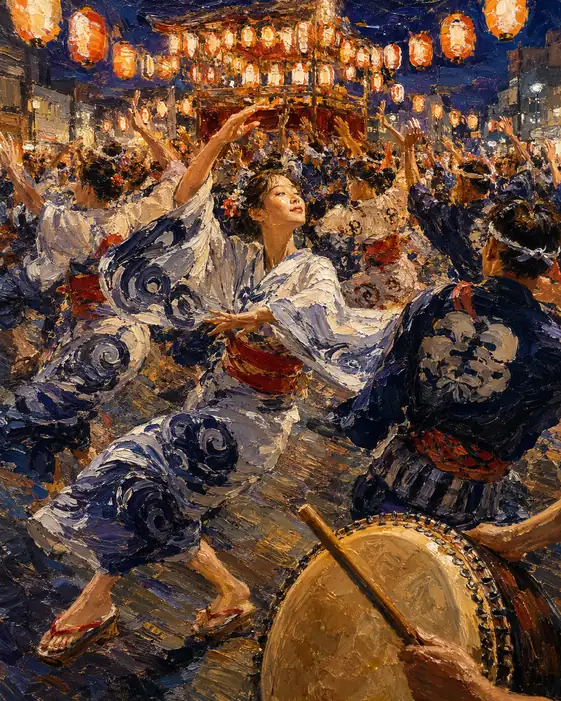 Swirling Summer Robes in Night Air (No. 67)
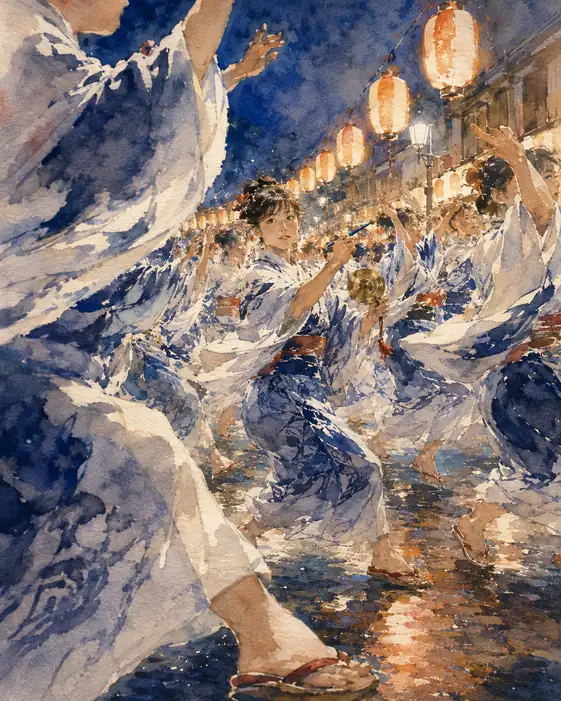 Swirling Summer Robes in Night Air (No. 40)
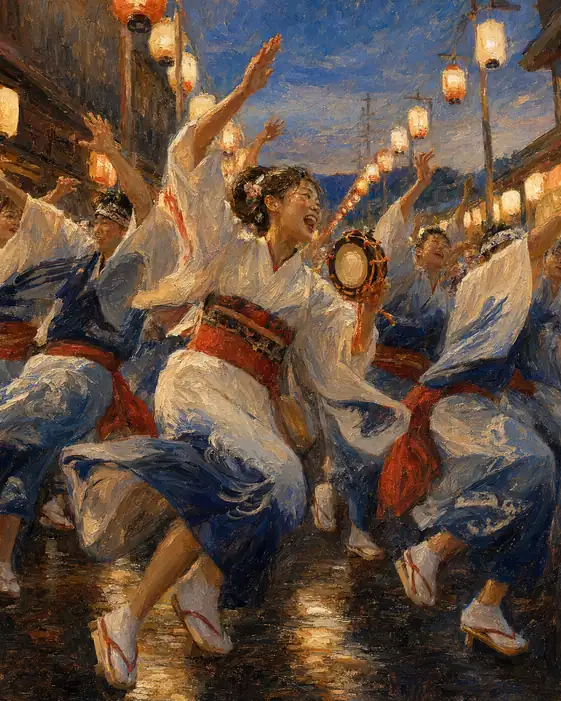 Swirling Summer Robes in Night Air (No. 37)
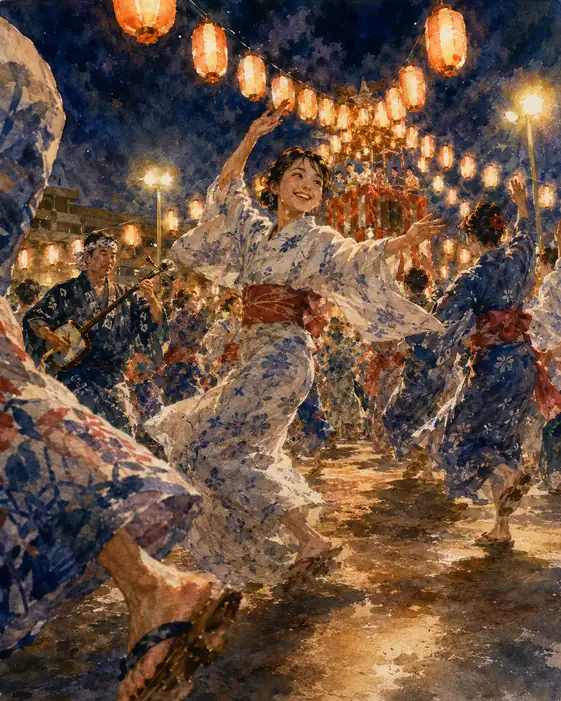 Swirling Summer Robes in Night Air (No. 28)
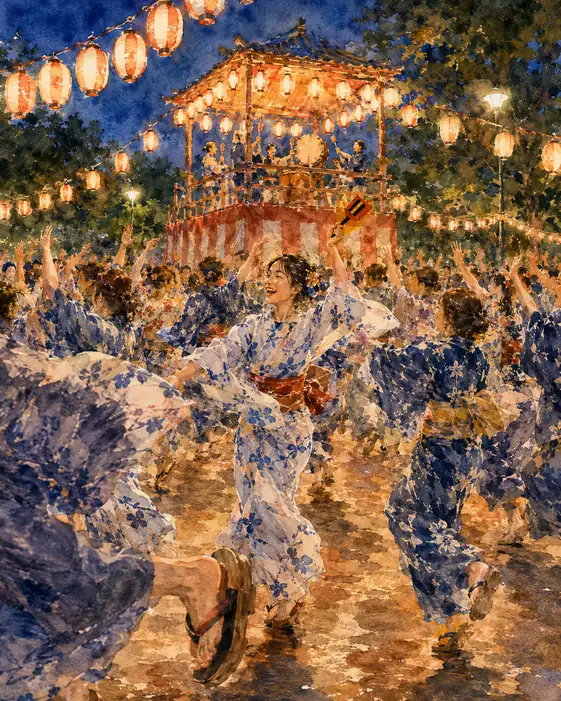 Swirling Summer Robes in Night Air (No. 19)
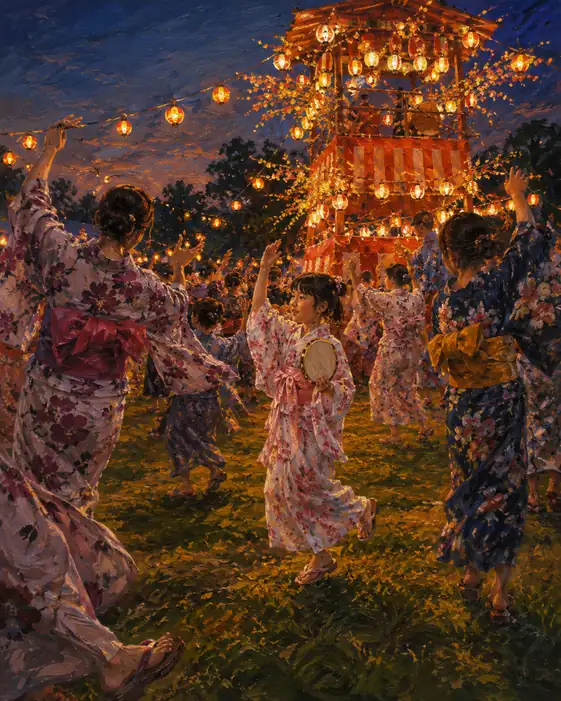 Swirling Summer Robes in Night Air (No. 17)
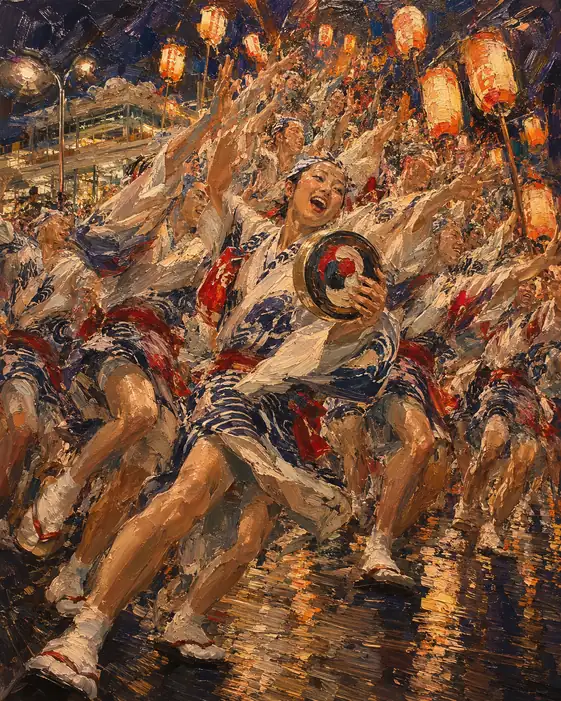 Swirling Summer Robes in Night Air (No. 39)
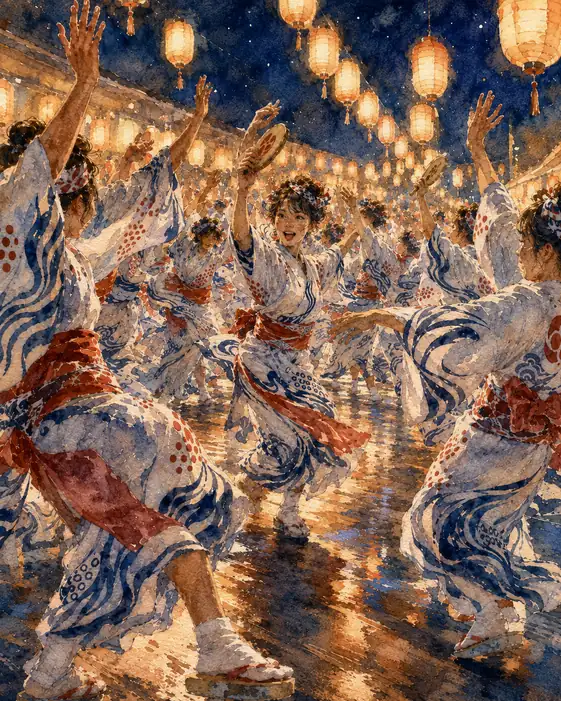 Swirling Summer Robes in Night Air (No. 32)