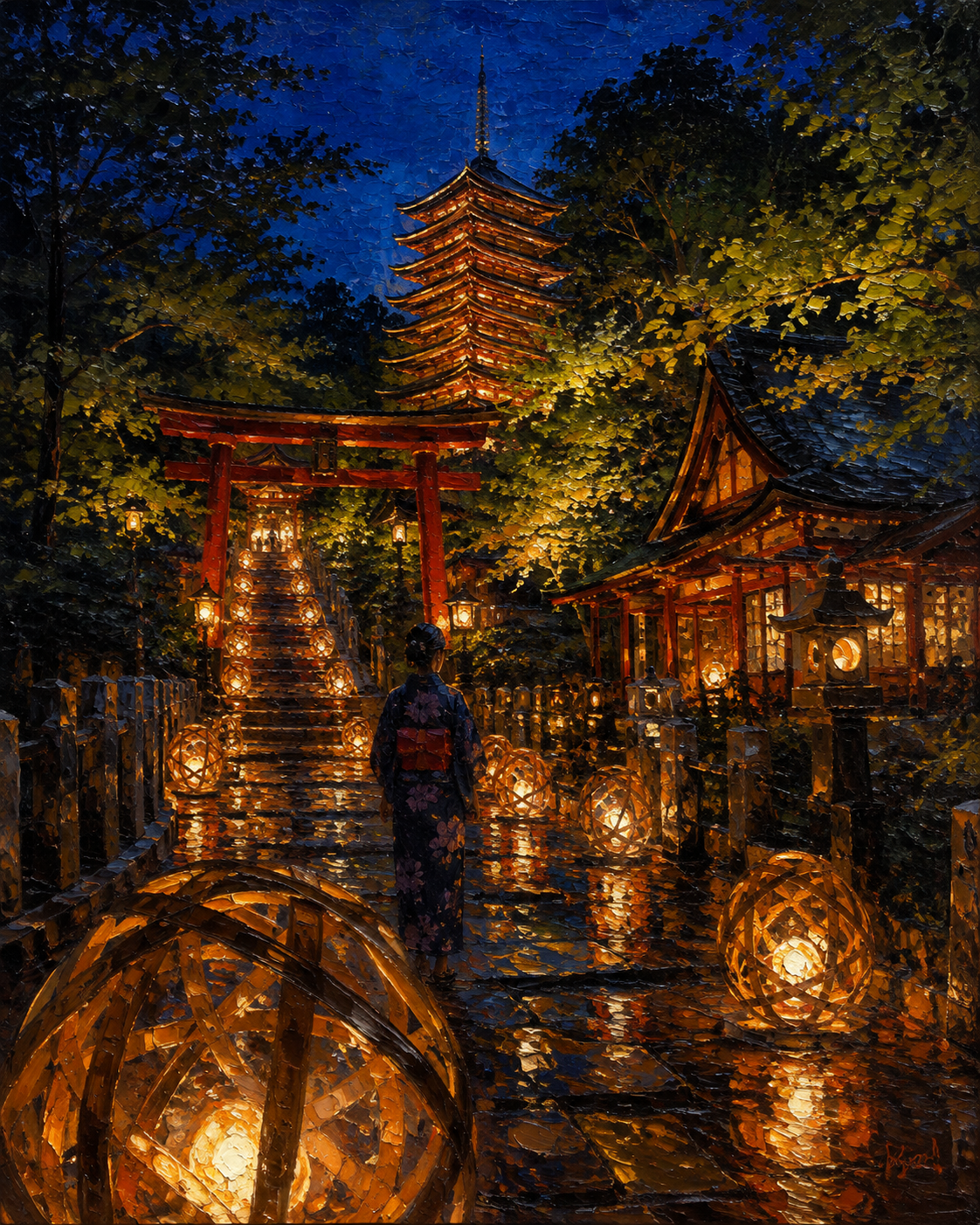
Warm Luminescence Rising in Darkness (No. 26)
Critique
Introduction This painting depicts a solitary woman approaching a shrine complex along a rain-darkened path illuminated by spherical bamboo lamps. A vermilion gate, glowing hall, dense trees, and tall pagoda create a layered sacred landscape in which human scale remains central. Description The woman walks away near the center in a dark violet floral robe with a broad red sash. Large woven globe lights occupy the lower corners, with smaller spheres ascending wet stone steps toward a vermilion torii. A warm wooden hall stands at right beside a stone lantern. Behind the gate, a tall multi-tiered pagoda rises through illuminated foliage into deep blue sky. Analysis The path and lamp rows converge toward the gate, establishing strong central perspective. The woman's vertical figure acts as a measured interval between oversized foreground lights and distant pagoda. Amber illumination reflects across black-blue paving, while vermilion architecture punctuates green foliage and cobalt sky. Thick strokes give bamboo, leaves, wood, and wet stone material weight; sharper roof edges organize the ascent. Interpretation and Evaluation The solitary walk suggests approach and preparation rather than spectacle. Repeated lamps mark successive thresholds, turning movement through the grounds into a deliberate ritual. The composition's layered verticality is distinctive, and the limited warm-cool palette is carefully controlled. Convincing differences among woven bamboo, fabric, stone, foliage, timber, and reflective water demonstrate technical strength. Conclusion At first the many lamps create a decorative night scene, but closer viewing reveals a precisely structured journey through gate, stair, hall, and tower. The work gives quiet walking ceremonial significance.
Same Subcategory
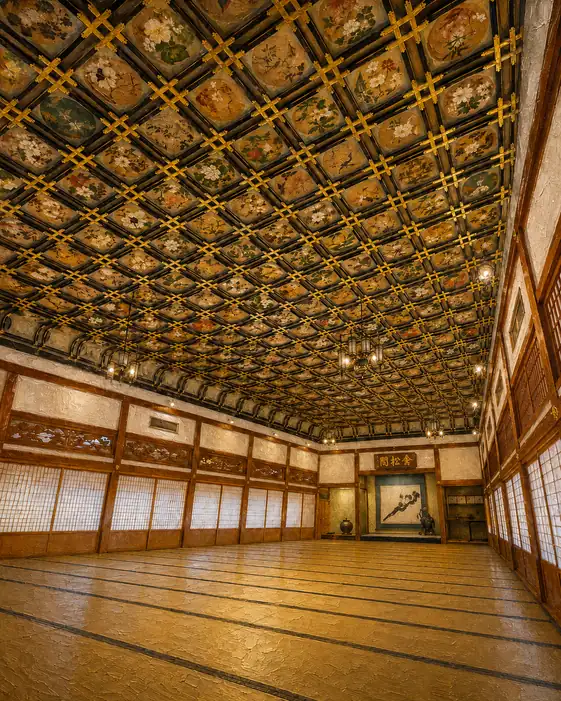 Seeking Wishes in a Sky of Flowers and Birds
Similar Artworks
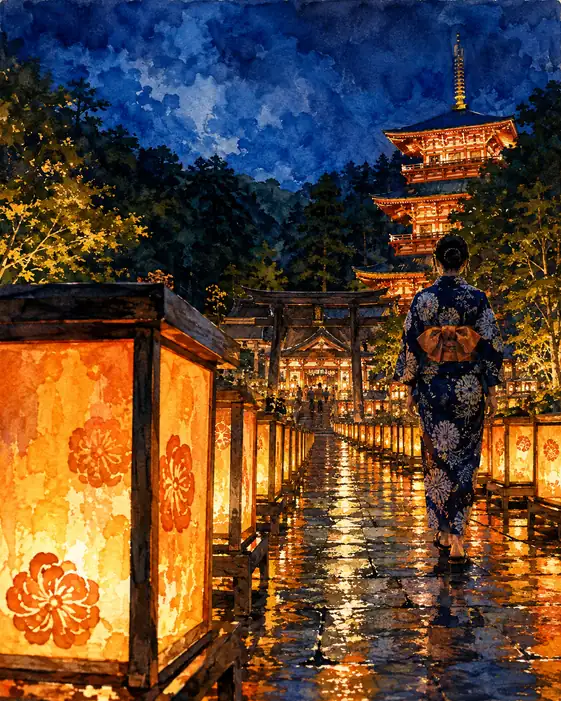 Warm Luminescence Rising in Darkness (No. 27)
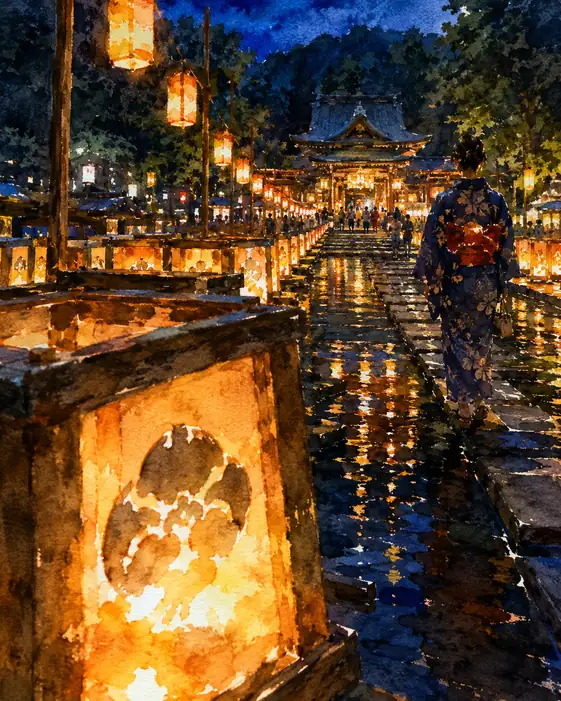 Warm Luminescence Rising in Darkness (No. 89)
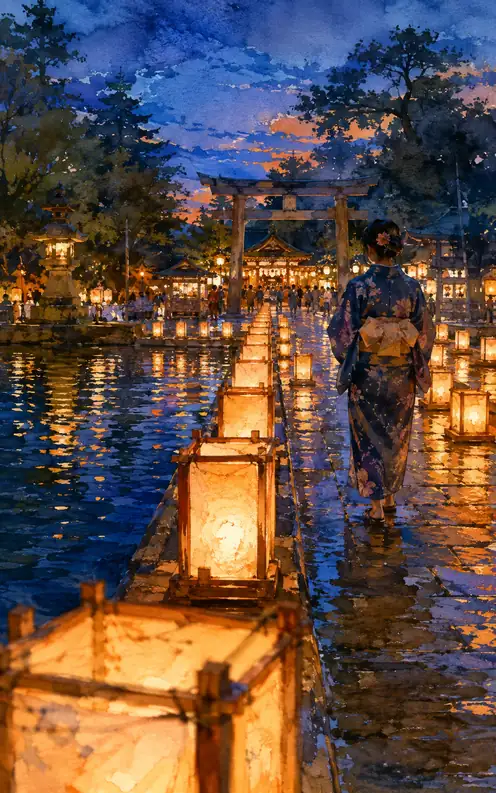 Warm Luminescence Rising in Darkness (No. 91)
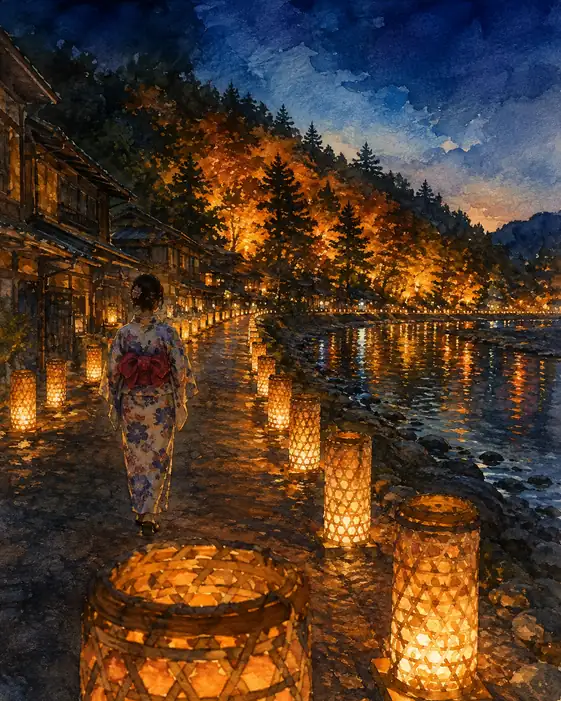 Warm Luminescence Rising in Darkness (No. 51)
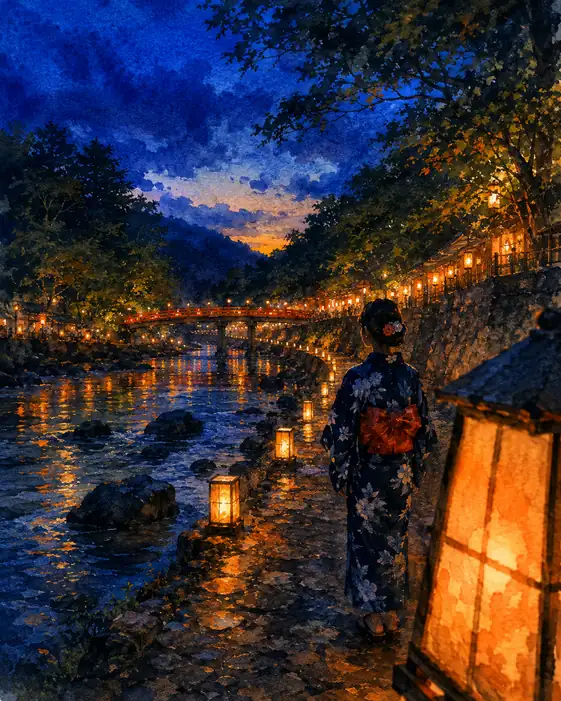 Warm Luminescence Rising in Darkness (No. 48)
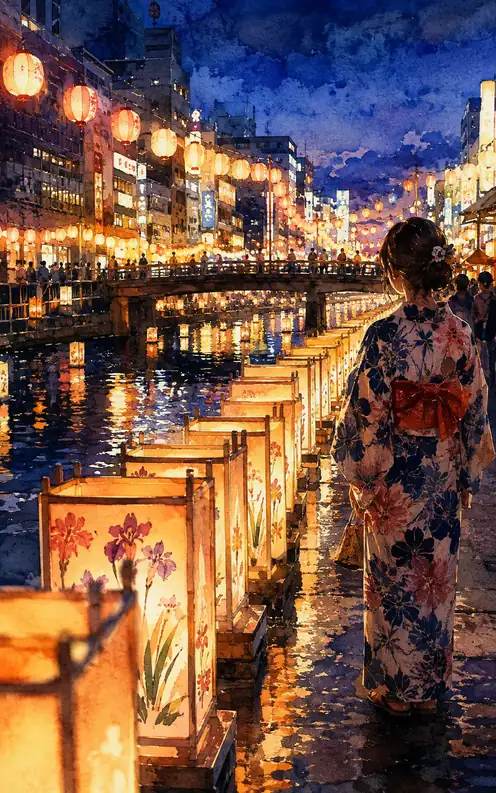 Warm Luminescence Rising in Darkness (No. 25)
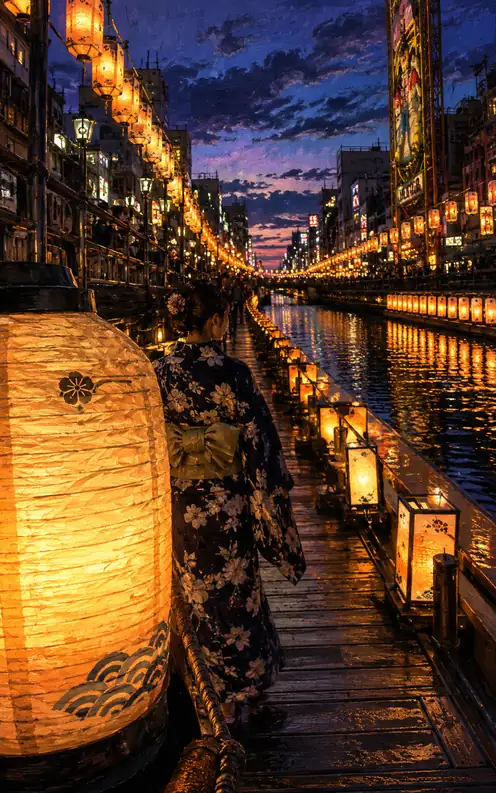 Warm Luminescence Rising in Darkness (No. 23)
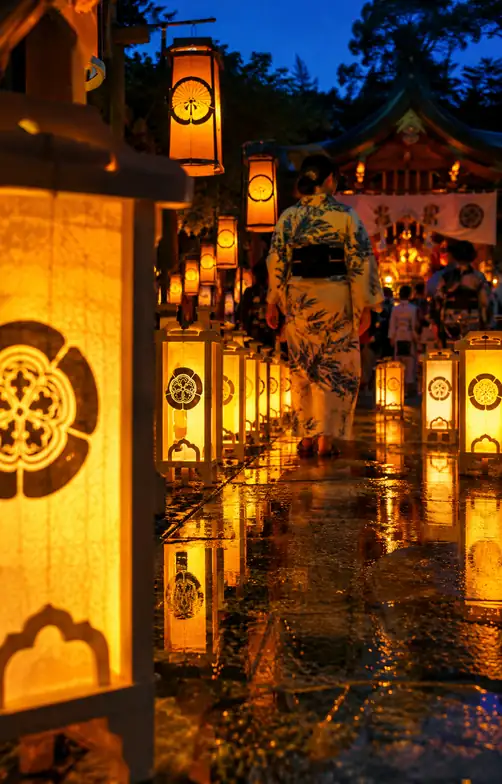 Lanterns and Serenity of a Yukata Figure on the Rain-Washed Shrine Path
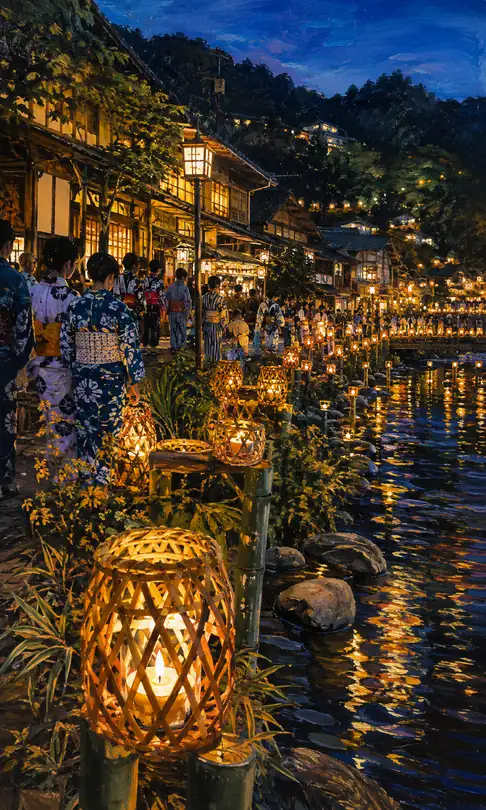 Bamboo Candle Lights and Strolling Yukata Ladies by the Hot Spring Stream
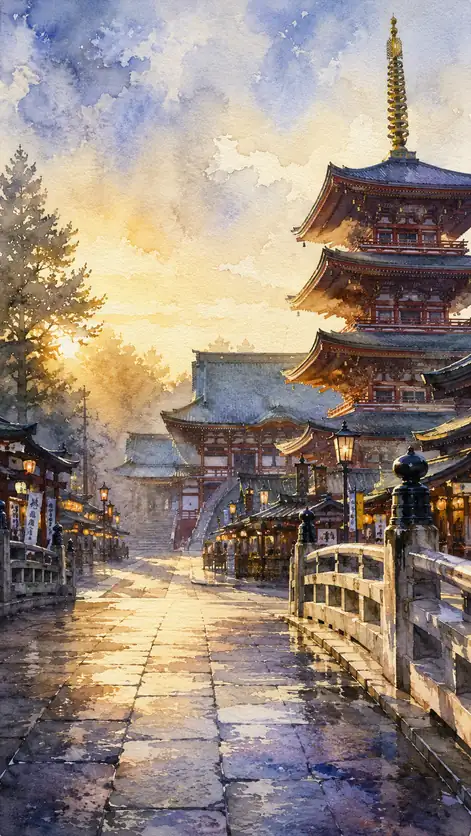 Morning Kindles the Vermilion Pagoda