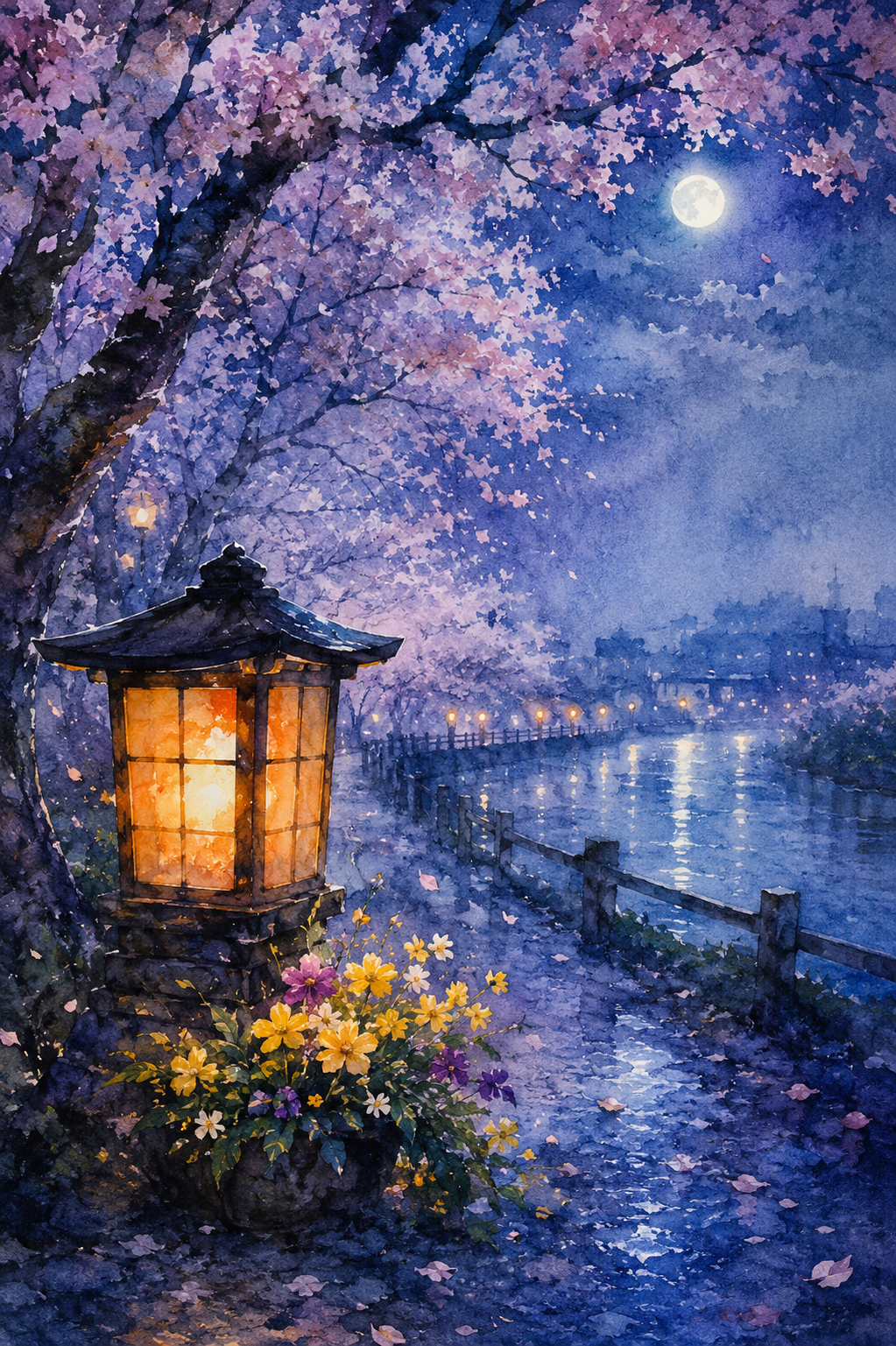
Moonlight Blossoms beside the Riverside Lantern
Critique
Introduction This nocturnal watercolor presents a traditional lantern beside a river path beneath flowering cherry trees. The lantern occupies the lower left and glows intensely, while a full moon hangs in the upper right. Between these two lights, the path curves beside reflective water toward a distant line of lamps and buildings. Description The lantern has a dark tiled cap, square wooden frame, and warm paper panels divided by narrow bars. Yellow and violet flowers cluster at its base. A massive trunk rises behind it, spreading pink blossoms across the upper field. Fallen petals cover the blue path, and a low rail follows the bank. Across the river, dim structures and repeated lamps dissolve into mist. Analysis Lantern and moon establish a strong diagonal balance between near warmth and remote coolness. The curving path, railing, and reflected lights carry the eye from one to the other. Dense blossom and trunk anchor the left, while open sky and water provide breathing space on the right. Saturated orange glazes contrast with layered ultramarine and violet; broken highlights distinguish paper glow, wet stones, petals, and rippled water. Interpretation and Evaluation The human-made lantern and celestial moon offer two kinds of guidance, one close and sheltered, the other distant and universal. Their coexistence avoids competition because each illuminates a different spatial zone. The painter’s composition is clear despite abundant blossom, and the restrained yellow flowers mediate between orange lamp and pink canopy. Confident color control and varied edge handling produce convincing nocturnal atmosphere. Conclusion At first the glowing lantern dominates, but the eye gradually travels toward moon, river, and distant shore. This change in attention reveals the work as a measured dialogue between intimacy and openness, supported by strong structure and expressive watercolor technique.
Same Subcategory
Similar Artworks
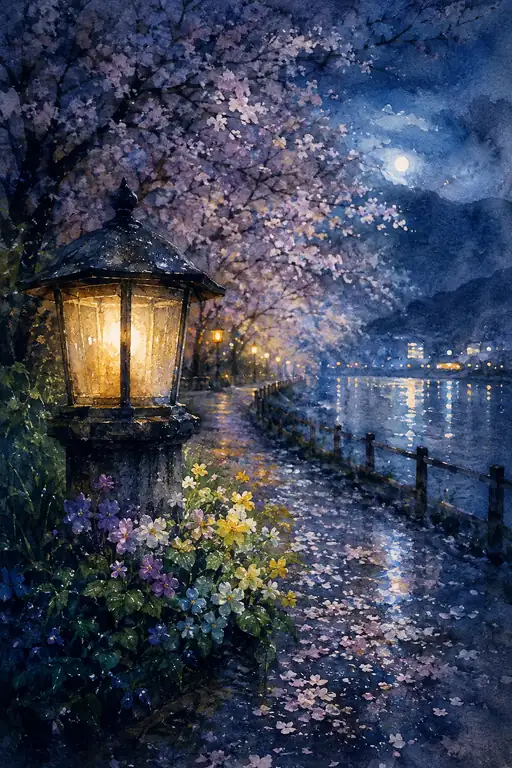 Spring Moon Path Beside the River
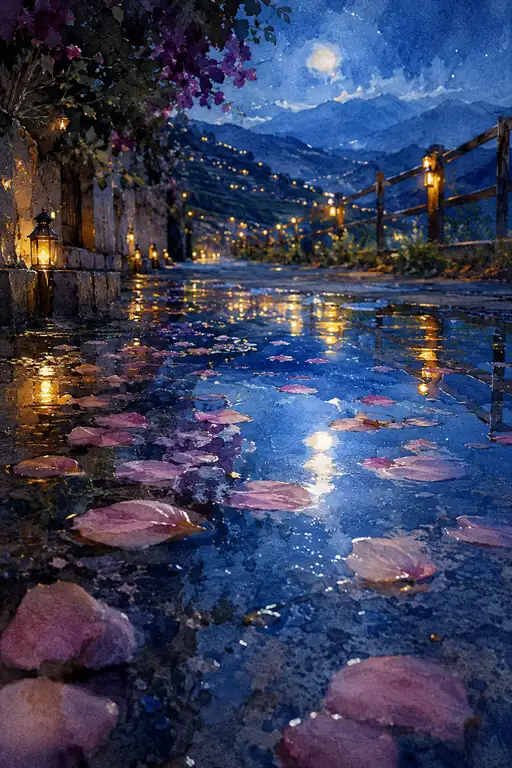 Petals Teach the Rain to Remember the Moon
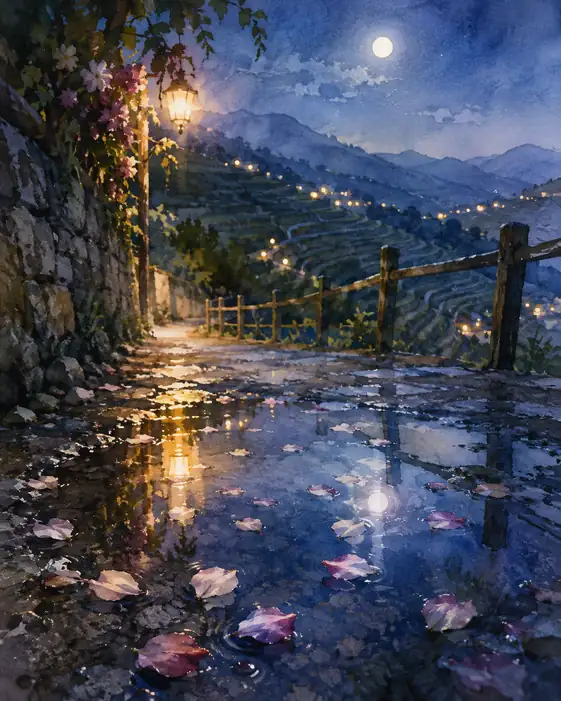 Petals Carry Moonlight Down the Vineyard Road
 Moonlight Blossom over the Quiet Village
 Petals Sail Through the Thawing Lantern Street
 Fallen Petals Borrow the Lanterns' Glow
 Warm Luminescence Rising in Darkness (No. 51)
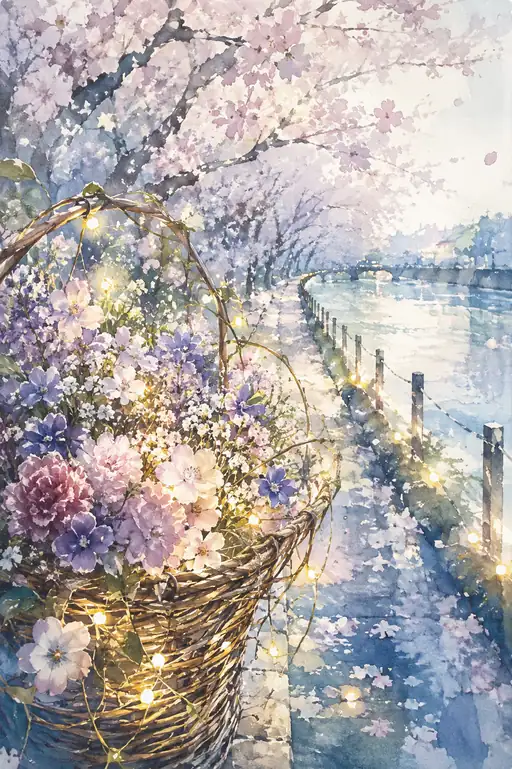 A Basket Carries Spring along the River of Blossoms
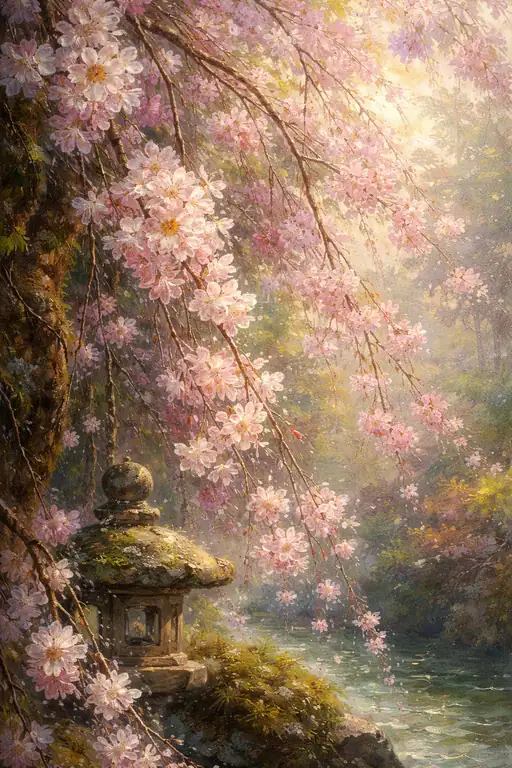 Cherry Blossom Rain Falling on the Lantern
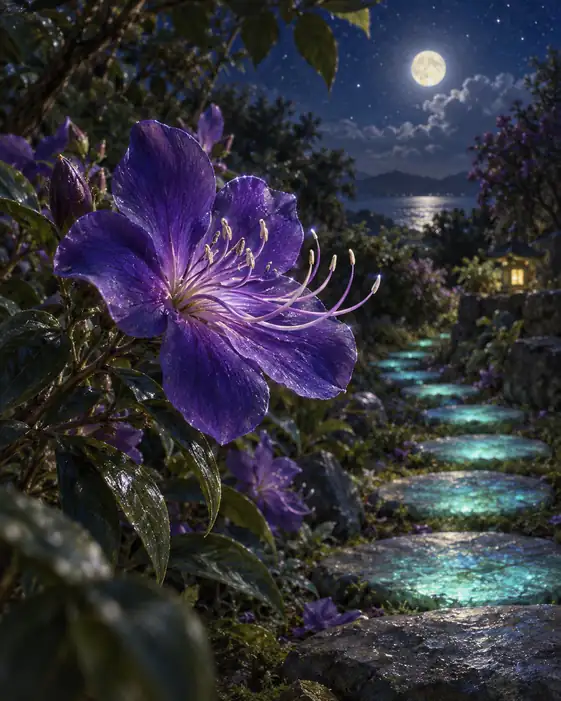 Night Blooming Princess Flower, Path of Glowing Stones