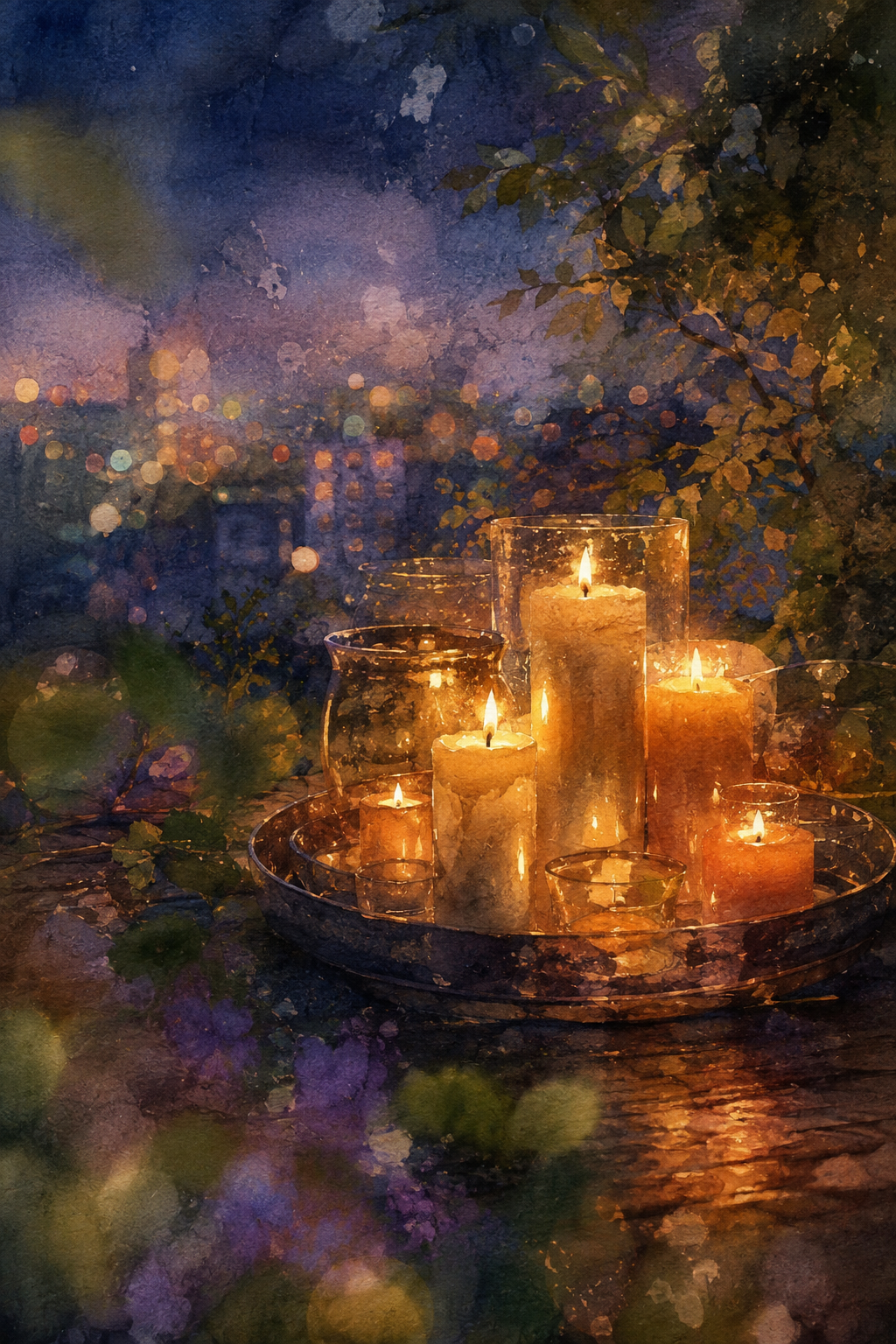
Six Candles Gather the City's Blue Hour
Critique
Introduction This nocturnal watercolor gathers candles of varied sizes on a round metal tray in a leafy terrace garden. The luminous cluster occupies the lower right, with an unfocused city spreading behind it beneath a violet-blue sky. The composition concentrates warmth within a dark, moist environment. Description Tall cream and ochre pillar candles stand among shorter votives inside clear and smoky glass cylinders. Wax edges are irregular, and seven visible flames produce overlapping reflections across vessel walls and the tray. Golden leaves descend from the upper right; broad blurred foliage crosses the lower left. Distant windows become circles of orange, green, and pale blue rather than distinct buildings. Analysis Overlapping cylinders build a compact pyramidal group, stabilized by the tray’s broad ellipse. Repeated vertical candles counter the horizontal railing and remote skyline. The highest flame establishes hierarchy, while smaller lights circulate around it. Dense amber glazes model glass, wax, and reflections against expansive indigo washes. Crisp rims and flame tips fade into soft leaves and bokeh, shifting attention from material specificity to atmosphere. Interpretation and Evaluation The clustered lights suggest collective shelter: each flame remains separate, yet their reflections merge on a shared surface. The city’s distant lights echo this arrangement at another scale, connecting a private ritual to communal night. Technical control is evident in the layered transparency and varied wax textures. The centered tray could feel static, but asymmetrical heights and encroaching foliage sustain movement and visual tension. Conclusion Initially the candles offer immediate decorative warmth, but their relation to the remote city broadens the scene into a study of individual and shared illumination. Strong tonal organization and convincing materials give the familiar subject unusual depth.
Same Subcategory
Similar Artworks
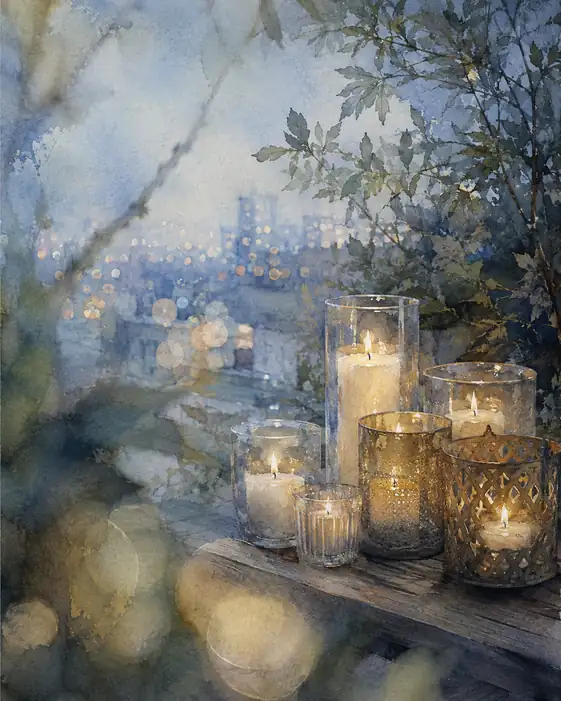 Six Quiet Flames Soften the Rainy City
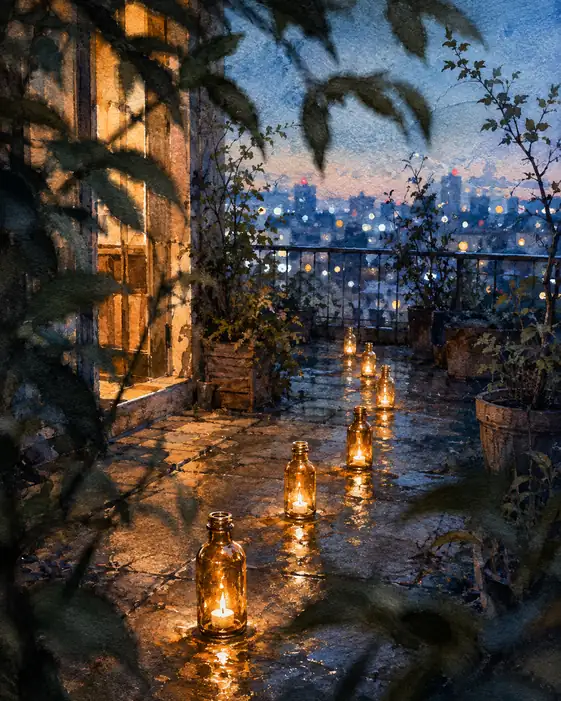 Seven Bottled Flames Lead Evening Home
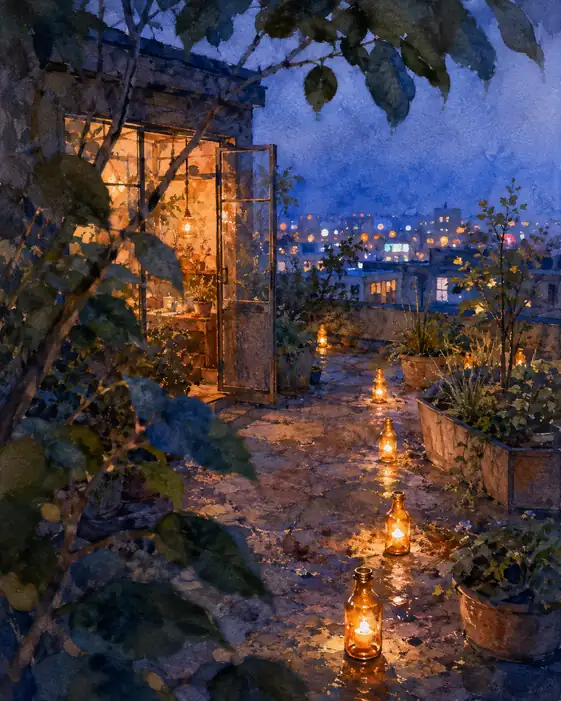 Bottled Lights Welcome the Blue Evening In
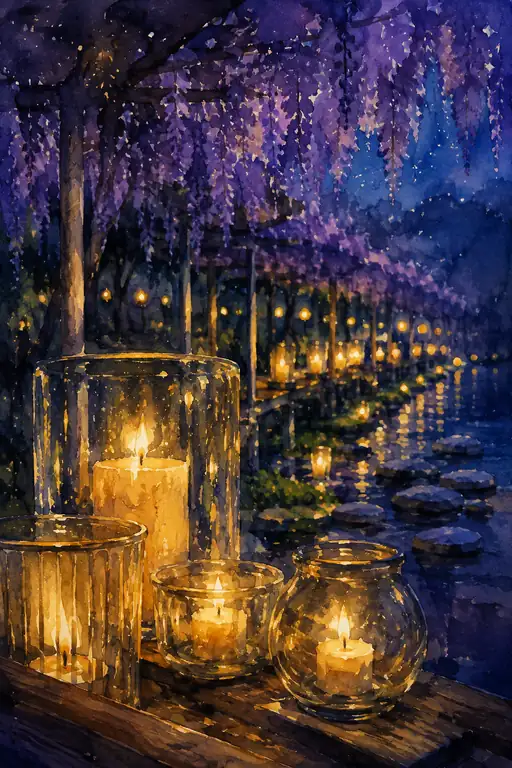 Four Candles Begin the Wisteria Night
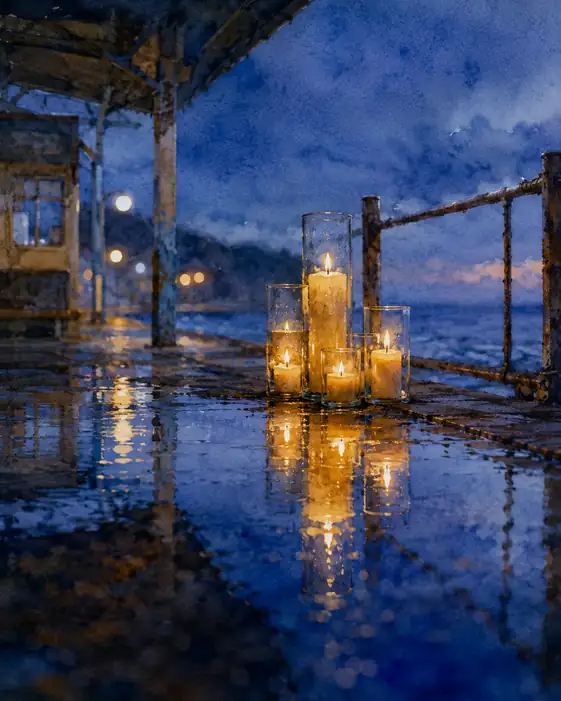 Five Candles Wait for the Tide to Turn
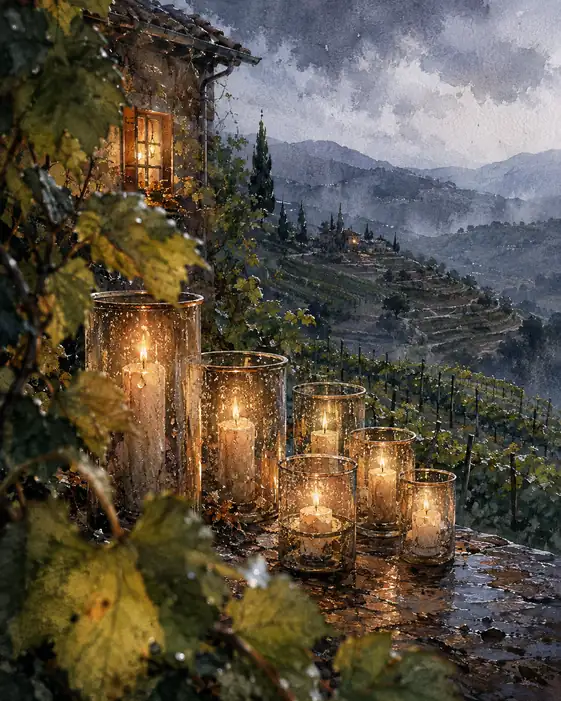 Six Flames Defy the Vineyard Storm
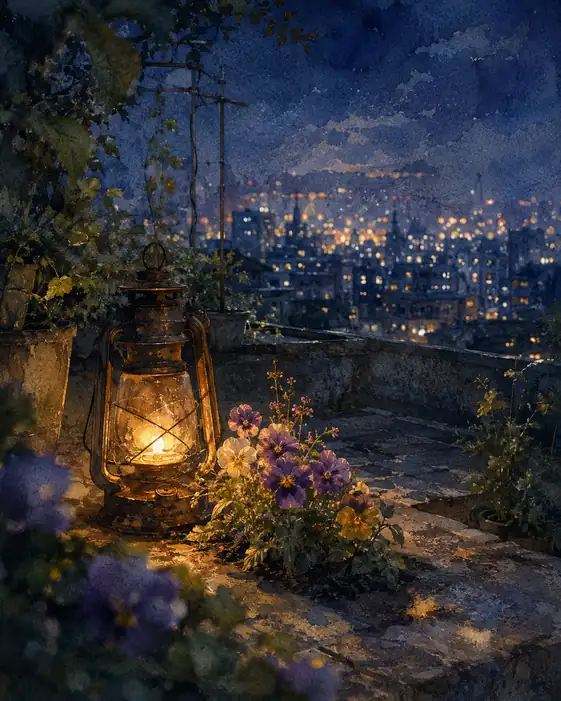 Pansies Gather around the City's Smallest Sun
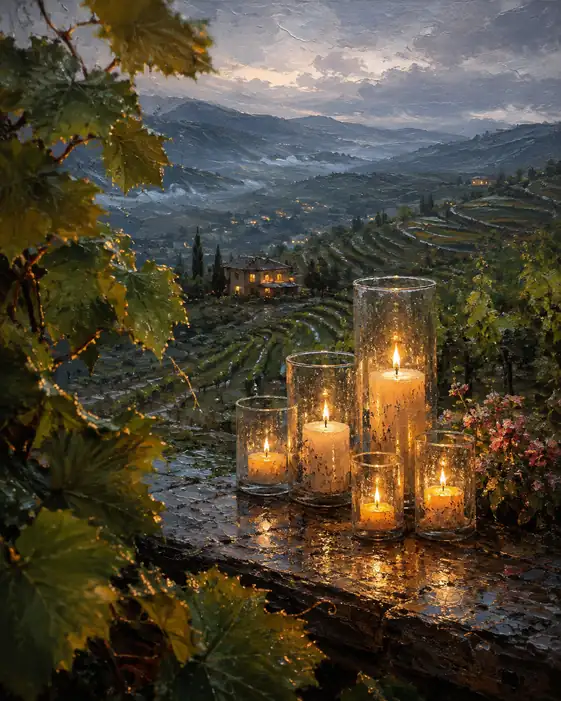 Five Candles Warm the Rain-Darkened Vines
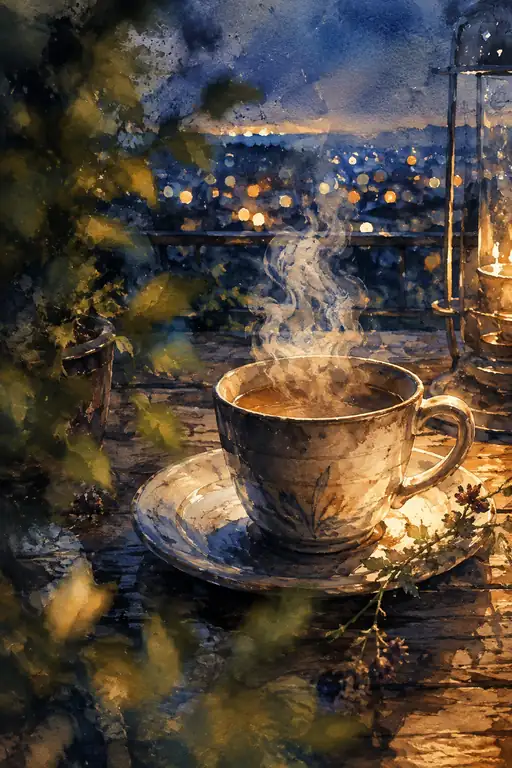 Evening Tea Listens to the Faraway Lights
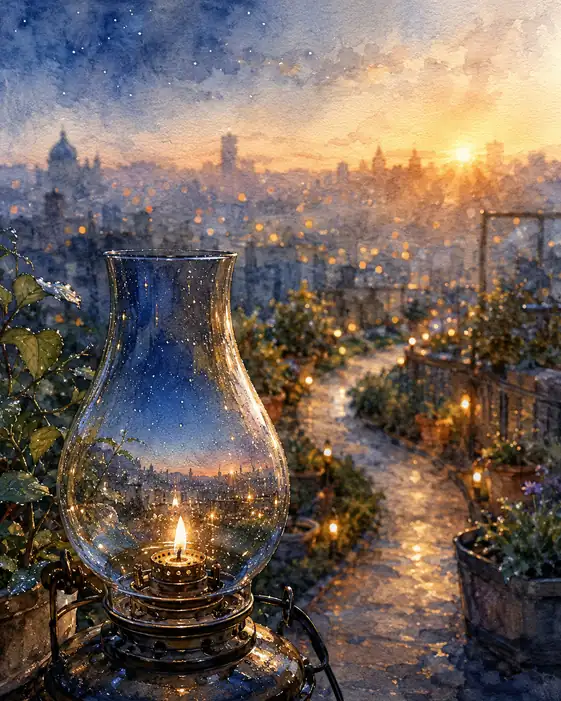 One Lamp Holds Both Sunrise and Stars