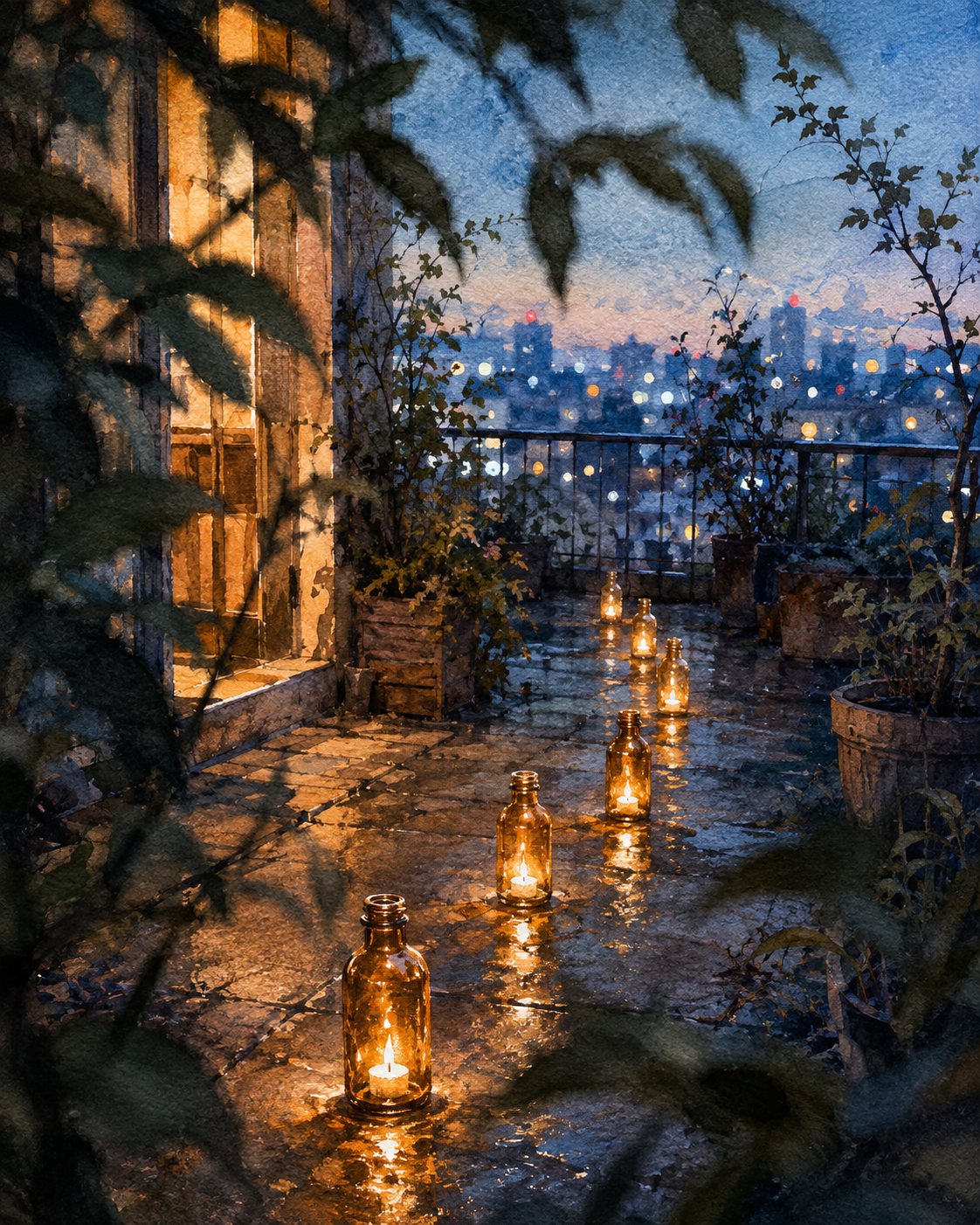
Seven Bottled Flames Lead Evening Home
Critique
Introduction This nocturnal watercolor shows a line of candlelit amber bottles crossing a rain-darkened terrace toward a city overlook. The nearest bottle stands prominently in the lower center, and six more diminish toward the railing. A warmly illuminated façade at left and potted plants at right enclose the path. Description Each open-necked bottle contains a low white flame that glows through brown glass and casts a broken orange reflection. Uneven stone slabs retain shallow puddles between dark joints. Wooden boxes and terracotta pots hold sparse shrubs and vines. Large, nearly black leaves overlap the upper and lower edges, while beyond the railing blue buildings and multicolored lights spread beneath a pale horizon. Analysis The bottles form a rhythmic perspective sequence, their shrinking intervals pulling the eye from foreground to distance. This central axis is balanced by the strong vertical wall and windows on the left. Amber reflections create a second, downward version of the procession within the wet paving. Saturated blue washes establish depth, and concentrated orange defines glass, windows, and water. Foreground leaf silhouettes frame rather than describe, increasing the sensation of looking through foliage. Interpretation and Evaluation The improvised lanterns transform an exposed roof into a marked passage and suggest deliberate hospitality. Unlike distant civic lights, the flames remain small, reachable, and individually contained. The artist handles repeated motifs without mechanical uniformity, varying height, spacing, and reflection. Perspective, tonal contrast, and convincing wet textures give the simple arrangement structural and emotional force. Conclusion At first the foremost bottle commands attention, but the repeated flames progressively carry vision outward to the city. The painting turns a modest domestic gesture into a clear meditation on guidance, welcome, and connection across distance.
Same Subcategory
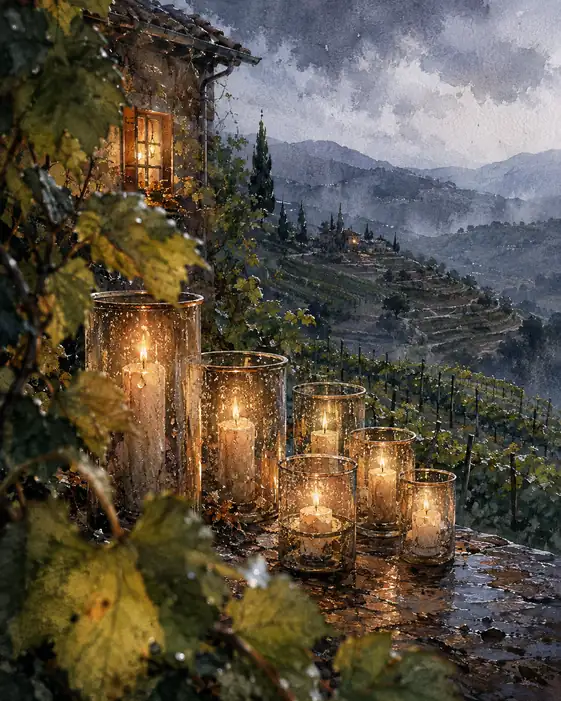 Six Flames Defy the Vineyard Storm
Similar Artworks
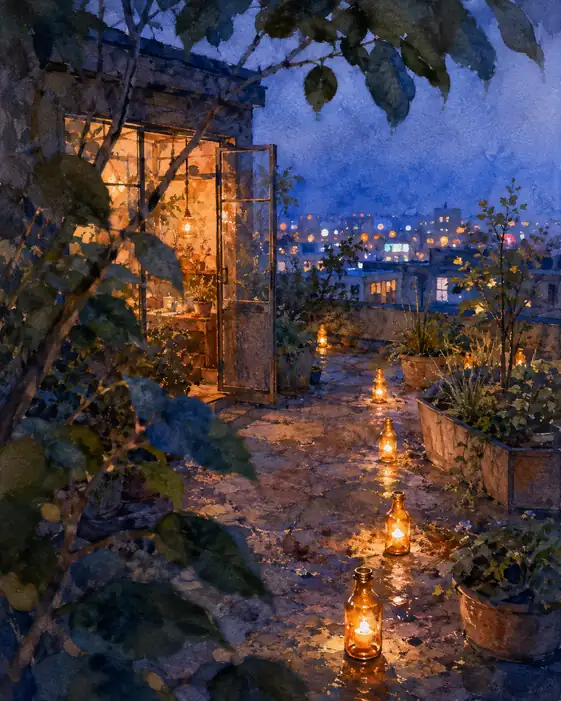 Bottled Lights Welcome the Blue Evening In
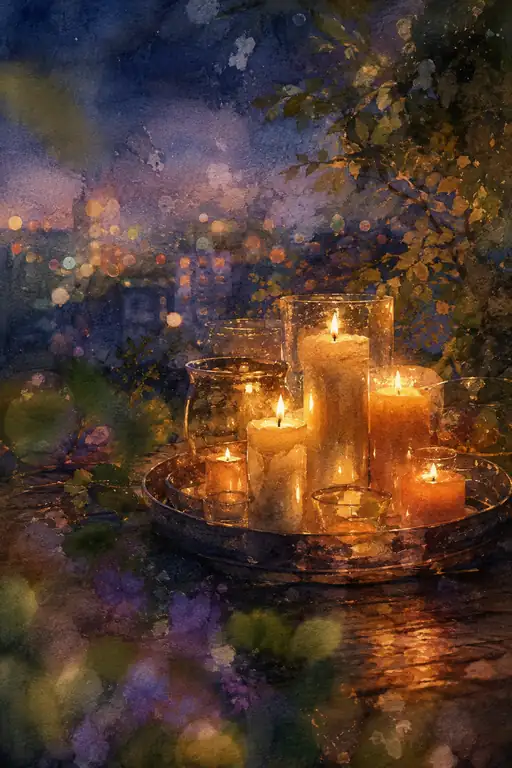 Six Candles Gather the City's Blue Hour
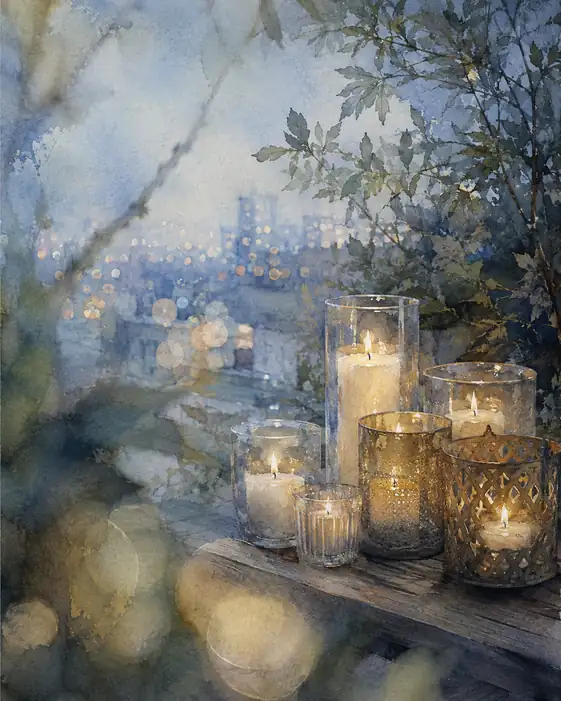 Six Quiet Flames Soften the Rainy City
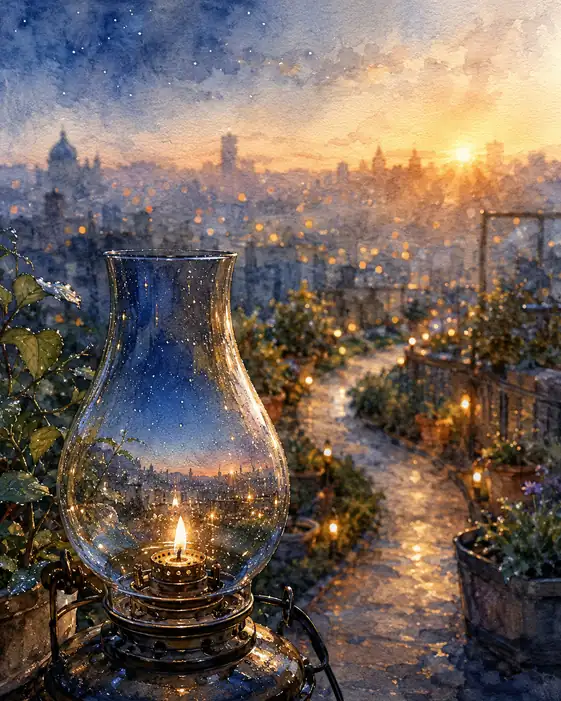 One Lamp Holds Both Sunrise and Stars
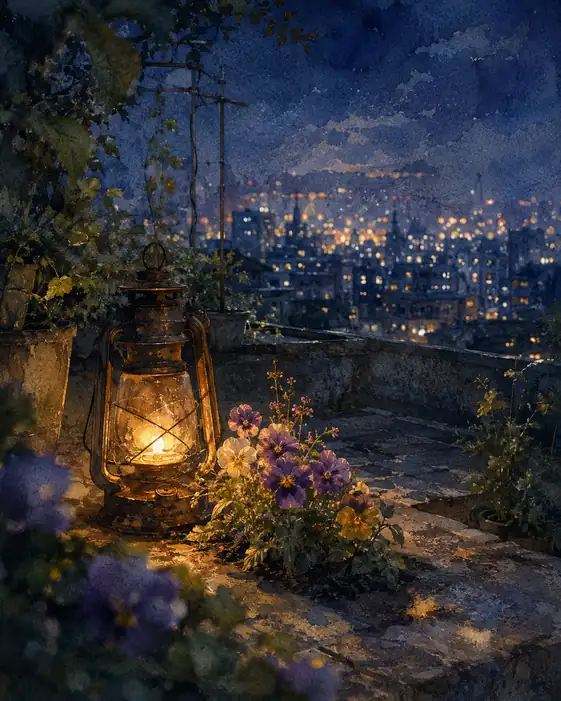 Pansies Gather around the City's Smallest Sun
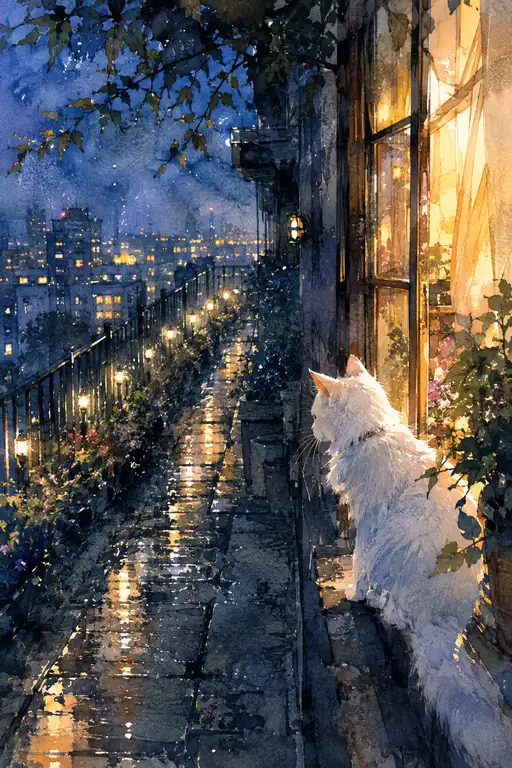 The White Cat Watches Rain Carry the Night Home
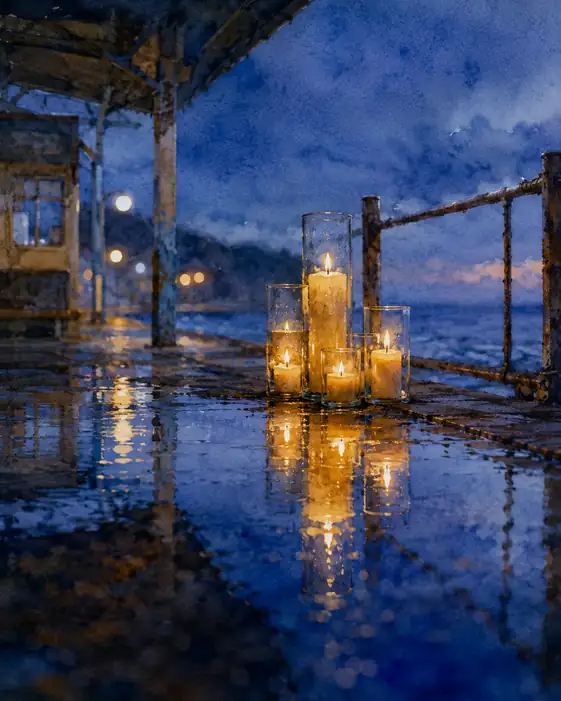 Five Candles Wait for the Tide to Turn
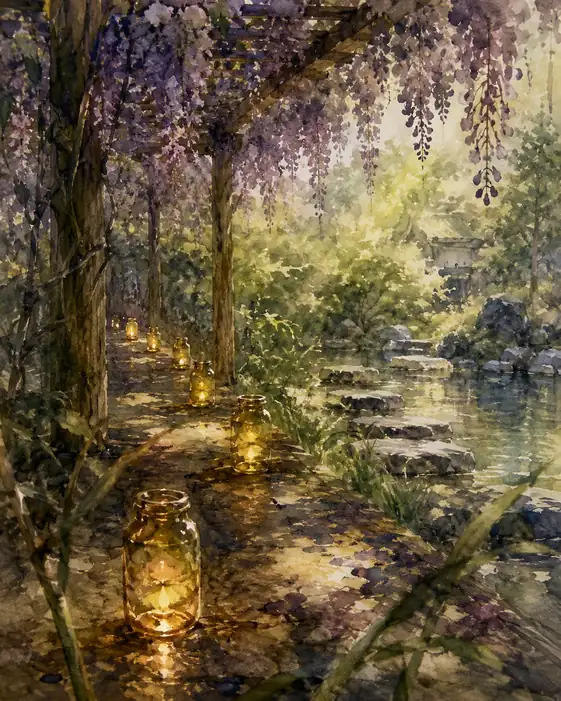 Little Jars Guide the Way through Wisteria Shade
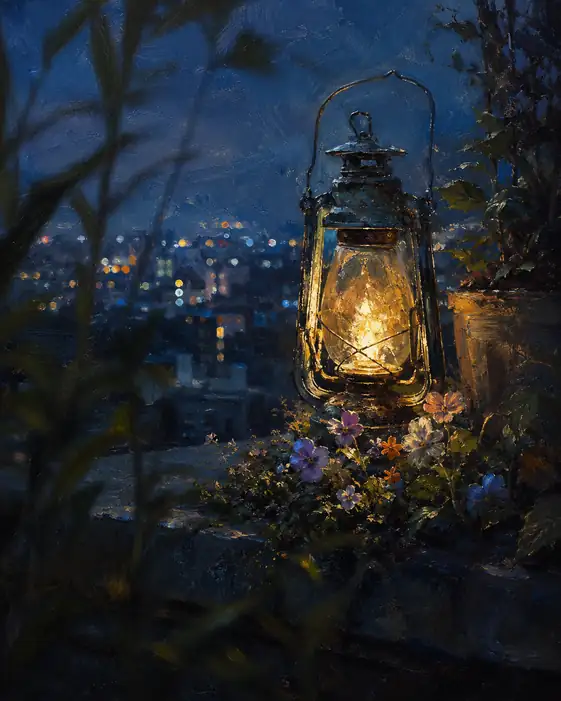 The Hilltop Lantern Answers the Distant City
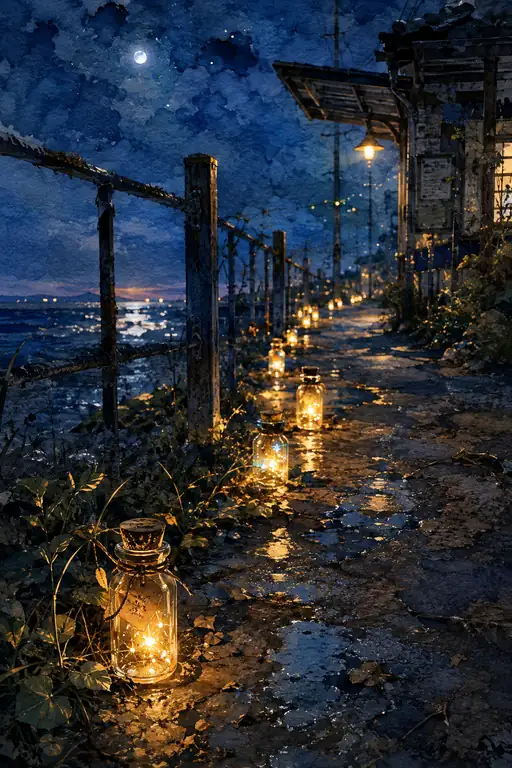 Moonlit Bottles Lead Along the Sleeping Shore