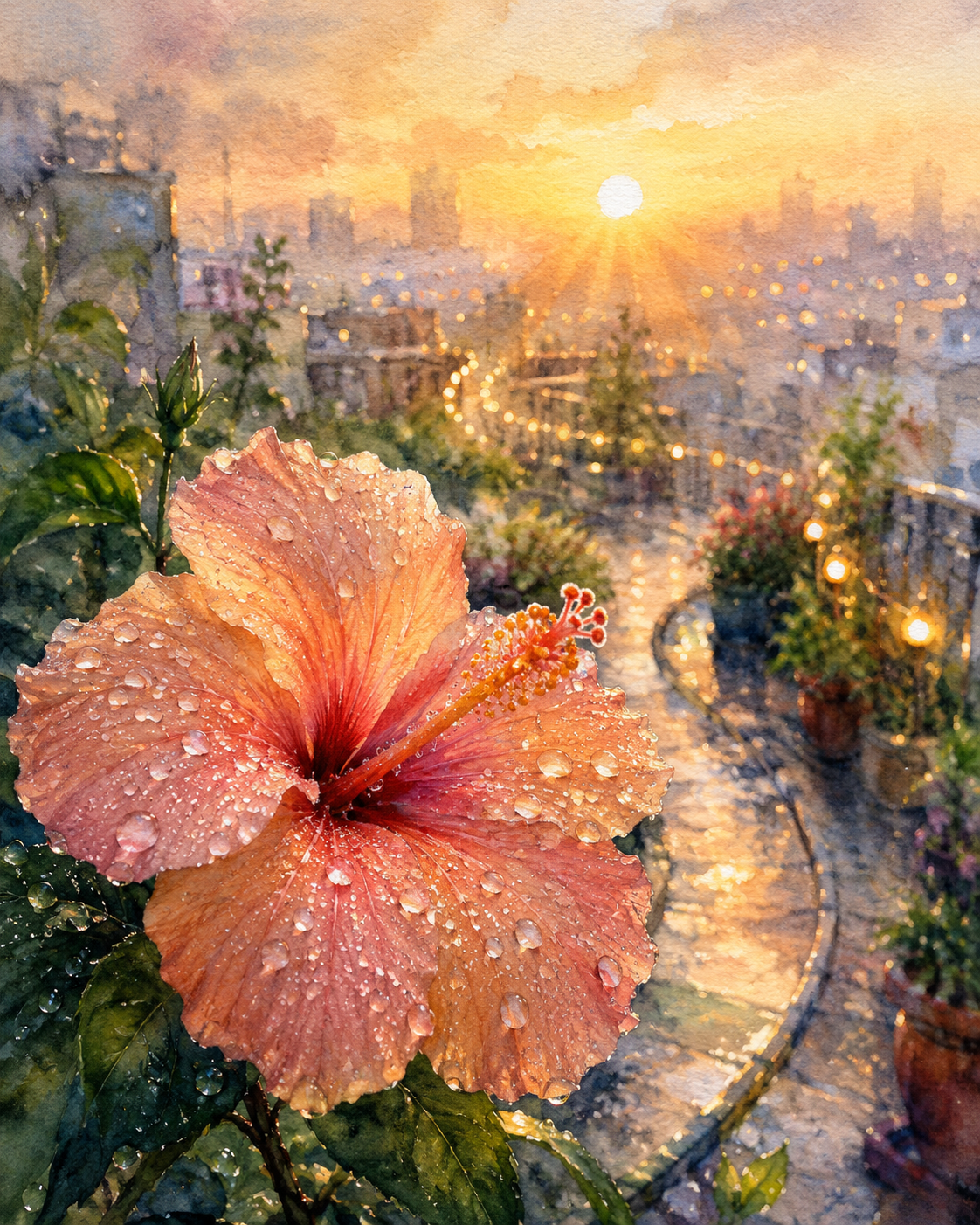
The Hibiscus Wears the City's Golden Rain
Critique
Introduction This watercolor magnifies a rain-beaded hibiscus against a rooftop garden and brilliant sunrise. The coral flower fills the lower left, its projecting red stigma aimed toward the center. Behind it, a curving wet path and strings of lights move through vegetation toward a hazy city. Description Five broad petals spread from a deep crimson throat into peach and orange edges. Fine veins radiate outward beneath droplets of many sizes. The long central column bears clustered yellow-orange anthers and red tips. Dark glossy leaves and a closed bud surround the bloom. In the distance, the low white sun sends gold rays across roofs, towers, lamps, and the reflective serpentine path. Analysis The flower’s frontal disk contrasts with the path’s receding curve and vertical skyline. Its projecting column creates a diagonal bridge toward the city. Precise droplets and veins establish the near plane, while buildings dissolve into granular light. Coral and crimson advance against green foliage and blue-gray shadow; repeated circular highlights connect water beads, garden bulbs, windows, and sun. Interpretation and Evaluation The hibiscus appears momentarily complete after rain, while its delicate surface makes that completeness visibly temporary. The city and flower receive the same light, reducing any opposition between nature and urban form. The painter demonstrates strong botanical observation, persuasive wet textures, and bold control of scale. The flower remains dominant without erasing the garden’s spatial journey. Conclusion At first the bloom reads as an isolated spectacle, but the curving light path extends its energy into the waking city. The work turns close observation into an expansive study of renewal, using disciplined focus and luminous color.
Same Subcategory
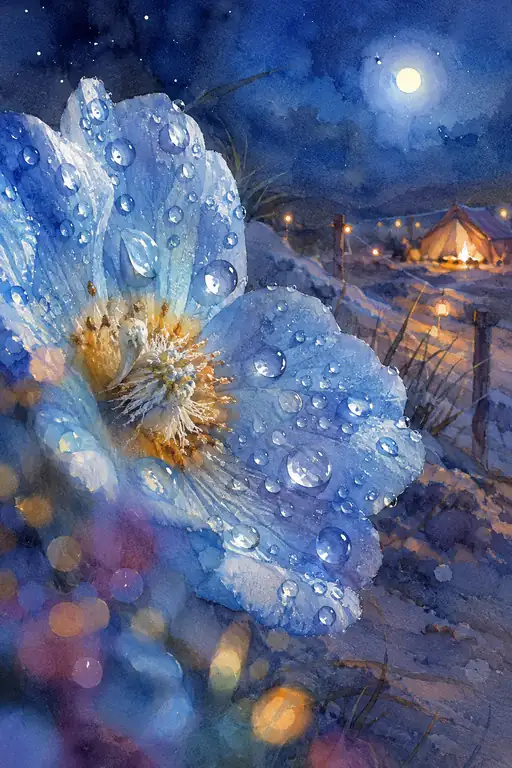 Moonlit Dew on the Azure Petals
Similar Artworks
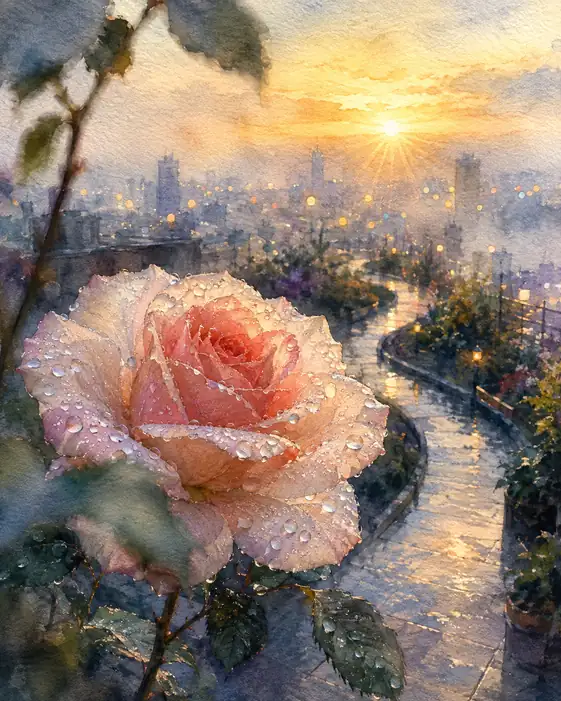 A Rose Drinks the Dawn from Every Raindrop
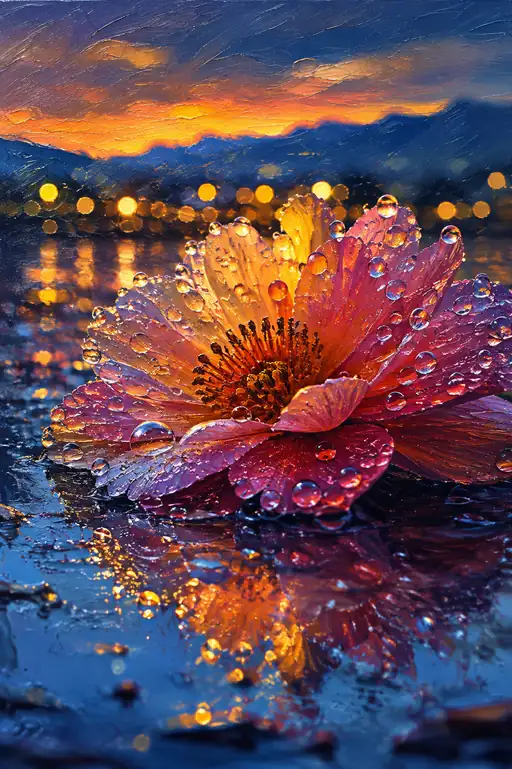 A Rain-Jewelled Blossom Mirrors the Burning Sky
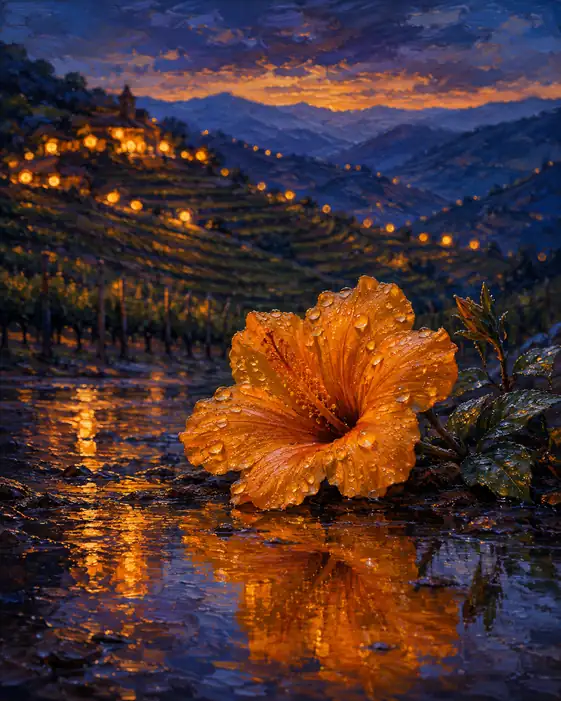 A Rain-Kissed Hibiscus Holds the Vineyard Sunset
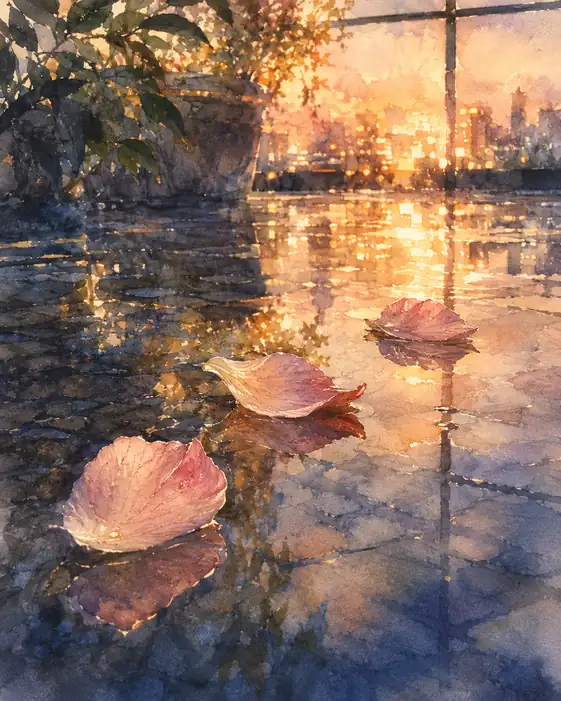 Three Petals Float upon the Rooftop Sun
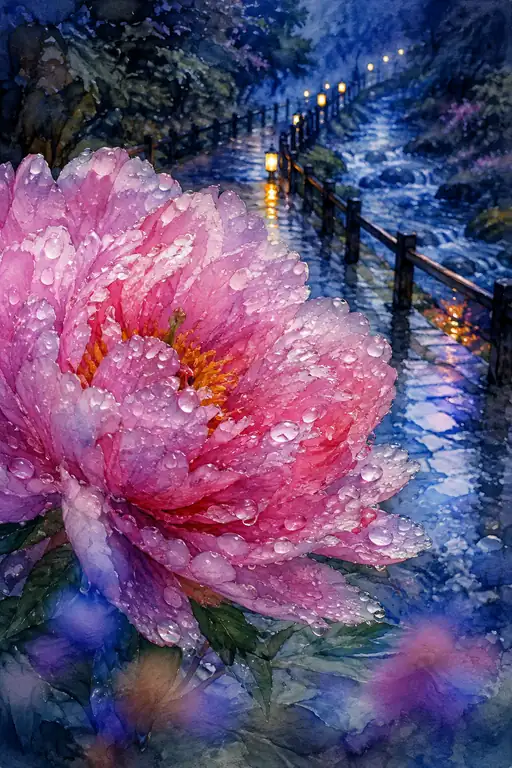 The Peony Wears a Necklace of River Rain
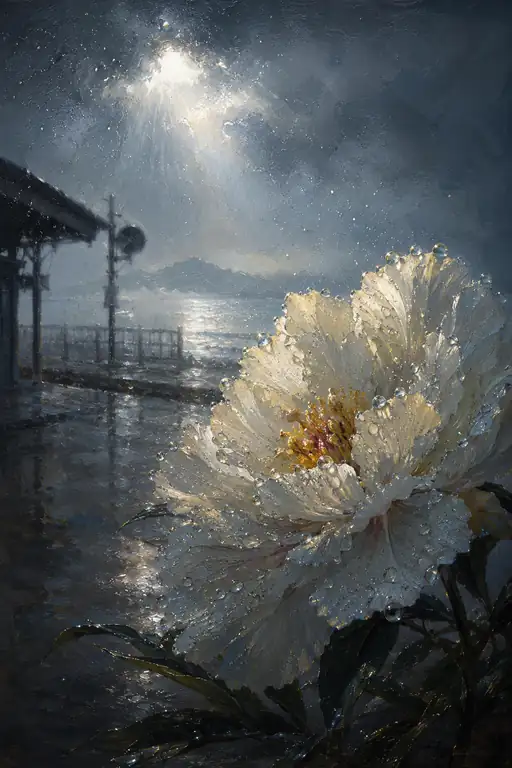 The White Peony Wears the Storm's Jewels
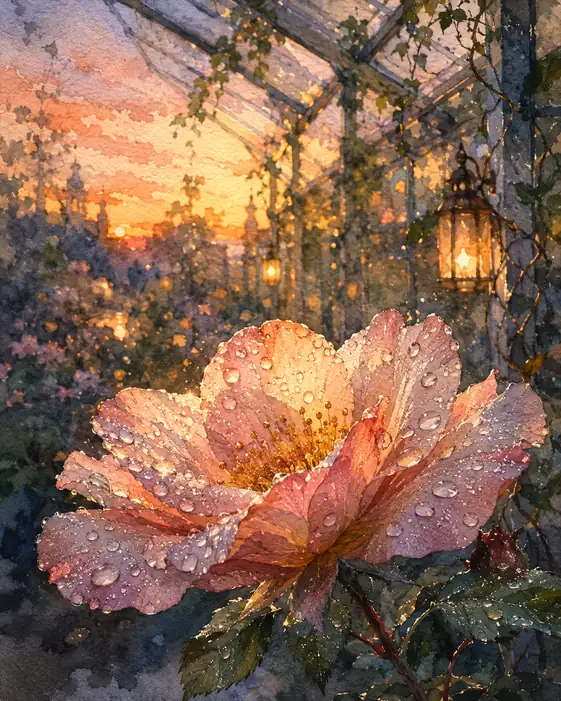 The Rose Drinks the Last Light of Rain
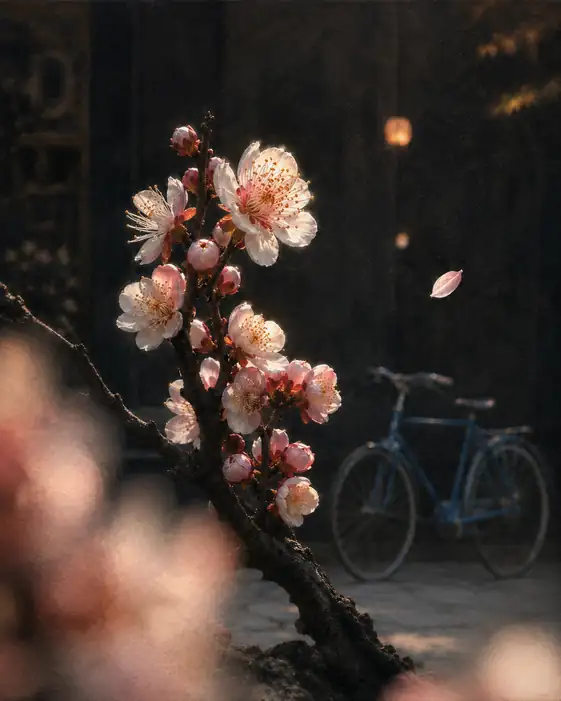 Drifting Petals and Blue Bicycle
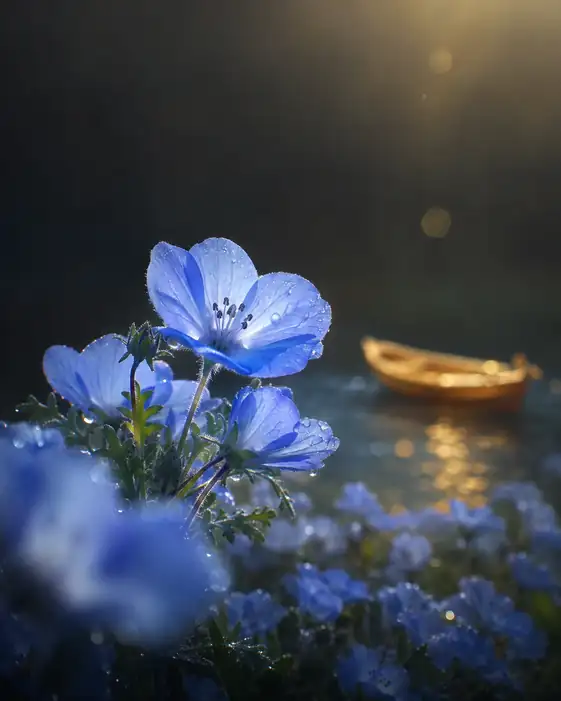 Leaving the Blue Glow of Flowers Behind
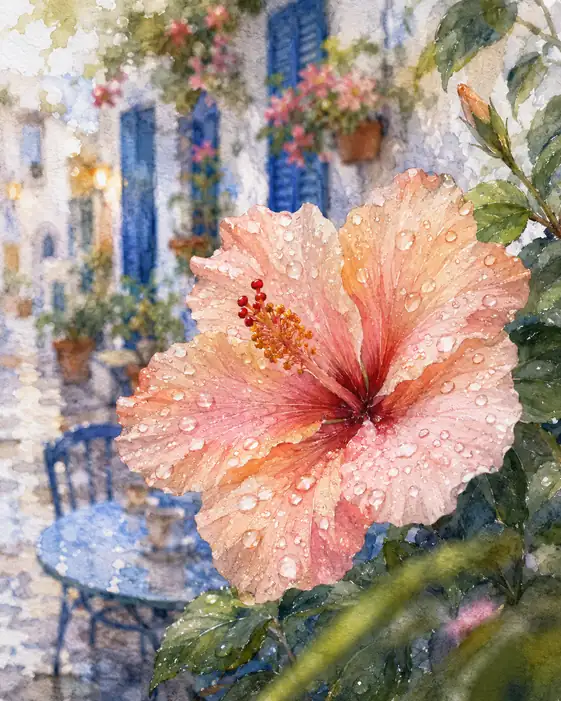 Dew-Kissed Hibiscus in the Mediterranean Morning