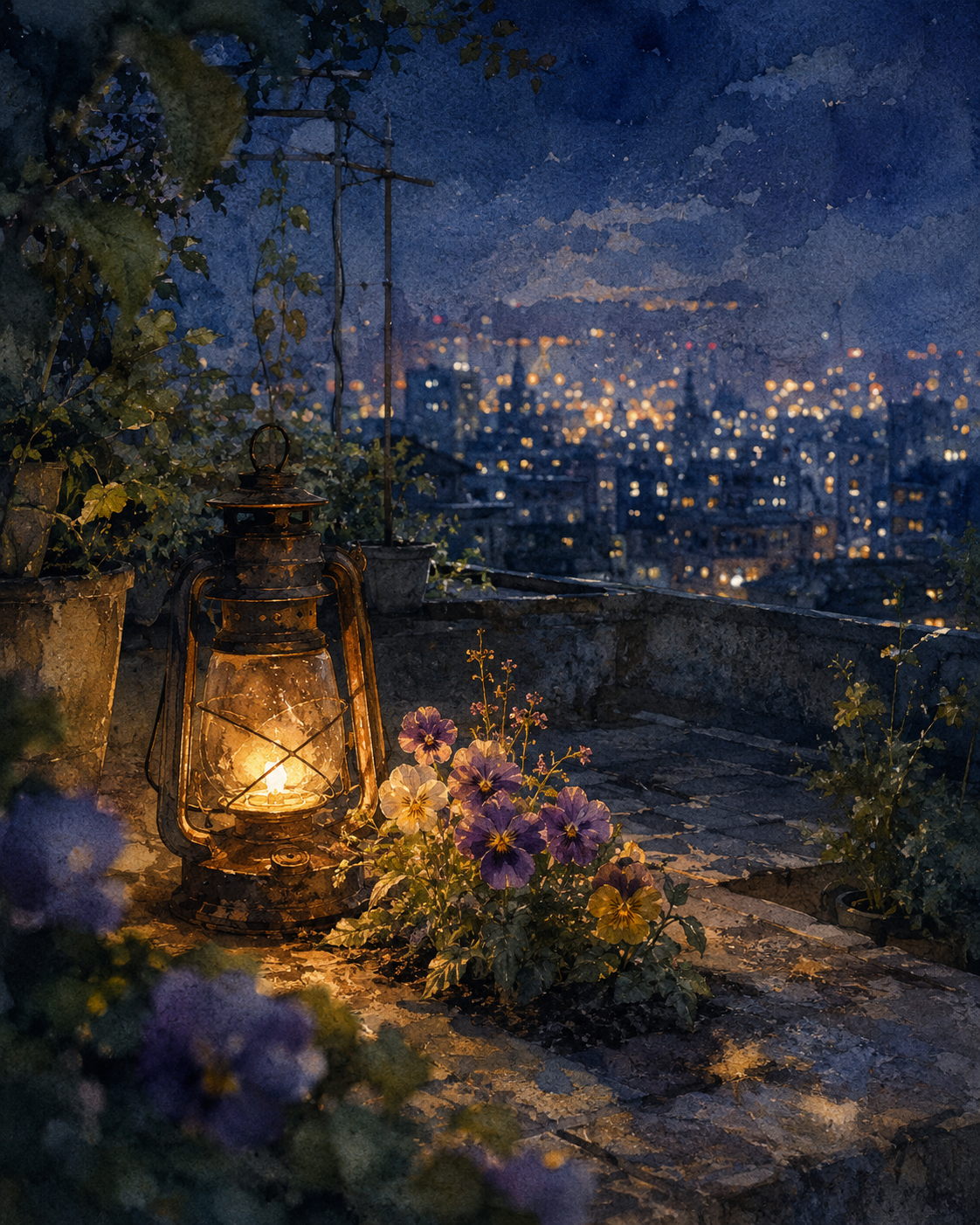
Pansies Gather around the City's Smallest Sun
Critique
Introduction This nocturnal watercolor places an old oil lantern beside a small bed of pansies on a rooftop terrace. The lantern occupies the lower left, while purple, yellow, and cream flowers spread toward the center. Beyond a low wall, an extensive city glows beneath layered blue clouds. Description The lantern’s dark metal frame, circular cap, side handles, and crossed guard wires enclose a warm flame in cloudy glass. Its light falls over soil, leaves, and uneven masonry. Five large pansy faces turn in different directions, accompanied by fine reddish stems. Pots and climbing plants gather along the left; to the right, sparse shoots rise from cracks. Distant windows form dense gold and white dots. Analysis The lantern and flowers form a low triangular grouping against the open city field. The lamp’s hard vertical structure contrasts with the pansies’ rounded petals and spreading leaves. Warm light creates a local pool that fades quickly into blue-gray stone, then reappears as countless remote points. Detailed metal, petals, and soil yield to soft architecture, producing depth through both scale and focus. Interpretation and Evaluation The lantern does more than illuminate the flowers; it gives their fragile forms a protected territory within the large night. Conversely, the living plants soften the instrument’s utilitarian weight. The painter controls a dark palette without losing botanical distinctions. Balanced asymmetry, convincing metal and glass, and restrained highlights demonstrate technical assurance and prevent sentiment from overtaking observation. Conclusion At first the city seems to dwarf the small arrangement, but sustained viewing reveals the lantern and pansies as a complete world of their own. The work gives modest care visual dignity through clear structure and nuanced nocturnal color.
Same Subcategory
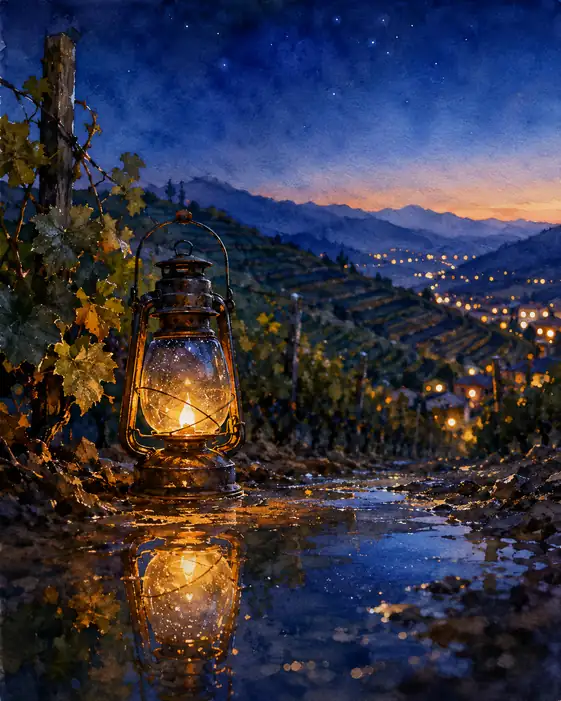 One Lantern Keeps the Vineyard Stars Awake
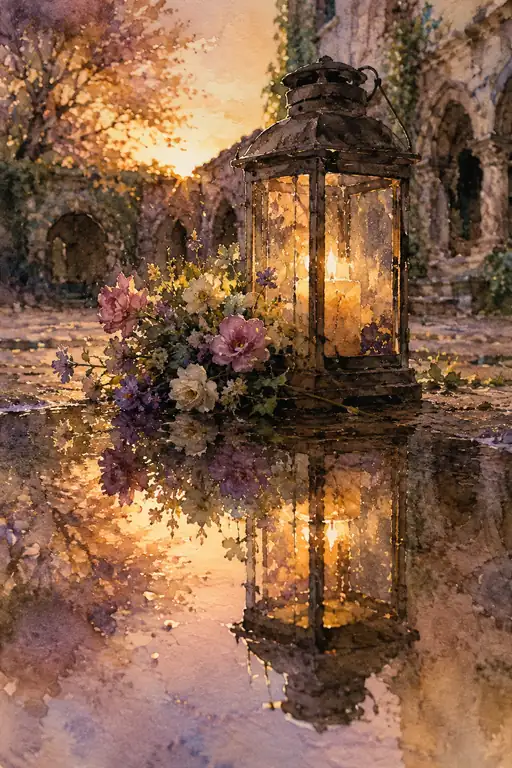 Candle Lantern Reflecting in the Castle Water Mirror and Twilight Floral Offering
Similar Artworks
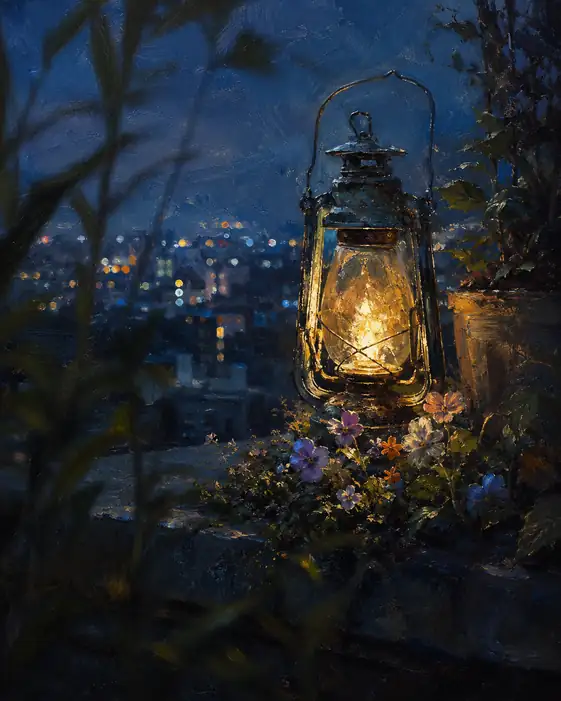 The Hilltop Lantern Answers the Distant City
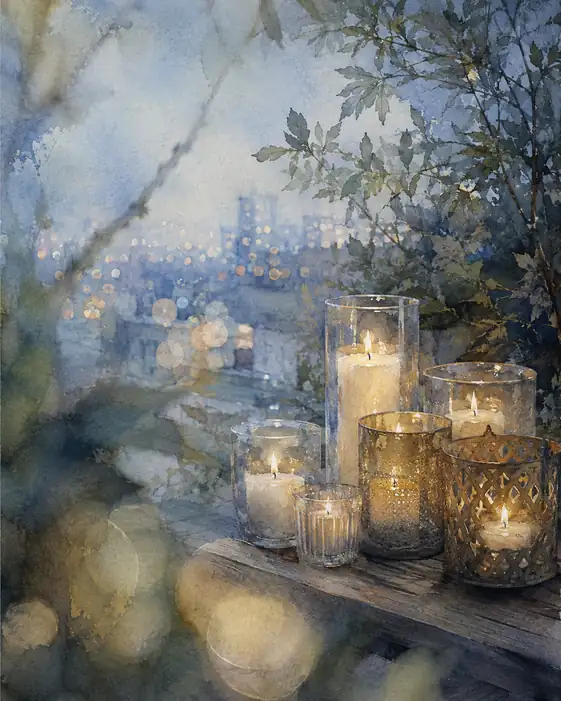 Six Quiet Flames Soften the Rainy City
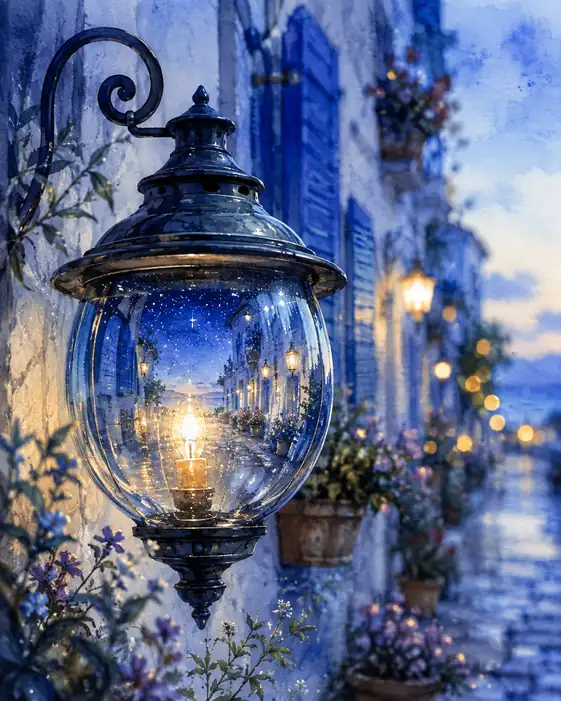 Sanctuary of Starlight in Glass
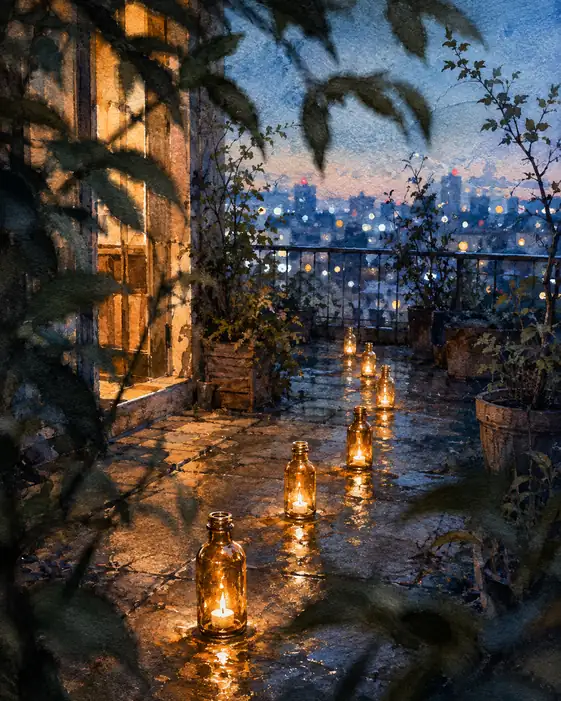 Seven Bottled Flames Lead Evening Home
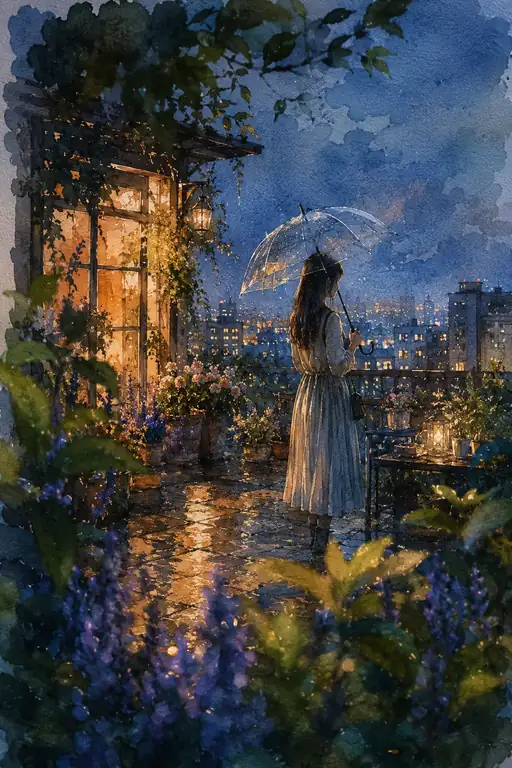 She Stands between Rain and a Thousand Windows
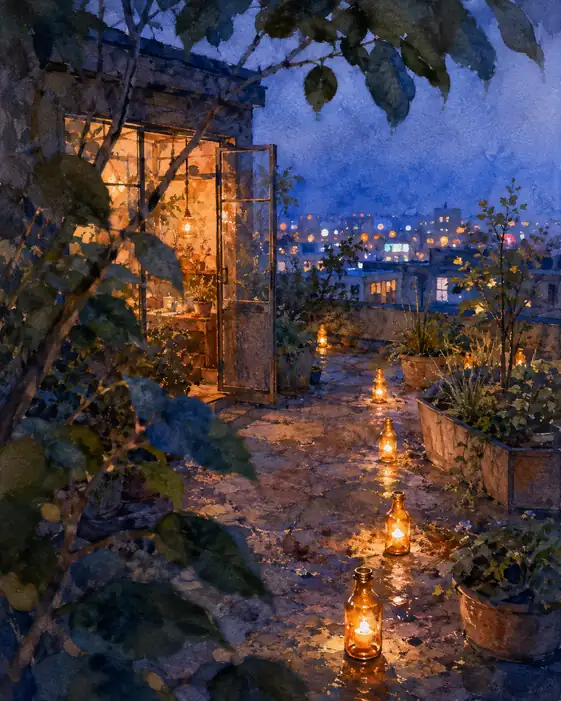 Bottled Lights Welcome the Blue Evening In
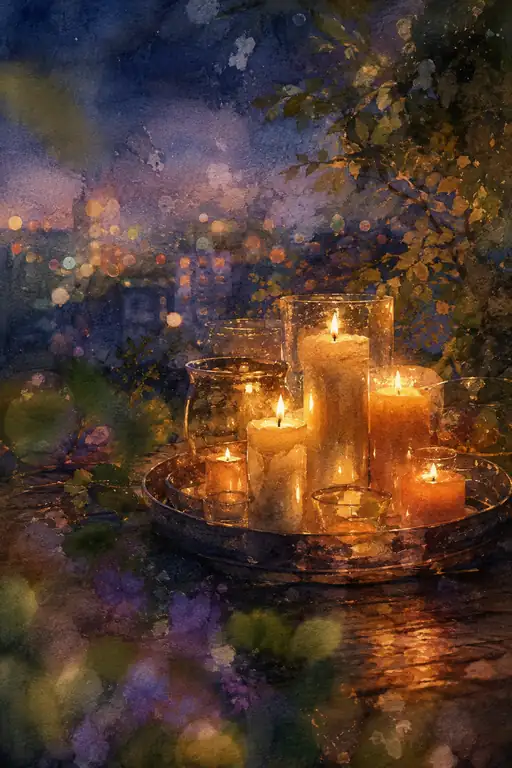 Six Candles Gather the City's Blue Hour
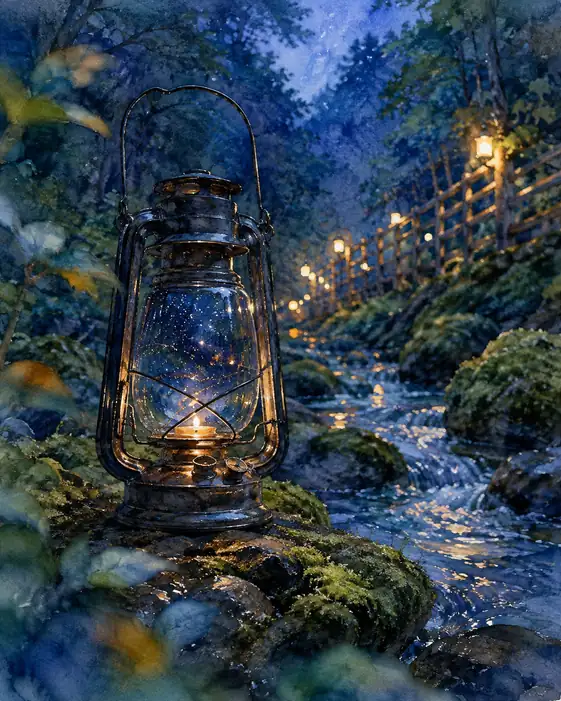 A Lantern Bottles the Forest's Midnight Sky
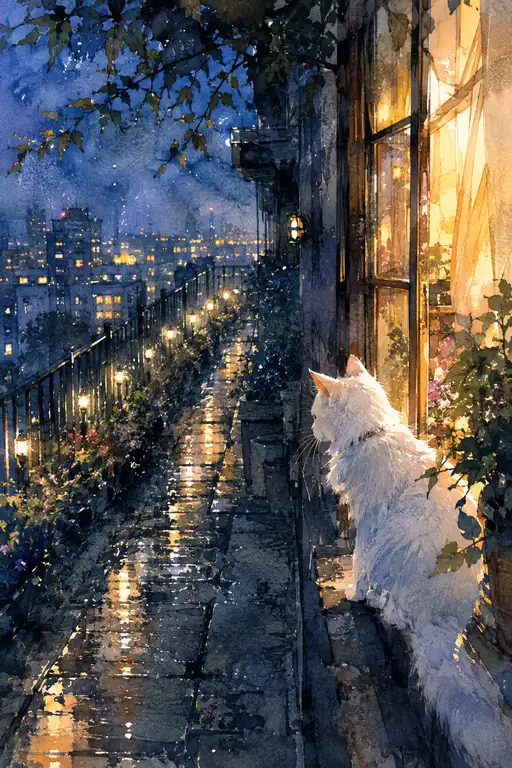 The White Cat Watches Rain Carry the Night Home
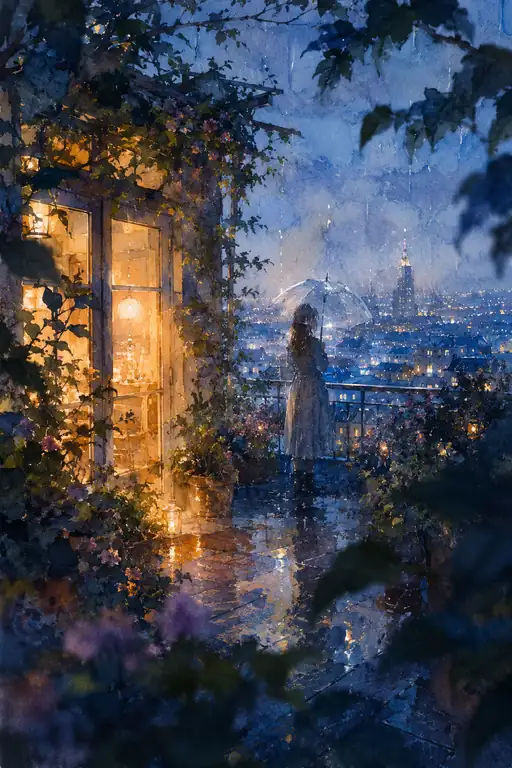 She Waits Where Warm Windows Meet the Rain