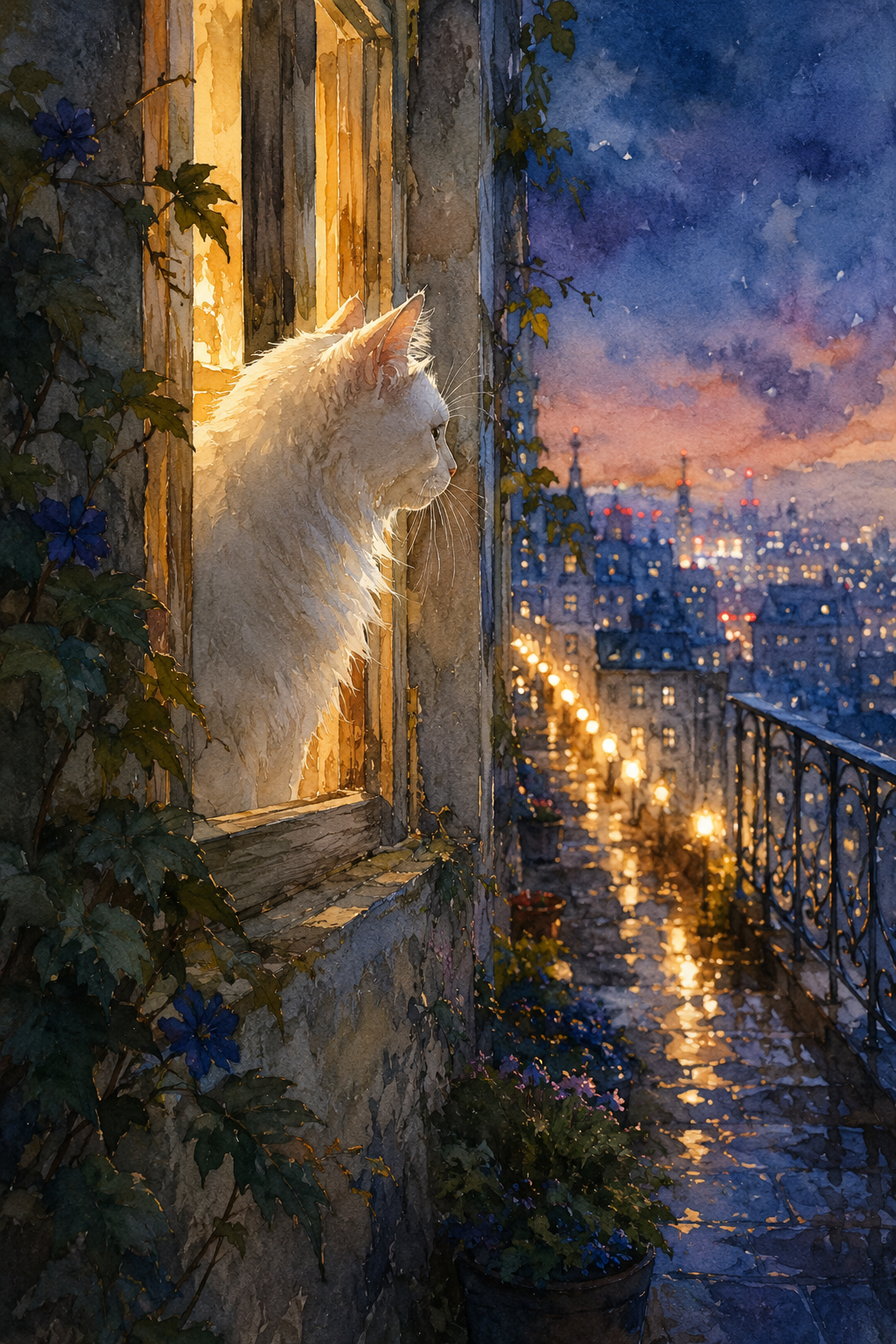
The White Cat Counts the City's Evening Lights
Critique
Introduction This watercolor portrays a white long-haired cat standing in an open window and looking over a rain-wet balcony toward a city at dusk. Warm interior light surrounds the animal from behind, while a procession of lamps leads outward through blue evening. Climbing leaves and deep blue flowers frame the threshold. Description The cat appears in left-facing profile, with upright ears, a small dark eye, long whiskers, and an irregular fluffy chest. Gold rim light catches individual hairs along its back and jaw. The aged window frame and sill show cracks and worn grain. Outside, an ornate railing borders a narrow walkway lined with pots and repeated lights. Red points crown distant towers beneath peach-violet cloud. Analysis The bright vertical cat and window occupy the left third, opposed by the deep recession of balcony and city to the right. Its gaze activates that open space. The lamp sequence and railing converge toward distance, while vines interrupt rigid architecture with organic curves. Fine hair and wood marks contrast with liquid pavement and softened skyline. Gold transitions from interior edge to lamps and windows within dominant cobalt. Interpretation and Evaluation The animal is physically held by the domestic threshold but mentally oriented toward the larger city. This creates alert curiosity rather than confinement. Its white body becomes a sensitive screen for changing light. The painter’s backlit fur, clear perspective, and varied materials are convincing; the side-profile viewpoint avoids direct sentiment and grants the cat an independent attention. Conclusion At first the cat appears to receive the room’s warmth, but its fixed outward gaze makes the illuminated balcony the true path of the image. The work turns a domestic pause into a precise study of curiosity and urban distance.
Same Subcategory
Similar Artworks
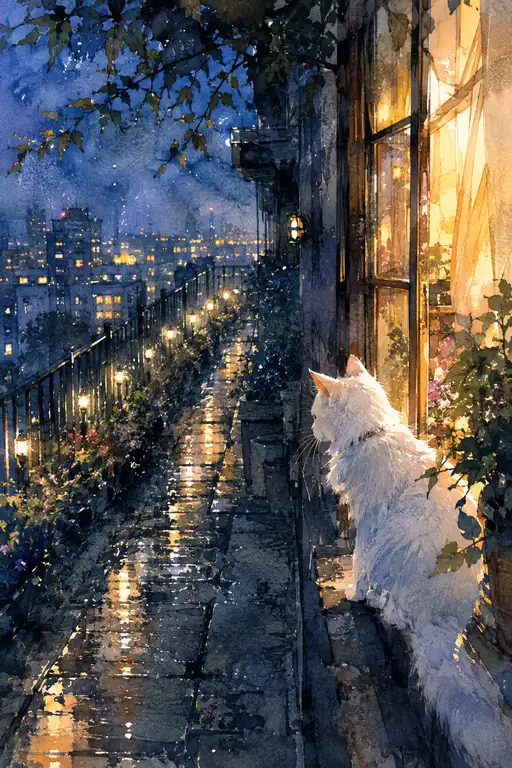 The White Cat Watches Rain Carry the Night Home
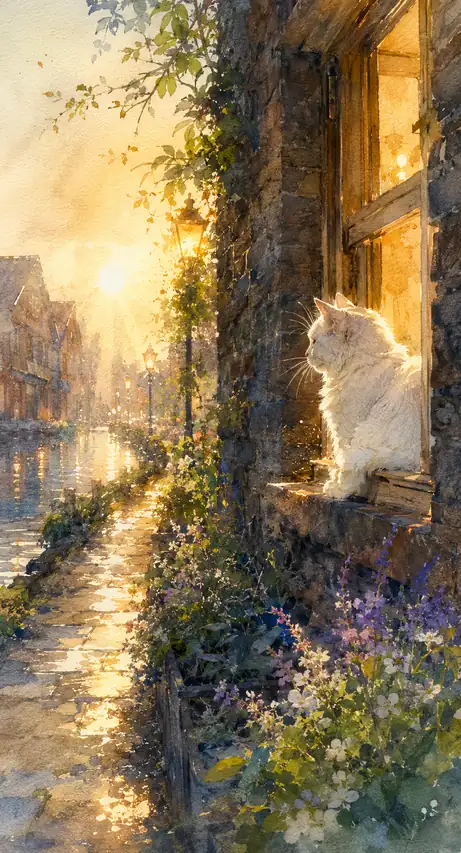 Sunset Finds the Cat at the Canal Window
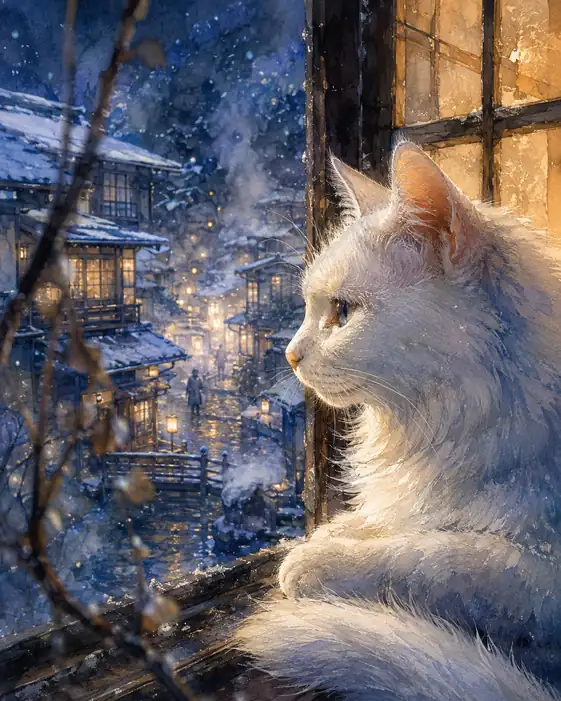 The White Cat Watches Snowfall Fill the Village
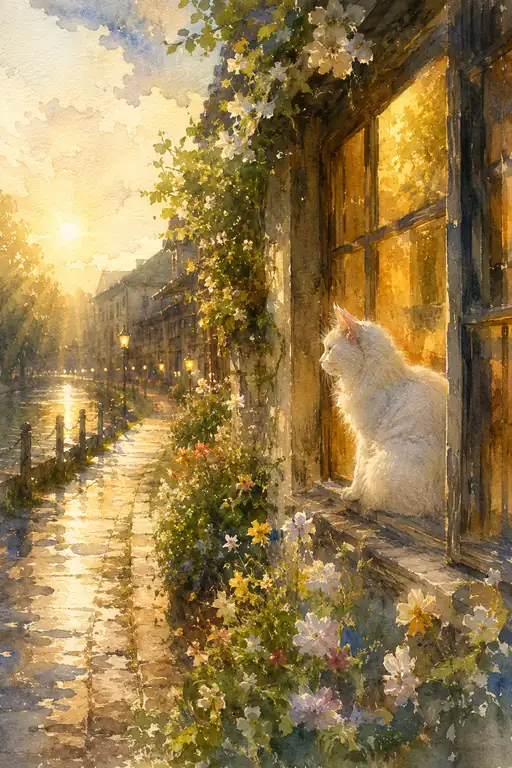 The White Cat Who Watches Morning Arrive
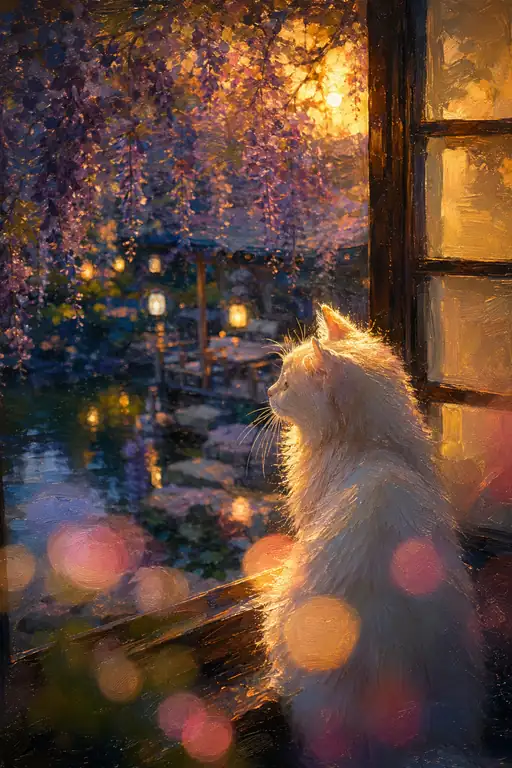 The White Cat Waits for Wisteria Twilight
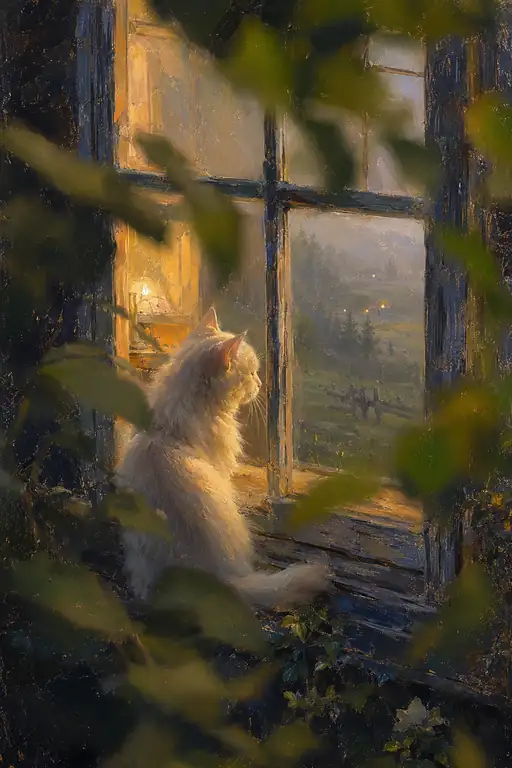 The Cat Who Watched Evening Cross the Fields
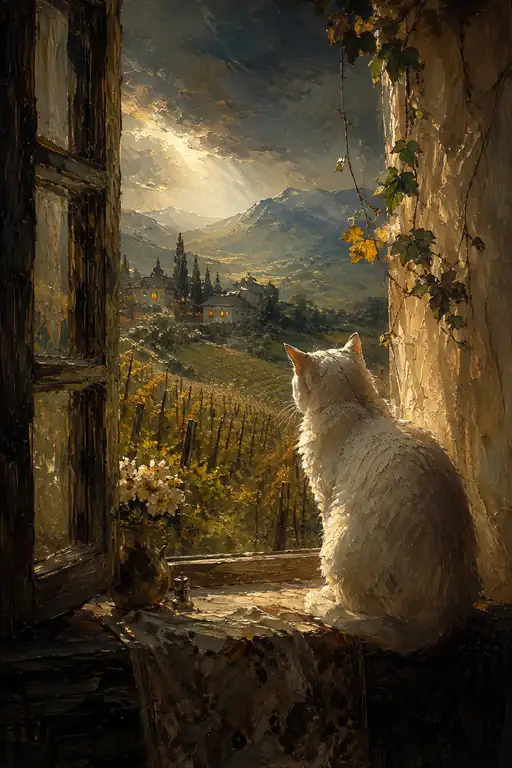 The White Cat Waits for Sunlight over the Vines
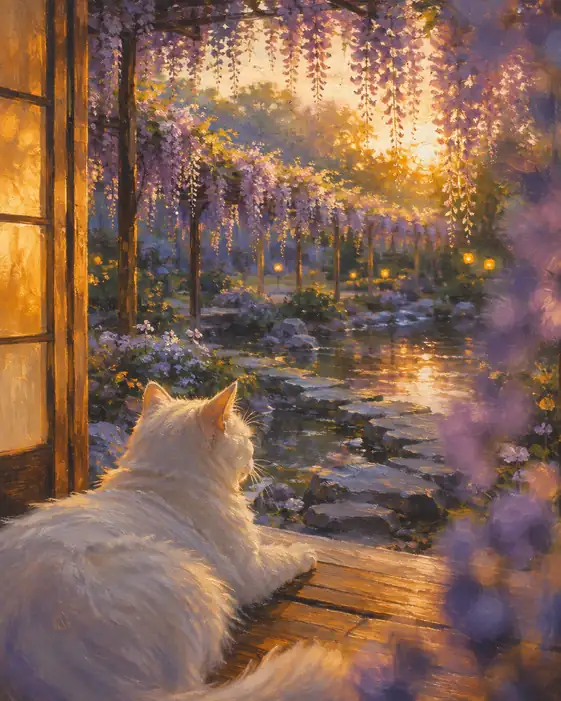 Sunset Comes Home to the Watching Cat
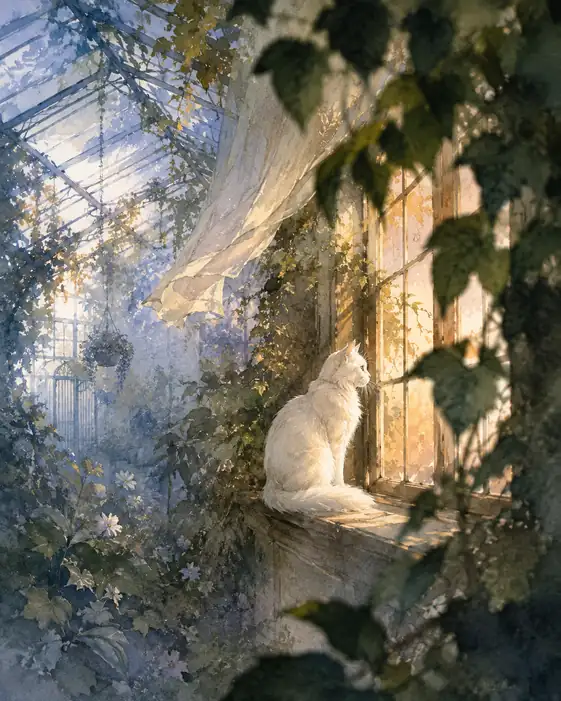 The White Cat Watches Morning Enter the Glasshouse
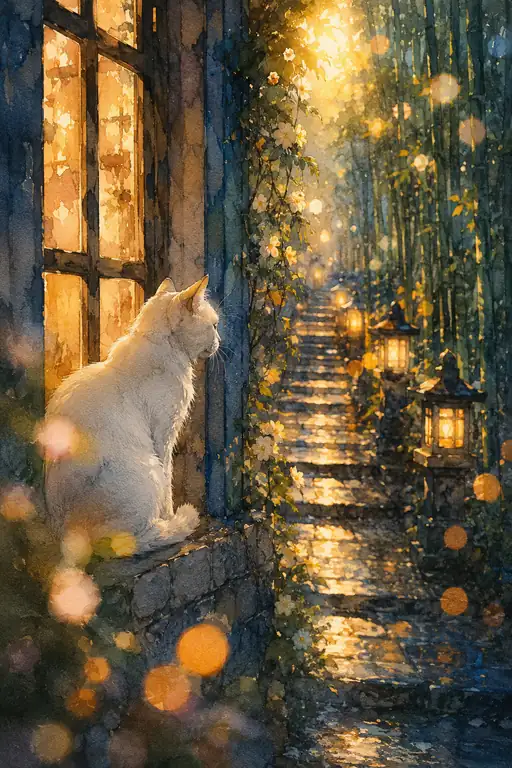 Silent Gaze Beyond the Bamboo Lanterns