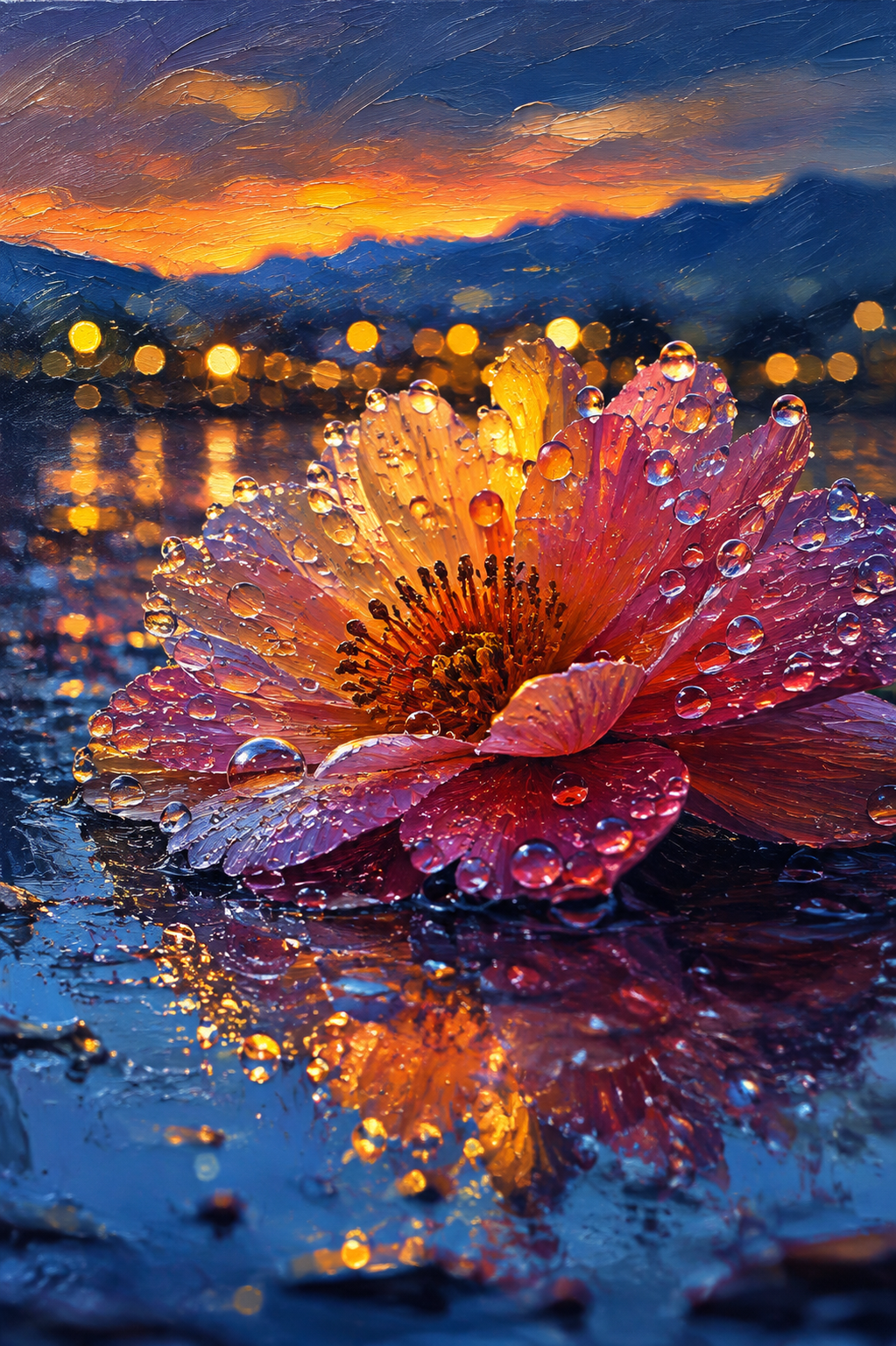
A Rain-Jewelled Blossom Mirrors the Burning Sky
Critique
Introduction This close painting presents a rain-covered pink flower lying on a reflective surface before a mountain lake at sunset. The blossom dominates the lower half, its petals opening toward the viewer. Behind it, dark ridges and a line of warm settlement lights frame a brilliant orange horizon. Description Broad petals shift from violet at the edges through rose and crimson to a golden center. Numerous droplets rest as clear spheres, enlarging veins and reflecting blue sky and orange light. Dark stamens rise densely around the central core. The flower’s inverted image spreads through the wet foreground, broken by ripples and scattered beads. Across the lake, lights form soft yellow circles and vertical reflections. Analysis The flower’s radial structure establishes a powerful near focus against the landscape’s horizontal bands. Its warm illuminated petals bridge the orange sky and blue water. Droplets repeat the circular form of distant lamps at radically different scales, linking microdetail to panorama. Sharp transparent spheres and stamens yield to broad reflective strokes, blurred lights, and simplified mountains, creating strong depth. Interpretation and Evaluation Detached and waterlogged, the blossom combines evident fragility with intense visual presence. Rain does not merely damage it; droplets multiply surrounding light and turn the surface into a lens. The painter’s observation of refraction, petal texture, and reflection is technically persuasive. Bold cropping and saturated complementary color renew the familiar theme of fallen beauty. Conclusion At first the flower seems to eclipse the landscape, but its droplets and reflection contain and echo the distant world. The work transforms a fallen bloom into a concentrated study of transience, perception, and evening light.
Same Subcategory
Similar Artworks
 A Rain-Kissed Hibiscus Holds the Vineyard Sunset
 The Hibiscus Wears the City's Golden Rain
 A Rain-Crowned Camellia Watches the Lantern Path
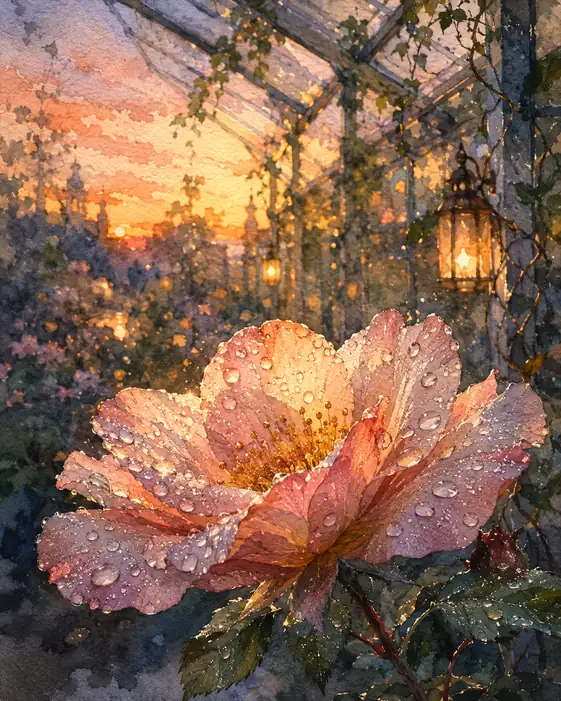 The Rose Drinks the Last Light of Rain
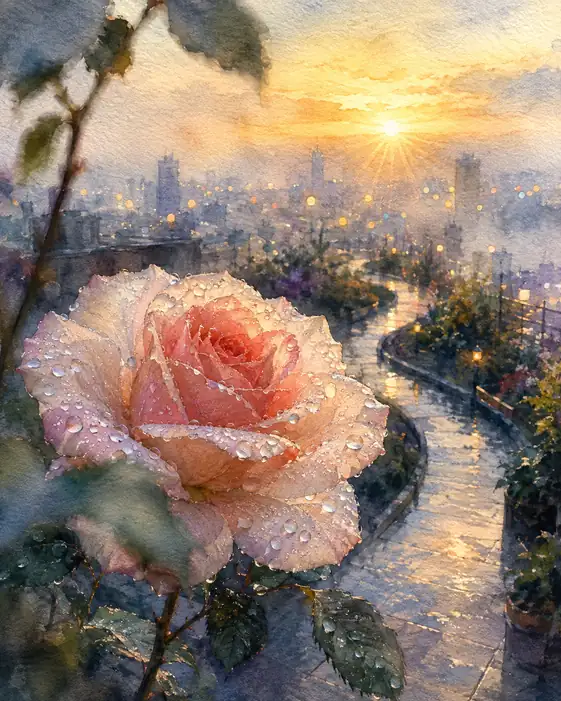 A Rose Drinks the Dawn from Every Raindrop
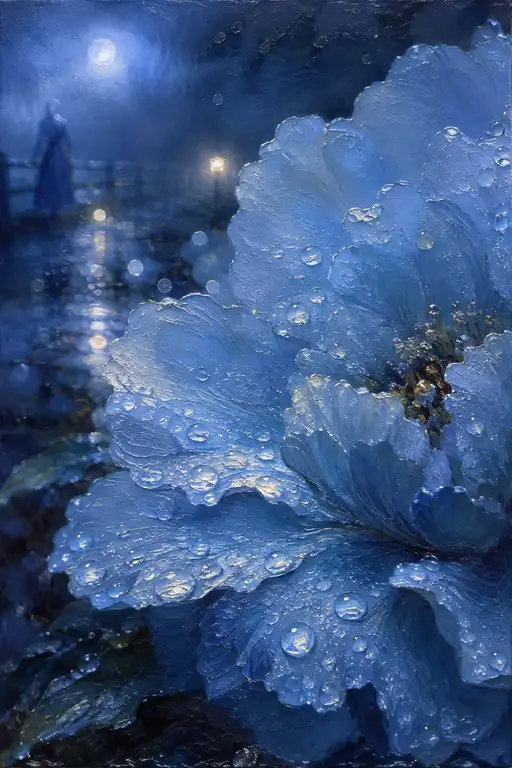 Blue Petals Gather the Moon's Tears
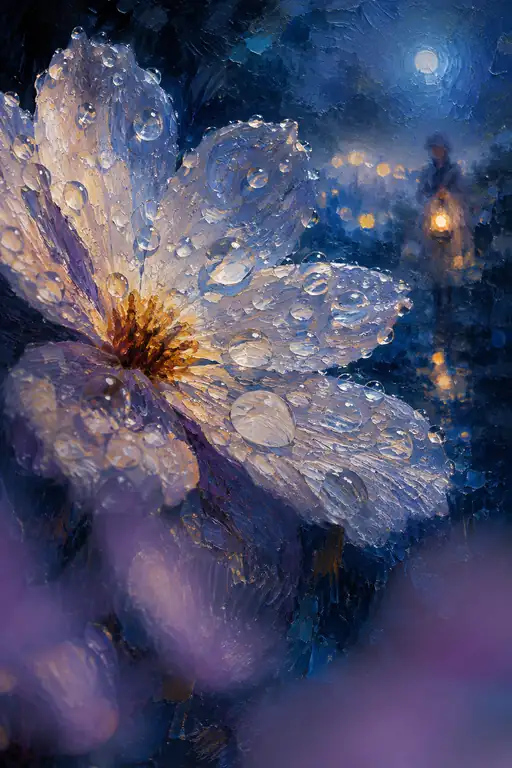 Moonlit Dew Crowns the Midnight Flower
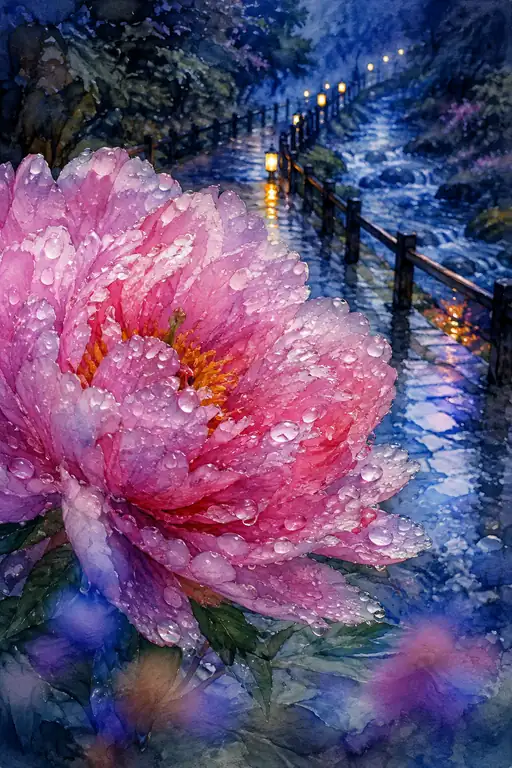 The Peony Wears a Necklace of River Rain
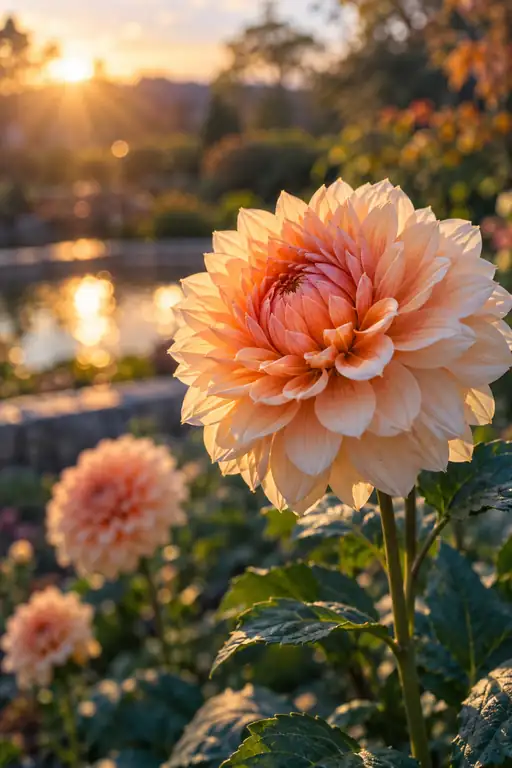 Sunset Ember by the Mirror Pool
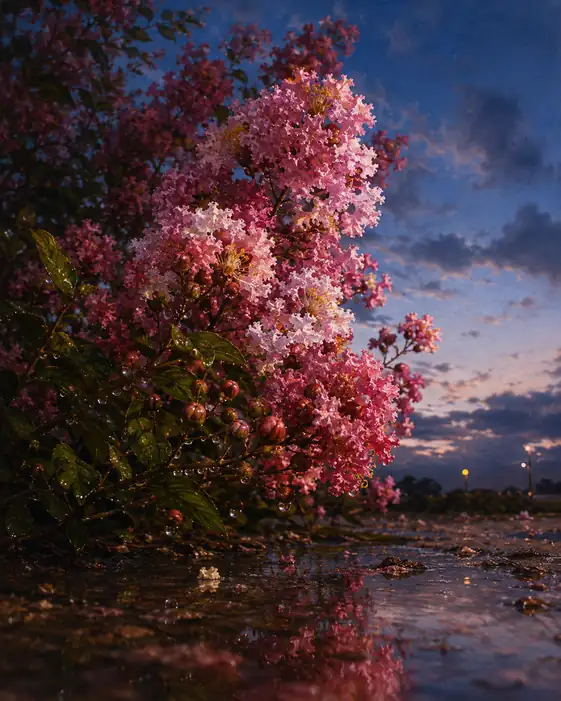 Crape Myrtle Reflected in the Twilight Puddle