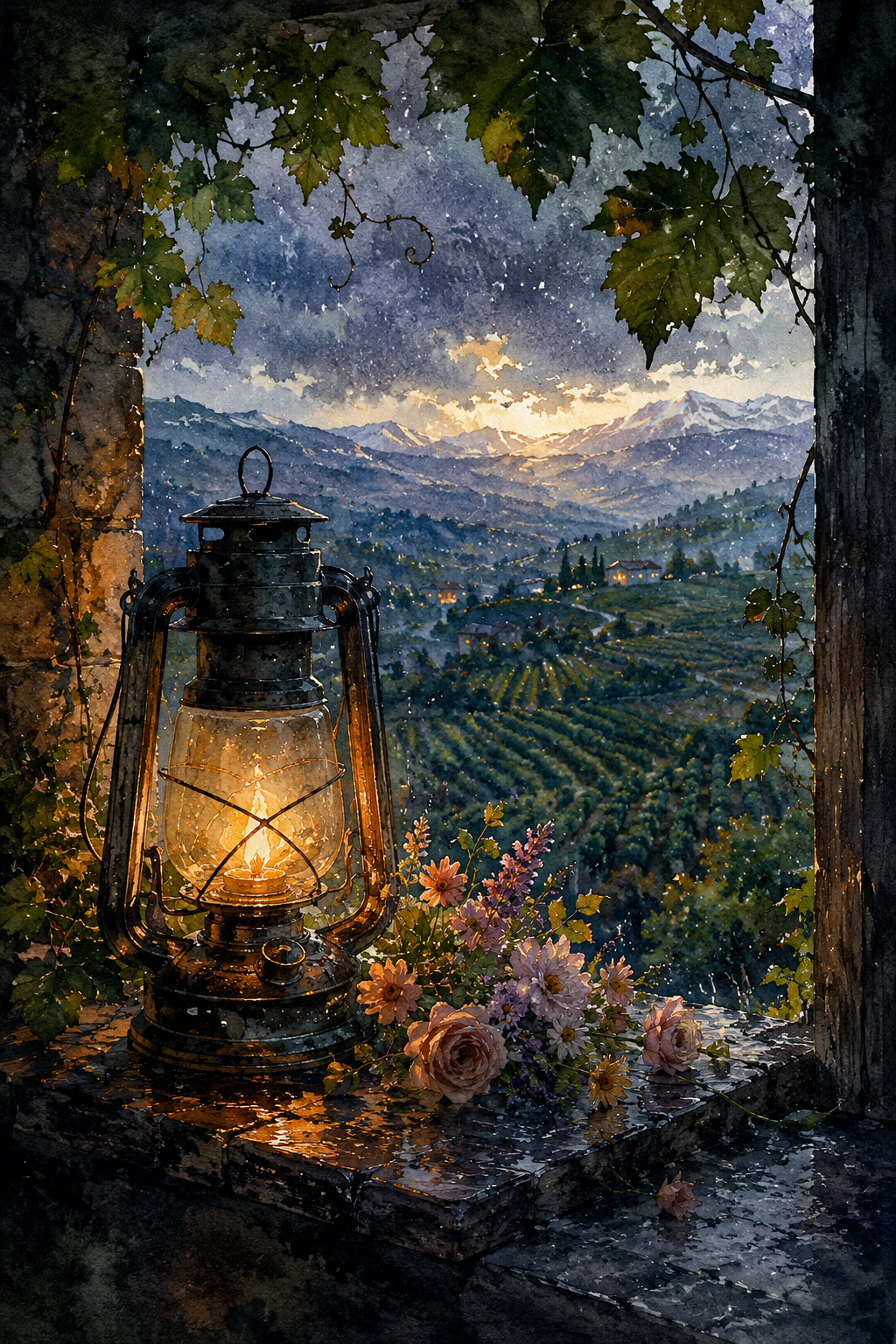
The Valley's Last Light Blooms beside the Lamp
Critique
Introduction This watercolor places a large oil lantern and a loose bouquet on a stone sill opening toward vineyards and distant snow-touched mountains. Rain or fine snow crosses the twilight view, while vine leaves form a canopy above. The lantern occupies the lower left and casts warm light over flowers and wet masonry. Description The black metal lamp has an oval top ring, broad cap, side braces, crossed guard wires, and a misted glass chamber. Its flame illuminates peach roses, purple spikes, orange daisies, and pale blossoms scattered rather than contained in a vase. Water beads on the stone and petals. Beyond, ordered vine rows curve toward small houses, and pale peaks catch the final light beneath broken gray clouds. Analysis The lantern’s strong vertical structure anchors the framed opening, while the bouquet spreads horizontally across its base. Dark walls and overhead leaves create a near enclosure around the bright valley. Amber is concentrated in flame, flowers, wet stone, and distant windows; blue-gray organizes air and mountains. Precise metal and petals transition through patterned vineyards to atmospheric peaks. Interpretation and Evaluation Portable light and cut flowers form a temporary arrangement before a landscape shaped by long cultivation and geological time. Their vulnerability to weather is visible in droplets and scattered placement. The painter balances symbolic contrast with material observation. Convincing lamp construction, diverse floral marks, and clear aerial perspective support an original threshold composition. Conclusion At first the lantern appears to protect the flowers from the dark, but the open landscape reveals that both remain exposed to changing weather. The work joins intimate care and immense terrain through disciplined light and spatial depth.
Same Subcategory
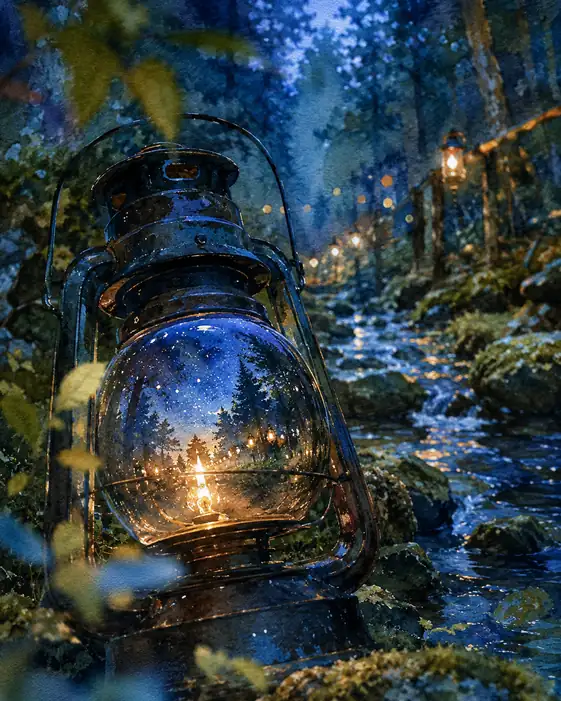 A Lantern Carries Dawn through the Mountain Stream
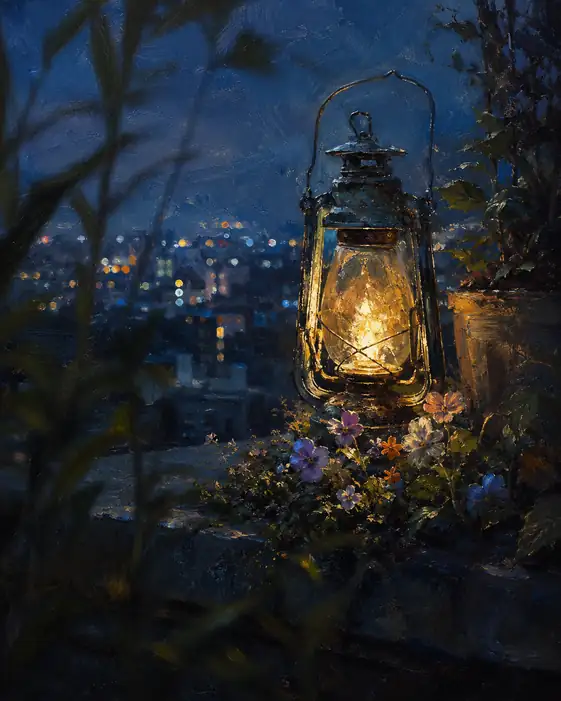 The Hilltop Lantern Answers the Distant City
Similar Artworks
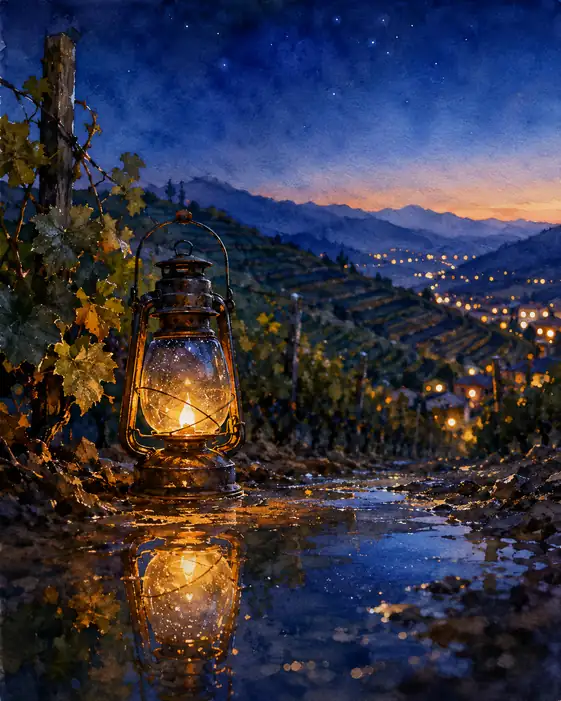 One Lantern Keeps the Vineyard Stars Awake
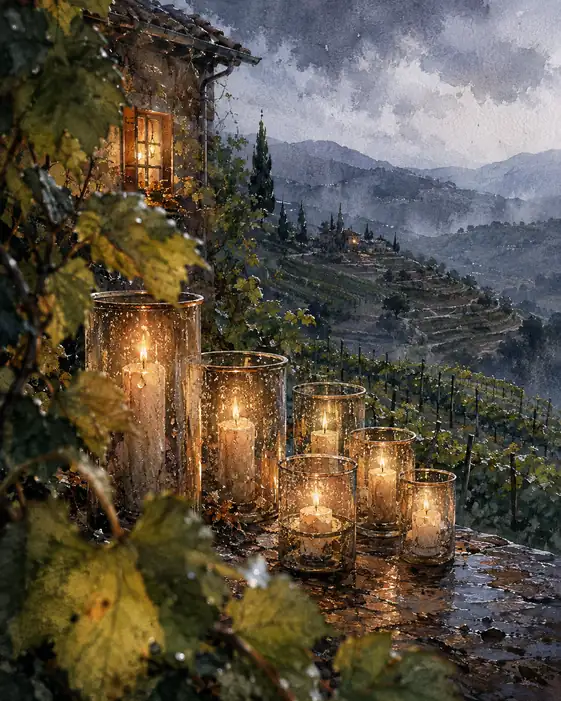 Six Flames Defy the Vineyard Storm
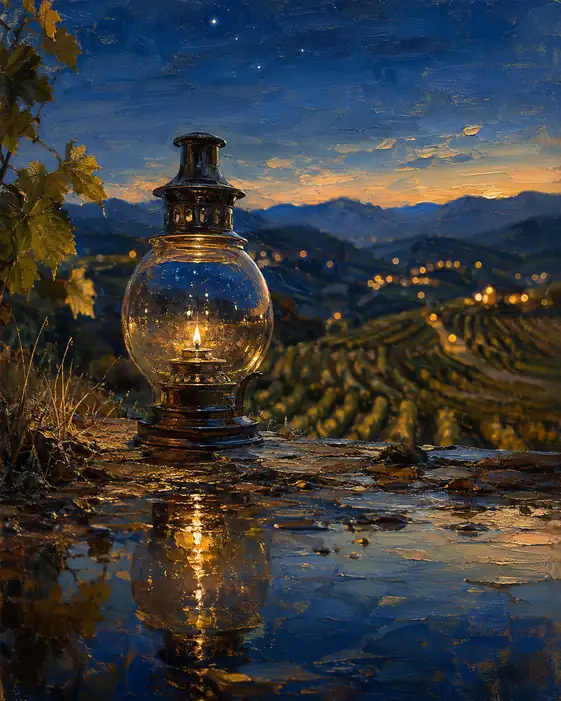 One Lamp Keeps Vigil over the Sleeping Vineyard
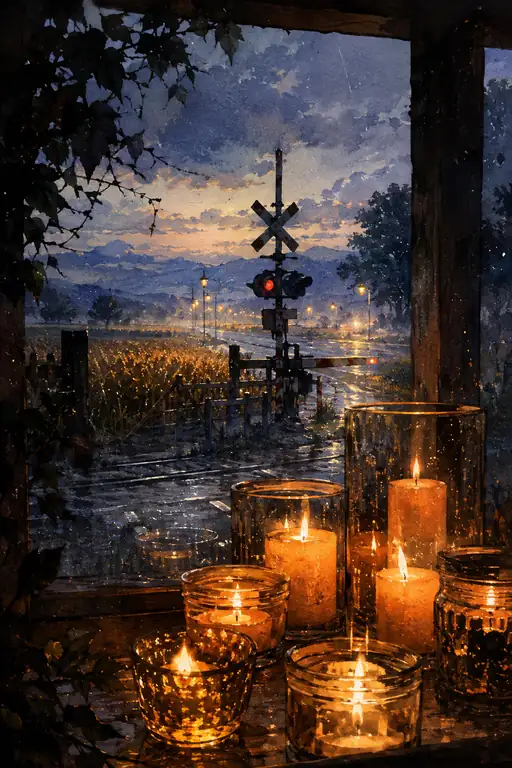 Candles by the Window Overlooking the Track
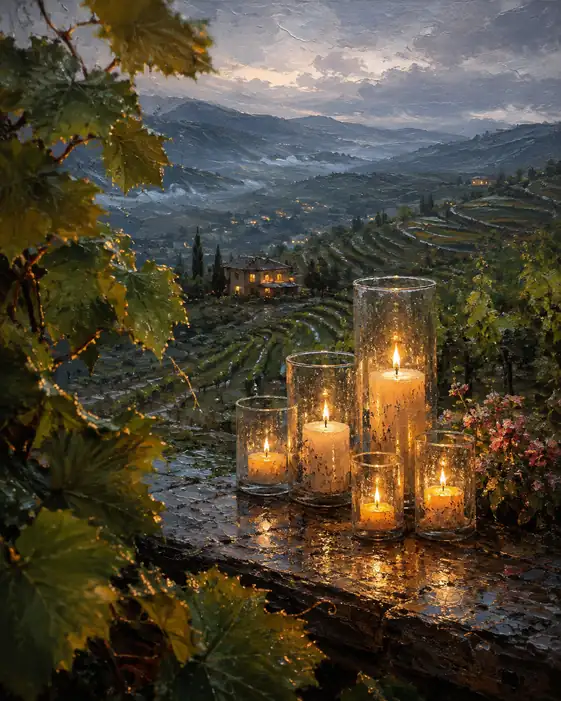 Five Candles Warm the Rain-Darkened Vines
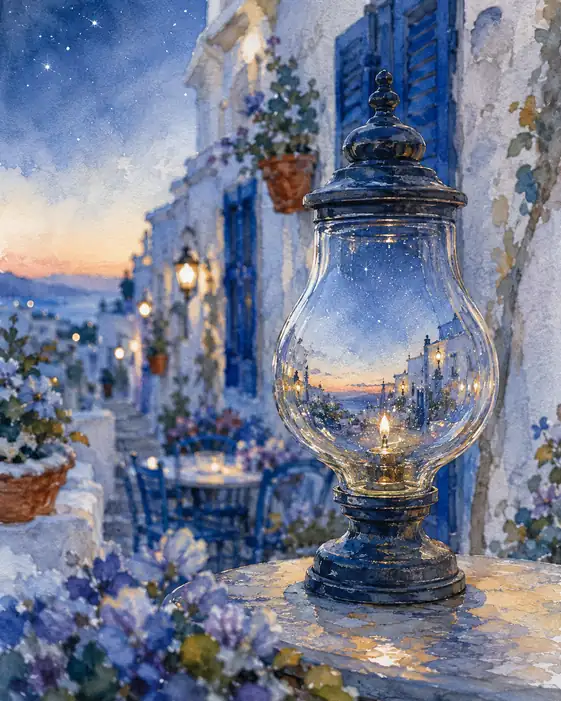 Twilight Captured in a Glass Orb
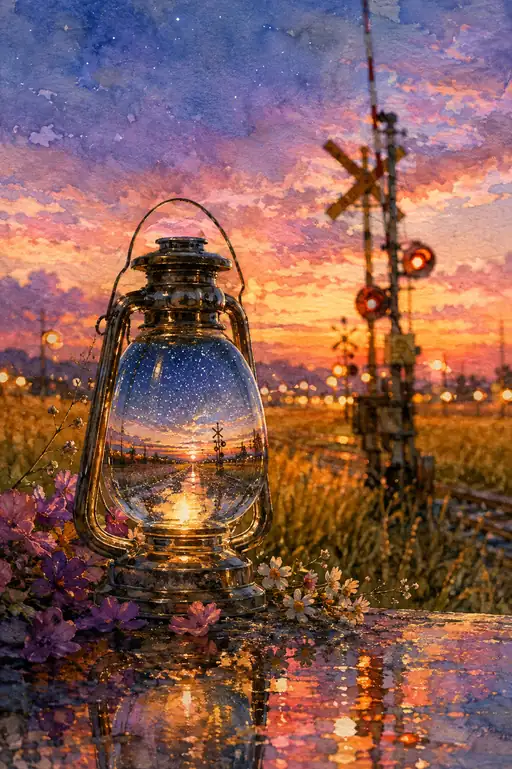 Sunset Train Path Captured in Glass
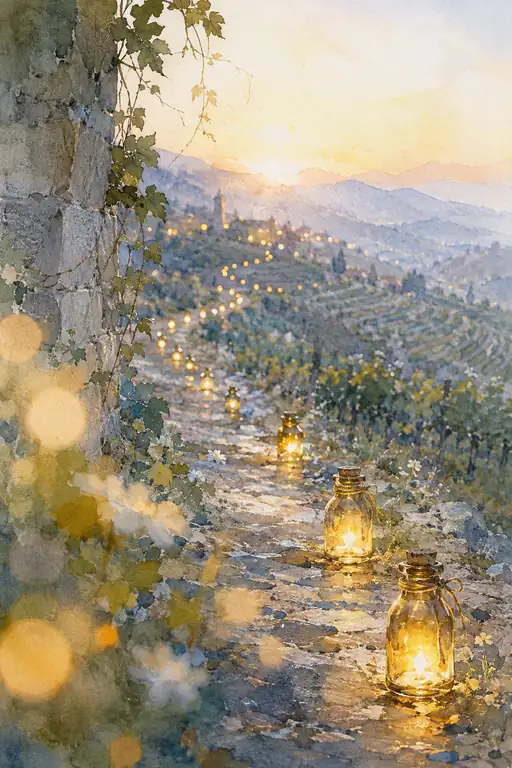 Bottled Lights Wander Home through the Vineyard
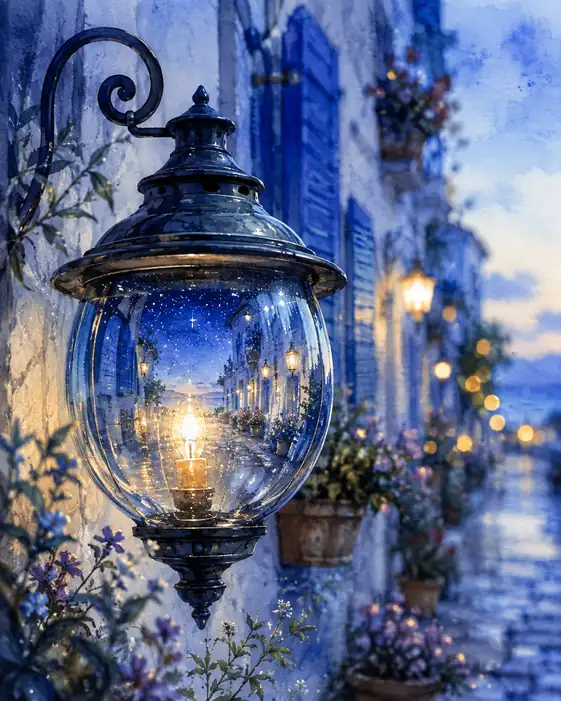 Sanctuary of Starlight in Glass
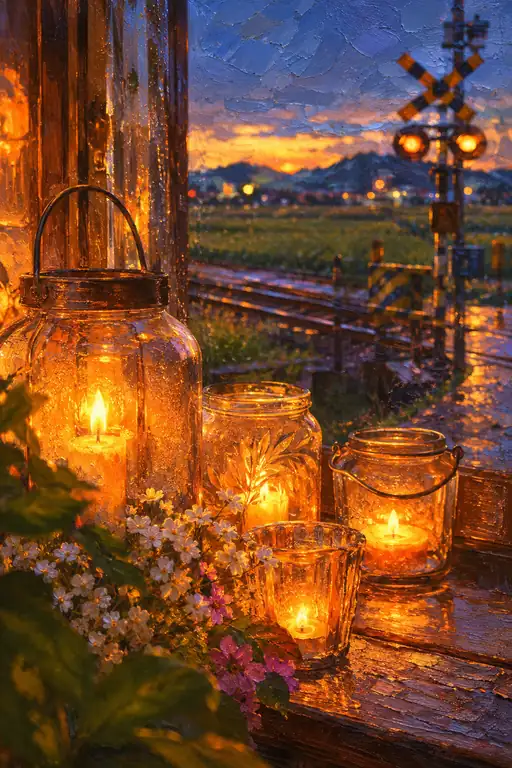 Warm Glow by the Rain-Drenched Crossing