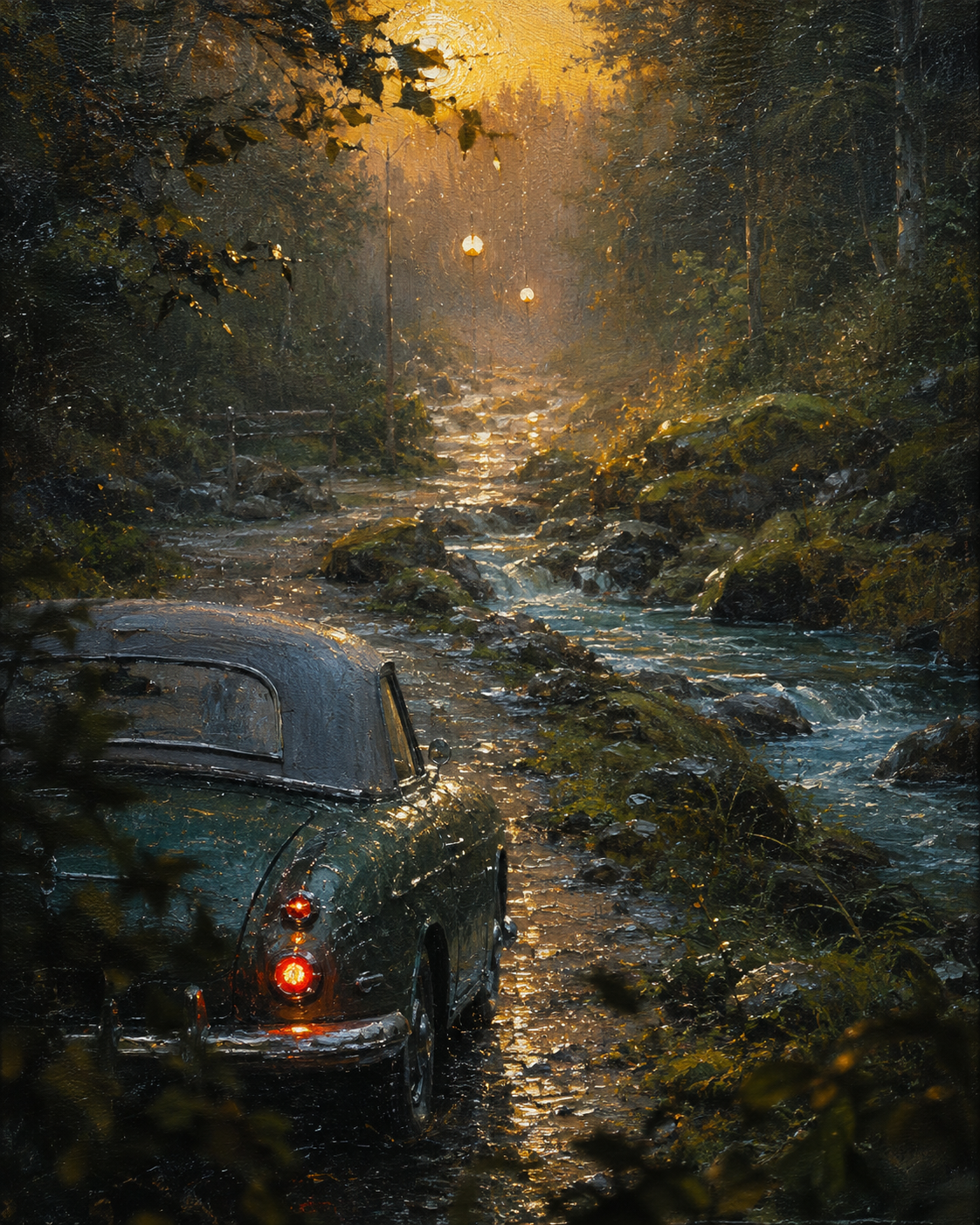
The Old Car Follows Lanterns into the Forest
Critique
Introduction This vertical painting depicts a vintage car halted on a wet forest track beside a stream. Rain, dusk, and artificial light transform an ordinary journey into suspenseful stillness. Description The car fills the lower left, partly screened by blurred branches, with two red rear lamps glowing against its rain-speckled body. A narrow muddy track runs from the bumper toward the center and climbs beside turquoise water broken by rocks. Dense trees and moss-covered banks close both sides, while three suspended lamps and a broad golden radiance emerge through mist above the path. Analysis The road and stream create parallel diagonals that pull the eye deeply into the forest. The vehicle’s rounded mass anchors this movement, and its red lights form a compact counterpoint to the larger amber glow overhead. Dark green and blue passages are crossed by gold reflections on puddles, chrome, leaves, and falling rain. Thick, irregular strokes give weight to moss and stone, whereas softened branches and vapor obscure boundaries and increase atmospheric depth. Interpretation and Evaluation Because no driver is visible, the stopped car suggests an interrupted passage. The hanging lights make the forest both route and psychological threshold. Reflections and wet surfaces show descriptive control; the off-center composition remains coherent through road and water. Saturated contrasts and tactile paint heighten the mood, while fusing motoring imagery with an illuminated forest is inventive. Conclusion At first the image promises a mysterious destination, but closer viewing emphasizes the unresolved pause before movement resumes. Red tail lamps, receding bulbs, and reflected gold mark successive stations into depth. The painting balances narrative uncertainty with precise spatial organization, making weather and light active elements rather than mere scenery.
Same Subcategory
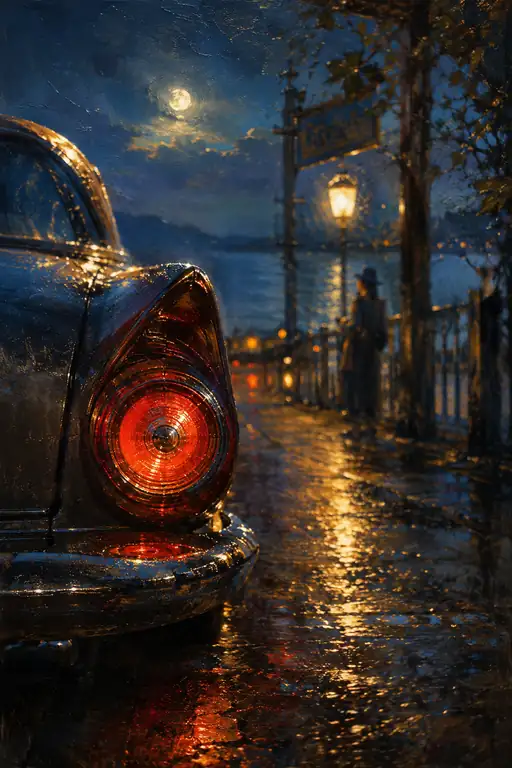 One Red Lamp Remembers the Moonlit Farewell
Similar Artworks
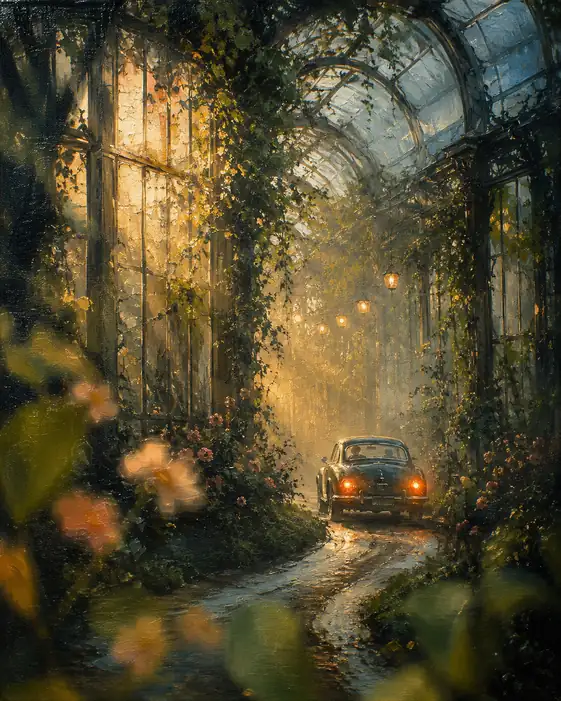 The Car Follows Sunset Through the Garden of Glass
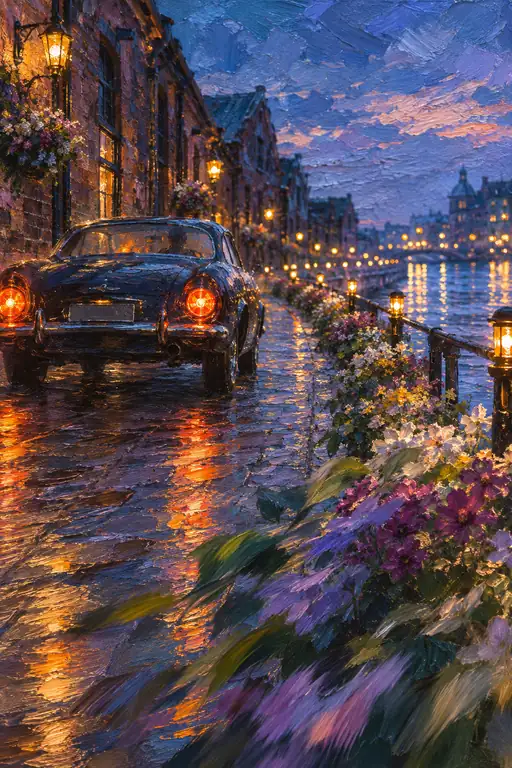 The Road Shines Before the Midnight Drive
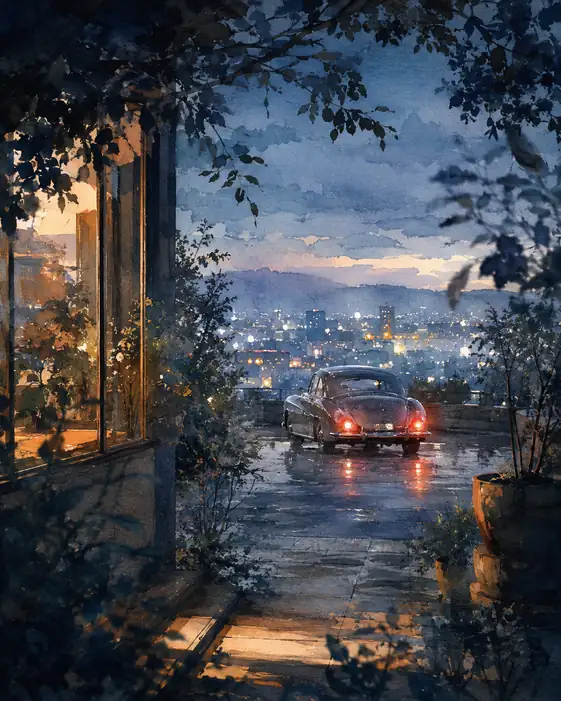 The Old Car Pauses between Home and the City Stars
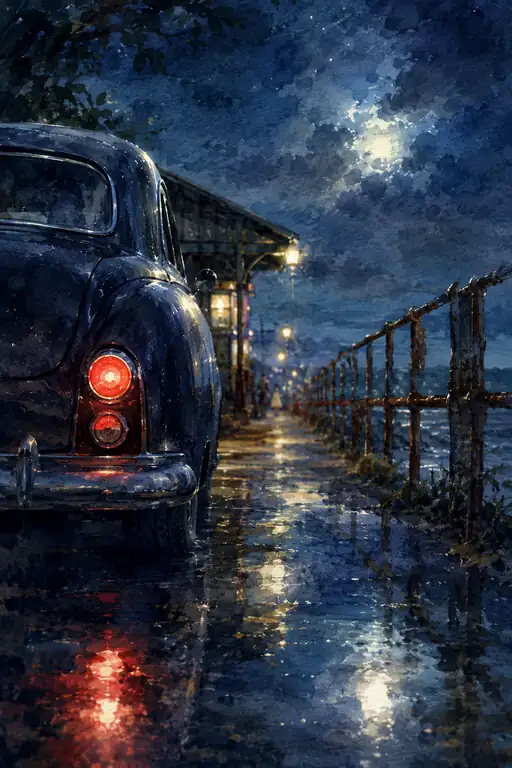 The Last Train Waits beneath a Rain-Washed Moon
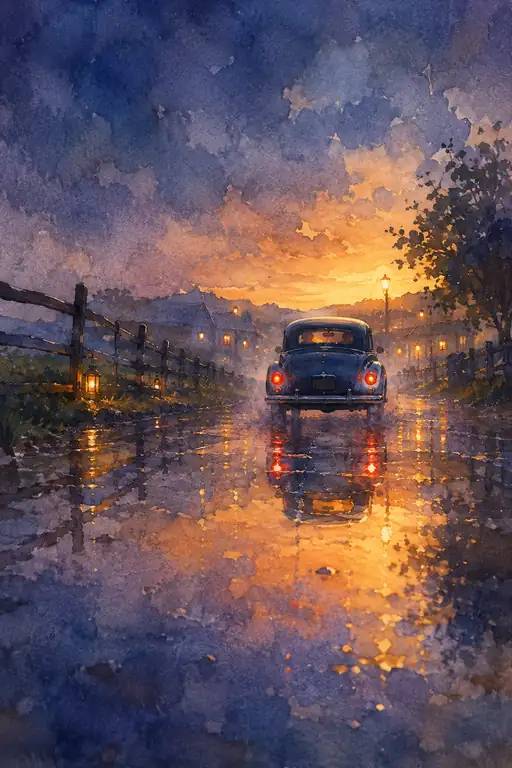 The Blue Car Drives into a Burning Sky
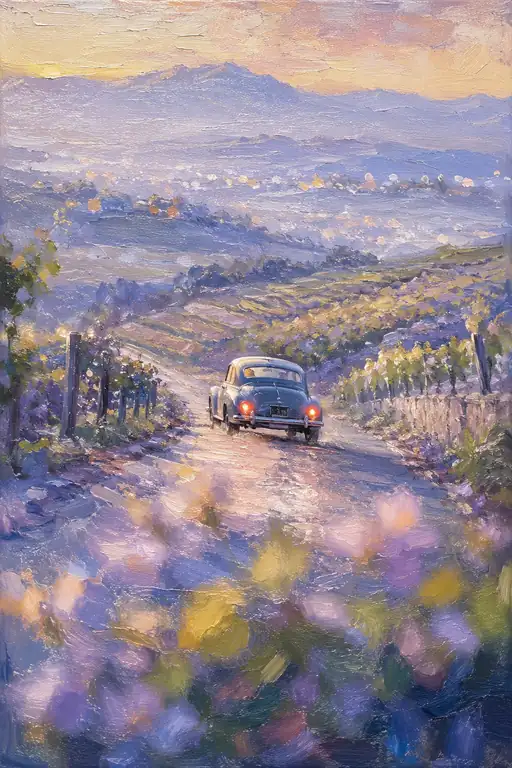 The Old Car Drives into a Lavender Dawn
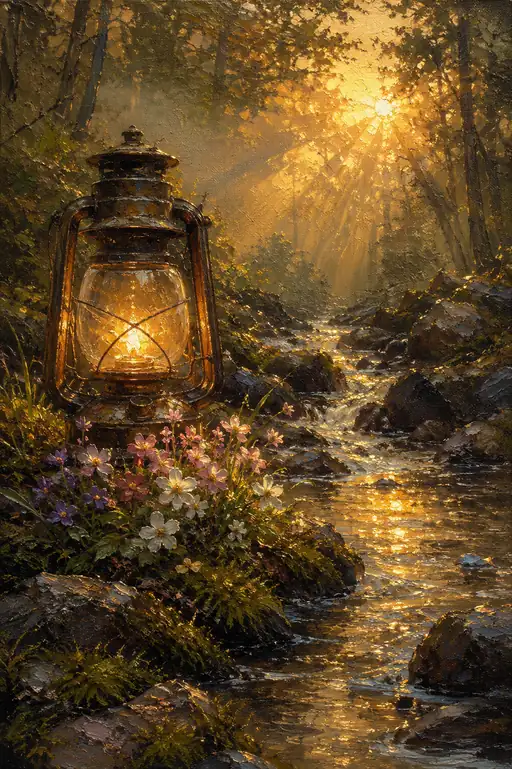 Two Fires Meet beside the Golden Stream
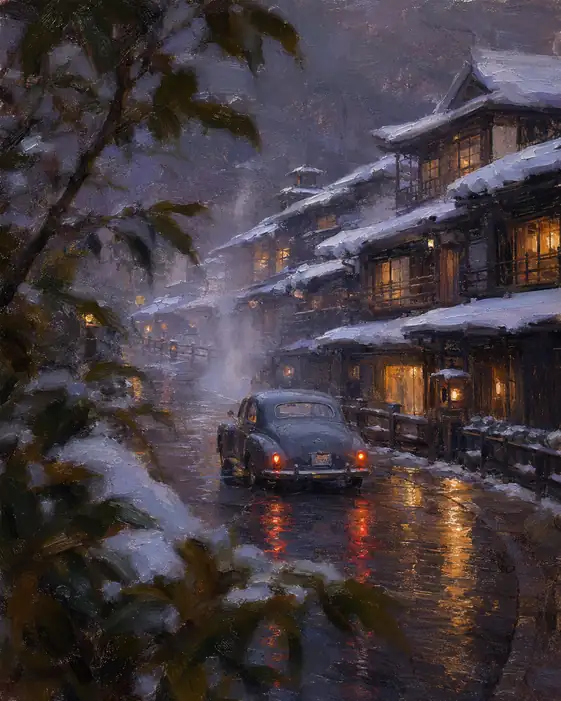 The Last Car Leaves a Trail of Emberlight
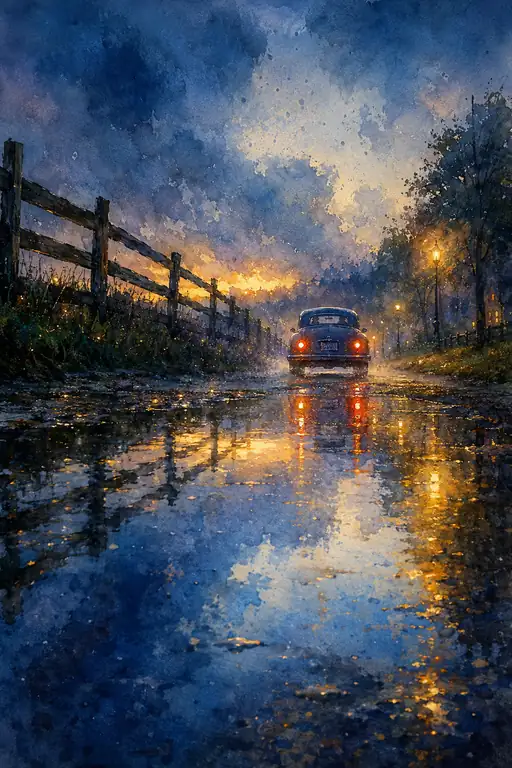 Rain Carries the Last Car Toward Sunset
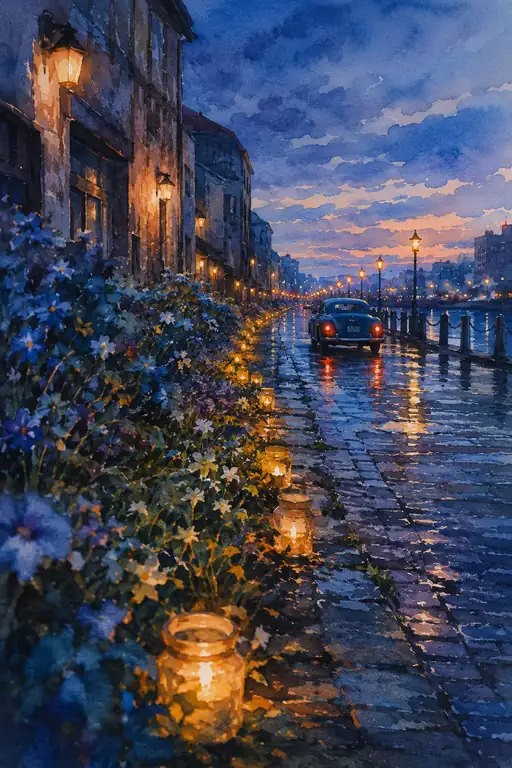 Little Lanterns Guide the Blue Car Home