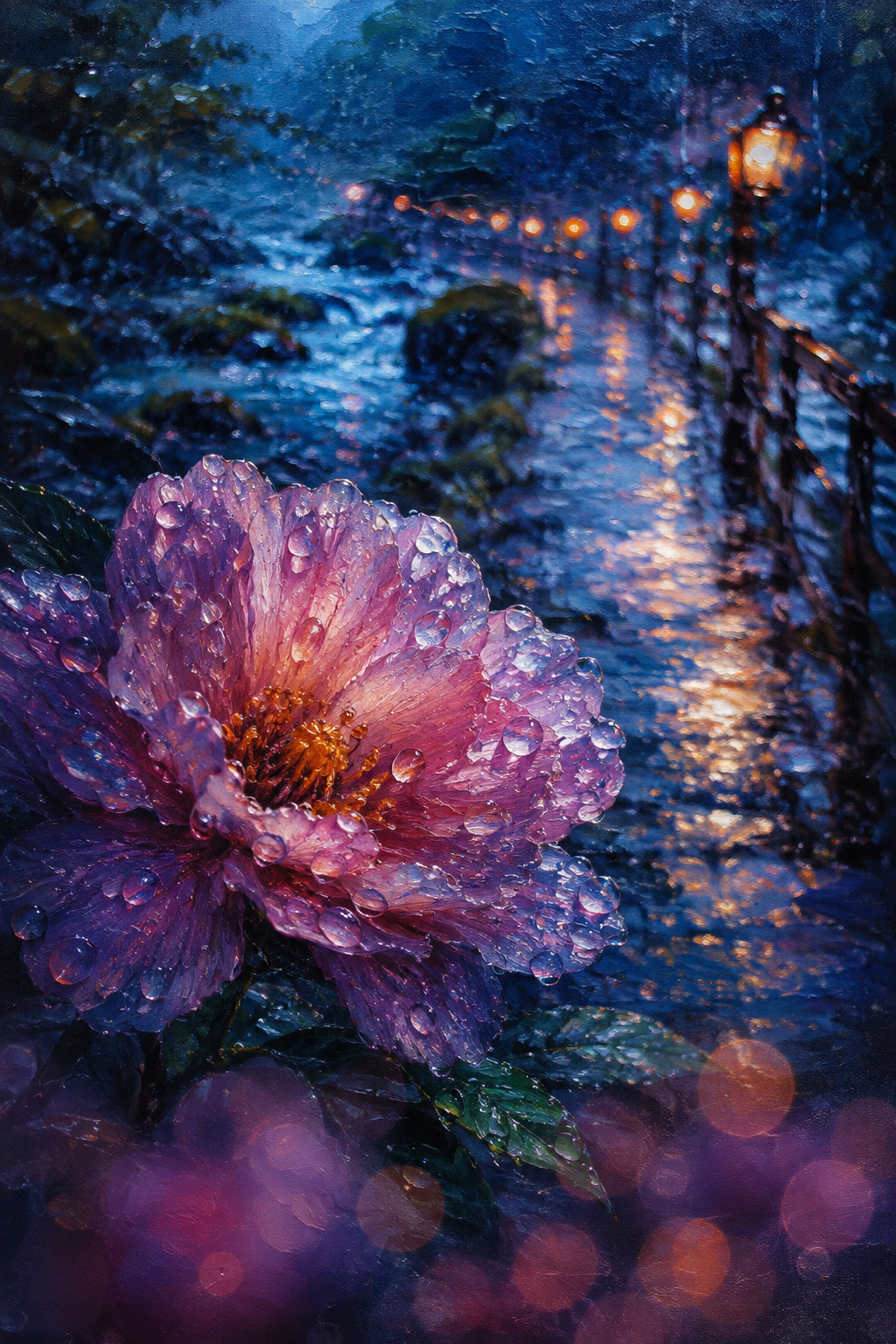
A Rain-Crowned Camellia Watches the Lantern Path
Critique
1. Introduction This vertical painting sets a rain-covered pink flower against a blue nocturnal stream and a lamp-lined footbridge. The close flower and distant path create a shift of scale. Its subject is less a single bloom than a place transformed by rain, darkness, and light. 2. Description The flower spreads across the lower left, its layered petals curling around an orange center. Large droplets rest on ridges and edges, while glossy leaves emerge beneath it. In the upper half, water courses among dark rocks beside a narrow bridge that recedes to the center; orange lamps and their reflections punctuate the blurred distance. 3. Analysis The bloom’s sharp contours and rounded droplets oppose the softened trees, bridge, and stream, producing pronounced spatial depth. Saturated magenta and violet mediate between the dominant blues and the lamps’ warm orange. Thick-looking strokes describe petal veins and wet surfaces, while circular bokeh marks scatter light across the foreground and path. The diagonal railing prevents the large flower from becoming visually static. 4. Interpretation and Evaluation By enlarging a fragile flower beyond expected scale, the painting grants temporary rainwater a monumental presence. Droplets preserve tiny highlights, while the distant lamps suggest movement into an uncertain night. The rendering of transparency is skillful, the complementary color scheme is coherent, and the unusual near-far relationship gives the familiar garden motif genuine freshness. 5. Conclusion The first impression is decorative brilliance, yet closer attention reveals a carefully structured meditation on nearness and distance. Focus moves from individual droplets to the receding bridge and back again. Through controlled composition, tactile paint handling, and sensitive illumination, the work makes transience appear substantial without losing the softness of a rainy night.
Same Subcategory
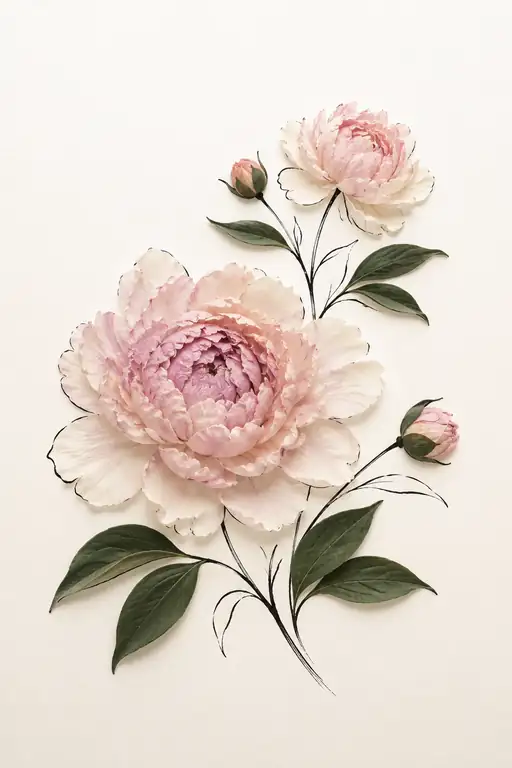 Bloom in Layered Rose
Similar Artworks
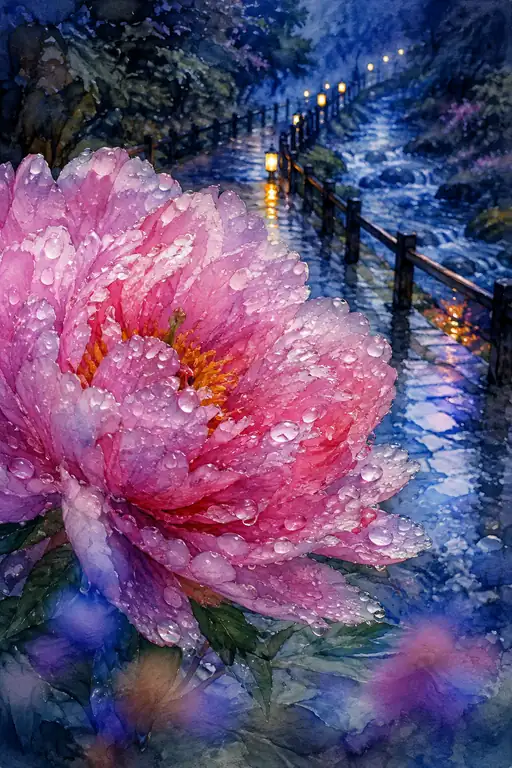 The Peony Wears a Necklace of River Rain
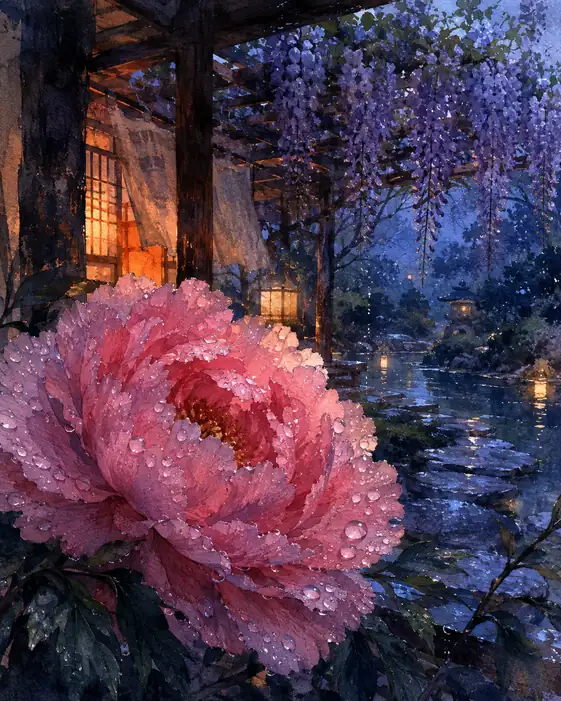 A Peony Gathers the Blue Garden's Rain
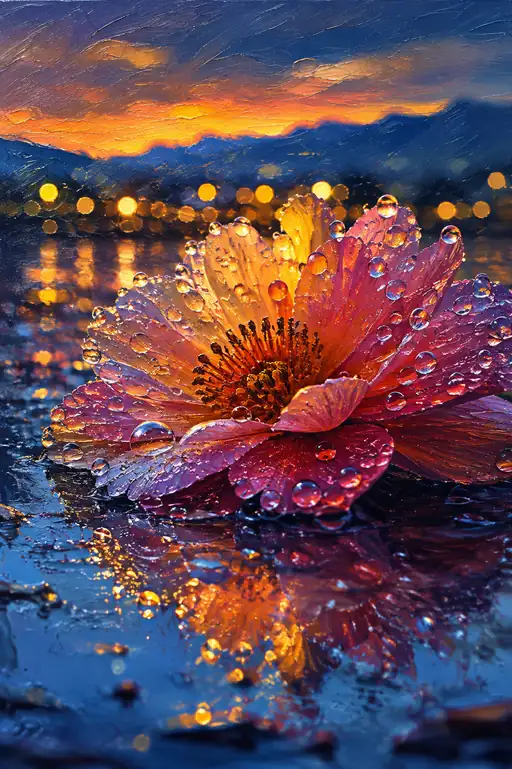 A Rain-Jewelled Blossom Mirrors the Burning Sky
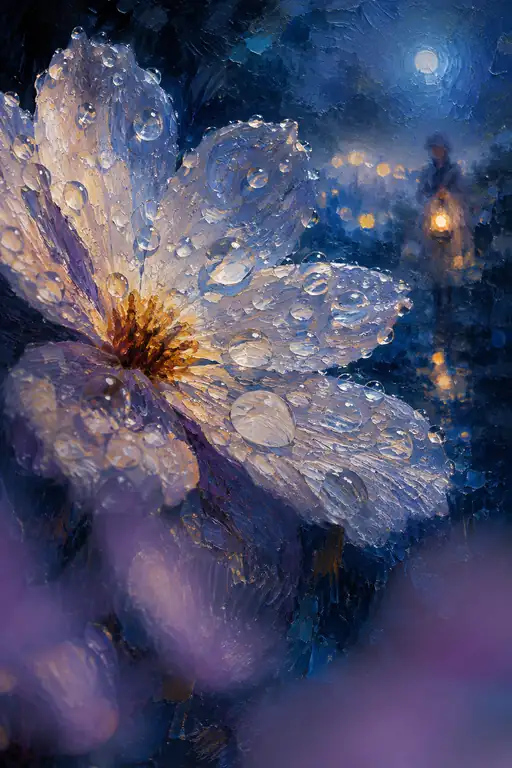 Moonlit Dew Crowns the Midnight Flower
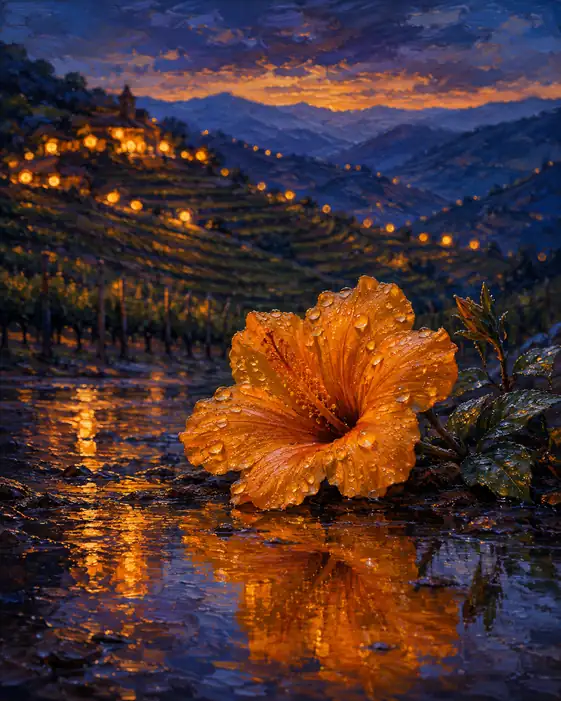 A Rain-Kissed Hibiscus Holds the Vineyard Sunset
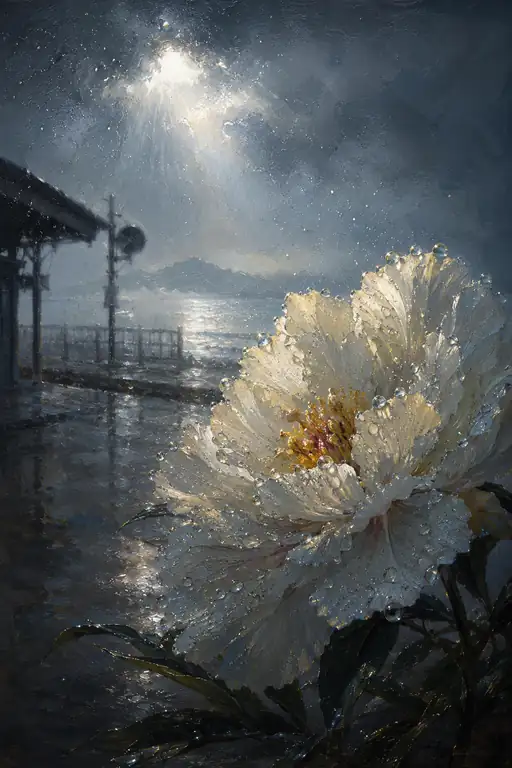 The White Peony Wears the Storm's Jewels
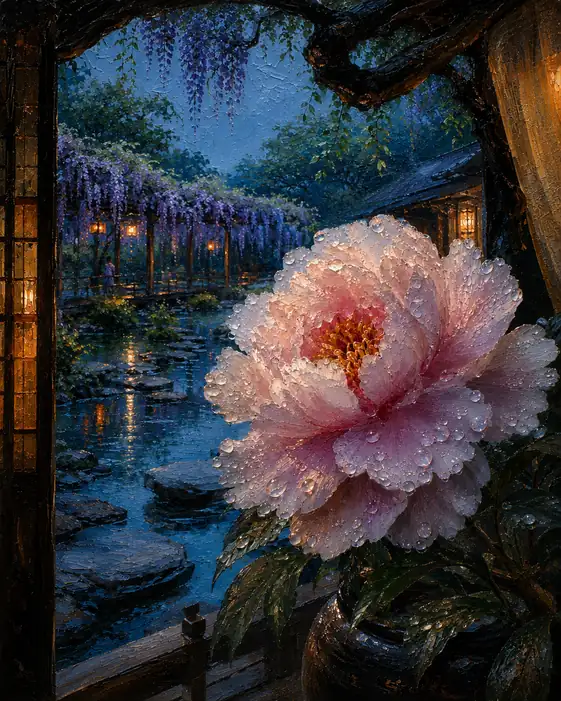 A Dewlit Peony Opens the Garden Night
 Blue Petals Gather the Moon's Tears
 Tears of the Luminous Dawn
 A Rose Drinks the Dawn from Every Raindrop