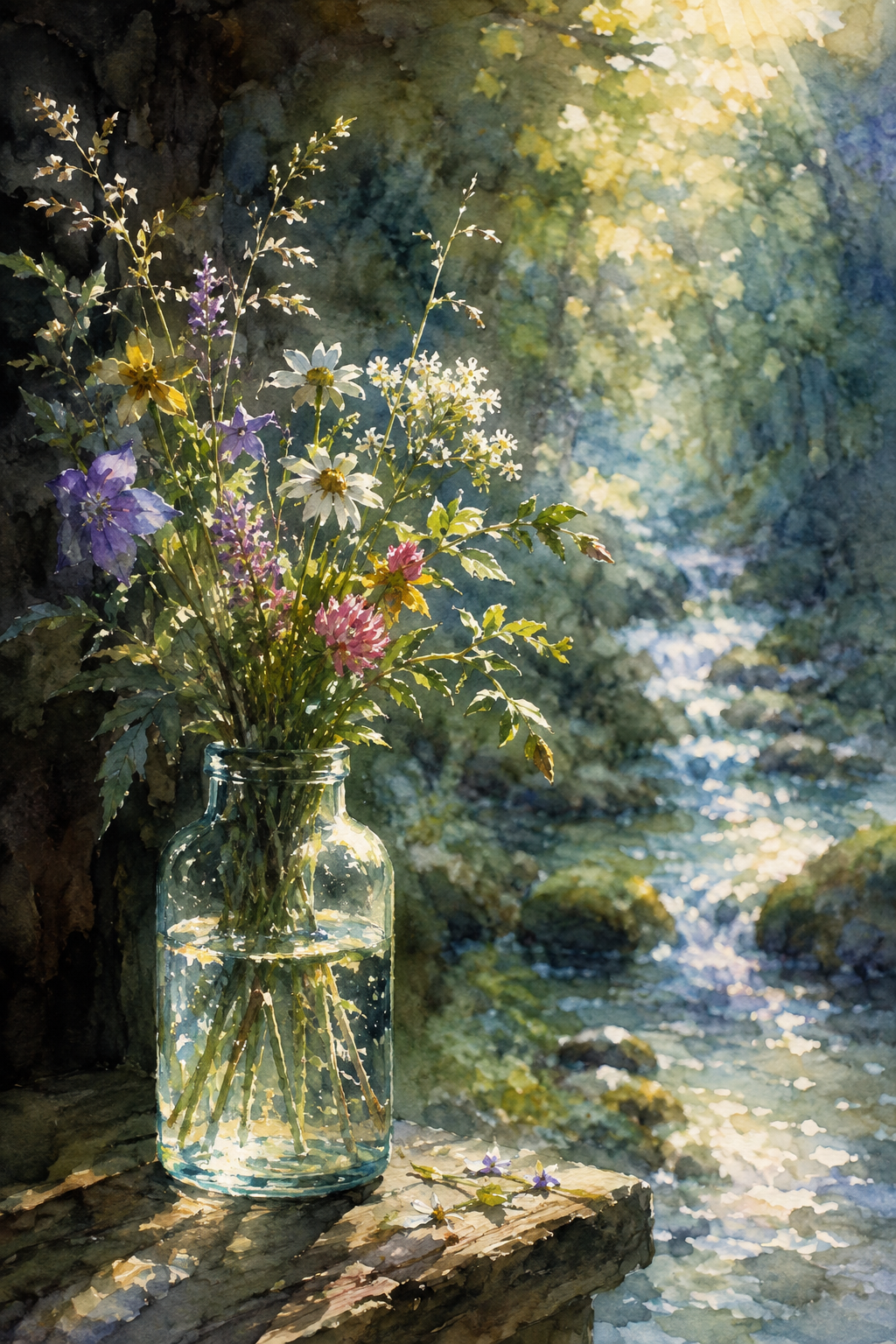
Wildflowers Stand Where the Stream Becomes Light
Critique
Introduction This work places a clear jar of wildflowers on a ledge beside a sunlit forest stream. The shaded arrangement faces moving water and luminous foliage. Description The jar stands at lower left, half filled with water through which stems remain visible. White daisies, violet bell-shaped flowers, pink clover, yellow blooms, grasses, and leafy sprigs form an asymmetrical bouquet. Two fallen purple blossoms rest on the ledge. At right, the stream descends around mossy rocks from a bright upper opening. Analysis Long stems lift the eye vertically from the heavy glass vessel, while the stream supplies a diagonal movement into depth. Dark rock behind the bouquet clarifies pale petals, and the sunlit upper right balances that concentrated shadow. Transparent washes merge blue, green, and gold throughout the setting. More precise edges define the jar rim, stems, and nearest flowers; broken highlights and softened contours describe water, reflections, and distant leaves. Interpretation and Evaluation The cut flowers temporarily gather the woodland’s variety into a human-scaled container, yet their irregular spacing preserves the character of growth. Water inside the jar visually echoes the stream beyond, joining stillness to motion. The composition handles asymmetrical weight with assurance, and the restrained palette lets small pink and violet accents remain legible. Convincing transparency, reflected light, and layered foliage demonstrate sensitive watercolor technique, while the dialogue between vessel and stream gives the familiar bouquet a thoughtful setting. Conclusion At first the flowers read as an isolated still life, but closer viewing reveals their structural links to branches, water, and filtered sunlight. The work succeeds by making a modest arrangement both an object of close observation and an entry into the surrounding forest.
Same Subcategory
Similar Artworks
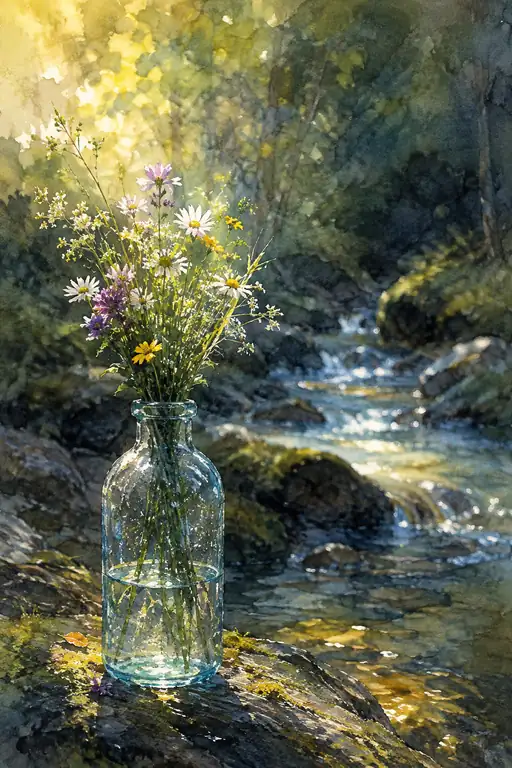 Wildflowers Drink the Forest's First Gold
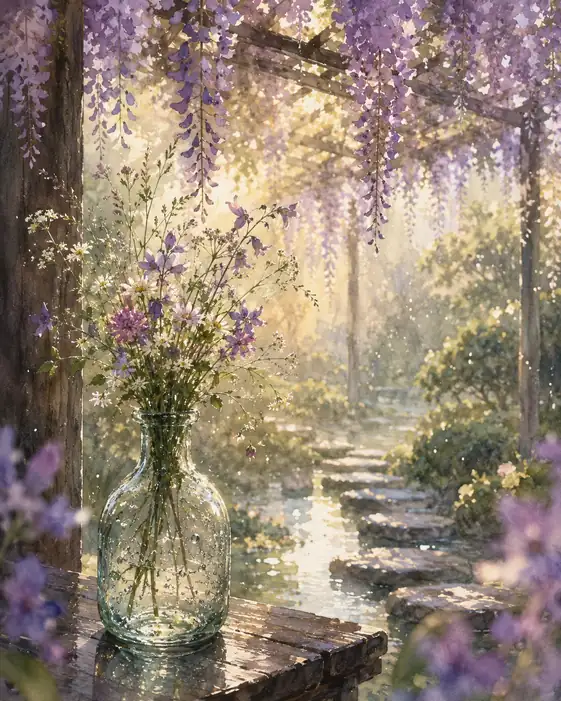 Wildflowers Hold the First Light of the Wisteria Path
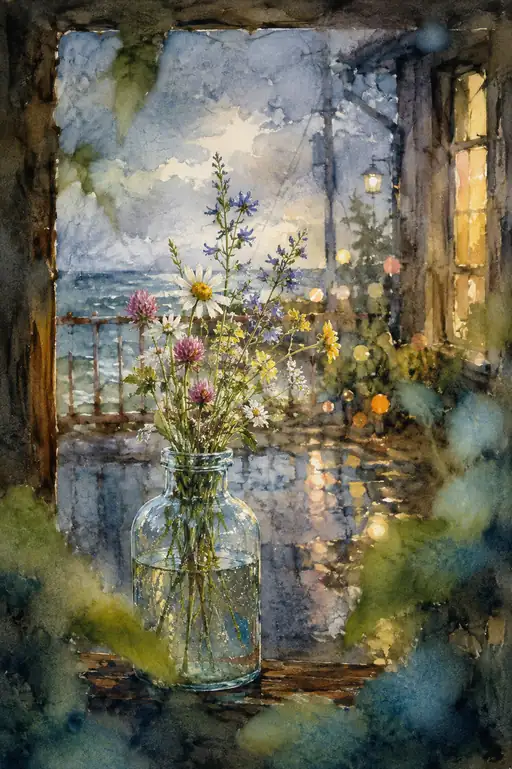 Wildflowers Bring Daylight into the Seaside Room
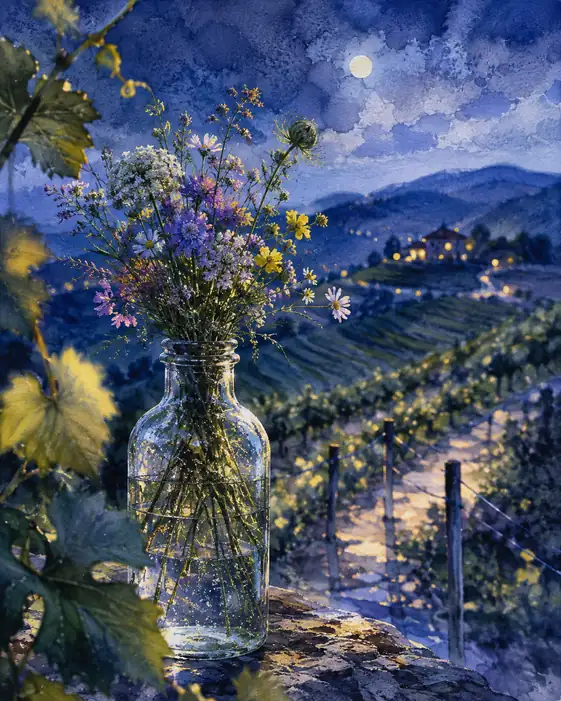 Moonlit Wildflowers Overlook the Sleeping Vines
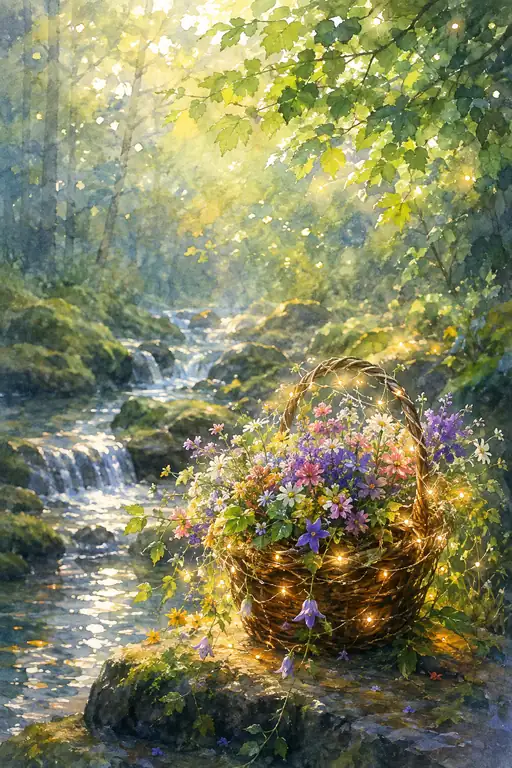 A Basket Brims with the Forest's Morning
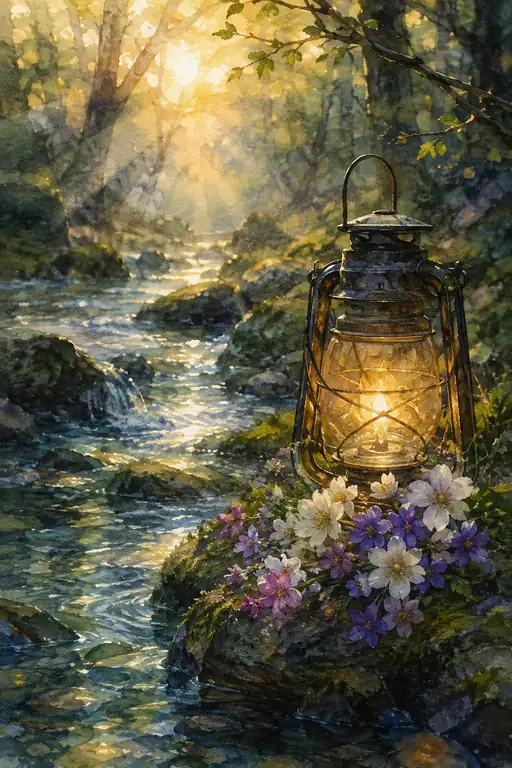 A Lantern Learns the Language of the Stream
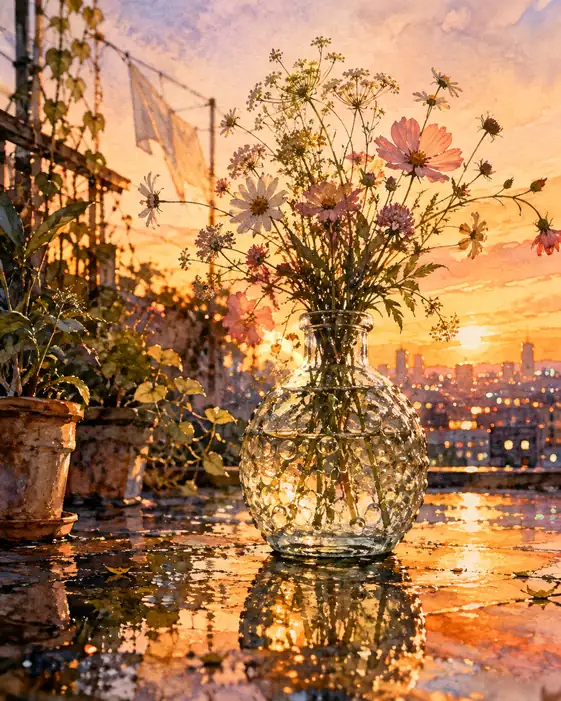 Wildflowers Catch the Last Sun in a Glass Moon
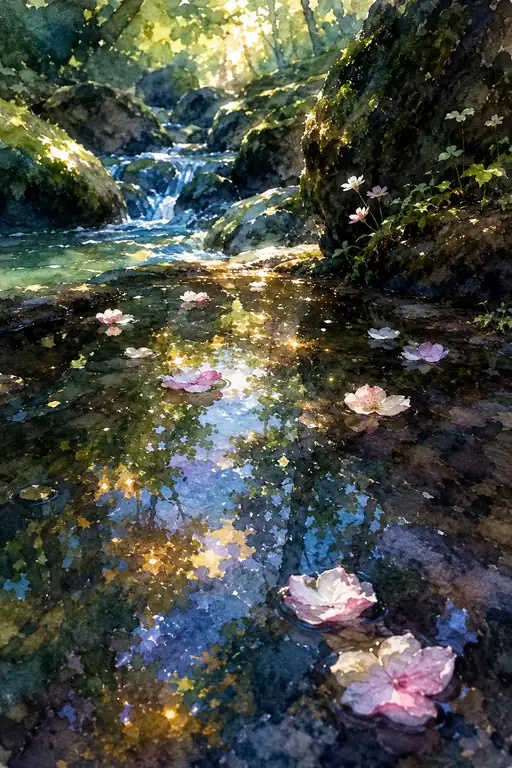 Blossoms Sail the Forest's Hidden Mirror
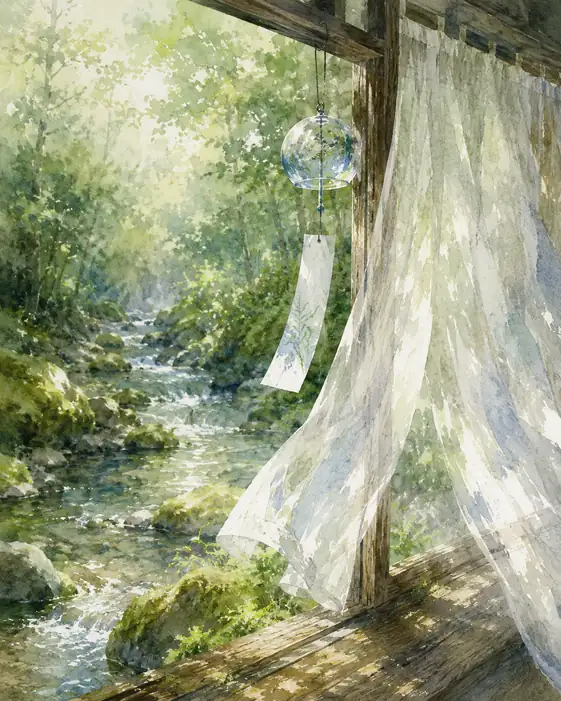 The Wind Chime Borrows the Stream's Cool Breath
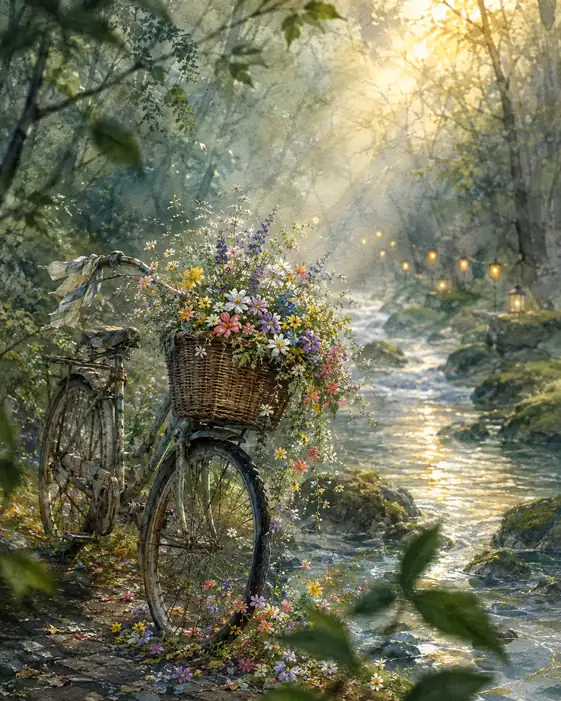 The Flower Bicycle Finds a Road of Water