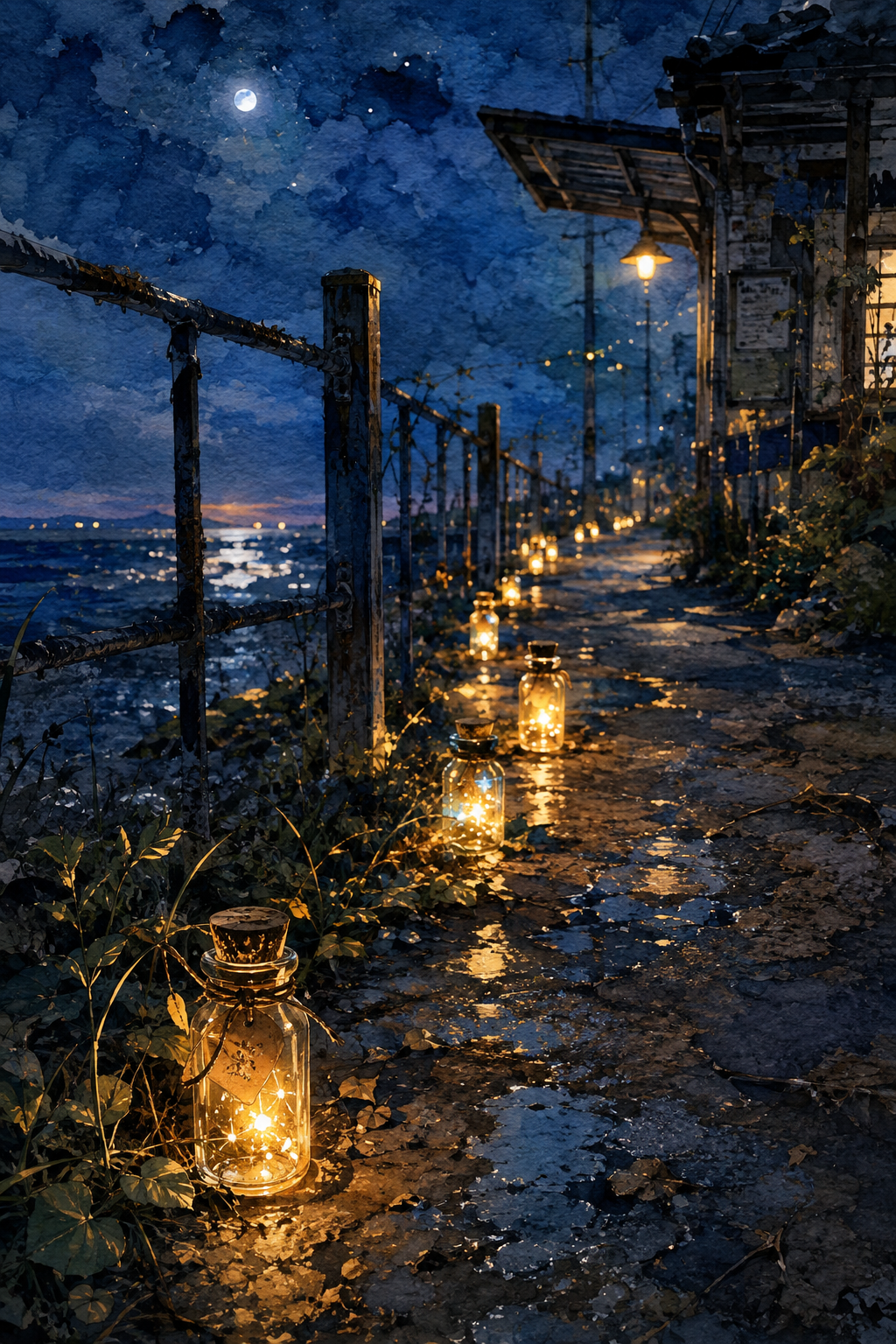
Moonlit Bottles Lead Along the Sleeping Shore
Critique
Introduction This painting depicts a coastal path, illuminated by a sequence of glowing glass jars. Moon, sea, wet pavement, and a house create a setting in which small handmade lights become the principal visual event. Description A corked jar rests among leaves in the lower left, with smaller jars continuing toward the distant bend. A rusted railing separates the path from restless water, and a full moon appears through mottled blue clouds. On the right, a worn wooden building projects over the lane; one hanging lamp adds another warm point above the trail. Analysis The jars establish a recession through diminishing scale and spaced golden lights. Their line follows the path’s diagonal, while railing posts reinforce the pull toward the distance. Deep ultramarine and near-black surfaces surround amber illumination, producing a controlled complementary contrast. Reflections break across cracked, wet pavement and choppy water, linking the moon’s cool shine with the lamps’ warmth. Crisp glass rims and corks stand against softer cloud washes and shadowed vegetation. Interpretation and Evaluation The humble jars transform a neglected passage into a route of welcome and guidance. Because the lights remain low and irregular, their effect feels communal and provisional rather than ceremonial. Detailed reflections and convincing glass demonstrate strong observation, while the forceful perspective organizes numerous points of light without confusion. The combination of watercolor-like skies with dense, tactile architecture gives the technique range, and the shoreline procession is an inventive compositional device. Conclusion The image first attracts attention through its warm lights against blue night, but its deeper subject is the act of making a difficult path traversable. Color, perspective, and surface detail work together to turn decay and darkness into measured reassurance.
Same Subcategory
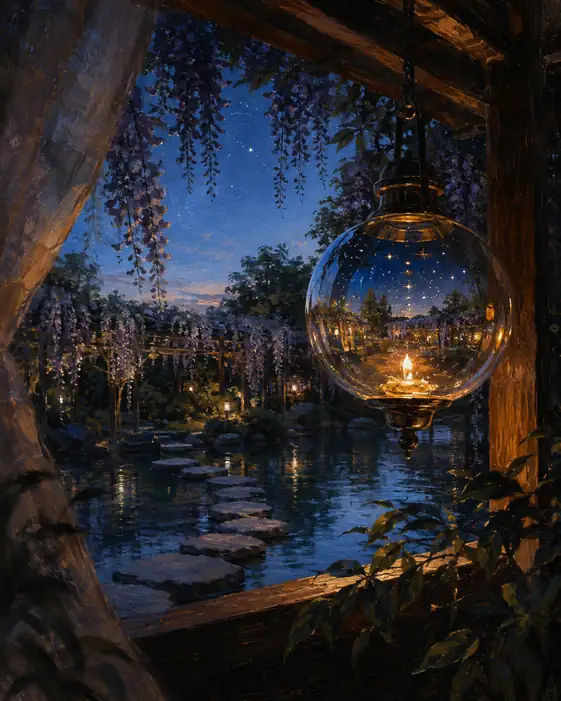 The Garden's Stars Gather inside One Lamp
Similar Artworks
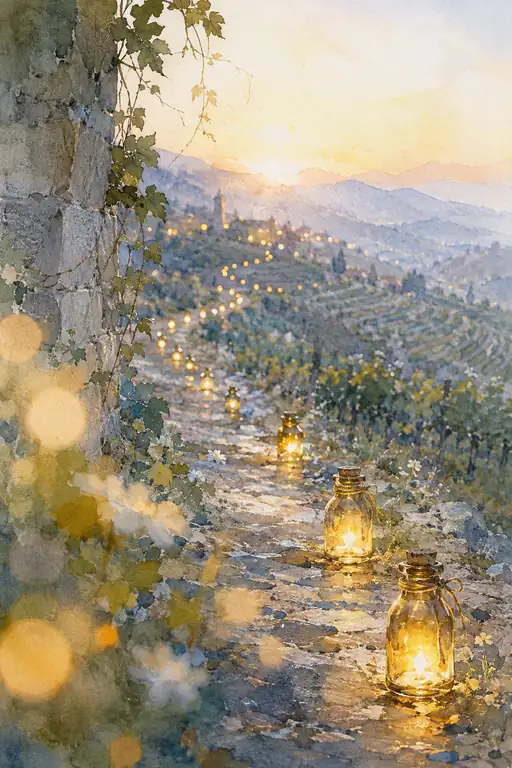 Bottled Lights Wander Home through the Vineyard
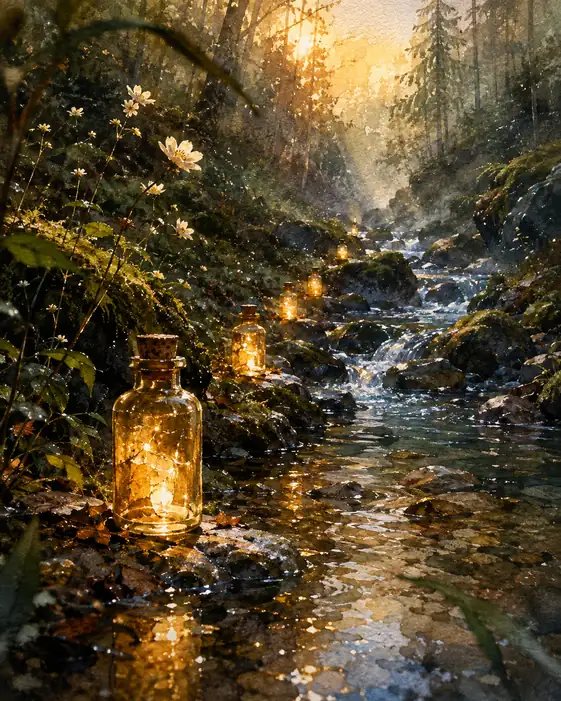 Bottled Stars Follow the Stream toward Dawn
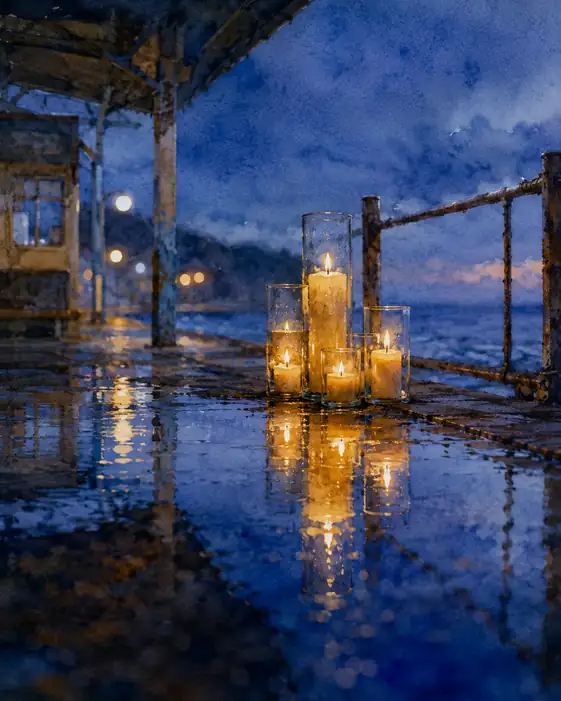 Five Candles Wait for the Tide to Turn
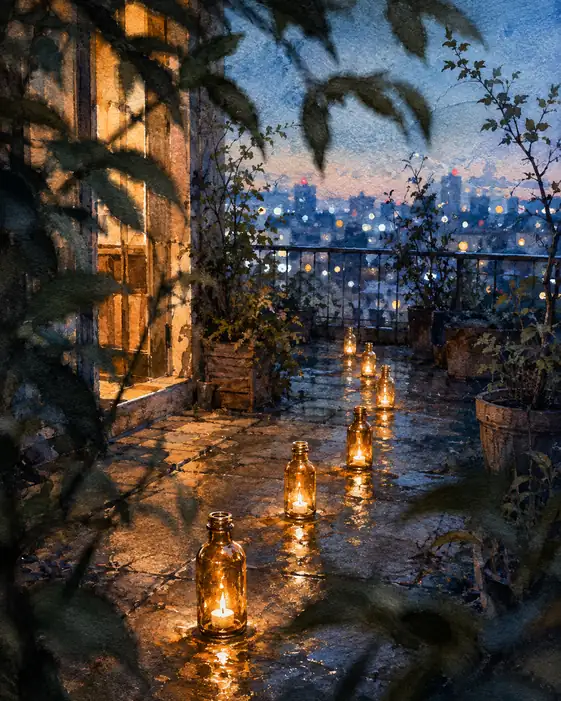 Seven Bottled Flames Lead Evening Home
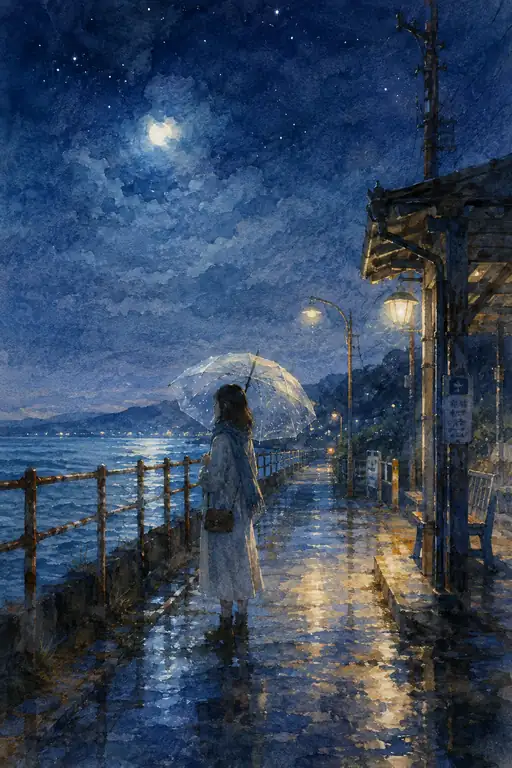 She Waits Where Moonlight Meets the Tide
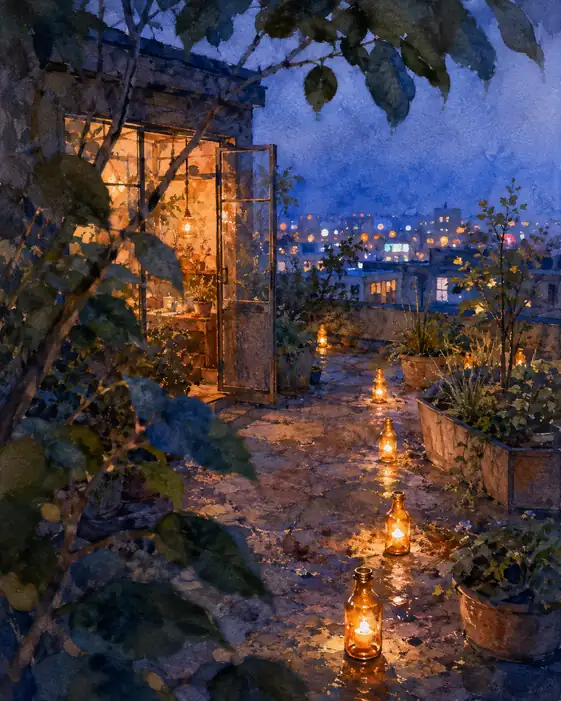 Bottled Lights Welcome the Blue Evening In
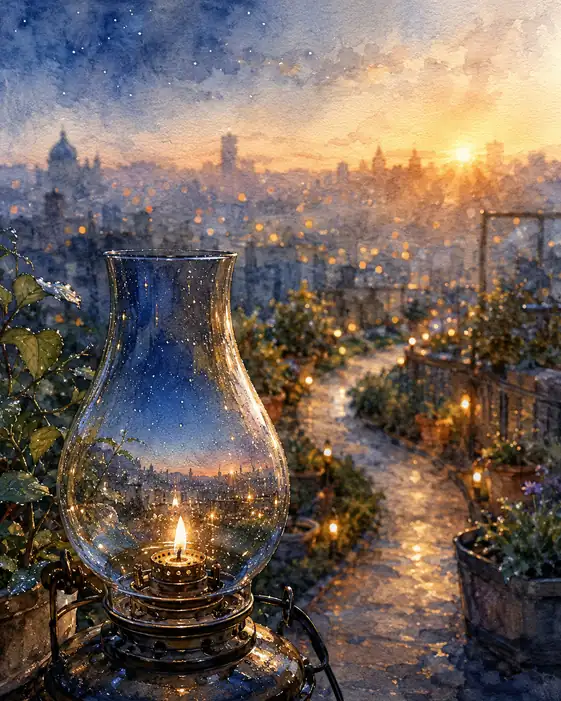 One Lamp Holds Both Sunrise and Stars
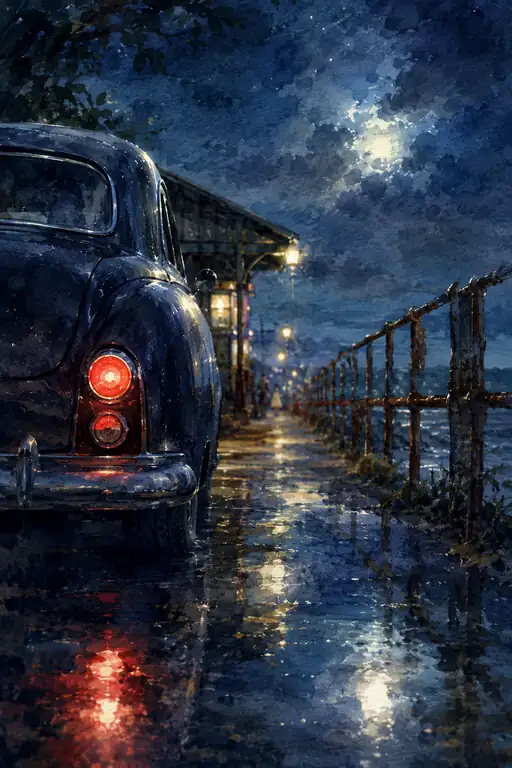 The Last Train Waits beneath a Rain-Washed Moon
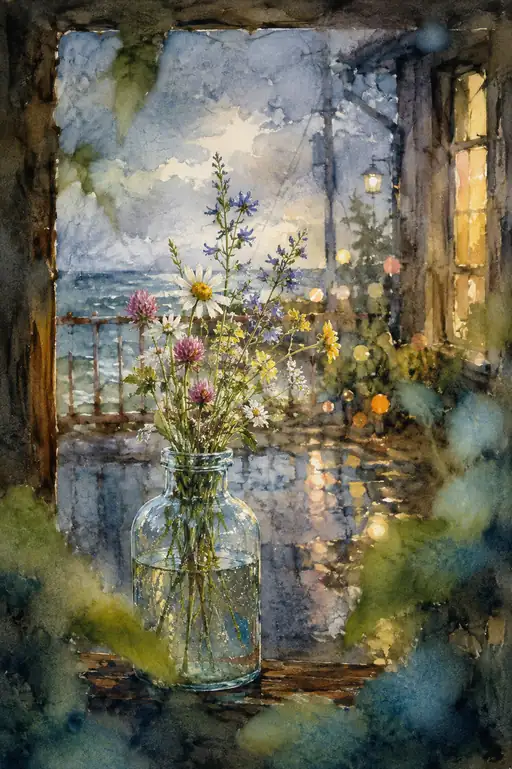 Wildflowers Bring Daylight into the Seaside Room
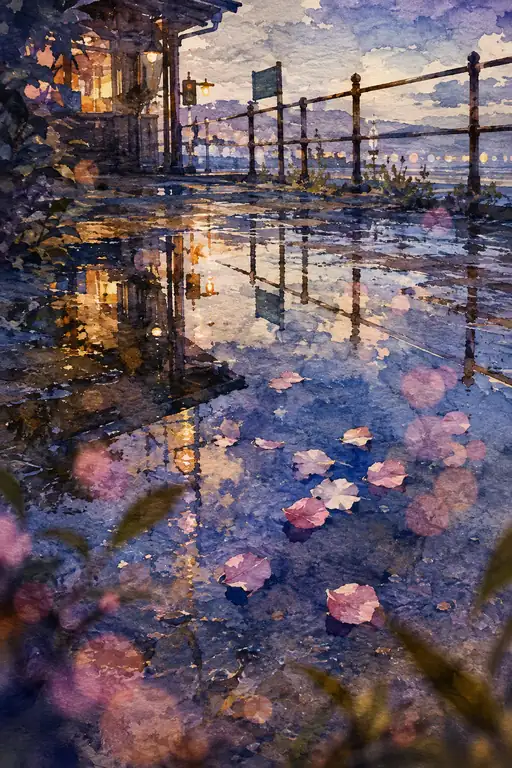 Petals Drift across the Station's Evening Mirror