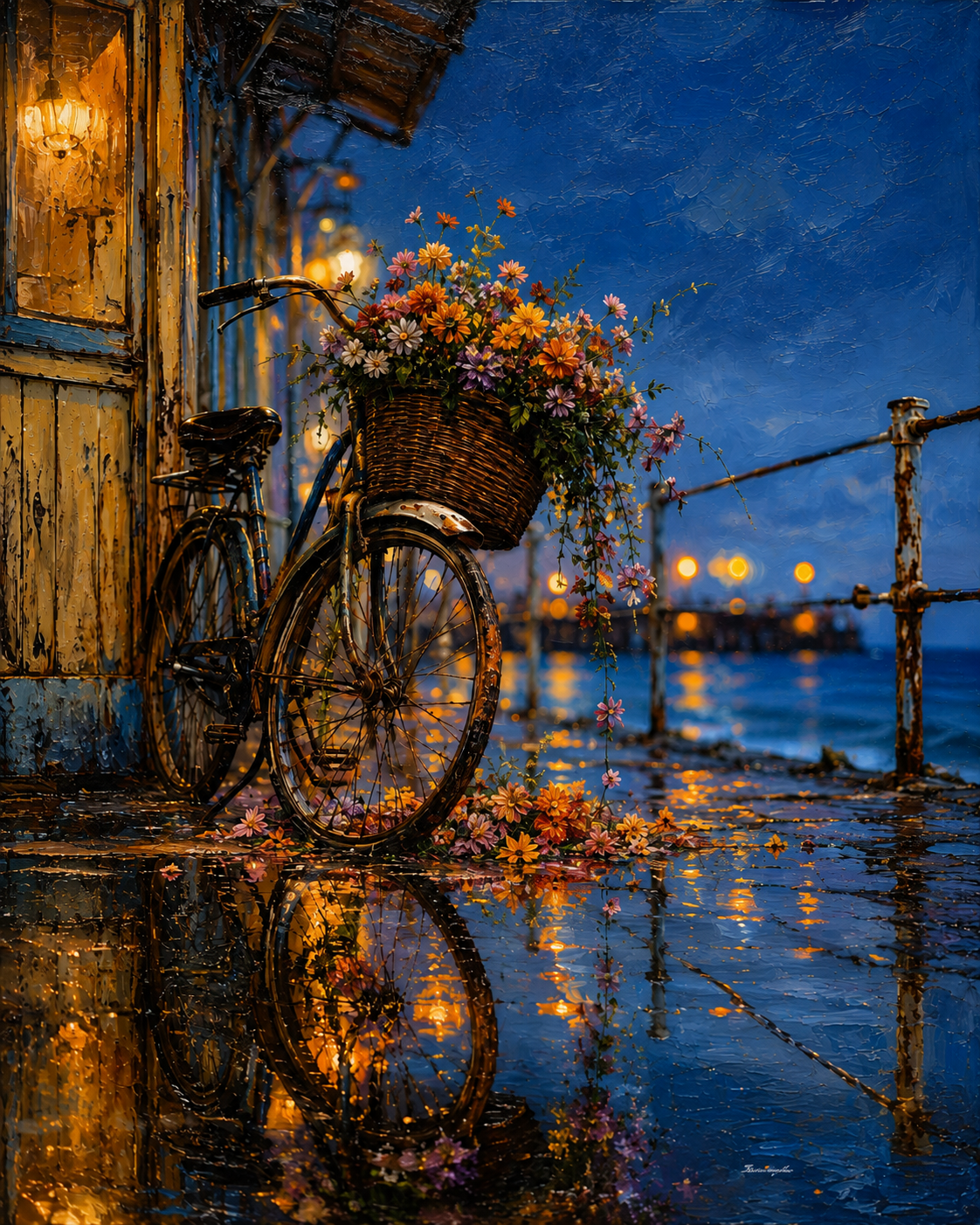
The Flower Bicycle Waits beside the Evening Sea
Critique
Introduction This painting rests a flower-laden bicycle beside water beneath wisteria at night. The vehicle suggests travel held in suspension. Utility, blossoms, and reflected light create an attentive pause. Description Set close to the water, the bicycle climbs from its left wheel toward the basket. Night reflections trace black tubing, spokes, crank, and curved handlebar. Cream, pink, and violet flowers overflow the woven container. Wisteria frames a pondside path toward a bridge and lamps. Deep-blue water carries broken gold reflections. Petals gather around wet, mud-marked tires. Analysis Two wheels establish circles against the path's recession and the flowers' downward rhythm. The diagonal frame leads vision from rear wheel to basket, then bridge. Pale blossoms and lamps punctuate violet-blue space. Thin lines describe spokes and tubing, dense strokes build flowers, and washes soften water and trees. Reflected colors integrate the bicycle into night, while its geometry steadies the bouquet. Interpretation and Evaluation The parked bicycle implies a nearby rider but leaves destination unspecified. Flowers transform transport into an offering without erasing mechanical wear. Low wheel and elevated basket distribute weight convincingly, while varied handling separates rigid metal, woven cane, petals, damp paving, and fluid reflections. Redirecting the vehicle's geometry with fresh flowers is inventive. Available wheels preserve future movement as the basket records present attention. Conclusion At first the scene records a stop during a journey, but sustained viewing makes the pause central. Circular wheels retain motion's promise as blossoms and shifting water register duration. Travel appears not merely as distance crossed, but as the ability to notice and briefly belong to a place.
Same Subcategory
Similar Artworks
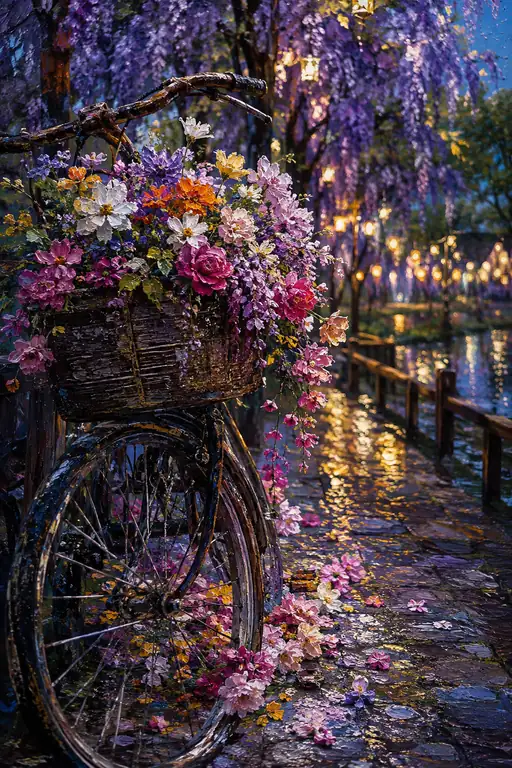 A Bicycle Overflows into the Lantern Rain
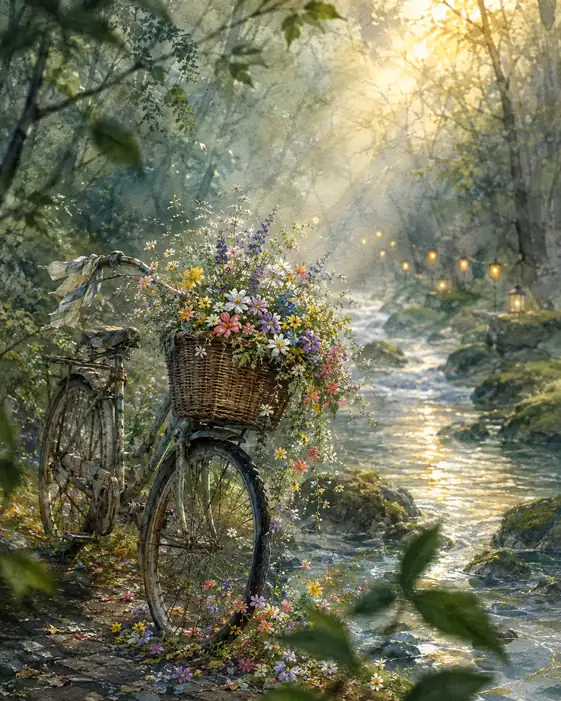 The Flower Bicycle Finds a Road of Water
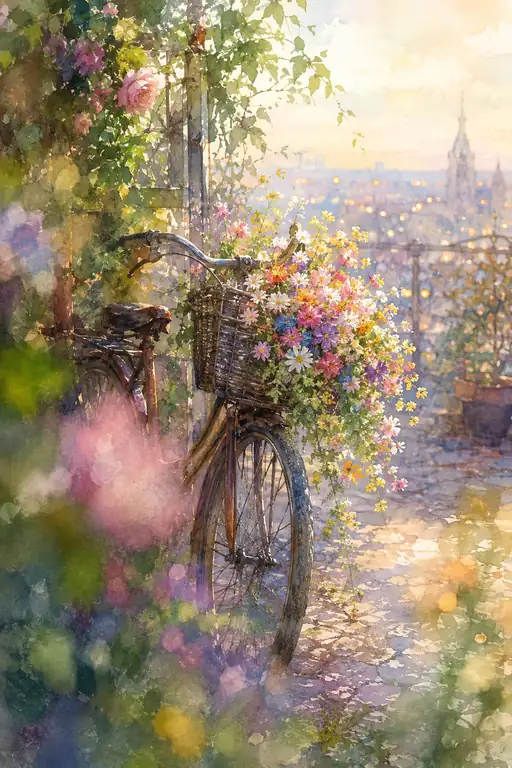 A Bicycle Brings Spring to the Rooftops
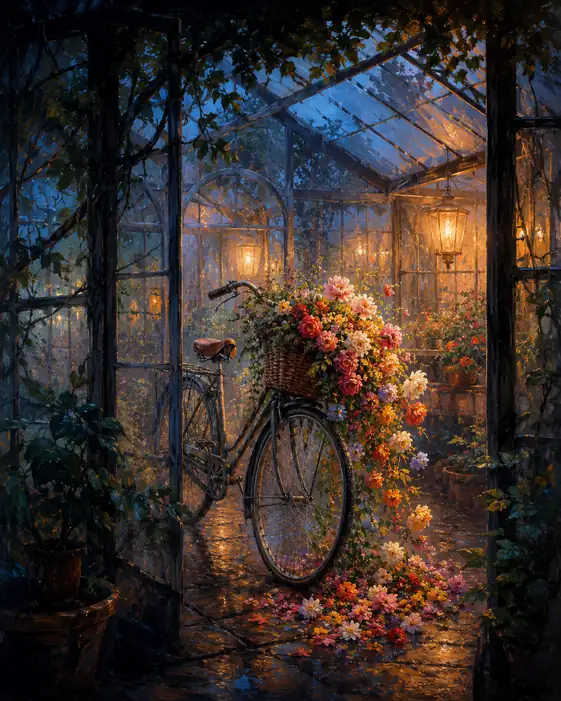 The Bicycle That Spilled a Garden of Light
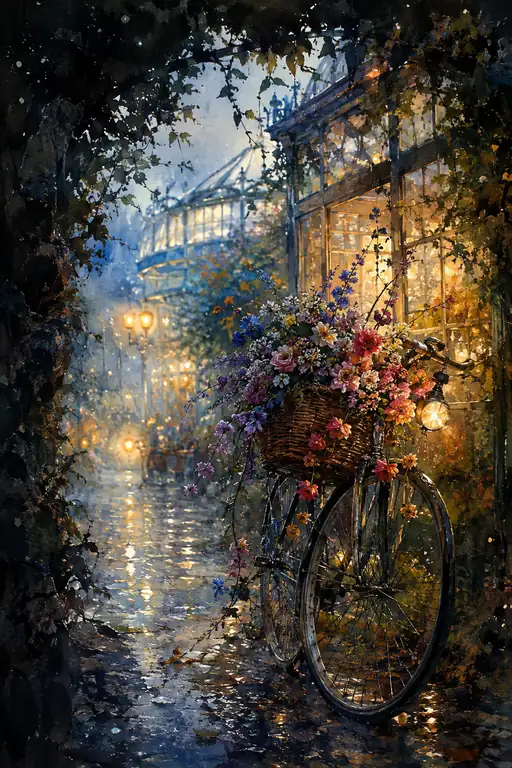 A Bicycle Overflows with the Greenhouse Evening
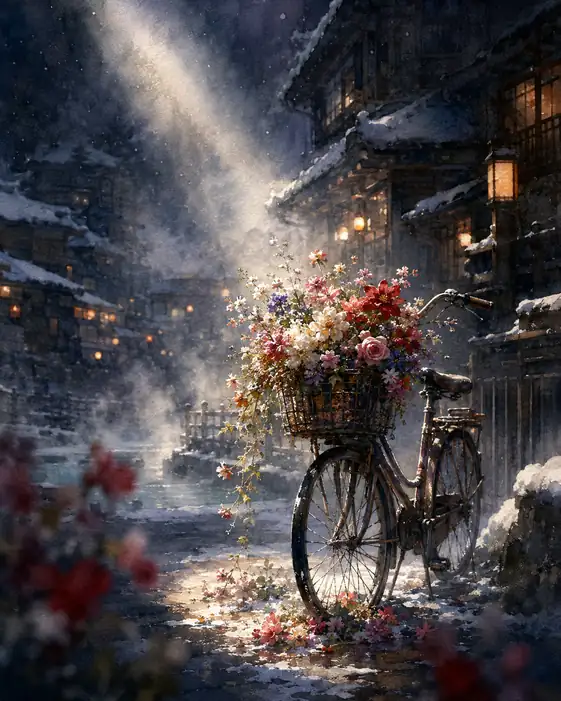 The Bicycle Bloomed Under a Winter Sunbeam
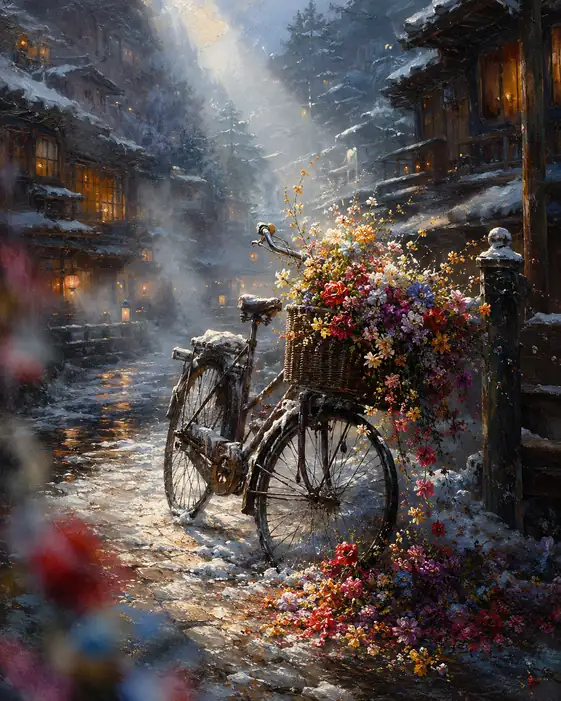 A Bicycle Brings Summer Flowers into Winter
 The Blue Bicycle at the Edge of Dreaming Fields
 Sunset Rests in the Bicycle's Basket
 A Bicycle Carrying the Last Garden Home