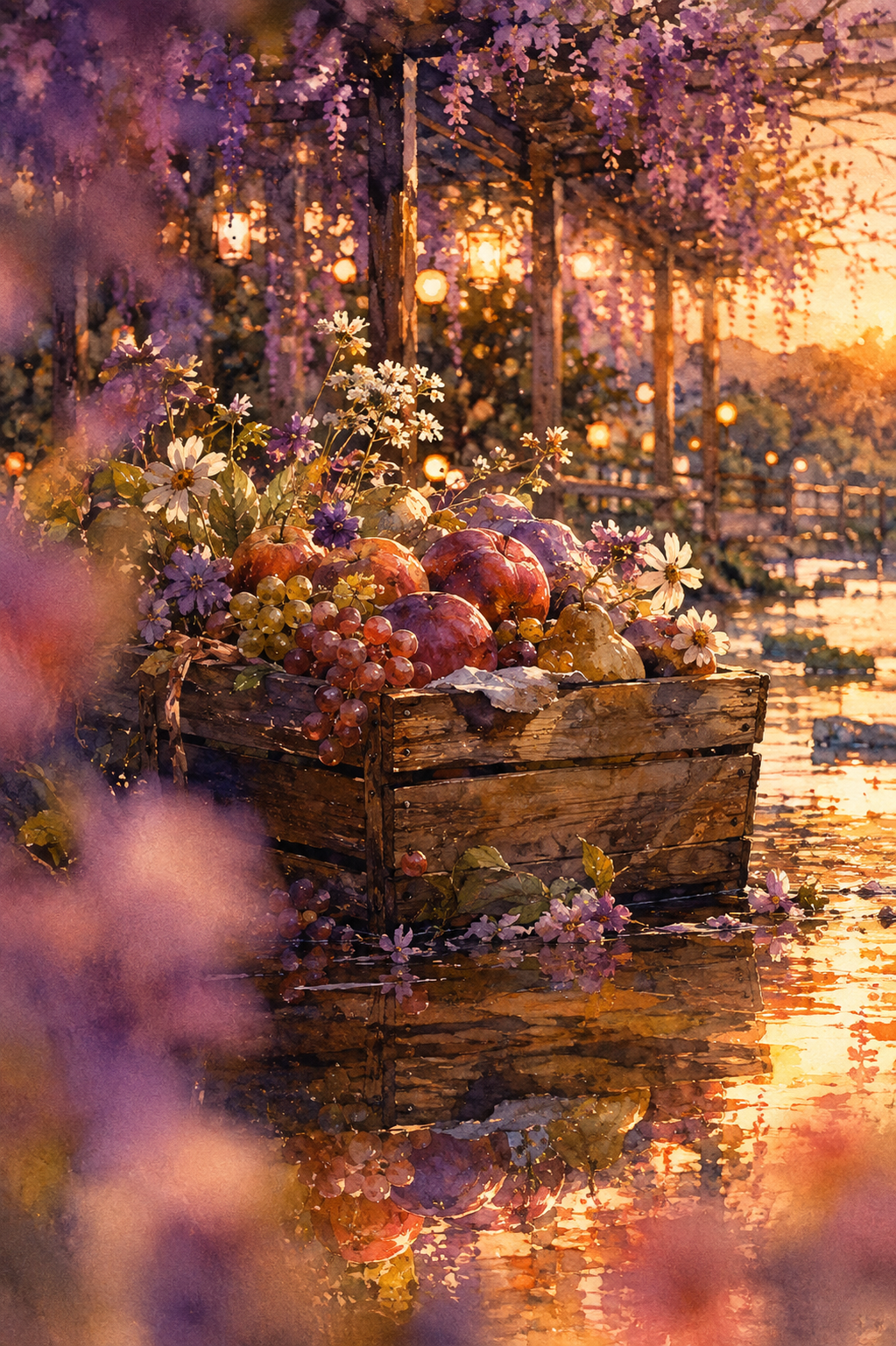
A Crate of Fruit Receives the Wisteria Sunset
Critique
Introduction Seen almost at ledge height, this painting pushes a loaded produce box against an evening pond. Solid provisions interrupt suspended blossoms and fluid reflections. Different seasons coexist as abundance shaped by time. Description The rough crate fills the lower foreground. Oranges, persimmons, and red apples rise above its rim among dark leaves and small flowers. Warm glints turn differently across dimpled citrus, matte persimmons, and glossy apples. Overhead clusters crop the sky, while the waterside route bends toward a crossing half hidden by trees. Salmon dusk stretches horizontally, then fragments on the pond. Petals rest on boards and damp stones. Analysis The crate forms a stable trapezoid supporting rounded fruit. Their circles echo lamp halos, flower clusters, and ripples. Path and shoreline lead from the still life toward the bridge. Orange and red advance through blue-violet shade, while pale blossoms repeat highlights across depth. Firm strokes describe grain, nails, and fruit skins; washes soften foliage, sky, and reflection. The crate's horizontal weight balances descending flowers. Interpretation and Evaluation Fruit suggests nourishment carried from an earlier season, while wisteria and sunset emphasize present change. Storage and transience therefore meet in one object. The composition is controlled, the complementary palette coherent, and wood, fruit, petals, and water show strong technique. Placing practical provisions within an idealized garden is inventive because beauty gains a sustaining dimension. Worn boards prevent plenty from becoming luxury. Conclusion At first color and abundance dominate, but sustained viewing reveals a still life exposed to weather and evening. Fruit carries one season into another without escaping decay. The painting presents richness as something gathered, cared for, and briefly shared with a changing landscape.
Same Subcategory
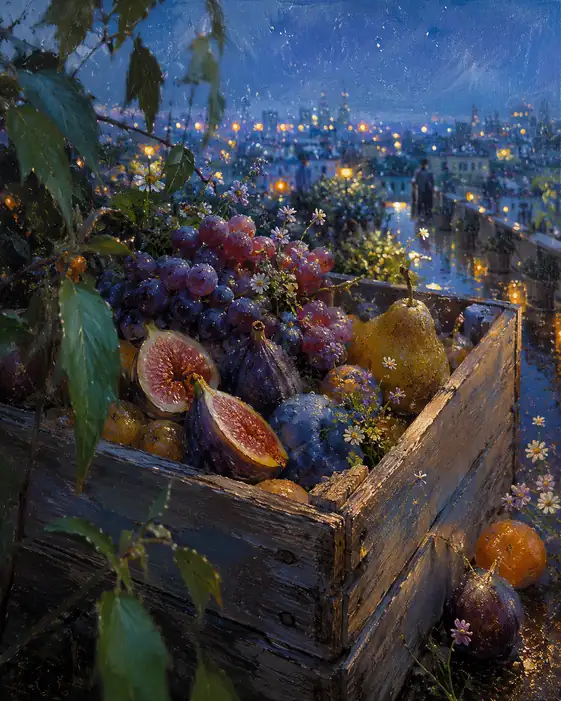 The Rain Harvests Figs beneath the City Lights
Similar Artworks
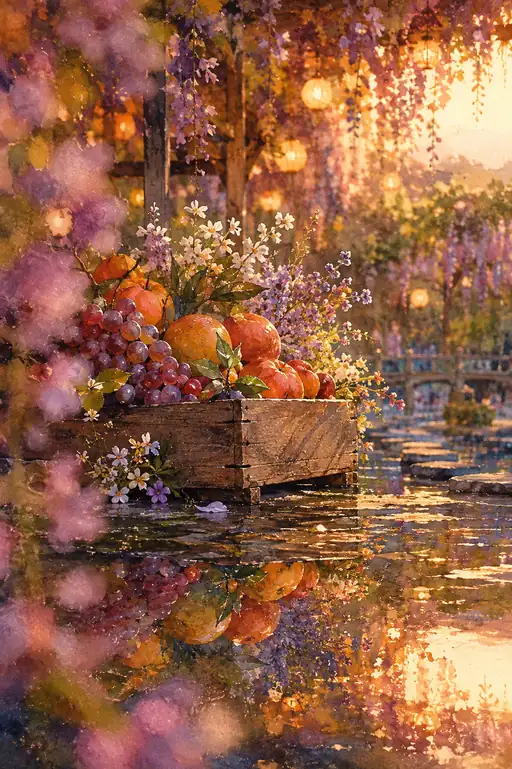 Summer's Harvest Glows beneath Autumn-Colored Wisteria
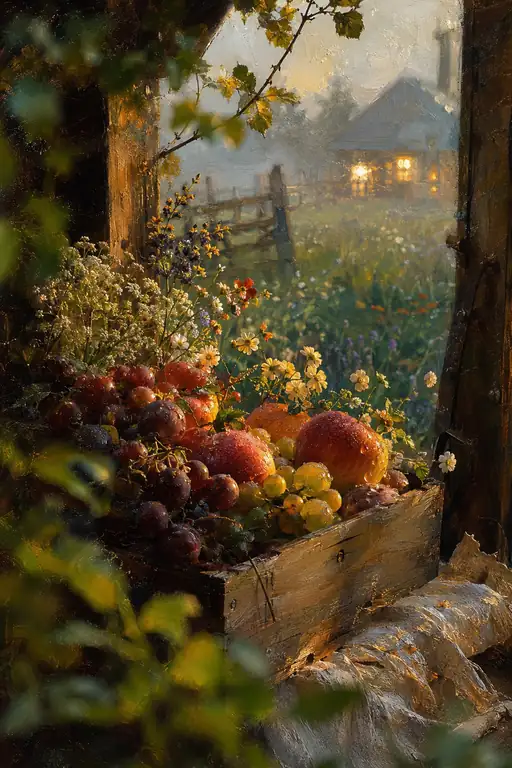 Autumn's Sweetness at the Lighted Door
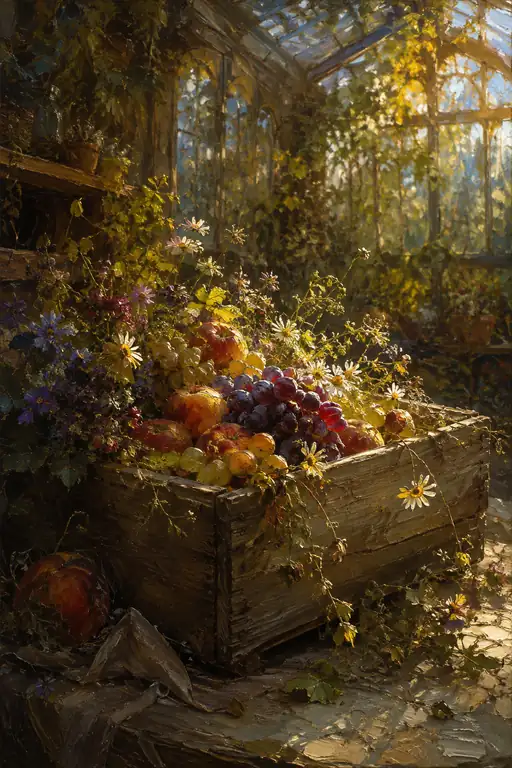 Autumn Overflows the Forgotten Crate
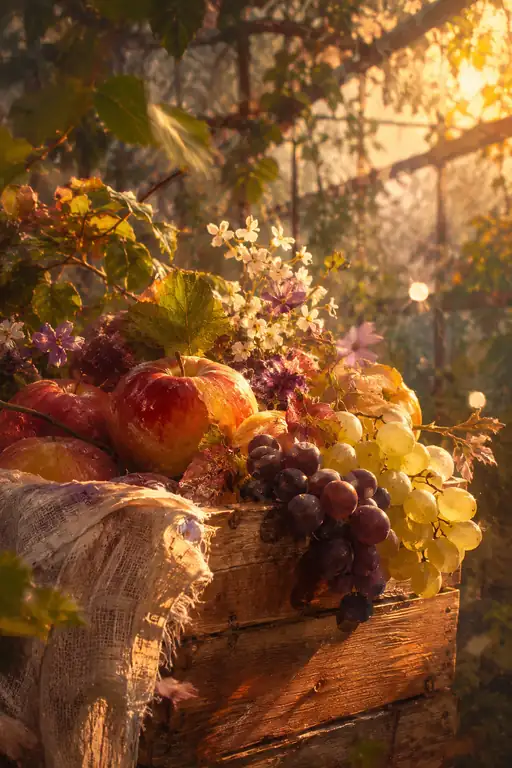 The Harvest Blushes in Greenhouse Gold
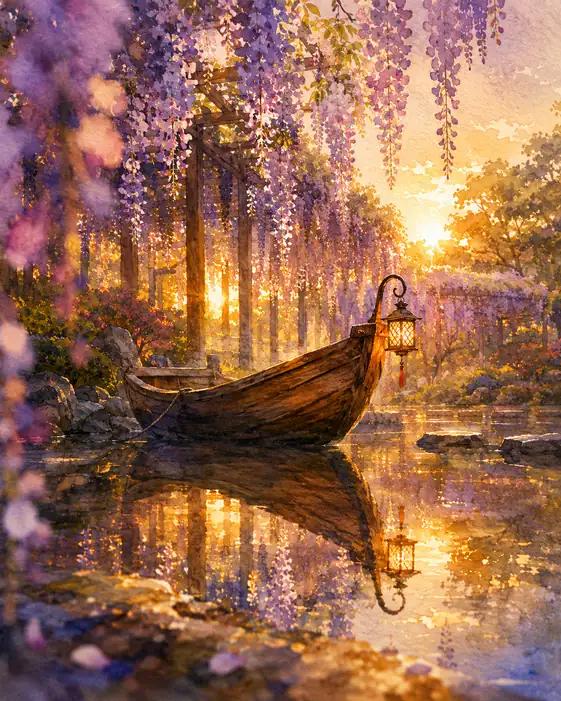 The Boat Waits Where Sunset Tangled with Wisteria
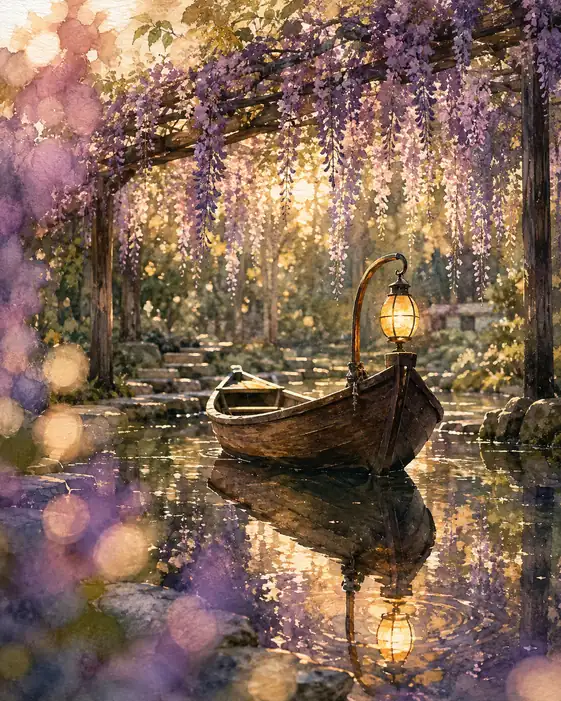 The Lantern Boat Sleeps in Wisteria Gold
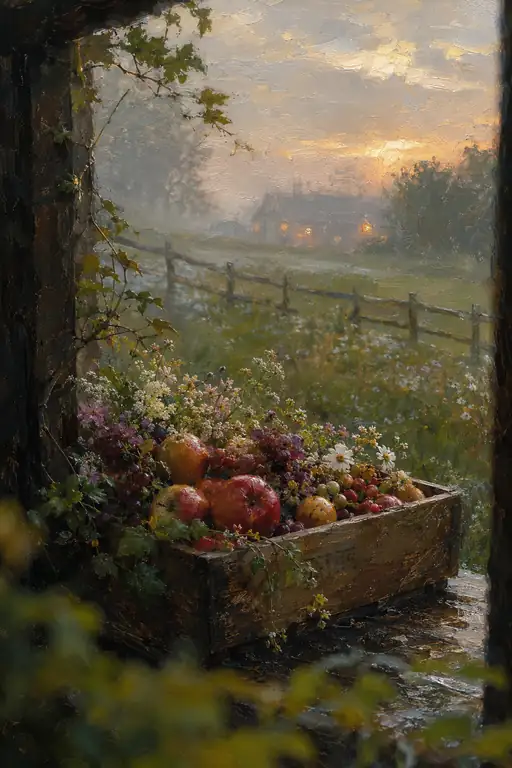 The Harvest Waits at the Threshold of Evening
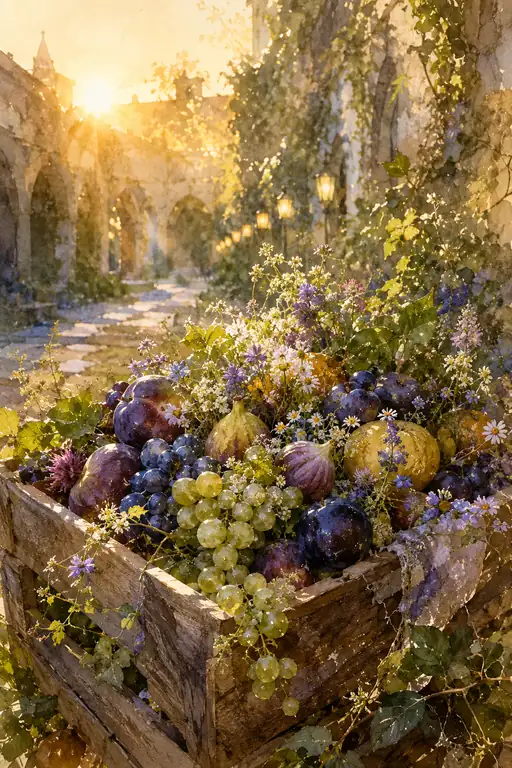 Golden Harvest in the Cloistered Sun
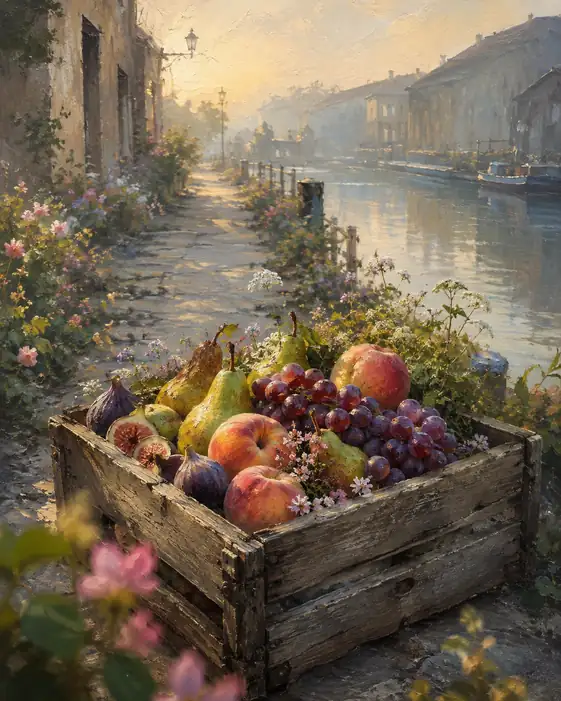 Morning Ripens in a Crate by the Canal
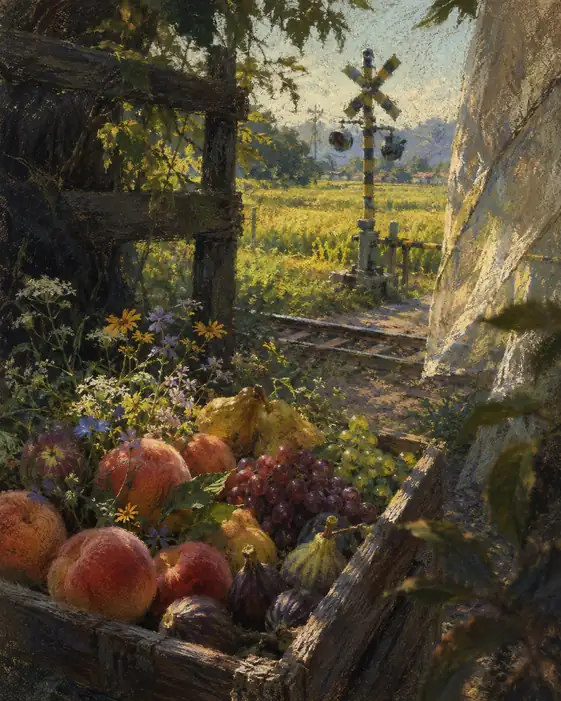 Autumn Harvest Beside the Rural Crossing