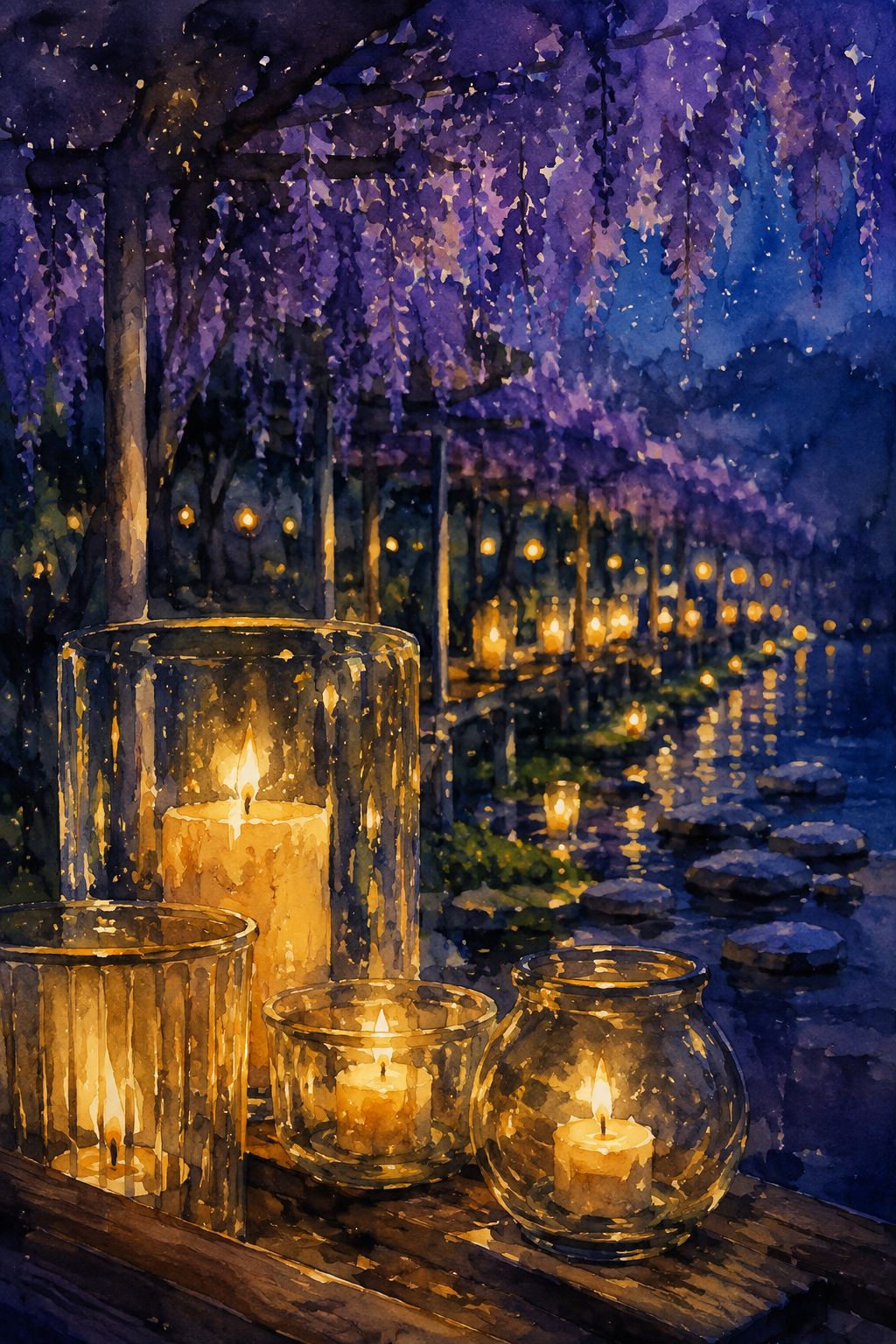
Four Candles Begin the Wisteria Night
Critique
Introduction This painting arranges candles inside glass cylinders beneath wisteria at night. Repeated vessels turn a path into a measured field of warmth. Flames and flowers create intimacy without eliminating darkness. Description Several clear cylinders stand on damp stone from the lower foreground toward the pond. Each encloses a small amber flame, with melted wax visible near the base. Curved glass catches white, purple, and gold reflections. Wisteria hangs overhead above a path leading toward a bridge and distant lamps. Deep-blue water mirrors lights and flowers in broken bands. Petals gather between the vessels, and droplets cling to their rims. Analysis The cylinders establish vertical repetition and shrink into depth. Their circular rims echo halos, blossoms, and ripples, while path and shore supply contrasting curves. Amber flames punctuate violet-blue shadow. Sharp highlights define glass edges and droplets; opaque strokes describe wax and stone; washes soften water and foliage. Transparency lets background color pass through each vessel. Unequal flame heights keep the rhythm from becoming mechanical. Interpretation and Evaluation Each flame appears vulnerable alone, but repetition transforms fragility into collective assurance. The glass protects without hiding, suggesting care that maintains connection to its surroundings. The composition is lucid, its complementary palette coherent, and glass, wax, flame, flowers, and water show strong technique. Using many modest lights instead of one dominant beacon is inventive and restrained. Darkness between them remains necessary, giving every flame purpose. Conclusion At first the candles seem to decorate the path, but sustained viewing makes their intervals and differences central. Guidance emerges as a sequence of limited lights rather than total illumination. The painting presents hope as plural, protected, and transparent enough to remain part of the night.
Same Subcategory
Similar Artworks
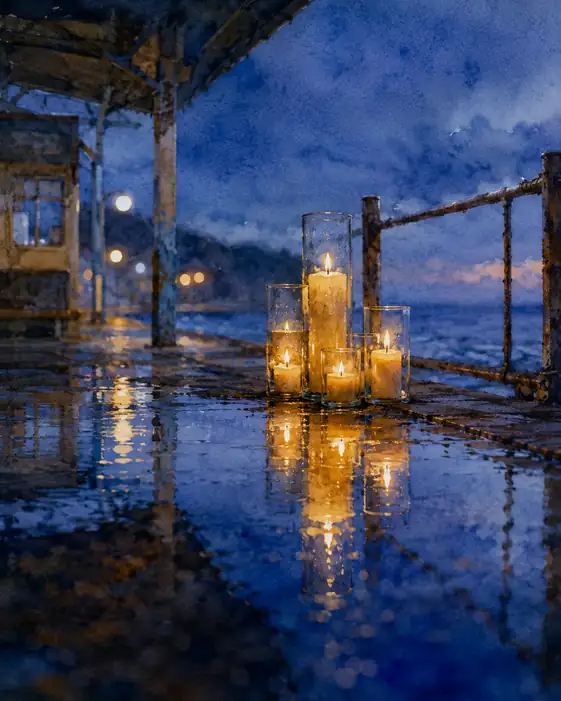 Five Candles Wait for the Tide to Turn
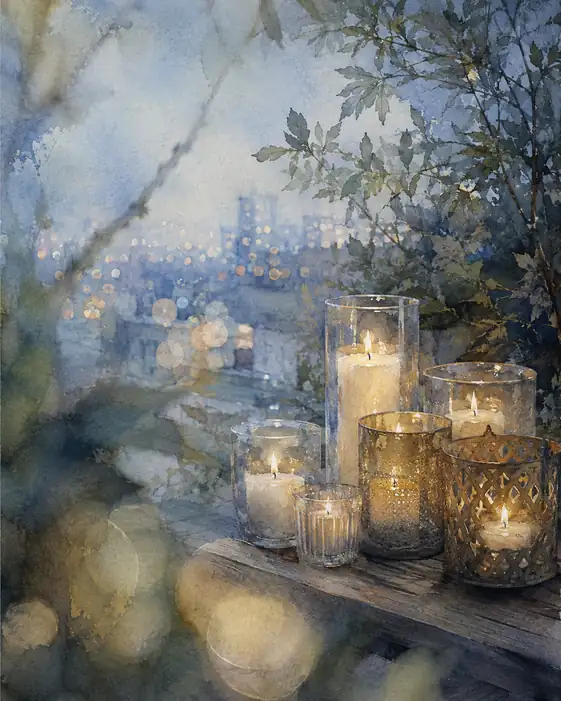 Six Quiet Flames Soften the Rainy City
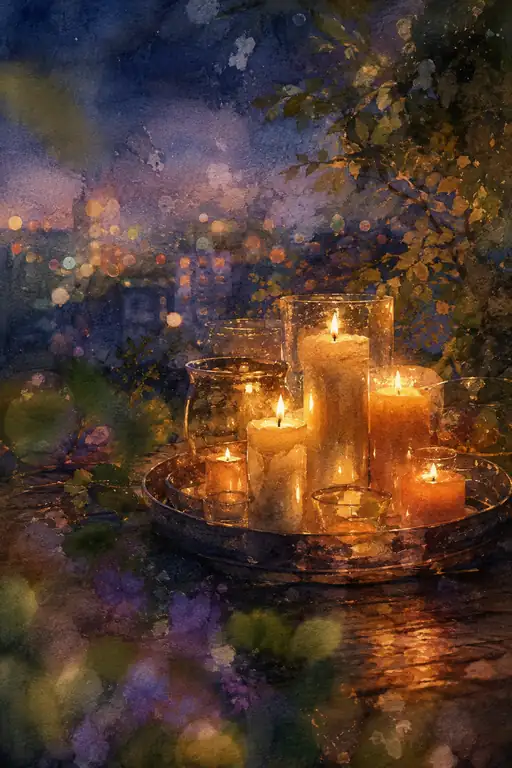 Six Candles Gather the City's Blue Hour
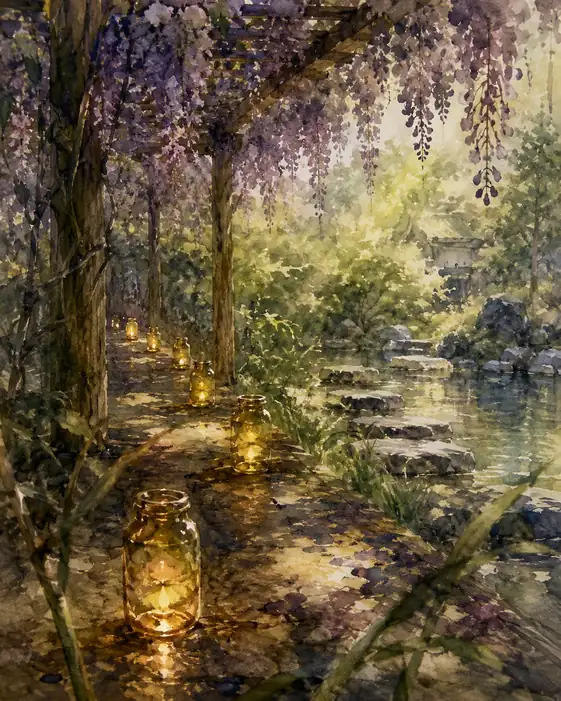 Little Jars Guide the Way through Wisteria Shade
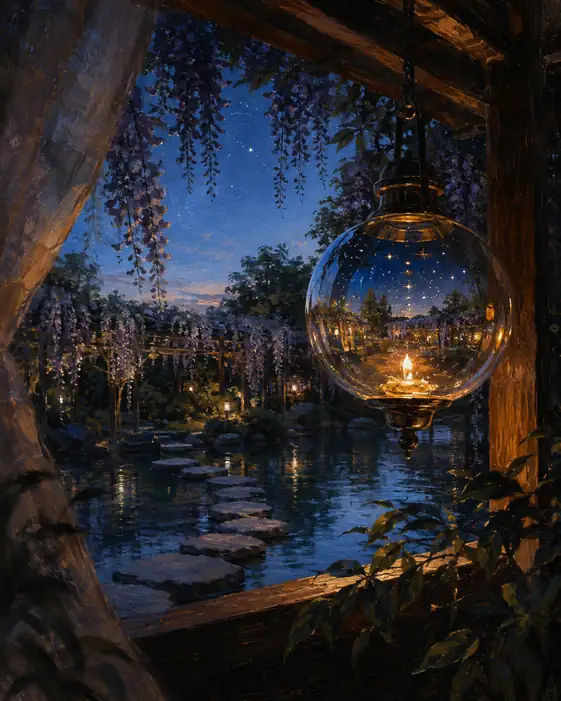 The Garden's Stars Gather inside One Lamp
 A Glass Lantern Keeps the Blue Hour's Stars
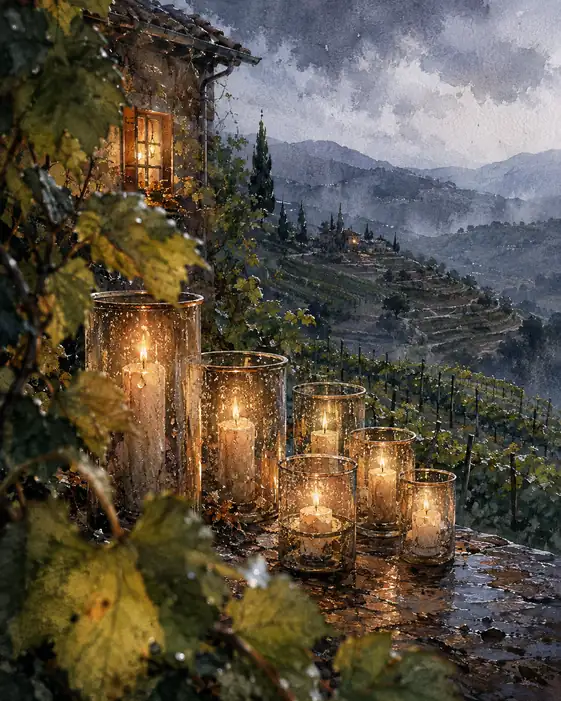 Six Flames Defy the Vineyard Storm
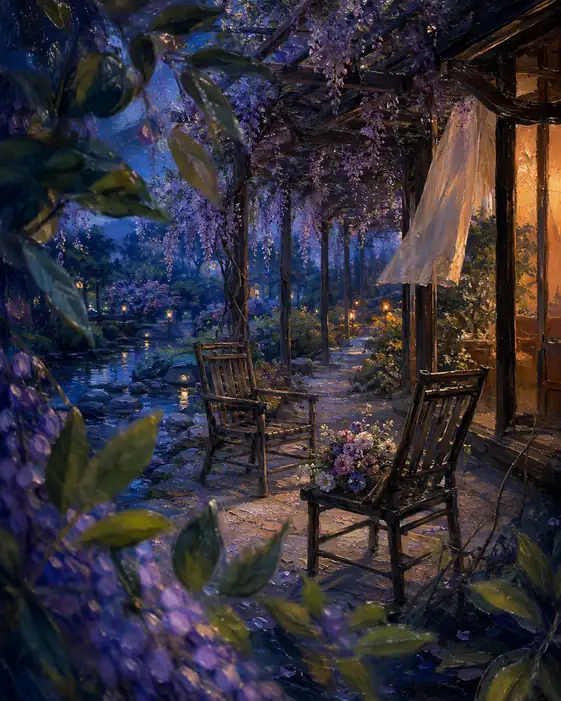 Two Chairs Keep the Garden's Evening Secret
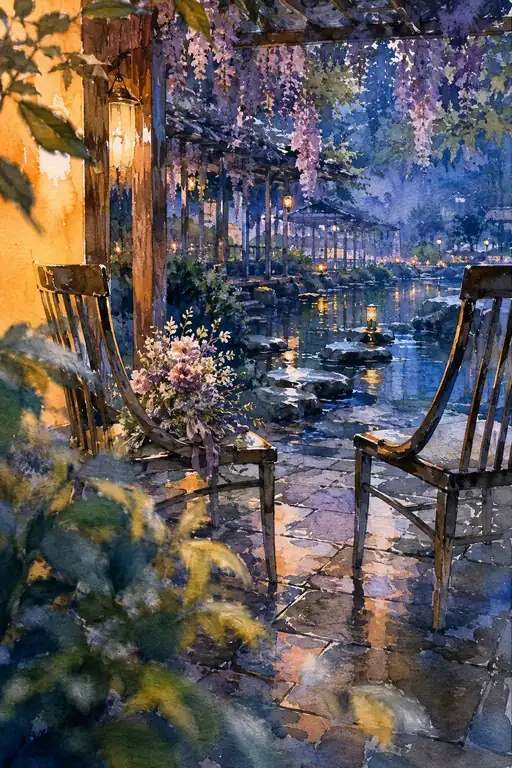 Two Empty Chairs Await the Wisteria Night
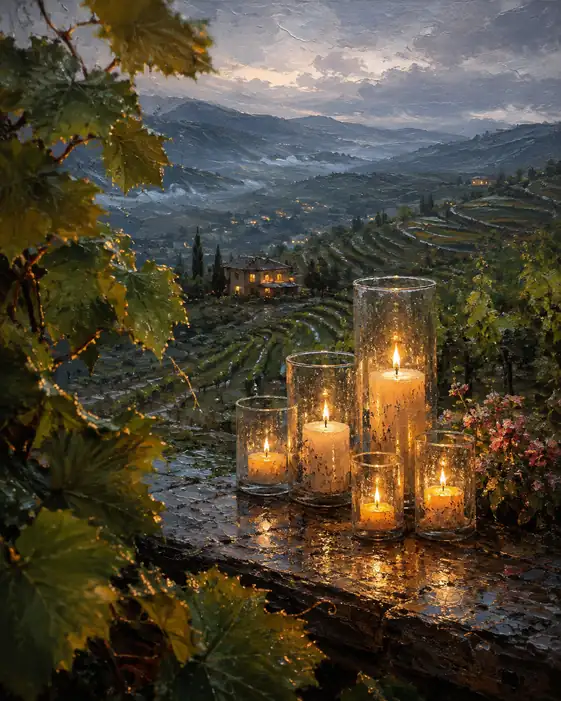 Five Candles Warm the Rain-Darkened Vines